Wender·Vista
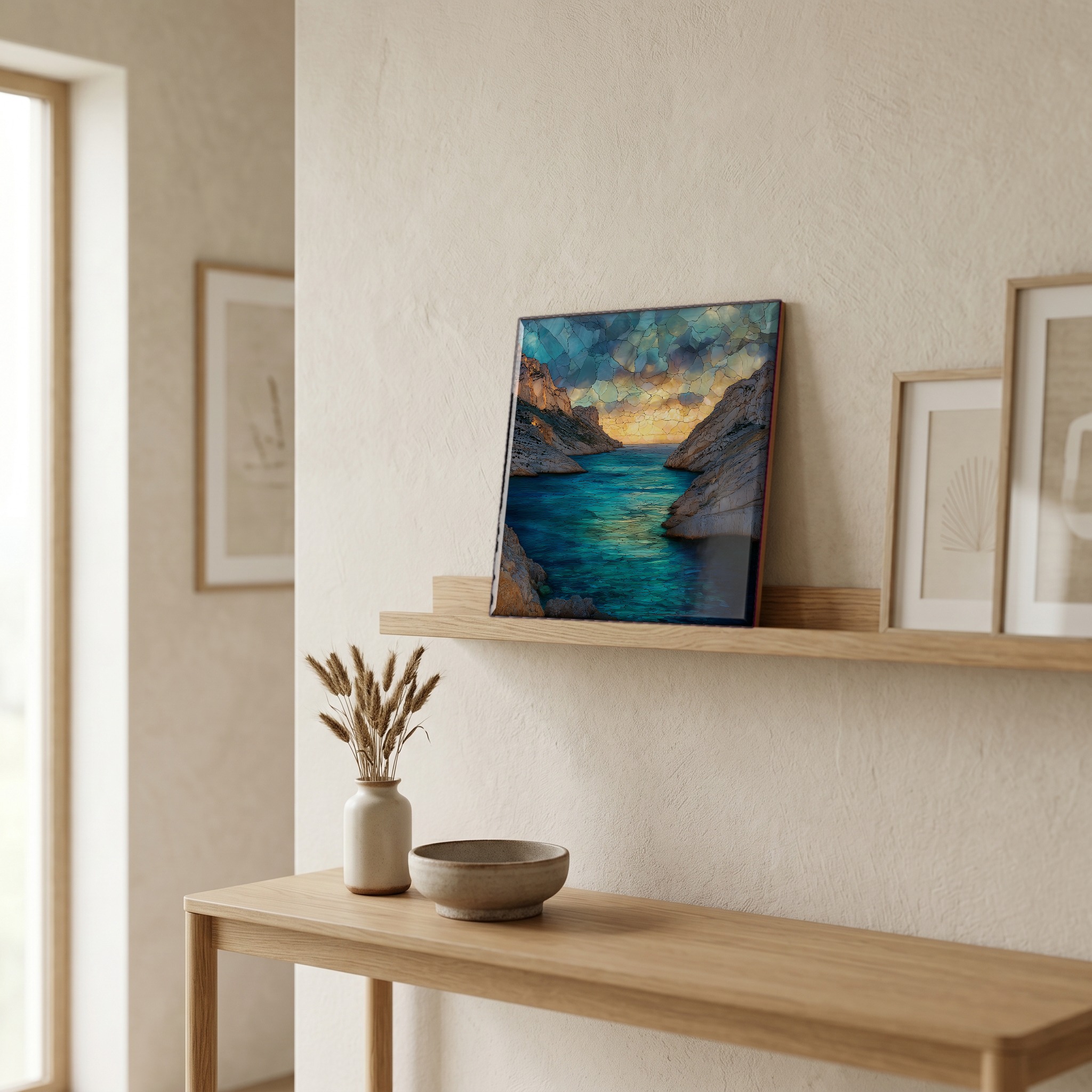
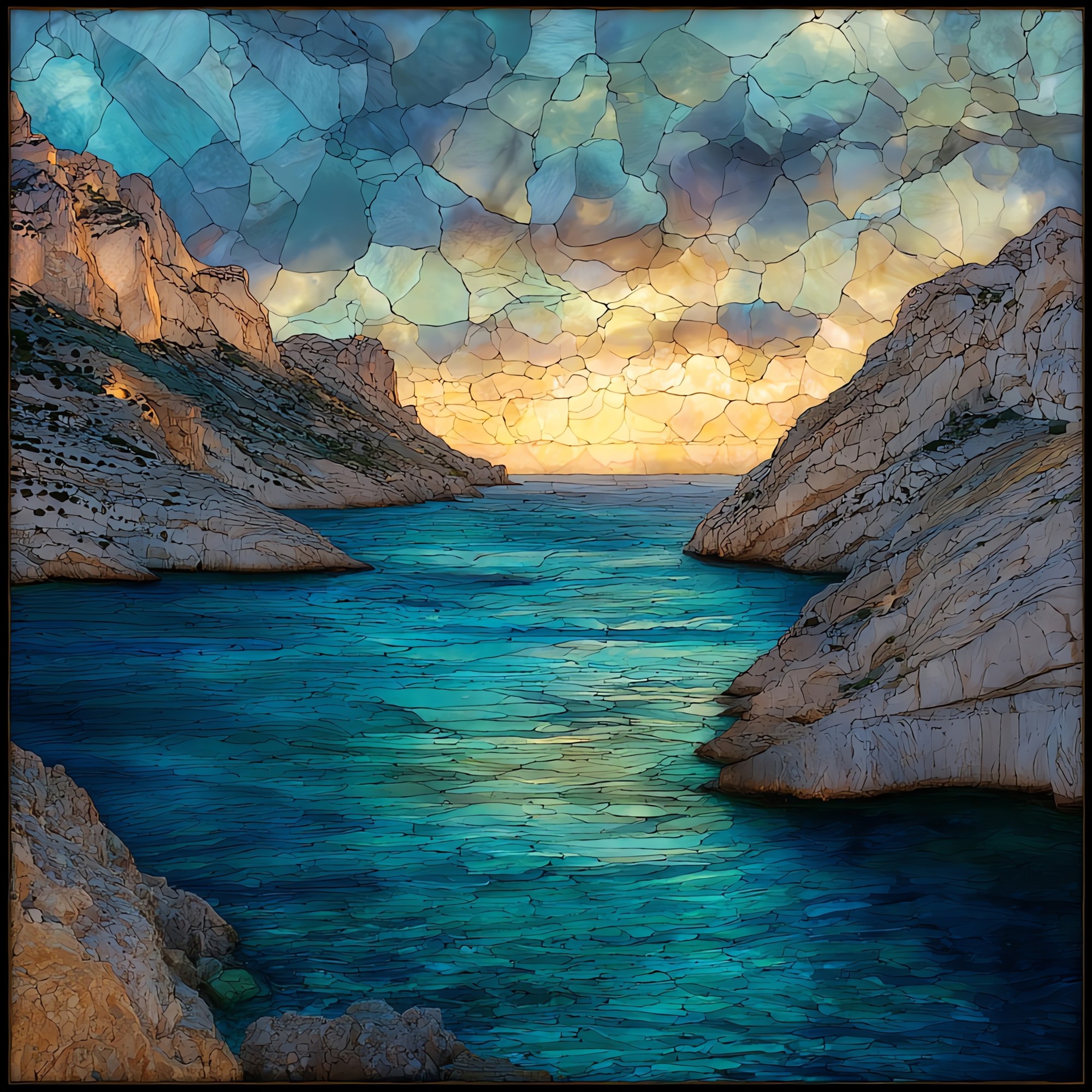
Calanque de Sormiou
shown on ceramic, 12-inch tileFrance
south of Marseille, in the Calanques

Calanque de Sormiou

the village the road forgets in summer.

Where it lives

Not only on a wall.

A small tile on the nightstand catching the morning. A larger one above the fire. Yours, wherever you spend the slow hours.
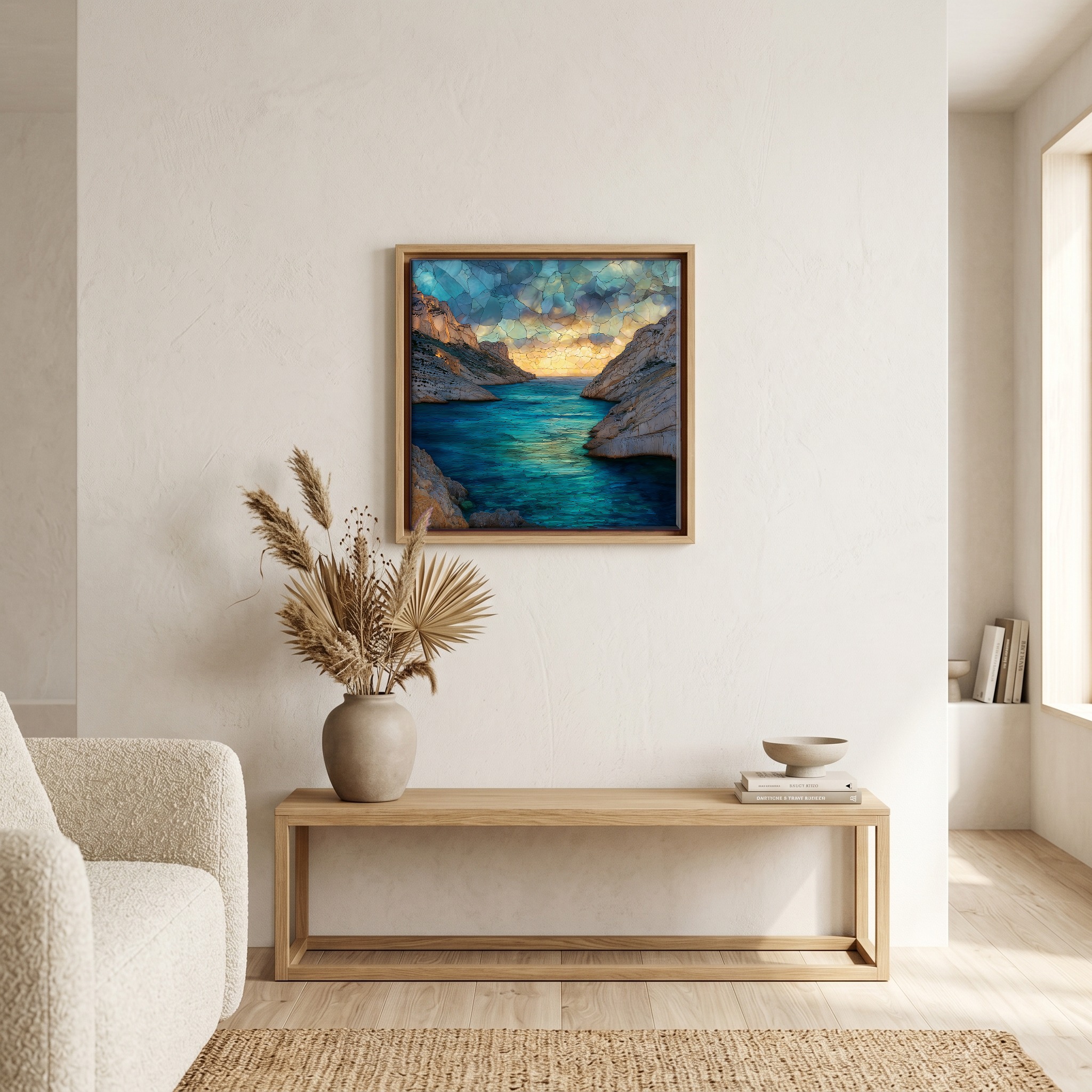
Above the bench, in a warm oak surround.
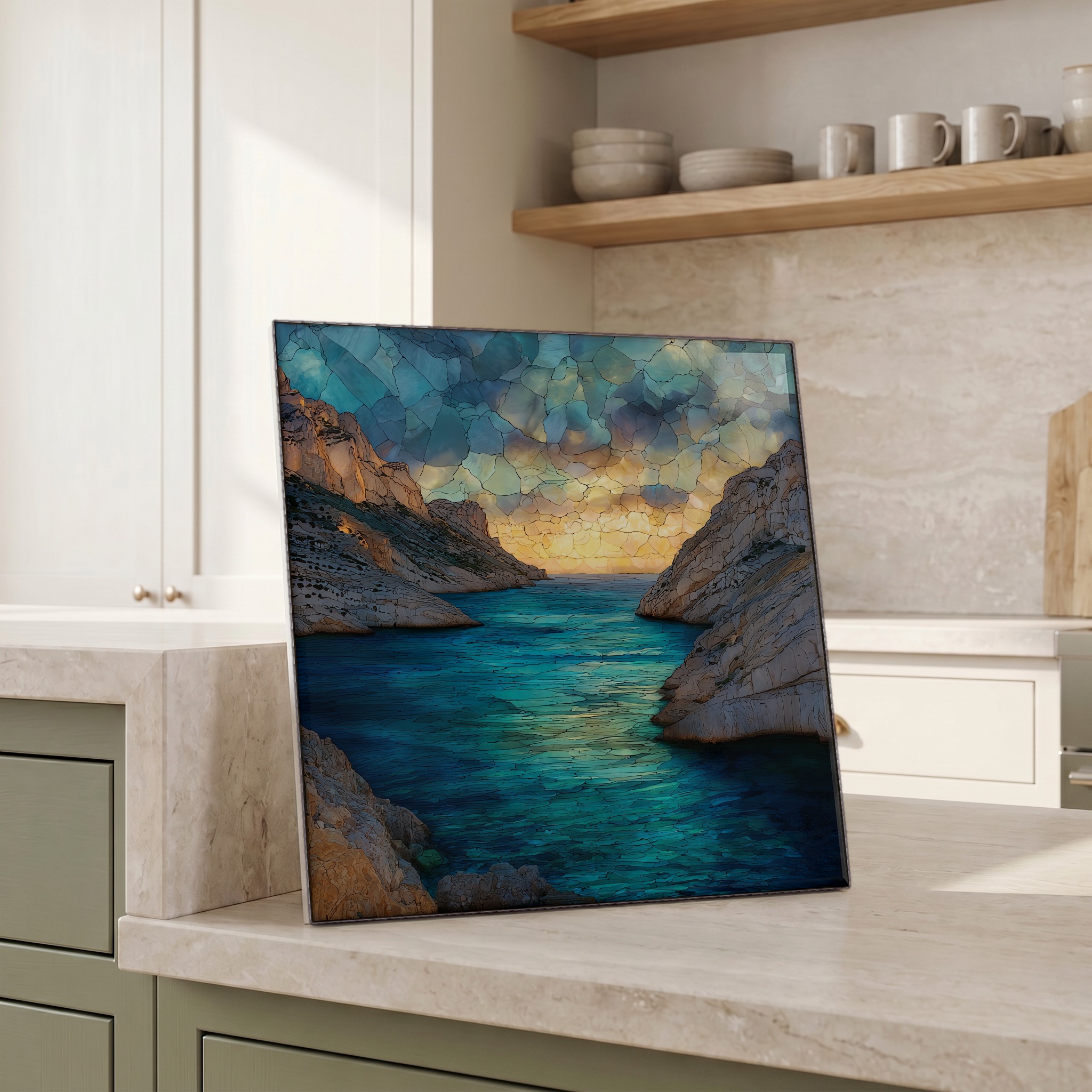
Beside the kettle, propped on the counter.
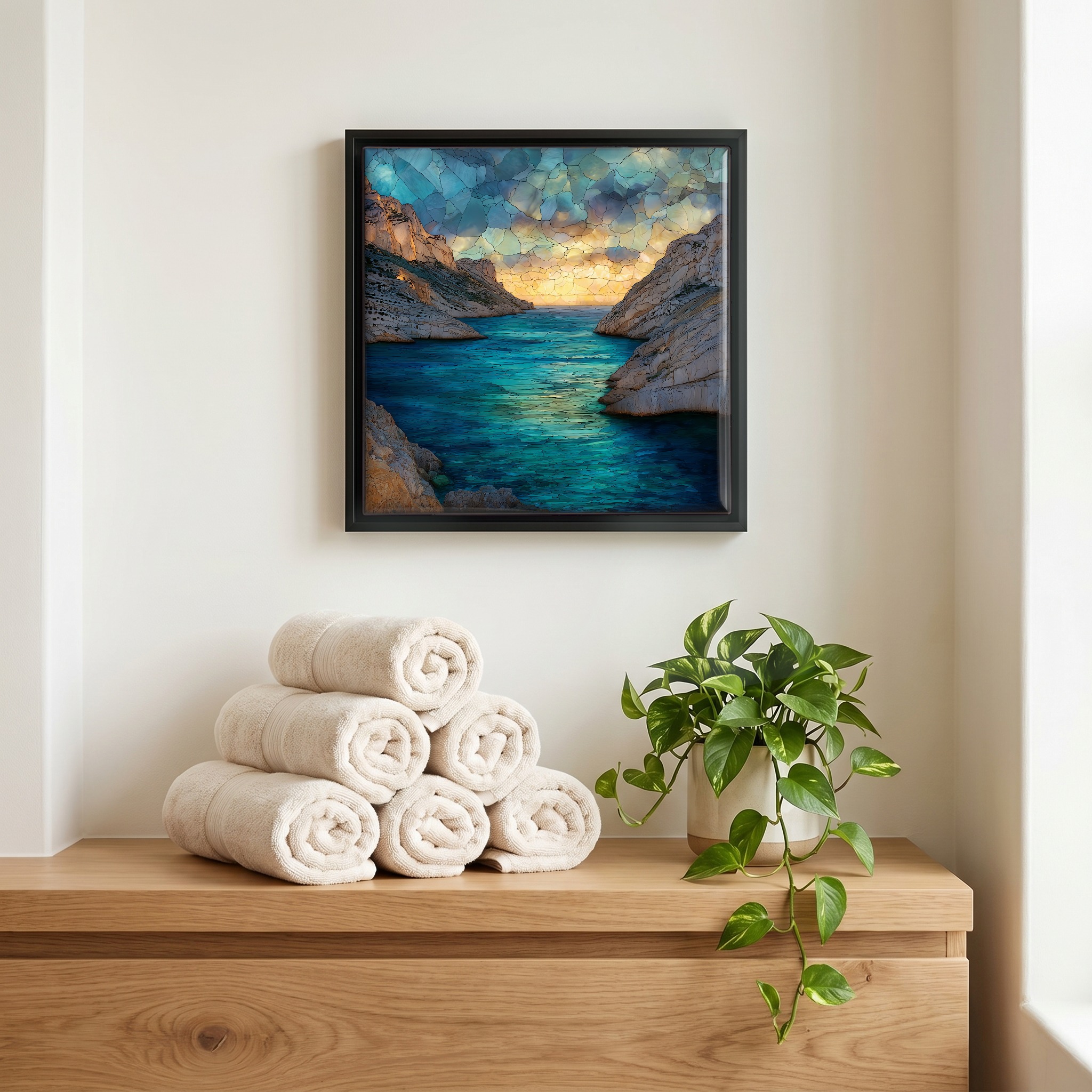
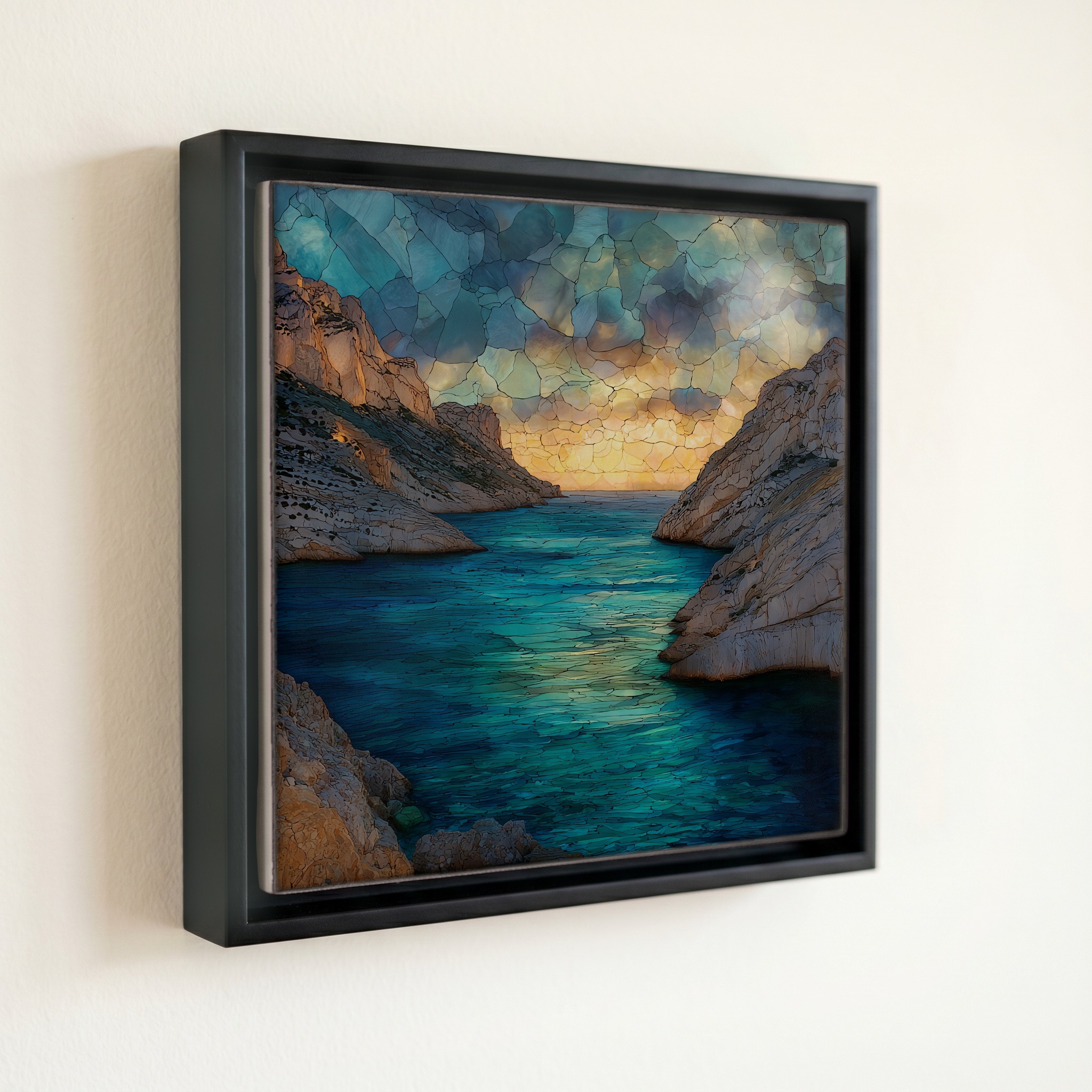
Above the linens, in a slim black surround.
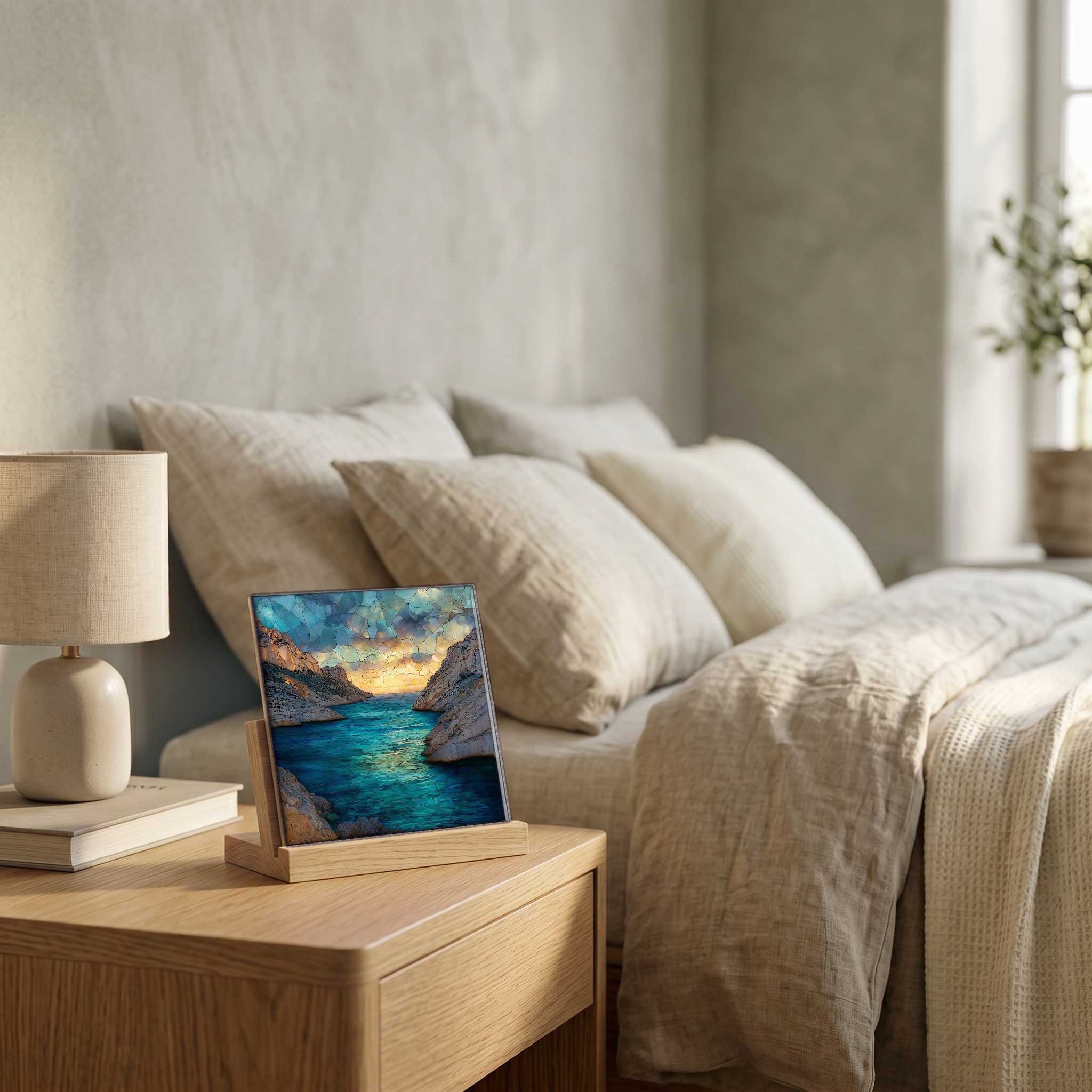
On the nightstand, on a light oak stand.
On a picture ledge, where the light comes in.
a note from the studio

A limestone notch in the cliffs south of Marseille, with a beach at the end of it and a small village of cabanons that has held the same shoreline since the 1890s. The water reads turquoise because seagrass beds and a pale limestone bottom return so much light. In summer the road in is barred from seven in the morning until seven at night, mostly for fire risk, and the cove fills with people who walked the col on foot. Fishing boats come and go from a dock that has worked since the fourteenth century. Nobody hurries here.
from the studio
shown in a slim black floating frame · 6 × 6 in
— bring it home

Calanque de Sormiou, on ceramic.

Each tile is finished by hand in our Knoxville studio. Artwork is slowly infused into the ceramic surface under high heat and pressure, and rests beneath a thin glossy finish. The colour lives in the surface, not on top of it.

What kind of piece?
One tile — square or rectangle.
How big?
the popular one — counter, shelf, nightstand
6 × 6 in · 15 cm · 1.6 lb
Surface finish
A clear glossy finish — the artwork reads as if under resin. Ideal for show-pieces and framed wall art.
How it sits
A hidden cleat — sits ¼″ proud of the wall.
$58
Hand-finished and shipped from our studio at the foot of the Smokies. On your wall in about ten days.
size
6 × 6 in
15 cm
weighs
1.6 lb
solid in the hand
surface
ceramic, hand-finished
art rests beneath a thin glossy finish
from
Knoxville, TN
our family studio, at the foot of the Smokies
— start a Coaster Set

Pick any four 4-inch tiles — National Parks you've been to, a Smokies set, the four seasons of one place. $ for a set of , cork-backed, ready to live on the table.
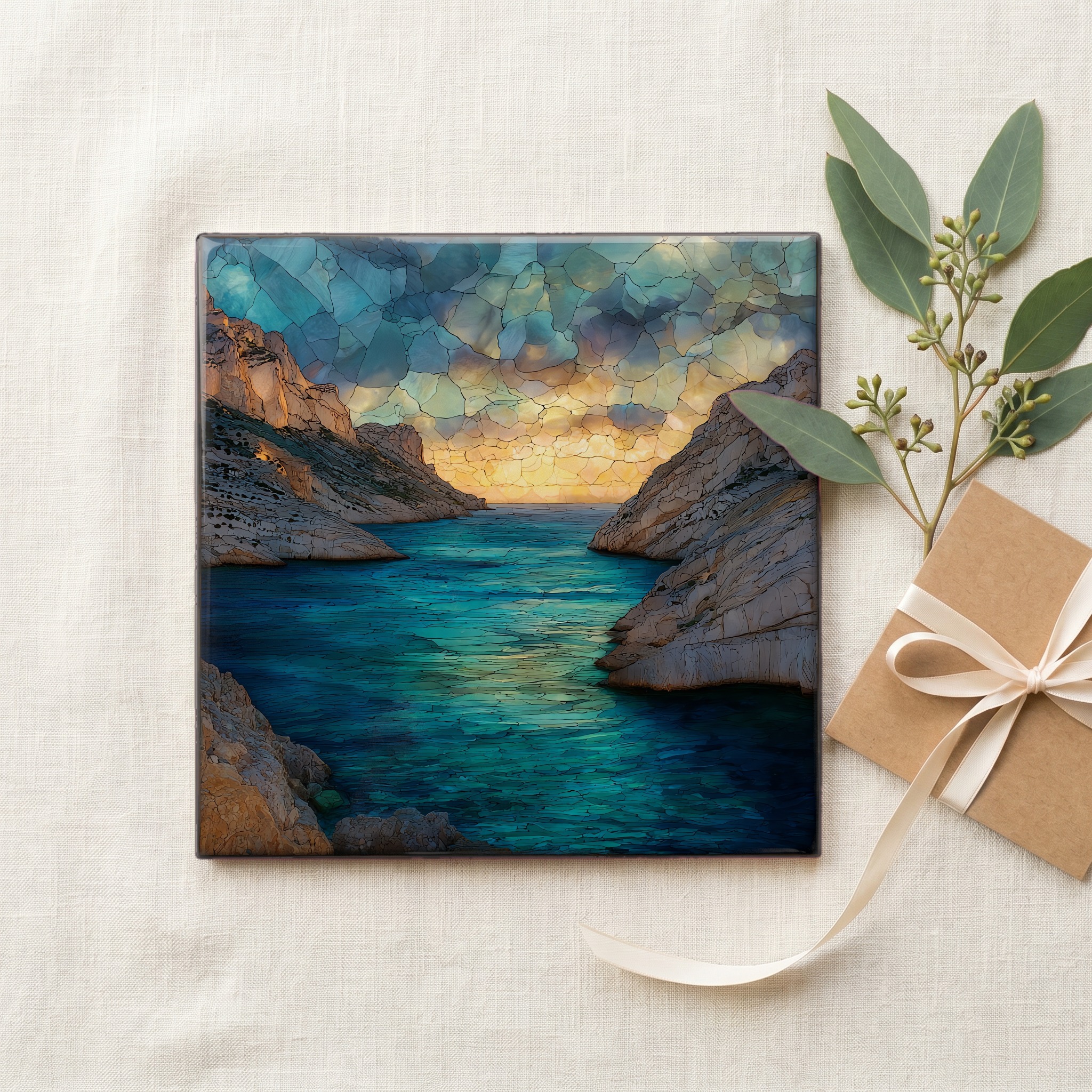
comes gift-ready
comes gift-ready

Each tile ships in a kraft box, tied with cream ribbon, with a handwritten note from the studio if you'd like to add one.
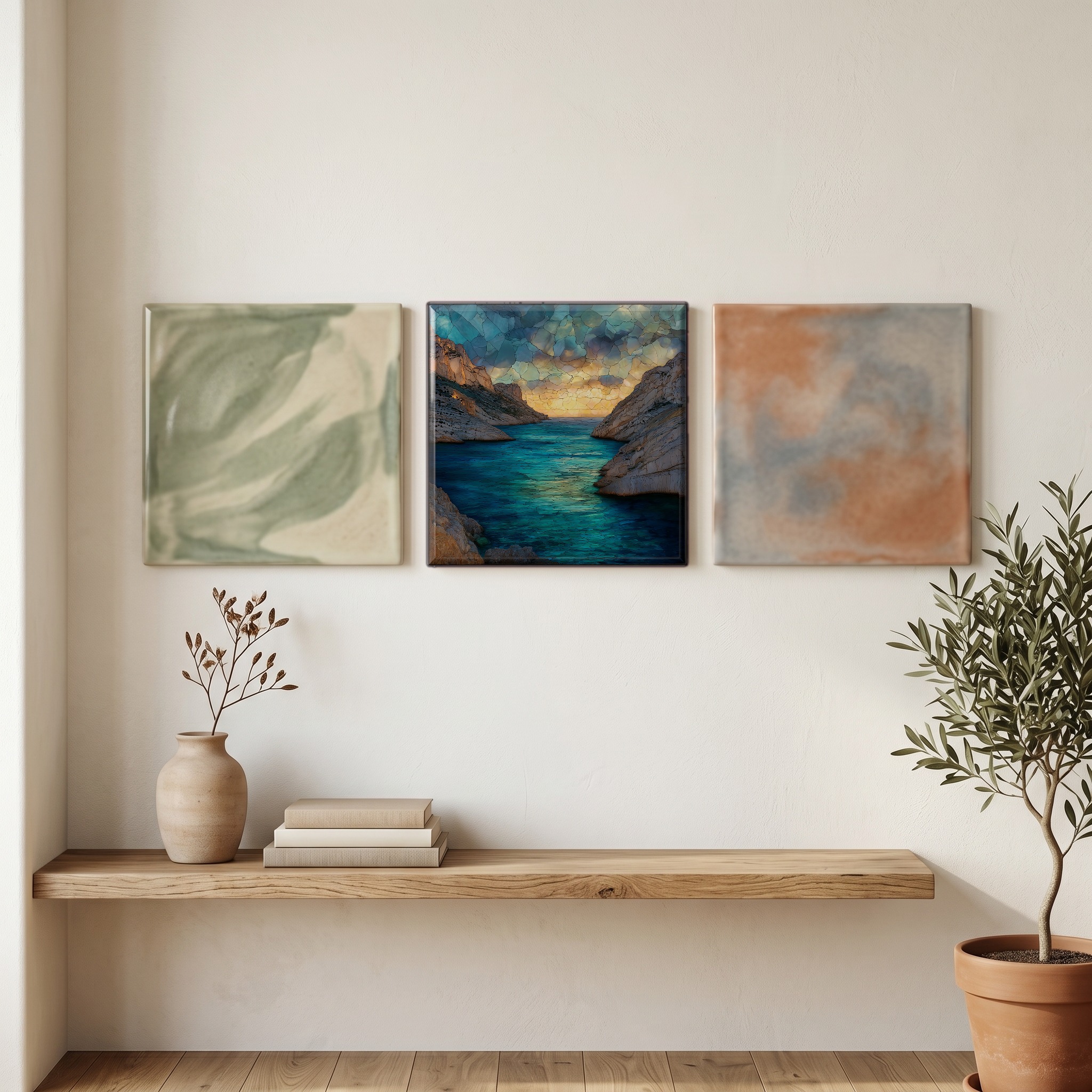
or build a grouping
or build a grouping

Three or five different vistas, hung together — a chapter of places you've been, or want to go.

about Calanque de Sormiou

The place, in three passes.

A little of what's known, in case you fall down the rabbit hole — or want to go see it yourself.
the place

Calanque de Sormiou is the largest of the calanques in the Calanques National Park, the limestone-cliff coast that runs between Marseille and Cassis. It sits in the city's 9th arrondissement, about ten kilometres south of the Vieux-Port, and is reached by a single road from the Mazargues quarter that climbs over the Col de Sormiou and drops down to the cove. The park was created by decree on 18 April 2012 and covers 520 km², 85 of them on land. Sormiou is wider than its neighbour Morgiou and harder to reach by car than either: the road is barred to traffic on summer days for fire risk.

the water

The water in the cove reads turquoise on calm days because two surfaces below it return short-wavelength light: a pale limestone shelf at the head of the inlet, and a Posidonia meadow that holds the sand from clouding. Posidonia oceanica is the slow-growing seagrass endemic to the Mediterranean; the meadows in the calanques are protected under the park's marine plan. Swimming is allowed from the small beach at the inlet's end, where a lifeguard station opens in summer. Fishing boats and a few cabanons share the shoreline; the marine zone outside the cove is a no-take reserve. The colour is steadier in late spring and early autumn than in midsummer, when traffic stirs the bottom.

the visit

Access changes with the season. From 1 June through 30 September the prefecture closes the calanque road to motor traffic between 7 a.m. and 7 p.m., extended to 10 p.m. on high fire-risk days; permits stay open for cabanon owners, residents of La Cayolle, and the restaurant's reservations. The same regime runs on every April and May weekend. On foot the cove is reached two ways: over the Col de Sormiou from the Baumettes parking, or down from the RTM bus stops on lines 22 and 23, roughly forty-five minutes each. The park's daily access map is published online and on the Mes Calanques app, with green, yellow, and red zones.

where
France · Marseille, Bouches-du-Rhône
within
Calanques National Park
position
43.2078° N · 5.4267° E
the neighborhood

What's nearby.

A handful of named places within an hour's walk or short drive. Some we've already painted; some we will.
1 km E
Calanque de Morgiou
calanque
2 km E
Cap Morgiou
limestone headland
4 km E
Calanque de Sugiton
calanque
1 km N
Col de Sormiou
mountain pass
10 km N
Vieux-Port de Marseille
historic harbour
20 km E
Cassis
fishing port
N
Calanque de Sormiou
Calanque de Morgiou
Cap Morgiou
Calanque de Sugiton
Col de Sormiou
Vieux-Port de Marseille
Cassis
common questions

What people ask.

A few questions we get about Calanque de Sormiou — and about bringing the piece home.
about the place

The turquoise comes from short wavelengths bouncing off two clean surfaces under the water: a pale limestone shelf at the head of the cove and a Posidonia oceanica seagrass meadow that holds the sand down. The colour reads strongest on calm days in late spring and early autumn.

From the Mazargues quarter of Marseille, drive over the Col de Sormiou outside summer hours; from 1 June to 30 September the road is barred to cars between 7 a.m. and 7 p.m. On foot the standard route is the Baumettes parking and the col, about 45 minutes.

A working fishing village of cabanons: small one-room shelters without running water or mains electricity. The first ones were built in the 1890s, and the village descends from Mazargues families. It is not a public hamlet; the cabanons are privately held.

Yes. Sormiou is the largest of the calanques in Calanques National Park, the limestone coast running roughly 20 kilometres from Marseille to Cassis. The park was created on 18 April 2012 and covers 520 km², with 85 km² on land.

Yes. There is a small beach at the head of the cove and a seasonal lifeguard station in summer. Swimming is open inside the cove; the marine zone immediately outside is a protected no-take reserve under the park's marine plan.

The Provençal name has been read as 'best source,' a reference to two 14th-century wells near the cove. Sormiou has been worked as a fishing village since at least the fourteenth century.

about the piece in your home

It has been a meaningful gift for our customers with ties to the Marseille coast. Sormiou is one of the places that defines that coastline for locals: the cabanon, the col, the colour of the water on a calm day. A Small or Medium with a handwritten note from the studio carries well.

The studio's stained-glass and alcohol-ink rendering of Sormiou reads strongest in three rooms: Coastal-modern, where the turquoise carries the palette; Mediterranean Maximalist, where the layered colour answers wood and terracotta; and Minimalist with one warm anchor, where the stained-glass detail does the work alone on a quiet wall.

Yes. Coastal-modern is moving away from greige and rope toward specific places and saturated water tones. A single Large of Sormiou above a console reads as a place rather than a beach trope, which is the direction the style is heading.

Above a standard three-seat sofa or a long console, a single Large carries the wall on its own. For a more architectural treatment, a 4-tile Mural opens the scene into the room; a 9-tile Mural reads as a window and works best on a wall with no competing art.

Yes, in Dura Satin or Matte. The Dura Satin finish is scratch-resistant and reads well in steam, which makes a Medium or Mural the right choice for a backsplash, a shower wall, or a powder room. The Glossy finish is reserved for show-piece installations on dry walls.

A microfibre cloth and water. The colour is slowly infused into the ceramic surface under high heat and pressure, beneath a thin glossy finish, so the image lives in the surface, not on it. No solvents, no abrasive cleansers.

Yes. Every WenderVista piece is original work by Reid Wender, the studio's curator, painted in our stained-glass and alcohol-ink visual language. We do not licence other artists' work; the atlas is a single-studio project.

if this one stayed with you

A few you might also love.

Hand-picked by the eye that found Sorapis. Same air, same kind of quiet.