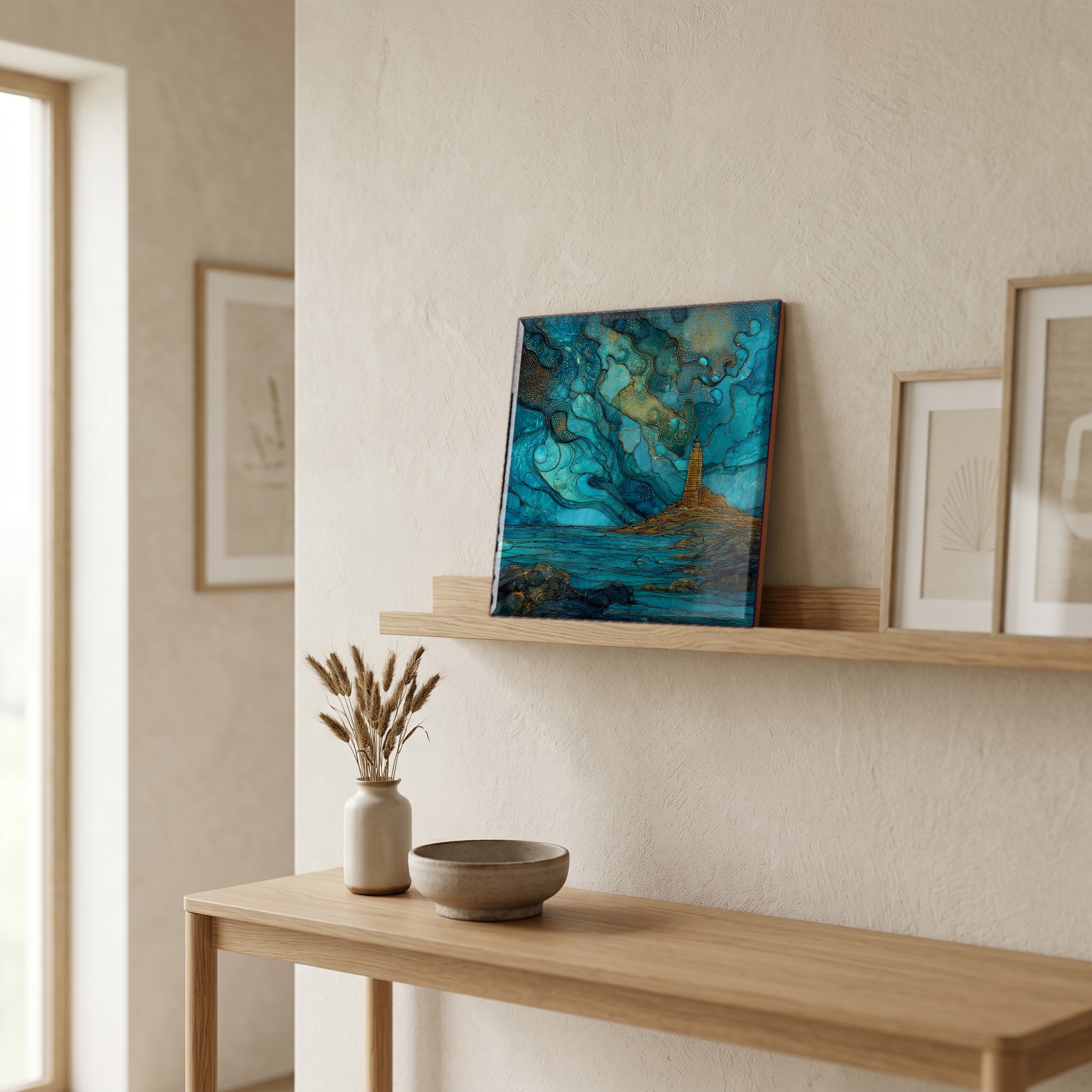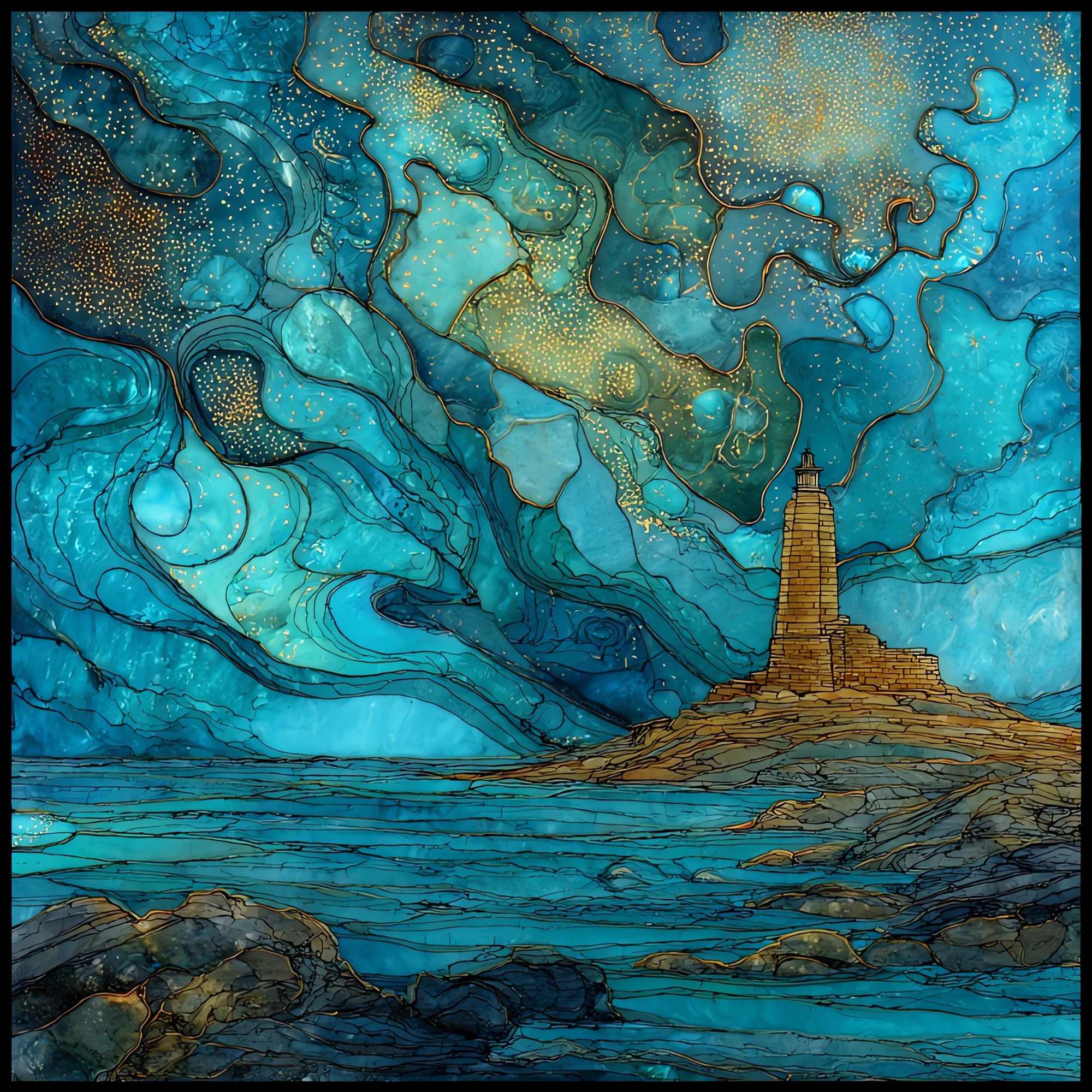
Wender·Vista
Cairn of Gavrinis
shown on ceramic, 12-inch tileFrance
on a small island in the Gulf of Morbihan, off the Brittany coast

Cairn of Gavrinis

— what someone carved before the sea came up.

Where it lives

Not only on a wall.

A small tile on the nightstand catching the morning. A larger one above the fire. Yours, wherever you spend the slow hours.
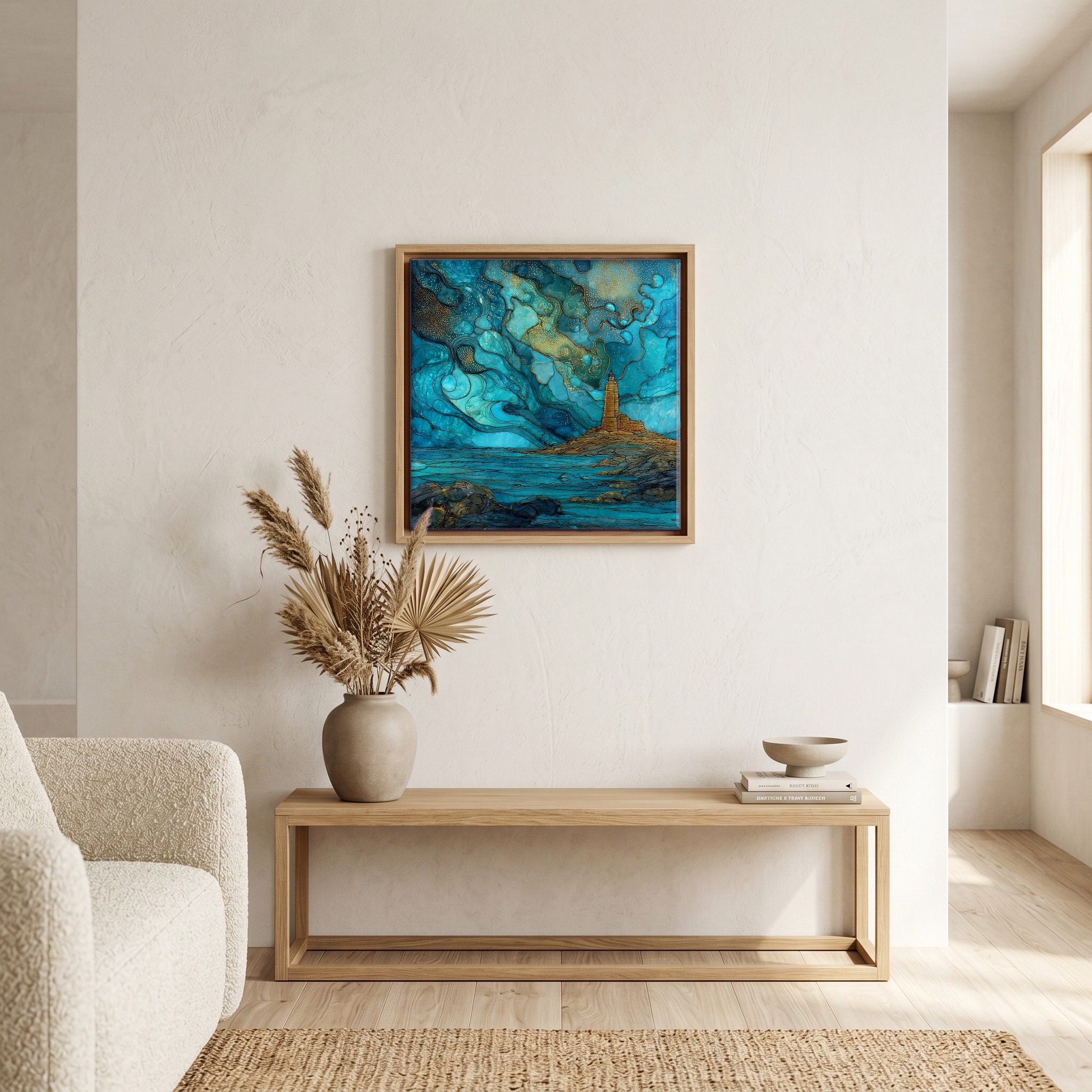
Above the bench, in a warm oak surround.
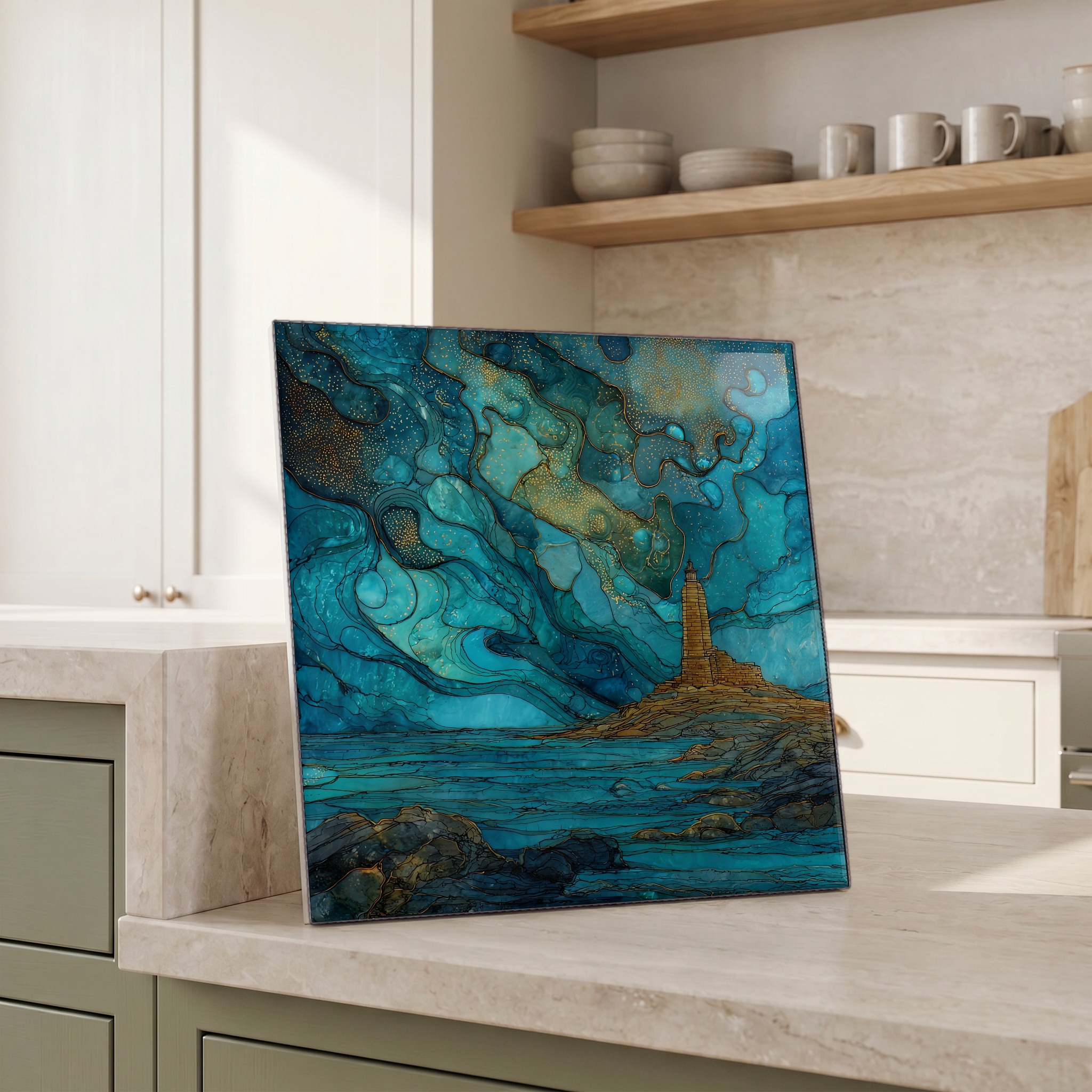
Beside the kettle, propped on the counter.
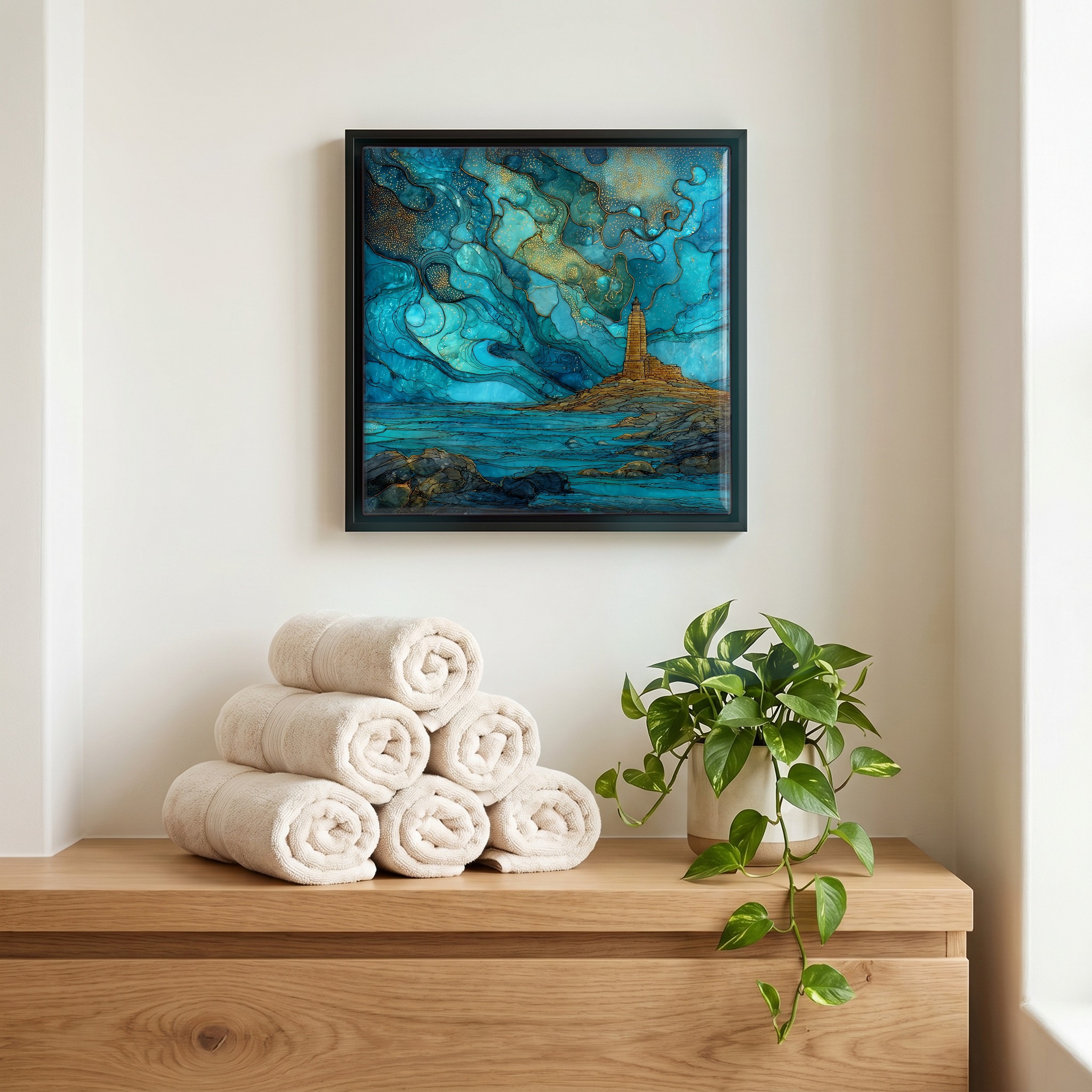
Above the linens, in a slim black surround.
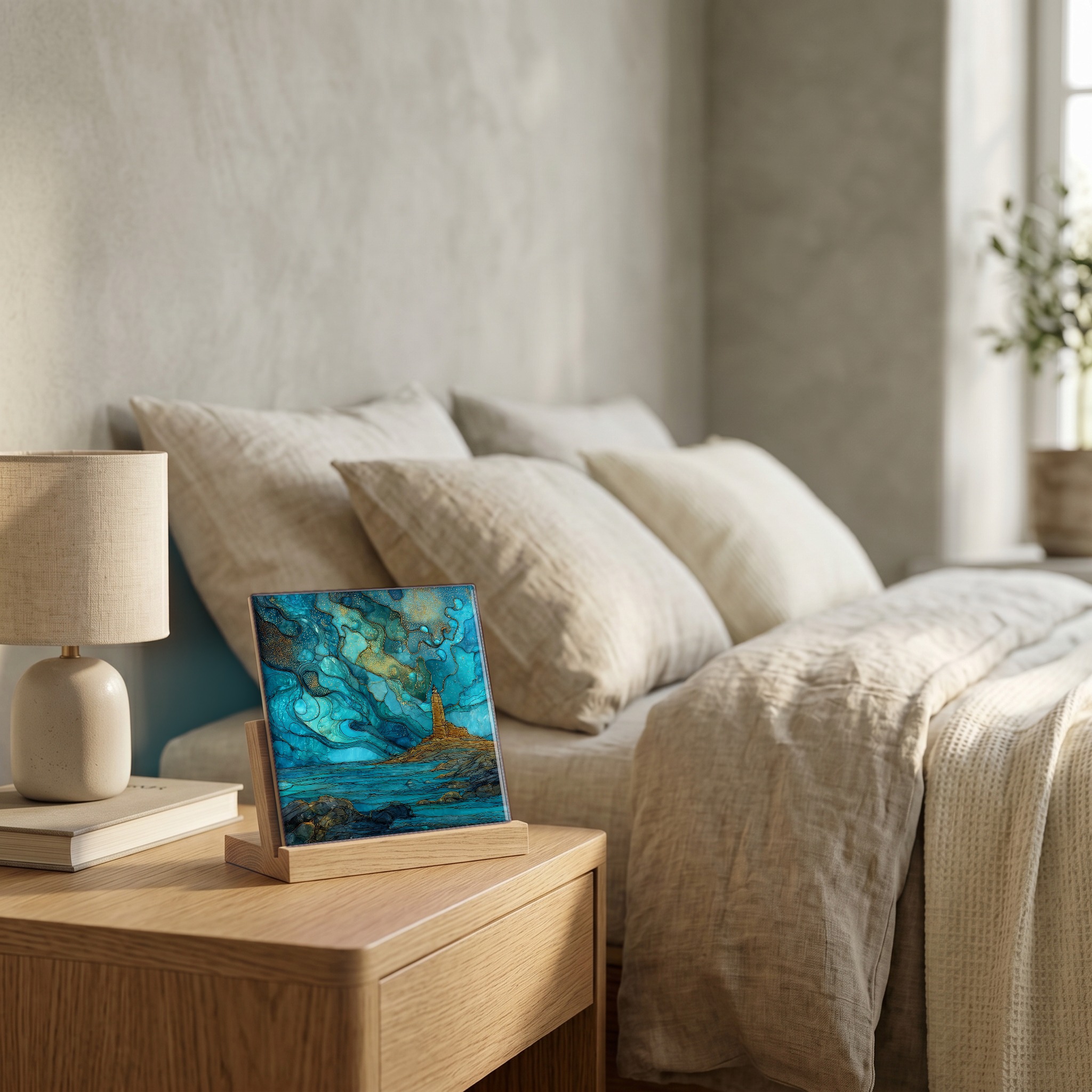
On the nightstand, on a light oak stand.
On a picture ledge, where the light comes in.
a note from the studio

A passage tomb on a small island in the Gulf of Morbihan, reached only by boat from the port of Larmor-Baden. Twenty-three of the twenty-nine stones lining the corridor and chamber are covered in carved arcs, spirals, axe-heads, and serpentine lines — among the most elaborate megalithic art in Europe. The cairn was raised around 3500 BCE, when Gavrinis was still a hilltop on the mainland; the post-glacial sea rose later and left the tomb on its island. Rediscovered in 1832, the chamber is open in season for guided visits of about half an hour. Newgrange in Ireland is the closest cousin we know of. *from the studio*
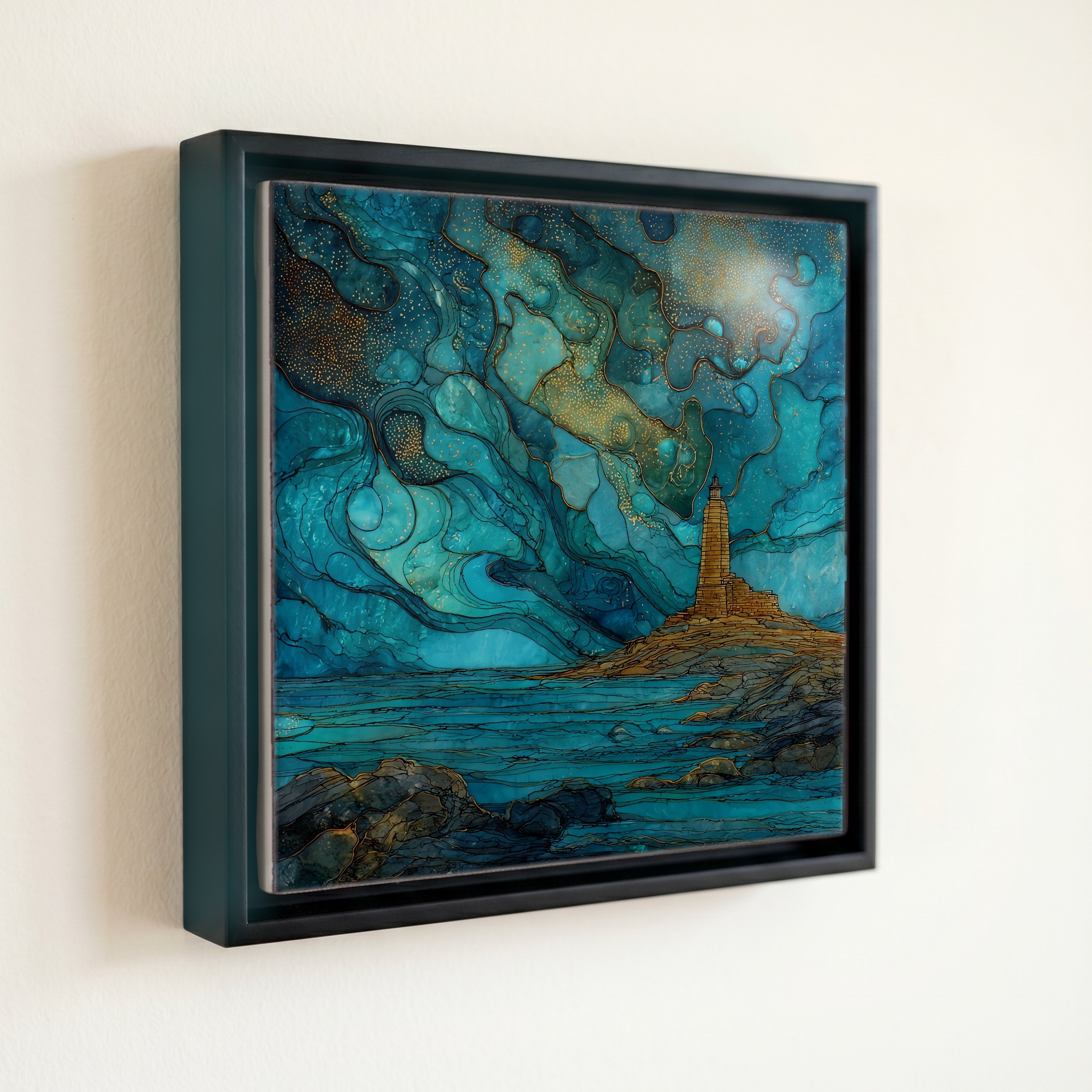
from the studio
shown in a slim black floating frame · 6 × 6 in
— bring it home

Cairn of Gavrinis, on ceramic.

Each tile is finished by hand in our Knoxville studio. Artwork is slowly infused into the ceramic surface under high heat and pressure, and rests beneath a thin glossy finish. The colour lives in the surface, not on top of it.

What kind of piece?
One tile — square or rectangle.
How big?
the popular one — counter, shelf, nightstand
6 × 6 in · 15 cm · 1.6 lb
Surface finish
A clear glossy finish — the artwork reads as if under resin. Ideal for show-pieces and framed wall art.
How it sits
A hidden cleat — sits ¼″ proud of the wall.
$58
Hand-finished and shipped from our studio at the foot of the Smokies. On your wall in about ten days.
size
6 × 6 in
15 cm
weighs
1.6 lb
solid in the hand
surface
ceramic, hand-finished
art rests beneath a thin glossy finish
from
Knoxville, TN
our family studio, at the foot of the Smokies
— start a Coaster Set

Pick any four 4-inch tiles — National Parks you've been to, a Smokies set, the four seasons of one place. $ for a set of , cork-backed, ready to live on the table.
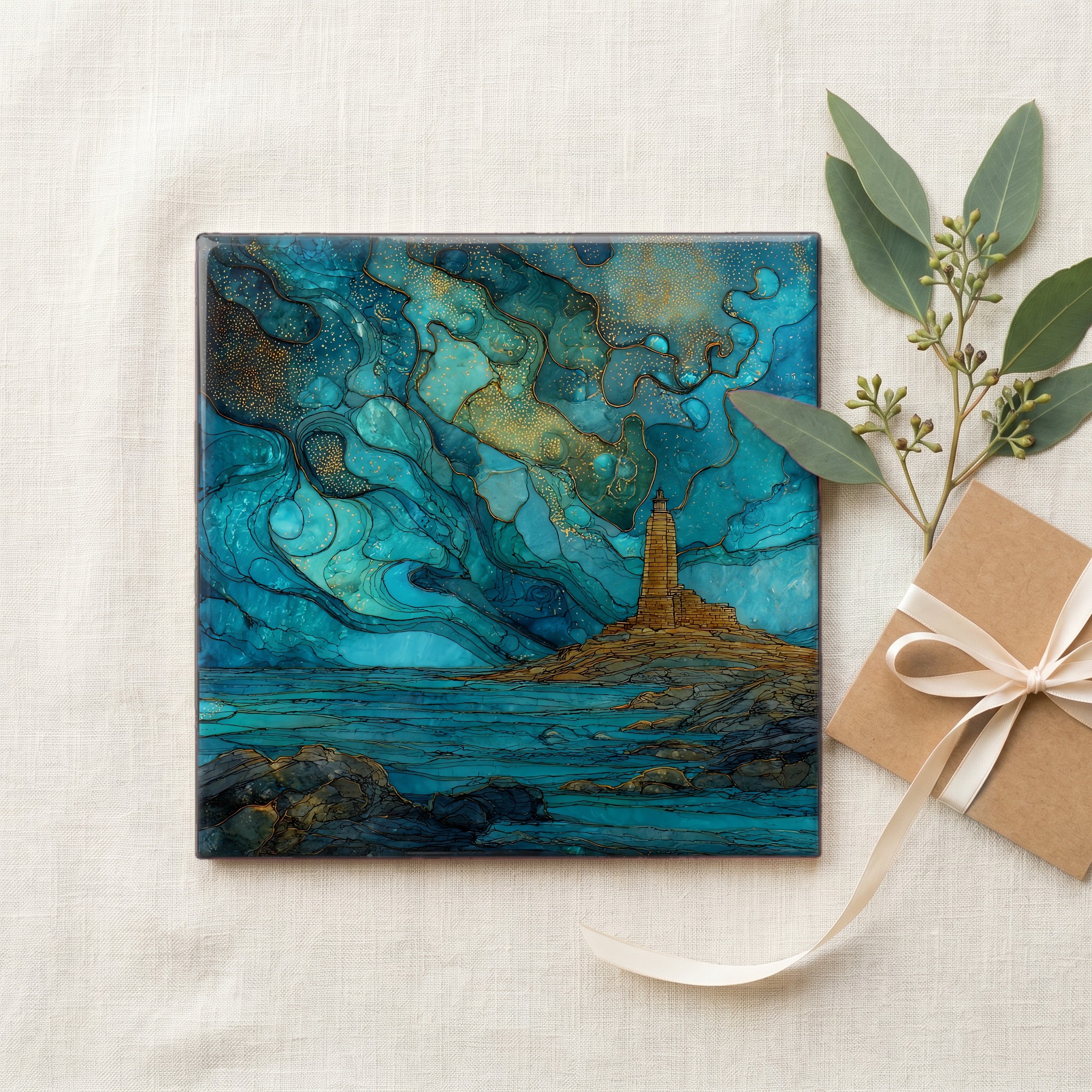
comes gift-ready
comes gift-ready

Each tile ships in a kraft box, tied with cream ribbon, with a handwritten note from the studio if you'd like to add one.
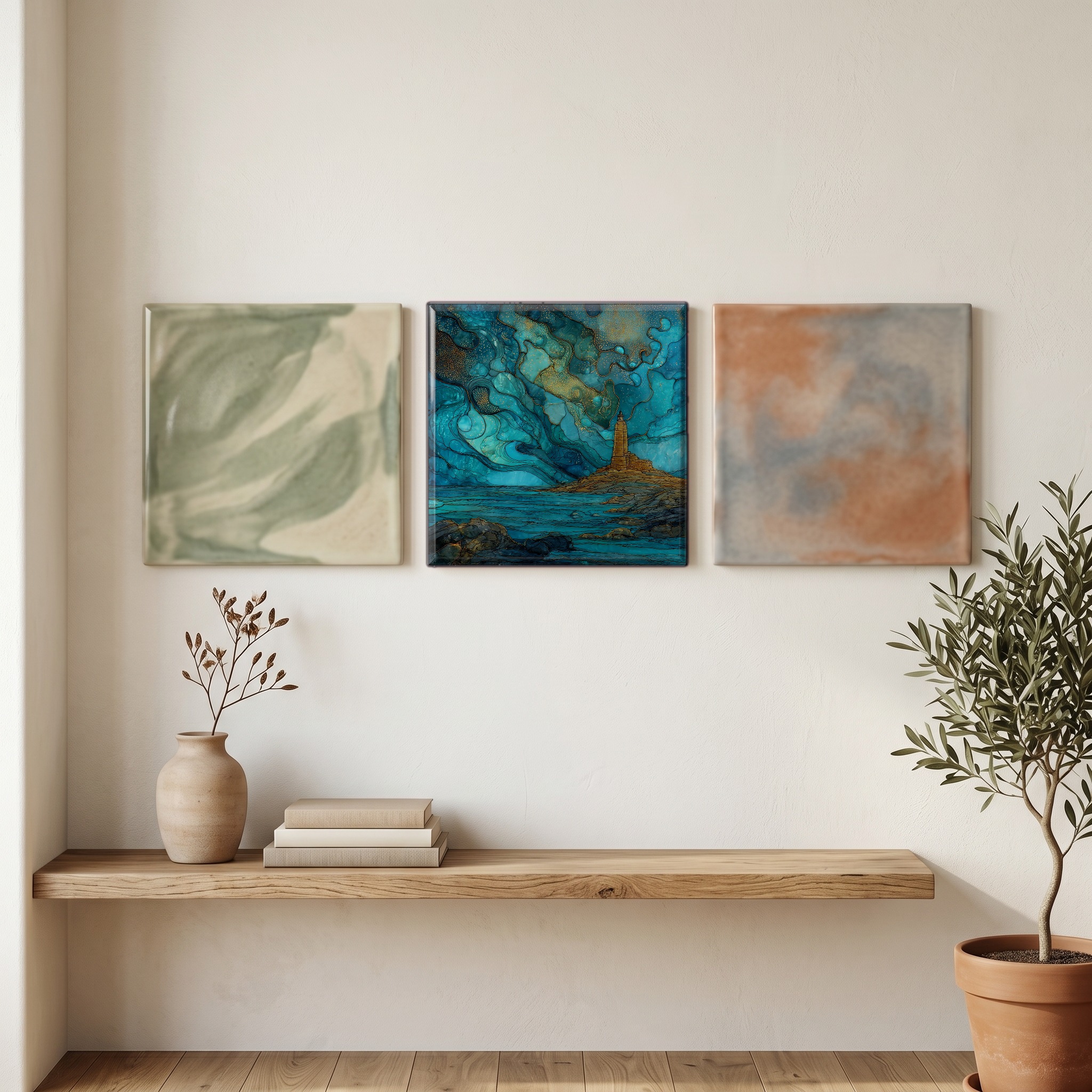
or build a grouping
or build a grouping

Three or five different vistas, hung together — a chapter of places you've been, or want to go.

about Cairn of Gavrinis

The place, in three passes.

A little of what's known, in case you fall down the rabbit hole — or want to go see it yourself.
the place

The Cairn of Gavrinis sits on Gavrinis, a small wooded island in the Gulf of Morbihan, a shallow inland sea on the southern coast of Brittany. The island is administratively part of the commune of Larmor-Baden, in the department of Morbihan. The monument itself is a passage tomb, raised around 3500 BCE during the Late Neolithic — roughly a thousand years before the great stones of Stonehenge. When the tomb was built, Gavrinis was a hilltop on the mainland; the post-glacial sea continued to rise through the following centuries and left the cairn stranded on its small island sometime after 3000 BCE. The mound is roughly fifty metres across and about six metres tall.

the stone

Twenty-three of the twenty-nine upright slabs lining the fourteen-metre passage and the inner chamber are deeply carved with curvilinear motifs — concentric arcs, spirals, hafted axes, serpentine lines, and crook-like signs. The density and craft of this engraved program place Gavrinis among the most important examples of Neolithic art in Europe, comparable to Newgrange in the Boyne Valley of Ireland. One of the slabs in the chamber, when examined from above, was identified as a broken fragment of a much larger menhir whose other pieces were reused at the Table des Marchand at Locmariaquer and the Er-Grah tumulus — direct evidence that the builders dismantled and re-deployed an earlier ritual monument.

the visit

Gavrinis is reached only by boat from the small port of Larmor-Baden, about a fifteen-minute crossing of the Gulf. The site is open from late March through early November; outside that window the island is closed. Visits inside the cairn are by guided tour only — small groups, roughly half an hour underground, led by an interpreter — and tickets are sold in limited daily slots through the operator running the crossing. The chamber and passage are kept under controlled conditions to protect the carved surfaces, so photography is restricted and the chamber floor is roped off. In July and August, the daily tours sell out and reservation ahead is needed.

where
France · Larmor-Baden, Morbihan
position
47.5717° N · 2.9036° W
the neighborhood

What's nearby.

A handful of named places within an hour's walk or short drive. Some we've already painted; some we will.
5 km W
Locmariaquer Megaliths
megalithic site
1 km N
Larmor-Baden
port village
3 km E
Île aux Moines
island
15 km NE
Vannes
walled medieval city
25 km W
Carnac Alignments
megalithic alignments
N
Cairn of Gavrinis
Locmariaquer Megaliths
Larmor-Baden
Île aux Moines
Vannes
Carnac Alignments
common questions

What people ask.

A few questions we get about Cairn of Gavrinis — and about bringing the piece home.
about the place

It sits on Gavrinis, a small wooded island in the Gulf of Morbihan on the southern coast of Brittany, France. The nearest mainland port is Larmor-Baden, in the department of Morbihan, about a fifteen-minute boat crossing from the harbour.

The cairn was raised around 3500 BCE, during the Late Neolithic — roughly five and a half thousand years ago, and about a thousand years before Stonehenge. At the time of construction Gavrinis was still part of the mainland; the sea rose later and stranded the monument on its island.

Twenty-three of the twenty-nine stones inside the passage and chamber are deeply carved with concentric arcs, spirals, serpents, and axe-heads. The density of this engraved program places Gavrinis among the most important works of Neolithic art in Europe, alongside Newgrange in the Boyne Valley of Ireland.

Boats run from the port of Larmor-Baden between late March and early November. Visits inside the cairn are guided only, in small groups, lasting roughly half an hour. Daily tour slots are limited and book out in July and August, so reservation ahead is needed in summer.

All three belong to the dense Neolithic landscape of southern Brittany. Carnac, about twenty-five kilometres west, is famous for its alignments of standing stones. Gavrinis is contemporary with the later Carnac monuments and was built within the same megalithic tradition that produced the Locmariaquer megaliths.

No. When it was built around 3500 BCE, Gavrinis was a hilltop on the mainland coast. The post-glacial sea continued to rise after the Neolithic and the surrounding lowlands flooded, turning the hilltop into the small island that visitors reach today.

The cairn was excavated and documented in 1832 by local antiquarians, though the mound itself was a known landmark long before. Modern restoration of the monument was directed by the archaeologist Charles-Tanguy Le Roux from the 1970s through the 1980s.

about the piece in your home

It has carried well for our customers with Breton roots and for visitors who took the boat across to the cairn. Gavrinis is one of the quieter monuments of southern Brittany and tends to mean a great deal to people who know it. A Small or Medium with a handwritten note from the studio holds the gesture.

The deep tones of the carved stone and the blue of the surrounding gulf place this tile comfortably in Coastal-modern, Old-stone Maximalist, and Mountain-modern rooms. The piece reads well against unpainted wood, linen, and pale plaster walls, and does not want to compete with a busy gallery wall.

Neolithic and megalithic interiors have a small, devoted collector base — readers of Marija Gimbutas, visitors to Newgrange and Avebury, students of European prehistory. The Gavrinis tile sits alongside framed maps, archaeological prints, and old-paper books without overtaking them.

Above a sofa the Large reads at the right scale; for a longer wall a four-tile Mural extends the carved-stone field horizontally. Above a console table a single Medium in a frame is usually the right weight. A nine-tile Mural is for a long room and a quiet wall.

Yes. For bathrooms, kitchens, and any vertical install near water, choose the Dura Satin or Matte finish — both are scratch-resistant and read with no glare. The Glossy finish is for framed wall positions where reflection is not an issue.

A microfibre cloth and a small amount of clean water. No abrasives, no ammonia, no acidic kitchen sprays. The colour lives in the ceramic surface and will not lift; gentle dry-then-damp wiping is enough.

Yes. The visual is original to the studio, drawn from Reid Wender's eye for the place and not licensed from anyone. Every WenderVista tile is hand-finished in our Knoxville workshop. The piece you receive is from a single studio, not a stock catalog.

if this one stayed with you

A few you might also love.

Hand-picked by the eye that found Sorapis. Same air, same kind of quiet.