Wender·Vista
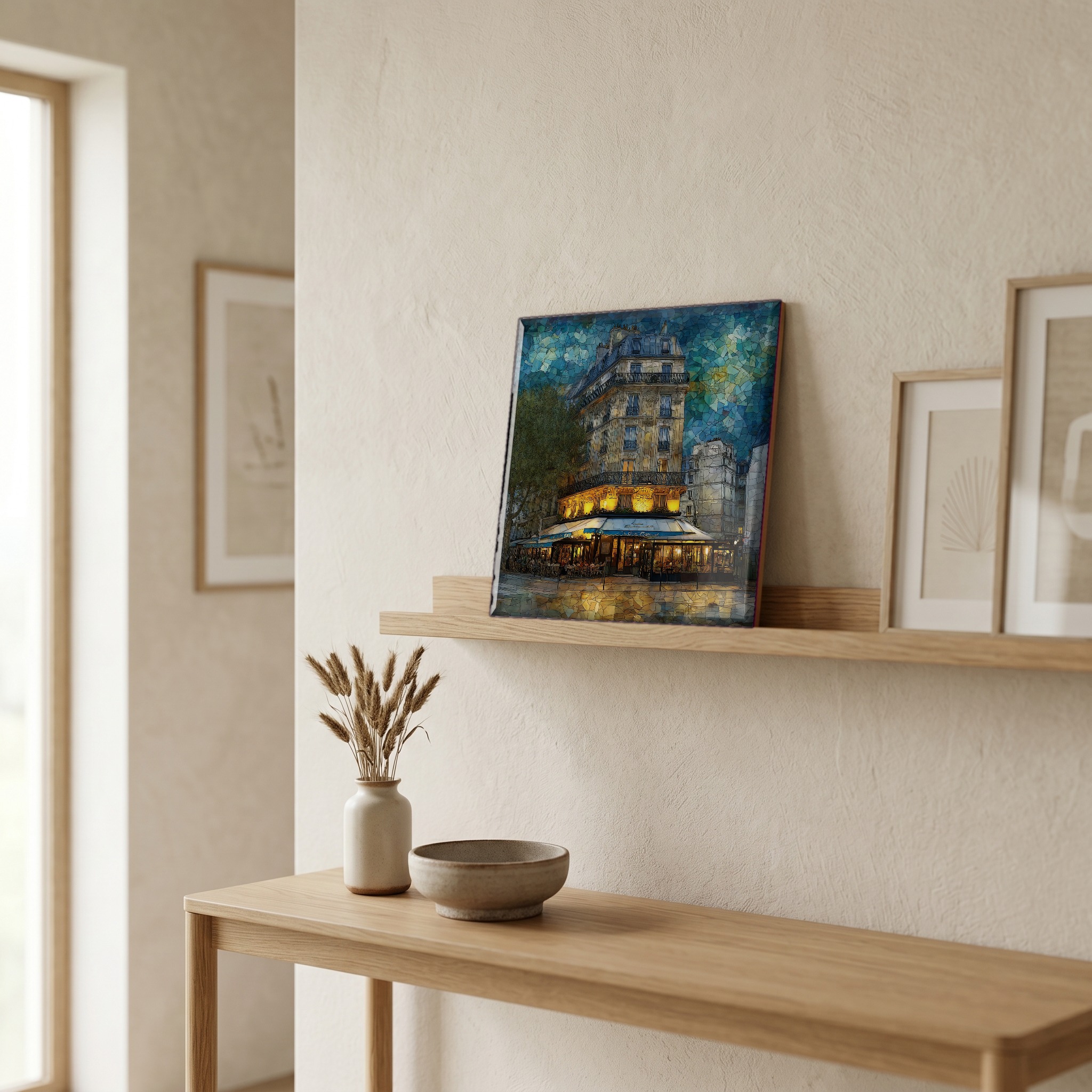
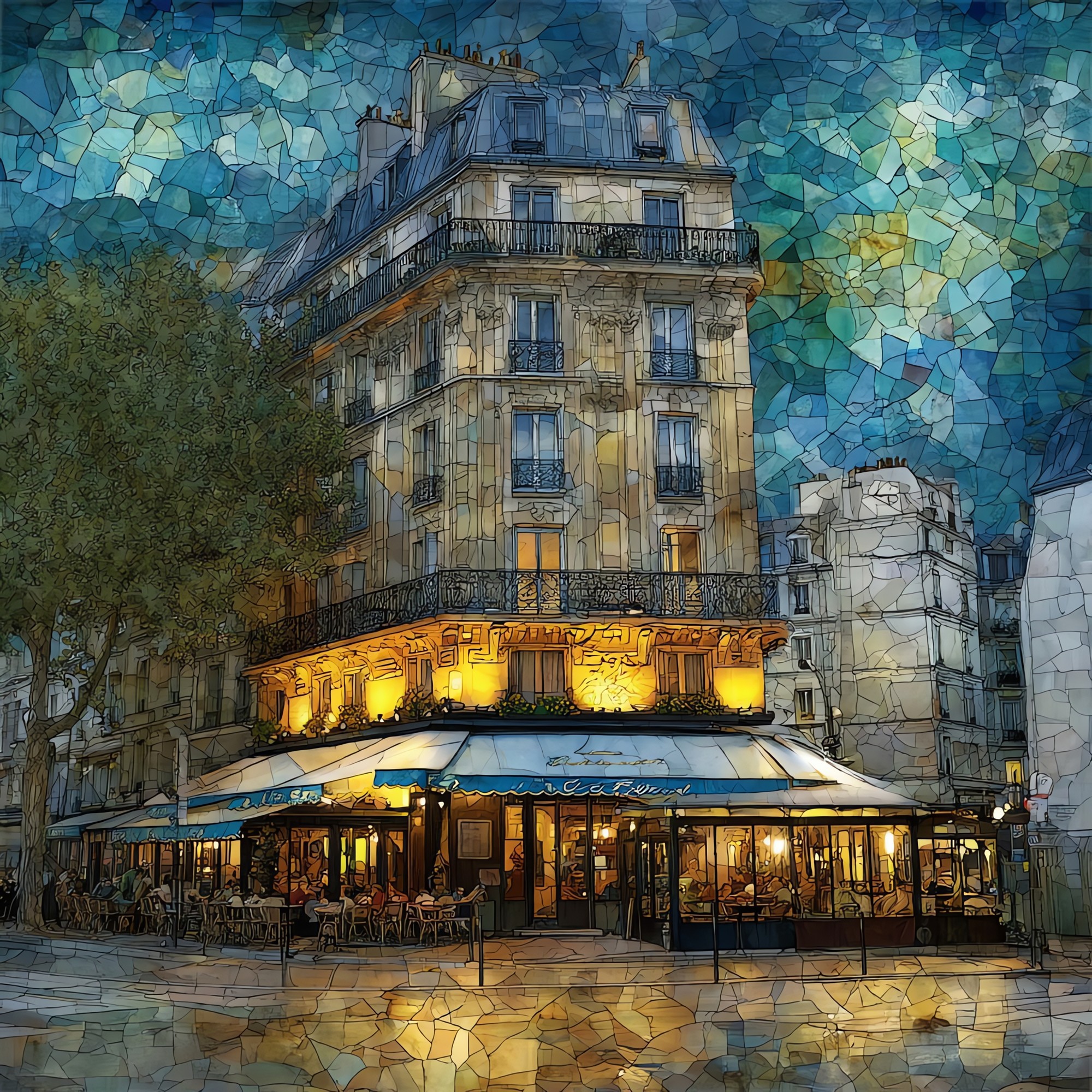
Cafe de Flore
shown on ceramic, 12-inch tileFrance
on the Left Bank of Paris, in Saint-Germain-des-Prés

Cafe de Flore

the room the twentieth century thought out loud in.

Where it lives

Not only on a wall.

A small tile on the nightstand catching the morning. A larger one above the fire. Yours, wherever you spend the slow hours.
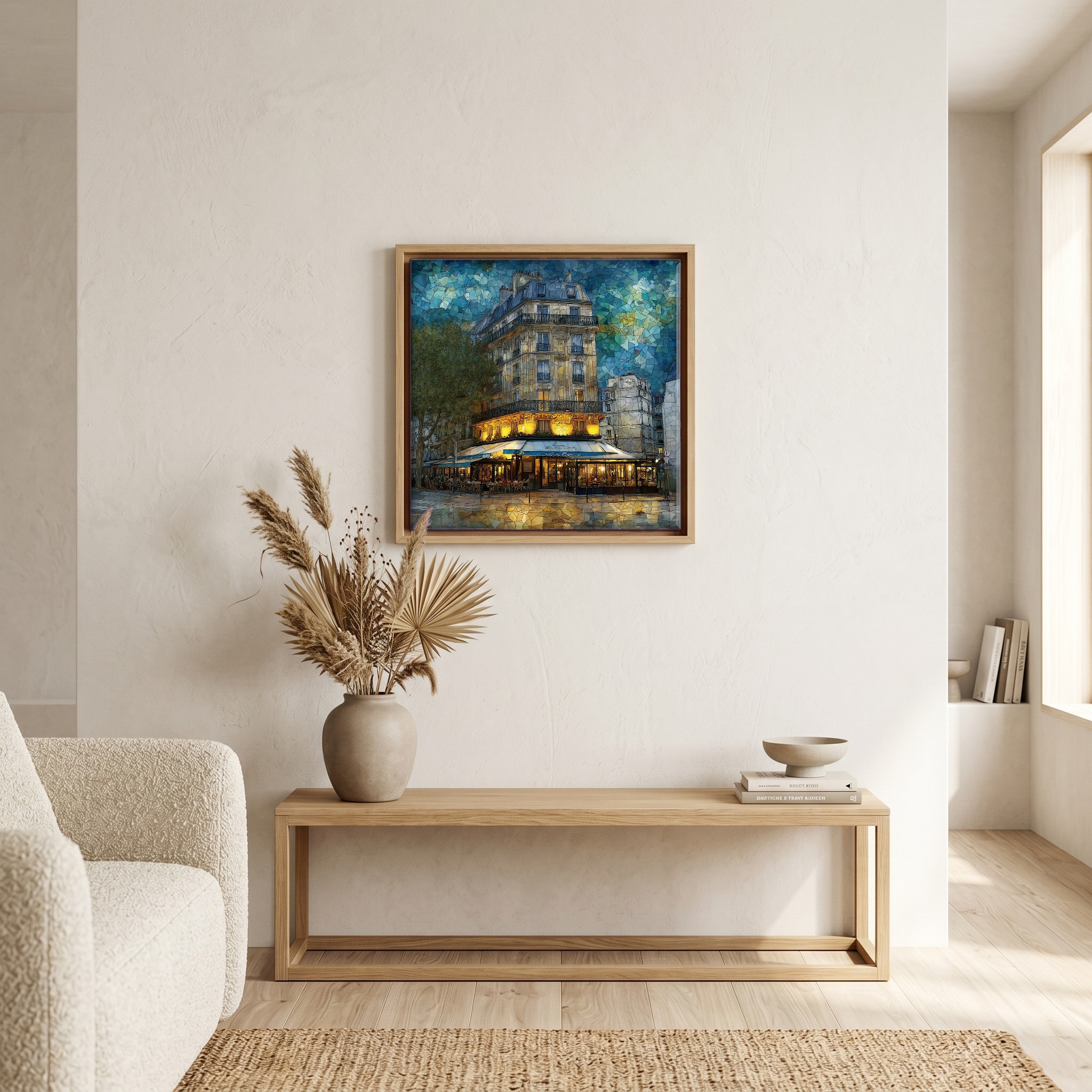
Above the bench, in a warm oak surround.
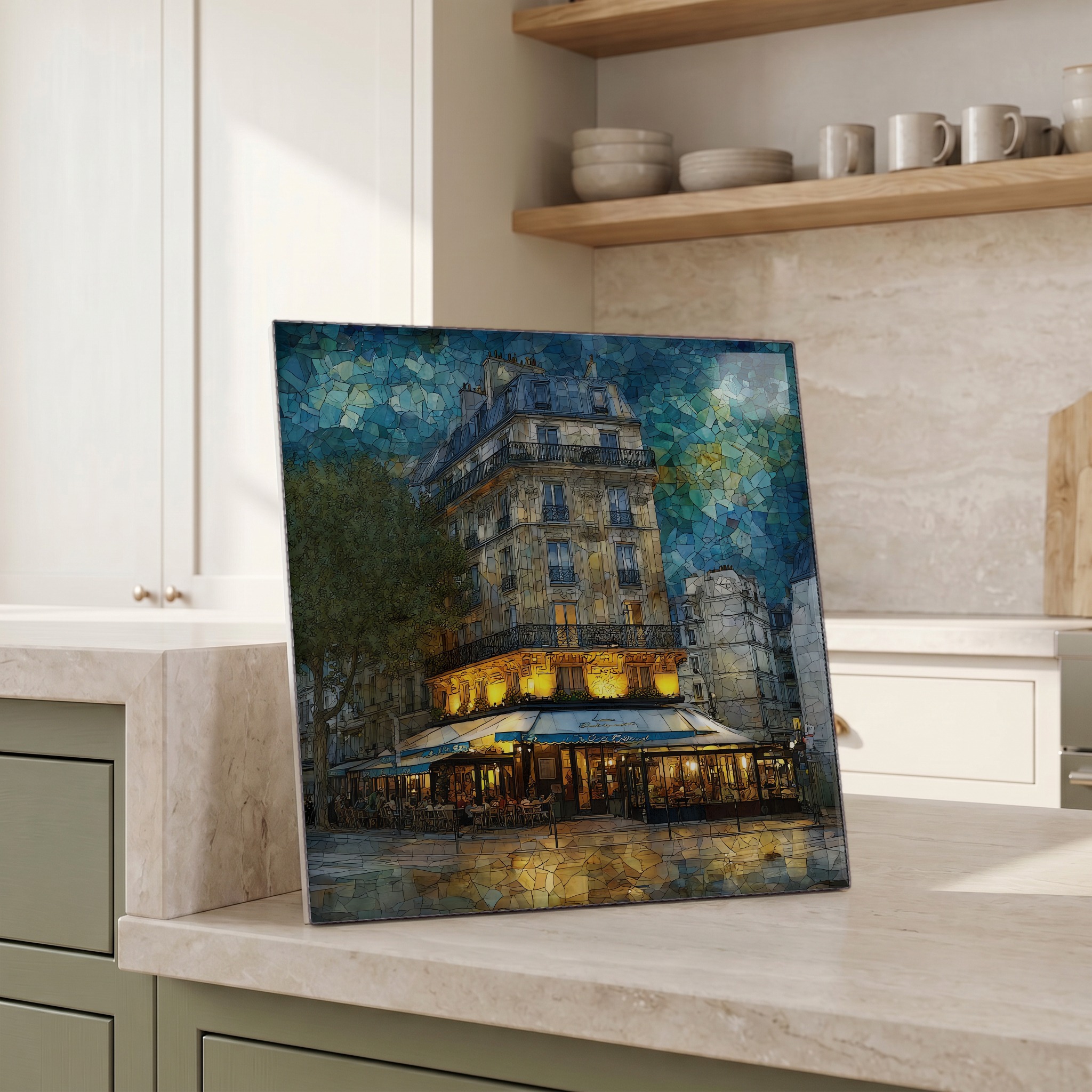
Beside the kettle, propped on the counter.
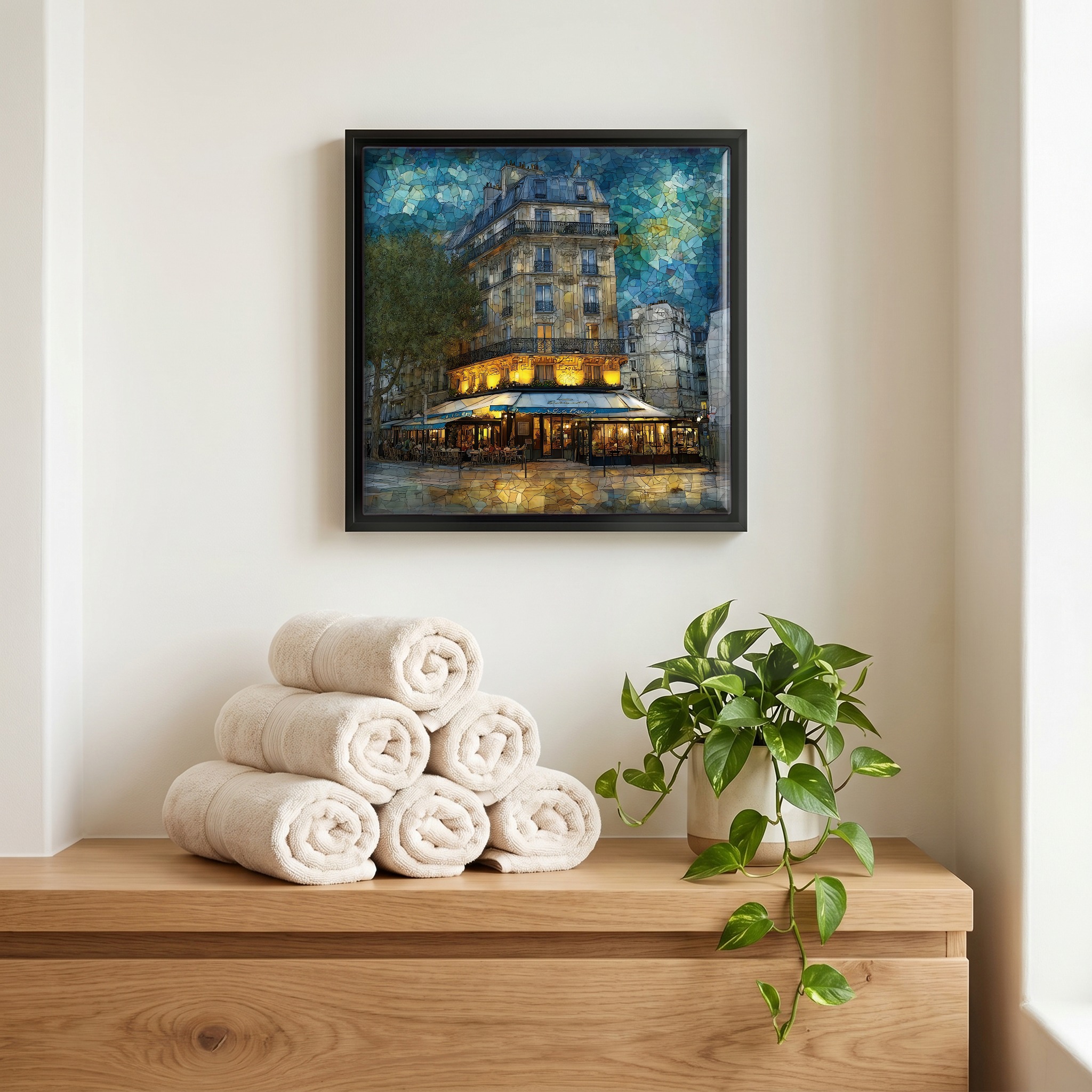
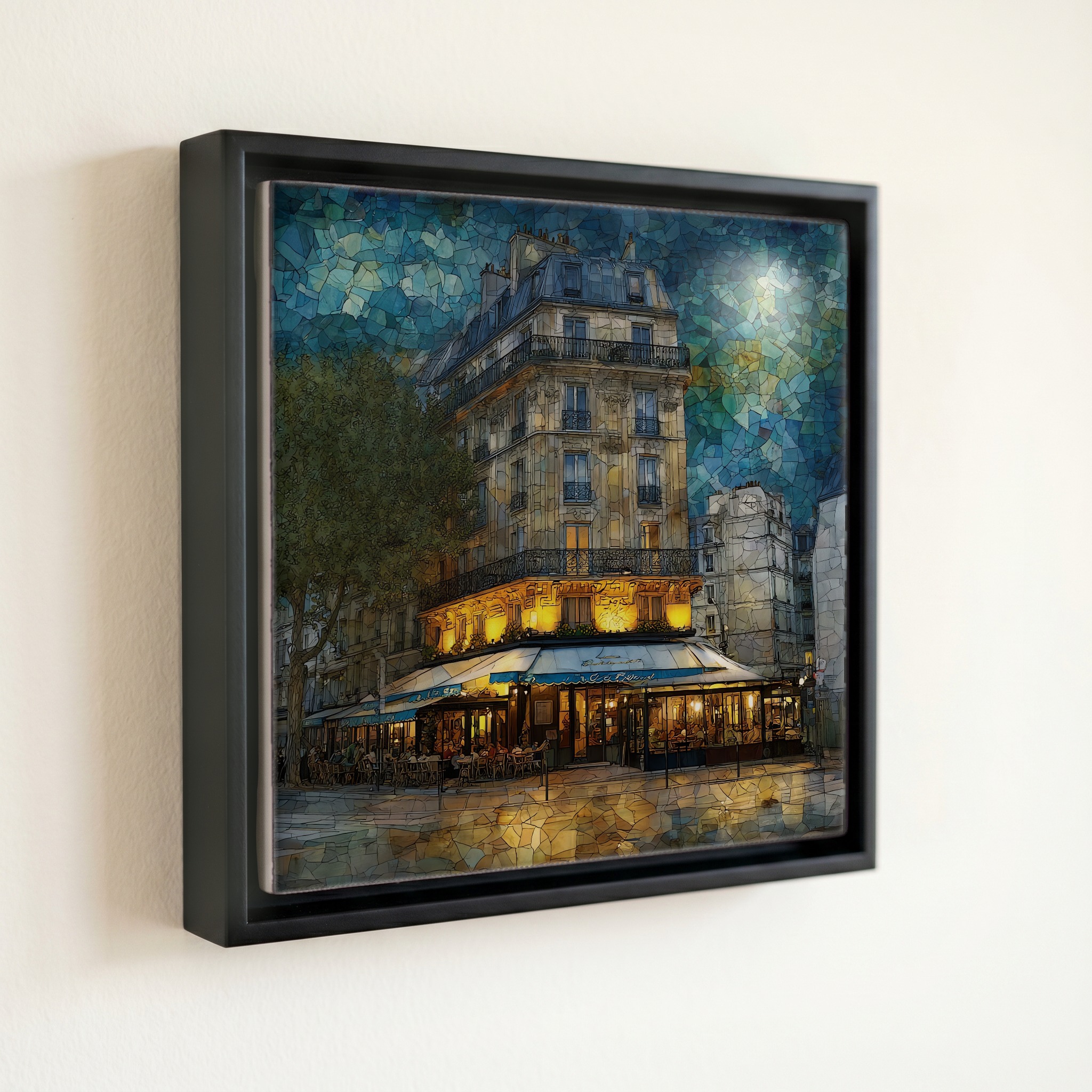
Above the linens, in a slim black surround.
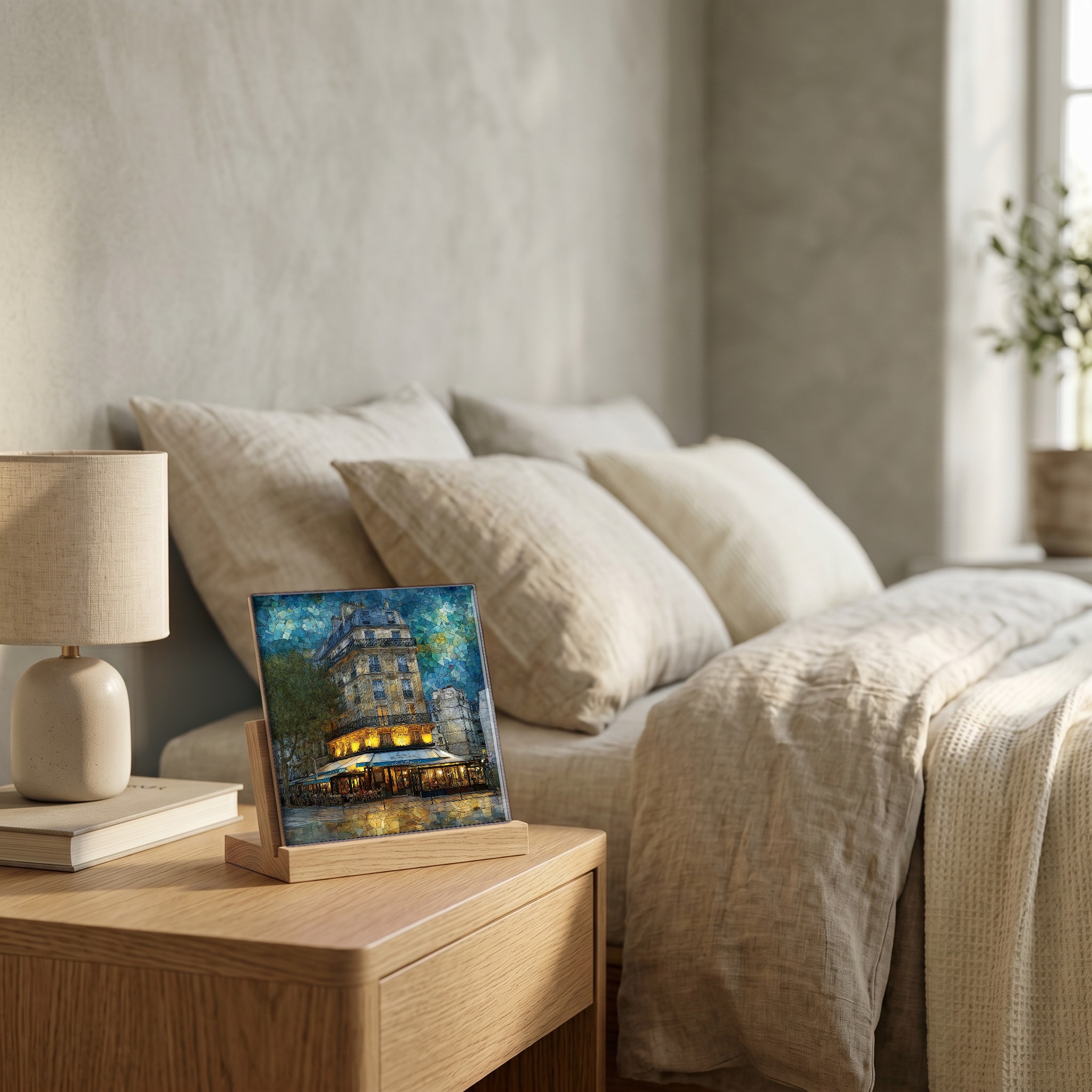
On the nightstand, on a light oak stand.
On a picture ledge, where the light comes in.
a note from the studio

The corner of Boulevard Saint-Germain and Rue Saint-Benoît, where Paris has been ordering coffee since 1887. Red leatherette, mahogany, mirrors that have not moved much since the 1939 redesign. Sartre and Beauvoir wrote here for years at the same upstairs table, a few feet from where Camus, Picasso, and Hemingway also passed long afternoons. The café still opens at dawn and stays open until nearly two the following morning, every day of the year. Tourists come for the photograph. Locals still come for the omelette and the hot chocolate.
from the studio
shown in a slim black floating frame · 6 × 6 in
— bring it home

Cafe de Flore, on ceramic.

Each tile is finished by hand in our Knoxville studio. Artwork is slowly infused into the ceramic surface under high heat and pressure, and rests beneath a thin glossy finish. The colour lives in the surface, not on top of it.

What kind of piece?
One tile — square or rectangle.
How big?
the popular one — counter, shelf, nightstand
6 × 6 in · 15 cm · 1.6 lb
Surface finish
A clear glossy finish — the artwork reads as if under resin. Ideal for show-pieces and framed wall art.
How it sits
A hidden cleat — sits ¼″ proud of the wall.
$58
Hand-finished and shipped from our studio at the foot of the Smokies. On your wall in about ten days.
size
6 × 6 in
15 cm
weighs
1.6 lb
solid in the hand
surface
ceramic, hand-finished
art rests beneath a thin glossy finish
from
Knoxville, TN
our family studio, at the foot of the Smokies
— start a Coaster Set

Pick any four 4-inch tiles — National Parks you've been to, a Smokies set, the four seasons of one place. $ for a set of , cork-backed, ready to live on the table.
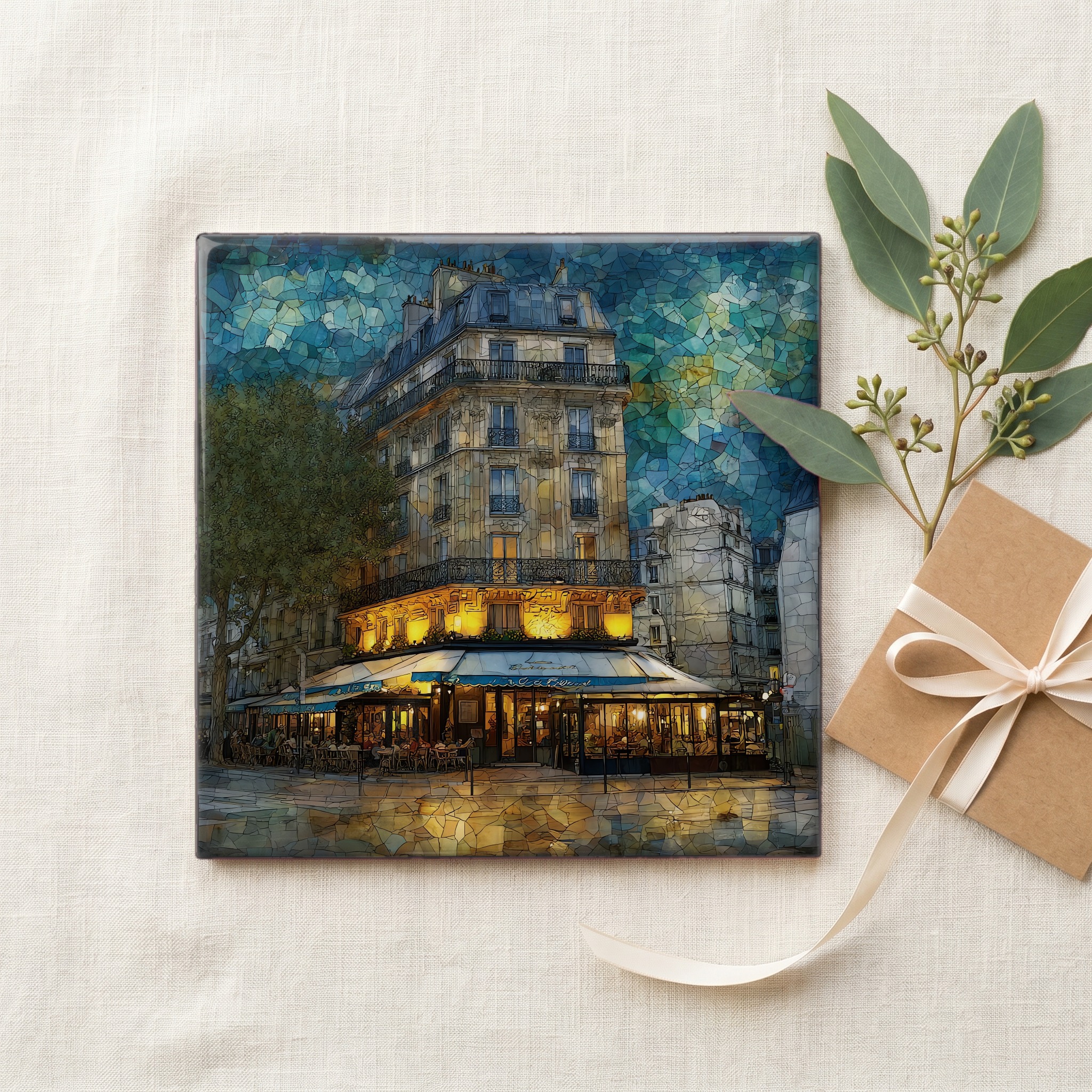
comes gift-ready
comes gift-ready

Each tile ships in a kraft box, tied with cream ribbon, with a handwritten note from the studio if you'd like to add one.
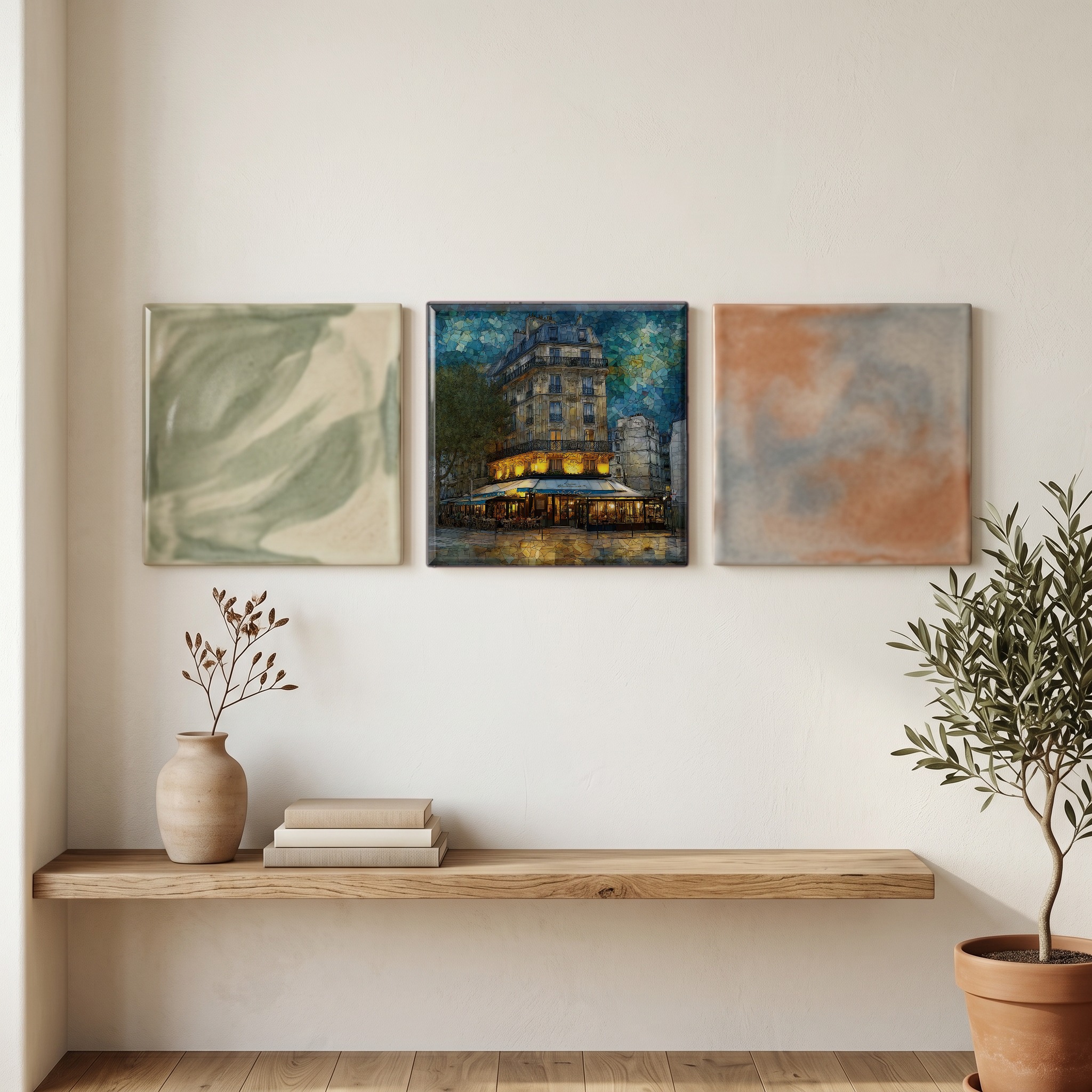
or build a grouping
or build a grouping

Three or five different vistas, hung together — a chapter of places you've been, or want to go.

about Cafe de Flore

The place, in three passes.

A little of what's known, in case you fall down the rabbit hole — or want to go see it yourself.
the place

Café de Flore sits at 172 Boulevard Saint-Germain in the sixth arrondissement of Paris, on the corner of Rue Saint-Benoît in the Saint-Germain-des-Prés neighborhood. It opened around 1887, during the Third Republic, and took its name from a sculpture of Flora, Roman goddess of flowers, that once stood across the boulevard. The Église Saint-Germain-des-Prés, the oldest church in Paris with a bell tower dating to the eleventh century, sits a three-minute walk west. The café opens from seven-thirty in the morning until nearly two the following morning, every day of the year. Métro Saint-Germain-des-Prés on Line 4 lies across the street.

the stone

The interior took its current shape after Paul Boubal acquired the café in 1939; his family ran it for over four decades. The signature elements have barely shifted since: red leatherette banquettes, mahogany paneling, a black-and-white tile floor, and tall mirrors that double the small ground-floor room. The upstairs salon, where Jean-Paul Sartre and Simone de Beauvoir kept a regular table through the 1940s and wrote large portions of their work, holds the same banquettes in a tighter geometry. Albert Camus, Pablo Picasso, and Ernest Hemingway all passed through these rooms. The mahogany has darkened a half-shade since France's café smoking ban took effect in 2008.

the visit

The café serves from seven-thirty in the morning until nearly two the following morning, every day of the year. The ground floor takes walk-ins; the upstairs room is the quieter perch and the one Sartre wrote in. The long-running order is an omelette, a Welsh rarebit, or the house hot chocolate, served in a small pitcher with cream on the side. Prices are higher than the brasserie around the corner; the room is the reason. The Prix de Flore, a French literary prize founded by novelist Frédéric Beigbeder in 1994, is awarded here each November. Métro Saint-Germain-des-Prés on Line 4 sits across the street.

where
France · Saint-Germain-des-Prés, Paris
position
48.8540° N · 2.3326° E
the neighborhood

What's nearby.

A handful of named places within an hour's walk or short drive. Some we've already painted; some we will.
at the lake
Église Saint-Germain-des-Prés
abbey church
at the lake
Les Deux Magots
literary café
at the lake
Brasserie Lipp
brasserie
1 km SE
Jardin du Luxembourg
palace garden
1 km NW
Musée d'Orsay
art museum
1 km NE
Pont des Arts
pedestrian bridge
N
Cafe de Flore
Église Saint-Germain-des-Prés
Les Deux Magots
Brasserie Lipp
Jardin du Luxembourg
Musée d'Orsay
Pont des Arts
common questions

What people ask.

A few questions we get about Cafe de Flore — and about bringing the piece home.
about the place

Café de Flore stands at 172 Boulevard Saint-Germain in the sixth arrondissement of Paris, on the corner of Rue Saint-Benoît in the Saint-Germain-des-Prés neighborhood. Métro Saint-Germain-des-Prés on Line 4 is across the street. The Église Saint-Germain-des-Prés, the oldest church in Paris, sits about a hundred metres west.

Jean-Paul Sartre and Simone de Beauvoir kept a regular table on the upper floor through the 1940s and wrote significant portions of their work there. Albert Camus, Pablo Picasso, Ernest Hemingway, Truman Capote, and Lawrence Durrell were among the other long-term regulars across the twentieth century.

The café opened around 1887, during the Third Republic, and was named for a sculpture of Flora, the Roman goddess of flowers, that once stood across the boulevard. The current Art Deco interior dates to 1939, when Paul Boubal acquired the café and ran it with his family for over four decades.

The Prix de Flore is a French literary prize founded at the café in 1994 by the novelist Frédéric Beigbeder. It is awarded each November to a young French-language author and includes a daily glass of Pouilly-Fumé at the café for a year. The winner is announced at the café itself.

Yes. The café operates every day of the year, from seven-thirty in the morning until nearly two the following morning. The Siljegovic family has owned it since the mid-1980s. The marble tables, red leatherette banquettes, and mahogany paneling of the 1939 interior remain in use.

The quietest stretch is between mid-morning and noon, after the breakfast crowd thins and before the lunch service begins. Weekday afternoons in the upstairs salon, the room Sartre and Beauvoir worked in, still keep a study-hall quiet. Tourist density peaks in summer and on weekend mornings.

The two cafés sit a hundred metres apart on Boulevard Saint-Germain and shared most of the same intellectual clientele for a century. Les Deux Magots leans slightly older (founded 1885) and awards its own literary prize. Sartre, Beauvoir, and Camus moved between both rooms by season and by mood.

about the piece in your home

It has been a meaningful gift for many of our customers with ties to the city. Café de Flore is part of the muscle memory of Saint-Germain-des-Prés: the red leatherette, the marble tables, the upstairs room. A Small or a Coaster with a handwritten note from the studio carries well.

Its colour signature, old reds with warm mahogany browns and soft creams behind stained-glass blues, settles into rooms that already lean Parisian, Old World European, or warm-traditional. It also reads well in a Jewel-tone Maximalist room. It pulls away from cool Scandinavian minimalism.

It belongs to the Parisian-apartment look that has stayed in rotation through every shelter-magazine cycle: warm reds, dark woods, gilt mirrors, café-society objects with provenance. It also sits inside the broader Old World Revival movement that the design press has tracked since around 2023.

A single Large reads as an art object above a console or a desk. Above a standard three-seat sofa, a 4-tile Mural at roughly twenty-four by twenty-four inches holds the wall. Above a longer sectional, a 9-tile Mural at roughly thirty-six by thirty-six inches is the next step up.

Yes, in the Dura Satin or Matte finish. Both are scratch-resistant and humidity-tolerant, suited to backsplashes and powder-room walls. The Glossy finish is reserved for framed wall pieces in dry rooms. A Small tile above a home coffee bar is a quiet placement.

Microfibre cloth with water for everyday dust. For kitchen splatter or shower buildup on the Dura Satin or Matte finish, a damp cloth with mild dish soap clears it. Skip abrasive pads and ammonia-based glass cleaners; both can dull the surface over time.

Yes. Every WenderVista piece is created by Reid Wender, the studio's curator and eye, in our distinctive stained-glass and alcohol-ink visual language. The work is slowly infused into the ceramic surface in-house in Knoxville, Tennessee, beneath a thin glossy, satin, or matte finish.

if this one stayed with you

A few you might also love.

Hand-picked by the eye that found Sorapis. Same air, same kind of quiet.