Wender·Vista
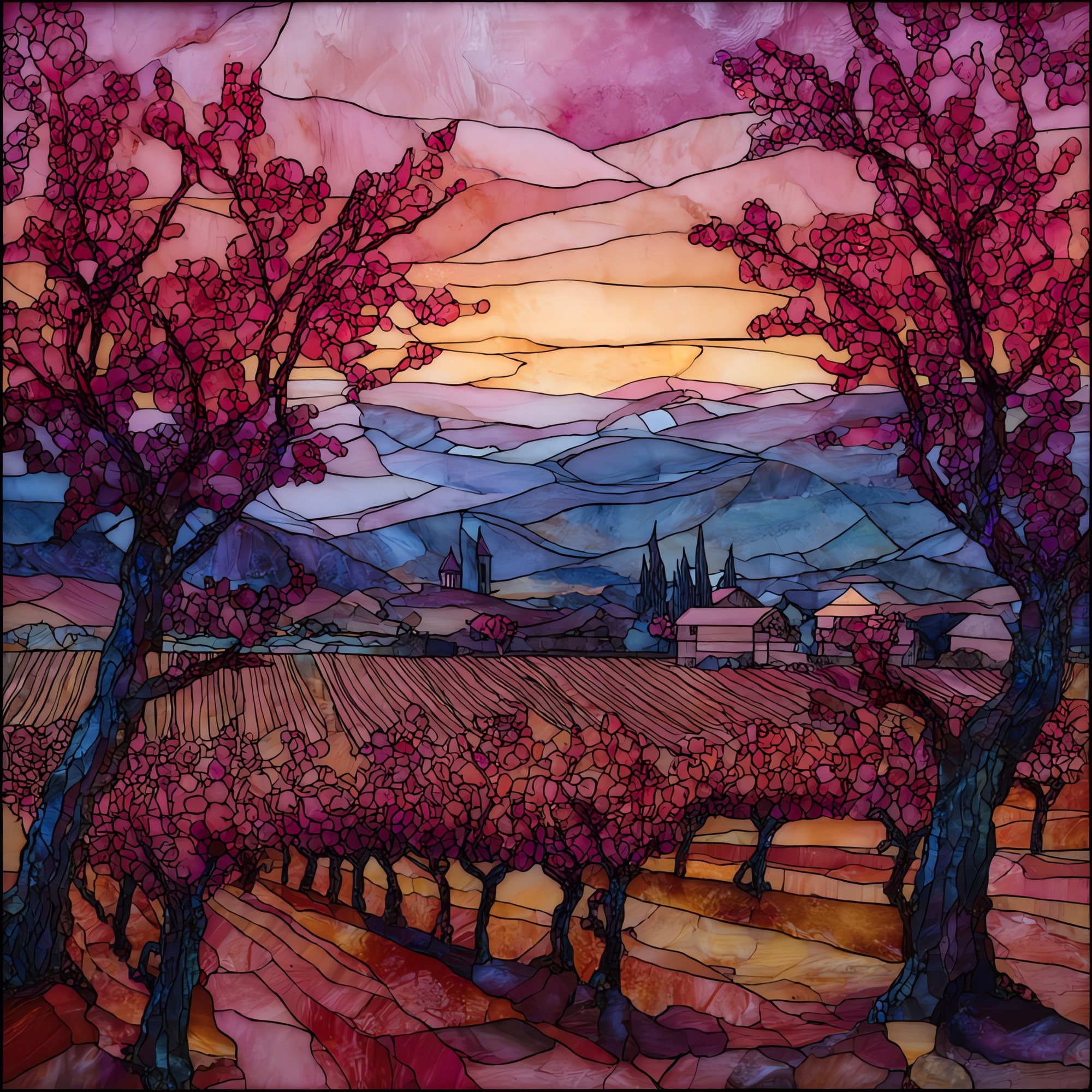
Burgundy Vineyard Winter Dawn
shown on ceramic, 12-inch tileFrance
south of Dijon, on the Côte d'Or

Burgundy Vineyard Winter Dawn

— the pink the dawn leaves on the rows.

Where it lives

Not only on a wall.

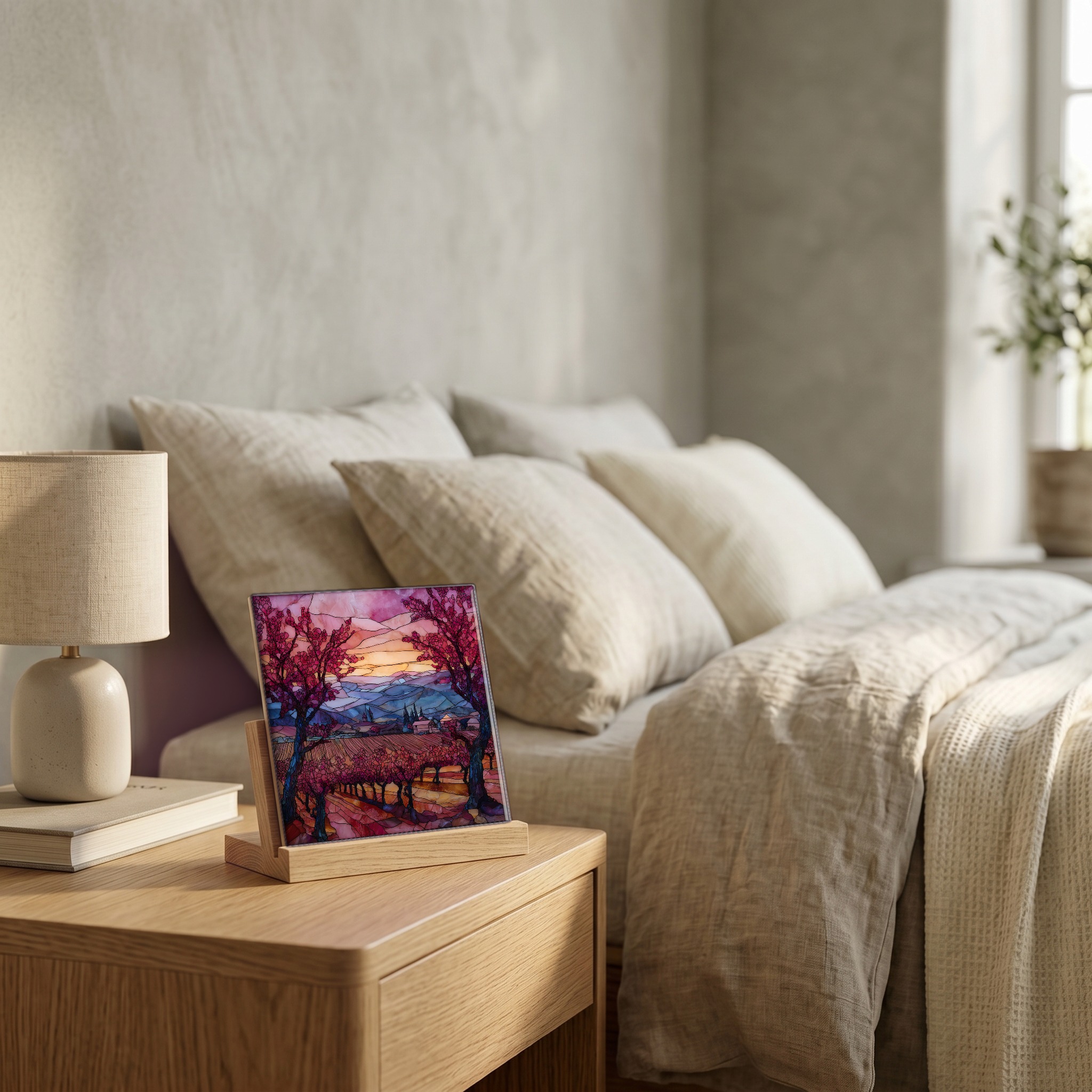
A small tile on the nightstand catching the morning. A larger one above the fire. Yours, wherever you spend the slow hours.
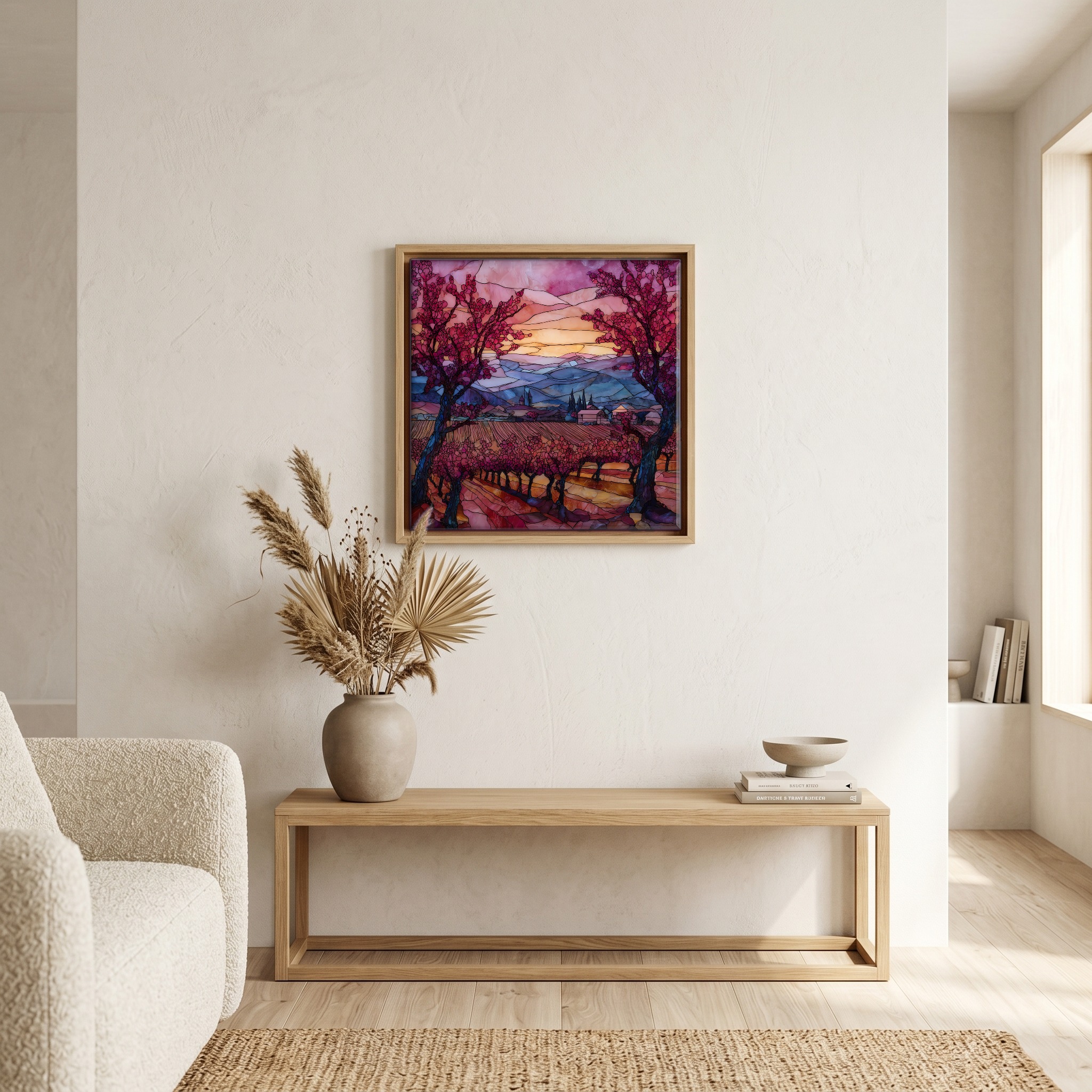
Above the bench, in a warm oak surround.
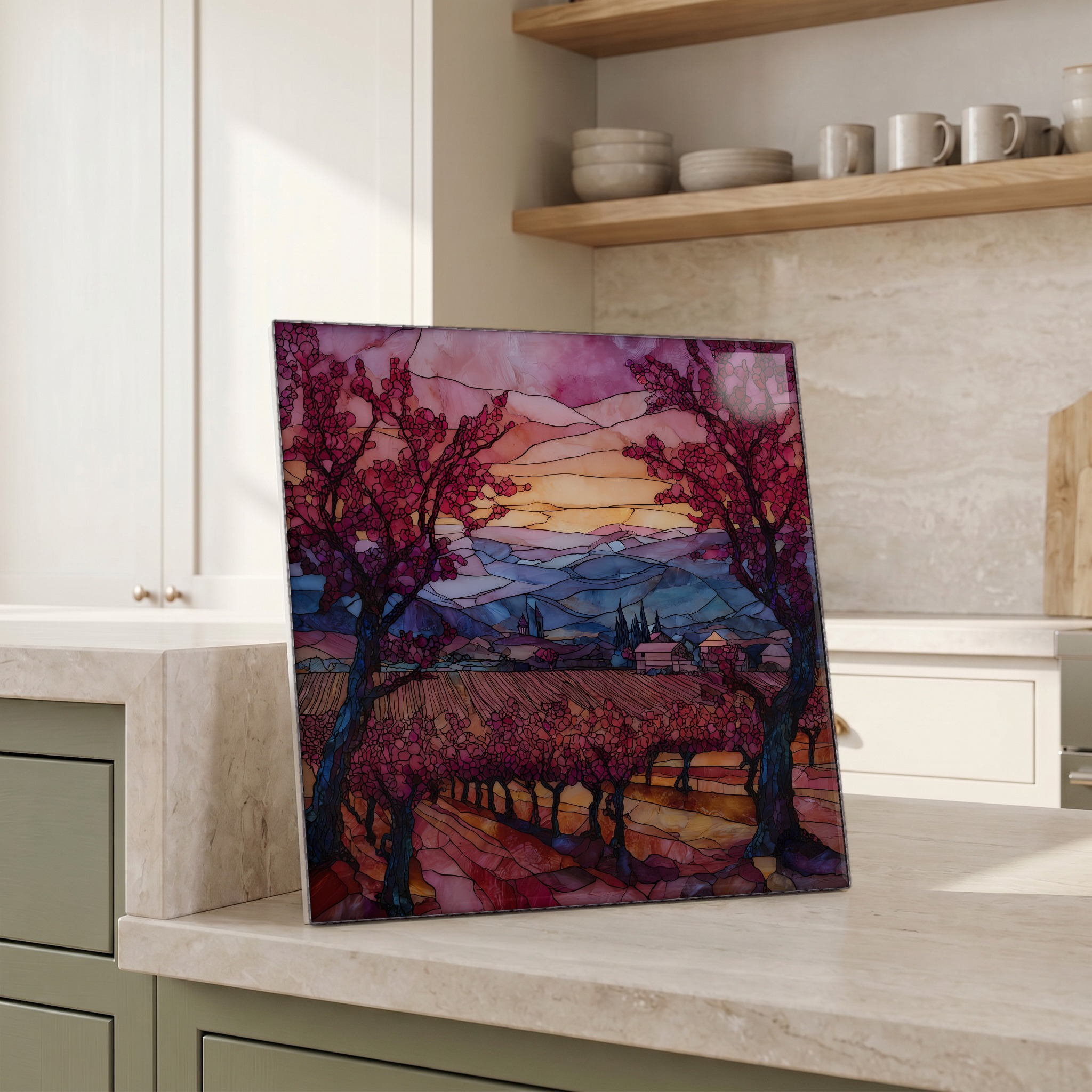
Beside the kettle, propped on the counter.
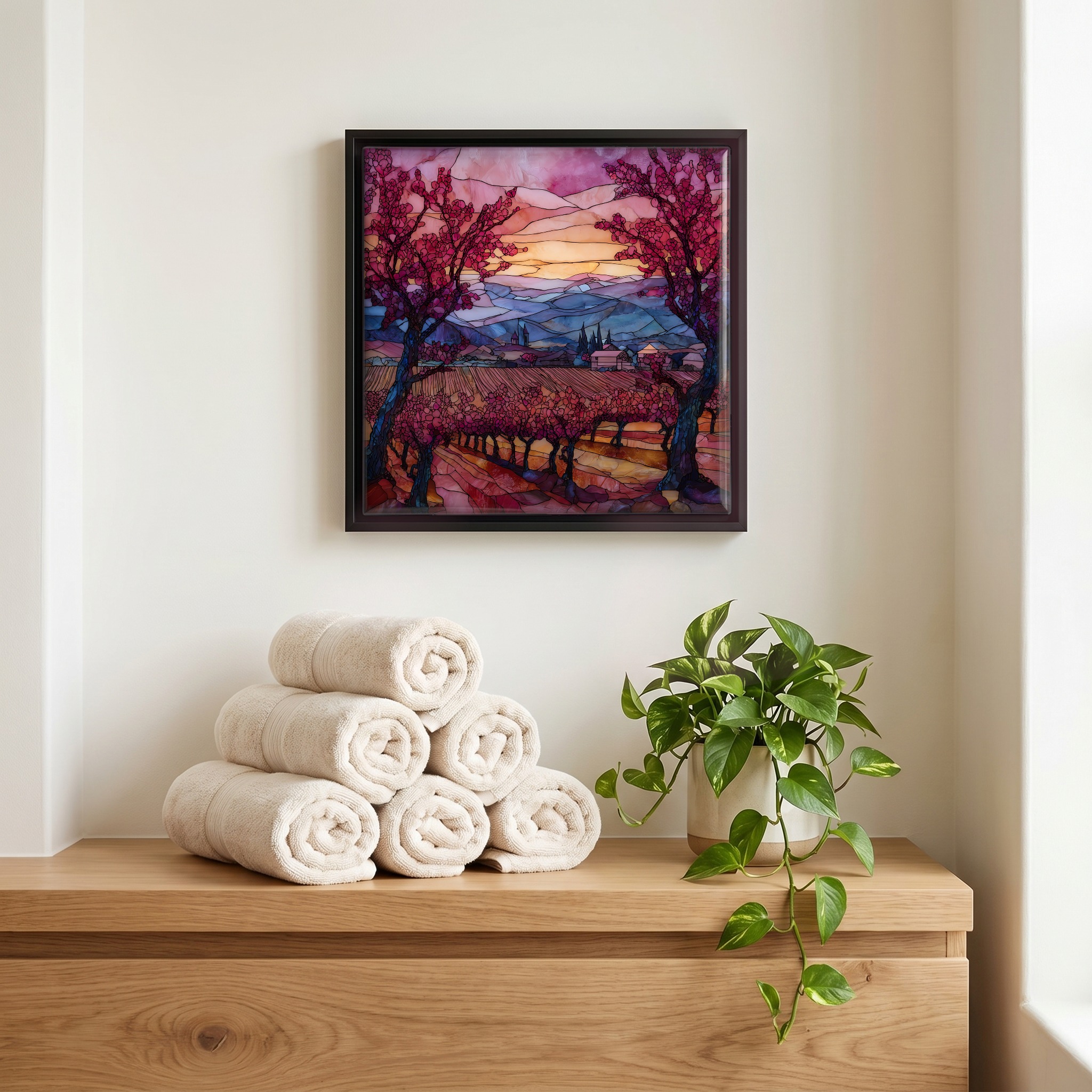
Above the linens, in a slim black surround.
On the nightstand, on a light oak stand.
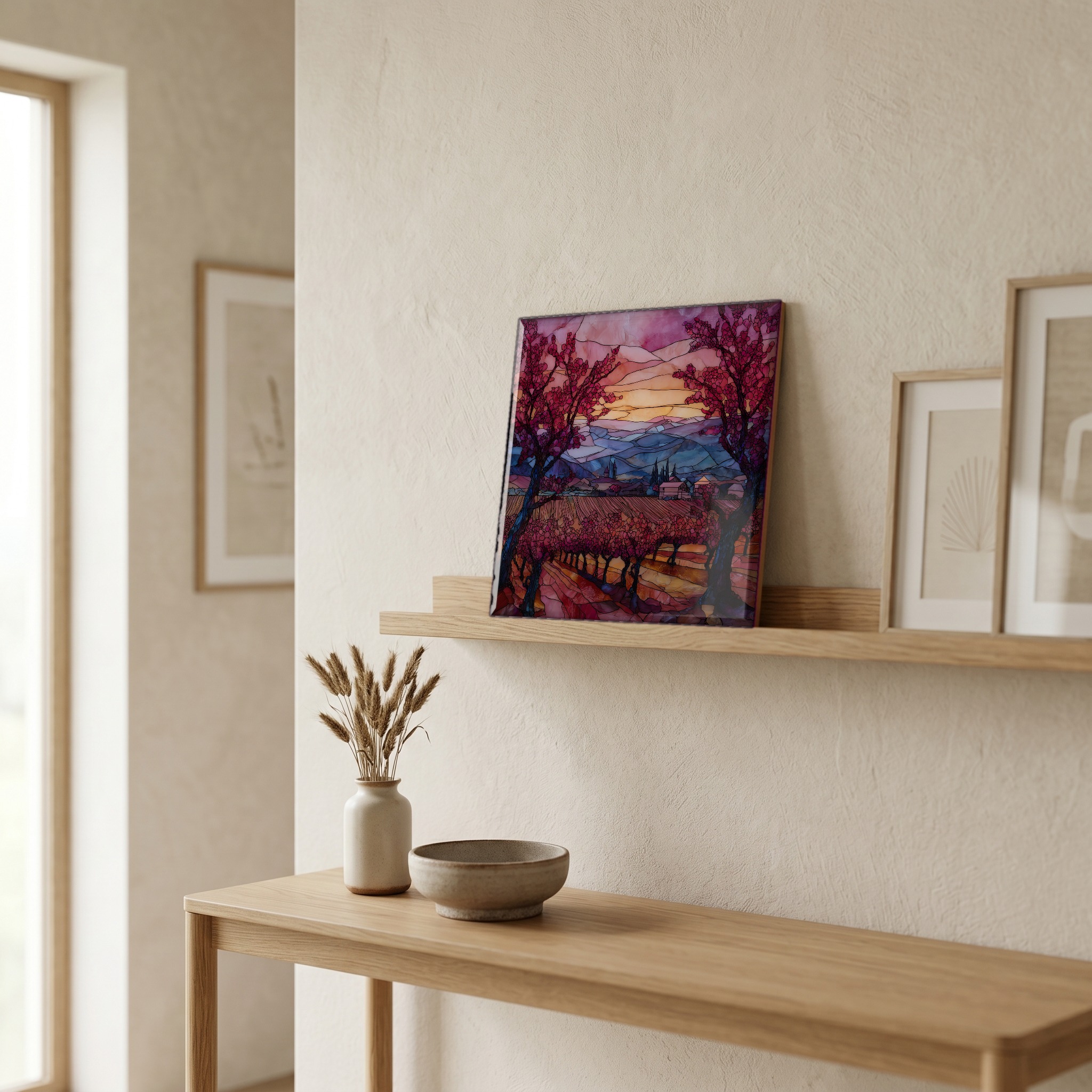
On a picture ledge, where the light comes in.
a note from the studio

The Côte d'Or in late November, when the harvest is two months gone and the leaves have dropped from the vines. The rows run in long parallel lines down the slope between Dijon and Beaune, the same rows that have grown Pinot Noir for the better part of a thousand years, walked by Cistercian monks and the families who took the work from them. At dawn the light comes in pink across the limestone ridge to the west, and a layer of mist still sits over the Saône plain to the east. The vines are pruned hard, almost skeletal. The colour does not need leaves to be there.
from the studio
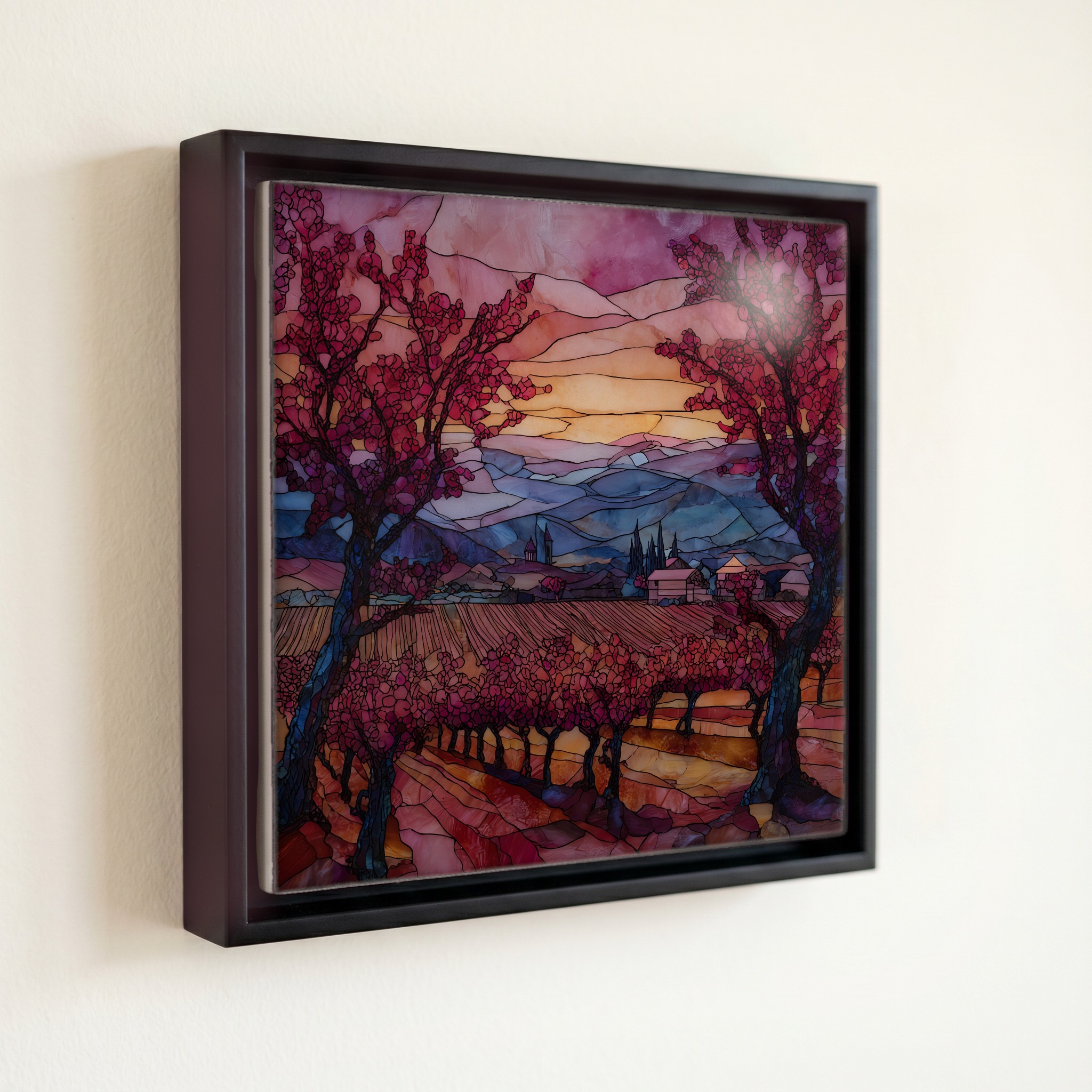
shown in a slim black floating frame · 6 × 6 in
— bring it home

Burgundy Vineyard Winter Dawn, on ceramic.

Each tile is finished by hand in our Knoxville studio. Artwork is slowly infused into the ceramic surface under high heat and pressure, and rests beneath a thin glossy finish. The colour lives in the surface, not on top of it.

What kind of piece?
One tile — square or rectangle.
How big?
the popular one — counter, shelf, nightstand
6 × 6 in · 15 cm · 1.6 lb
Surface finish
A clear glossy finish — the artwork reads as if under resin. Ideal for show-pieces and framed wall art.
How it sits
A hidden cleat — sits ¼″ proud of the wall.
$58
Hand-finished and shipped from our studio at the foot of the Smokies. On your wall in about ten days.
size
6 × 6 in
15 cm
weighs
1.6 lb
solid in the hand
surface
ceramic, hand-finished
art rests beneath a thin glossy finish
from
Knoxville, TN
our family studio, at the foot of the Smokies
— start a Coaster Set

Pick any four 4-inch tiles — National Parks you've been to, a Smokies set, the four seasons of one place. $ for a set of , cork-backed, ready to live on the table.
comes gift-ready
comes gift-ready

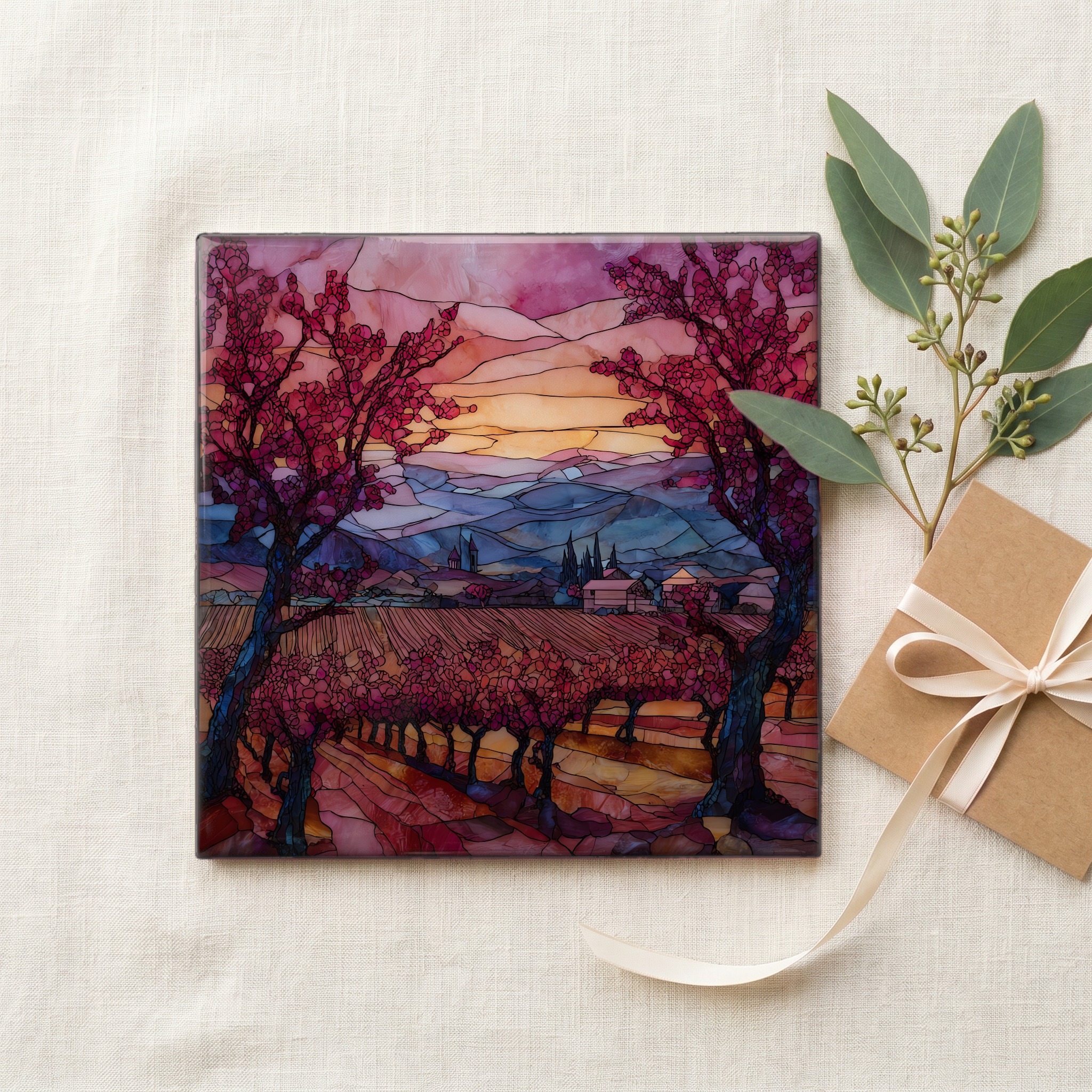
Each tile ships in a kraft box, tied with cream ribbon, with a handwritten note from the studio if you'd like to add one.
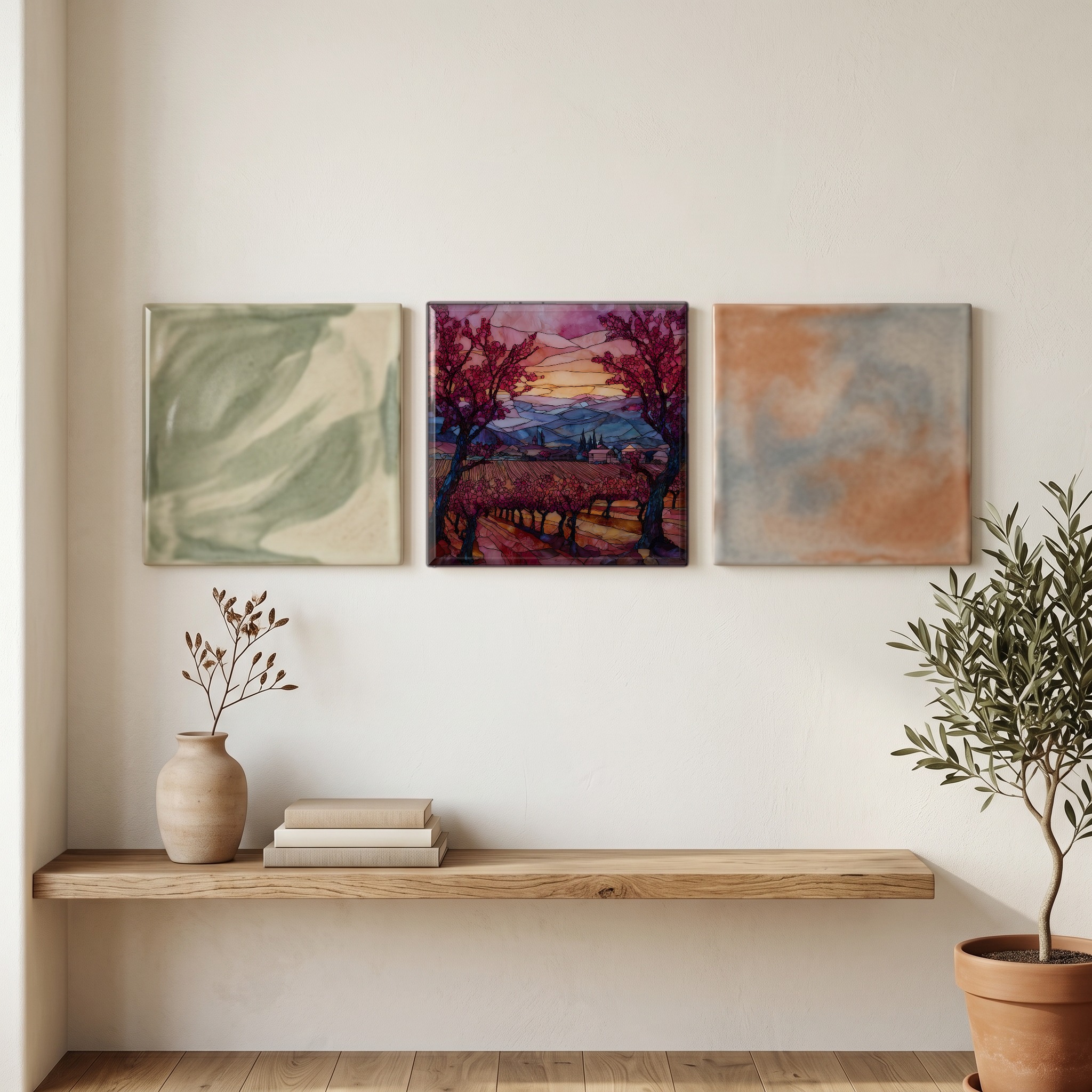
or build a grouping
or build a grouping

Three or five different vistas, hung together — a chapter of places you've been, or want to go.

about Burgundy Vineyard Winter Dawn

The place, in three passes.

A little of what's known, in case you fall down the rabbit hole — or want to go see it yourself.
the place

The Côte d'Or is the central limestone escarpment of Burgundy, running roughly sixty kilometres south from Dijon to Santenay in the Bourgogne-Franche-Comté region of eastern France. The vineyards face east and south-east across the Saône plain at elevations of about 220 to 380 metres. Since 2015 the slope has been a UNESCO World Heritage Site under the name Climats, terroirs of Burgundy, recognising the 1,247 precisely demarcated vineyard parcels (the climats) that subdivide it. The Côte is split into two halves: the Côte de Nuits to the north, where Pinot Noir dominates, and the Côte de Beaune to the south, where Chardonnay takes over. The market town of Beaune sits at the hinge between them.

the dawn

Winter dawn over the Côte d'Or is short and slow. In December and January the sun rises in Beaune around 08:20 and sits low against the limestone ridge for the first hour after it clears the horizon. The east-facing slope catches the light first, pulling the rows out of the blue half-dark in long parallel stripes. Mist often pools in the Saône plain below and burns off slowly as the temperature rises through the morning. The vineyards are at their stillest in this window: pickers gone, tractors quiet, the soil unworked. Local growers describe the period between harvest and pruning as the only quiet the Côte ever gets. The colour is in the bare wood and the frost.

— informed by Bourgogne Tourisme
the season

The vine year in Burgundy turns on the winter pruning, called la taille, carried out between late December and March. Growers walk every row of every climat, deciding by hand which cane to keep and which to cut back to two buds, a decision that sets the next season's yield and balance. The work is cold, slow, and skilled. The vines themselves are fully dormant: no leaves, no sap movement, the bare wood holding against frost down to about minus ten Celsius before serious damage occurs. The first sign of the new year is the budburst, called le débourrement, in late March or early April, which begins the most anxious six weeks of the calendar as growers watch the overnight forecasts for spring frost on the open slope.

— informed by Bourgogne Wines (BIVB)
where
France · Côte-d'Or, Bourgogne-Franche-Comté
position
47.0244° N · 4.8398° E
the neighborhood

What's nearby.

A handful of named places within an hour's walk or short drive. Some we've already painted; some we will.
at the lake
Hospices de Beaune
fifteenth-century hospice
8 km SW
Meursault
white-wine village
12 km SW
Puligny-Montrachet
white-wine village
20 km N
Nuits-Saint-Georges
wine town
24 km N
Vosne-Romanée
wine village
30 km N
Gevrey-Chambertin
wine village
40 km N
Dijon
regional capital
N
Burgundy Vineyard Winter Dawn
Hospices de Beaune
Meursault
Puligny-Montrachet
Nuits-Saint-Georges
Vosne-Romanée
Gevrey-Chambertin
Dijon
common questions

What people ask.

A few questions we get about Burgundy Vineyard Winter Dawn — and about bringing the piece home.
about the place

The Côte d'Or is the central limestone escarpment of Burgundy in eastern France, running about sixty kilometres south from Dijon to Santenay. The market town of Beaune sits at its hinge, between the Côte de Nuits to the north and the Côte de Beaune to the south.

UNESCO inscribed the Climats, terroirs of Burgundy in 2015, recognising the 1,247 precisely demarcated vineyard parcels that subdivide the Côte d'Or. Each climat is a single named plot with its own soil, slope, and microclimate, and the system itself goes back to Cistercian monks in the twelfth century.

Pinot Noir dominates the Côte de Nuits in the north, producing the red wines of Gevrey-Chambertin, Vosne-Romanée, and Nuits-Saint-Georges. Chardonnay takes over the Côte de Beaune in the south, producing the white wines of Meursault, Puligny-Montrachet, and Chassagne-Montrachet.

Vines are deciduous and fully dormant from leaf-fall in November until budburst in late March or early April. Growers prune every row by hand during this window, a job called la taille, cutting each plant back to one or two canes to set the next season's crop.

The sun rises in Beaune around 08:20 in December and January, low against the limestone ridge that backs the slope. The east-facing vineyards catch the first light, pulling the rows out of the blue half-dark, while mist often pools in the Saône plain below before burning off through the morning.

The Côte d'Or has a semi-continental climate. Overnight winter temperatures regularly fall below freezing, and the dormant vines tolerate frost down to about minus ten Celsius without serious damage. The slope itself drains cold air, which is why the climats sit on the hillside rather than on the plain.

about the piece in your home

Yes. The Côte d'Or is the spiritual home of Pinot Noir and Chardonnay, and wine people often know the slope intimately by village, climat, and vintage. A Small or Medium in a kitchen or tasting room reads as a quiet acknowledgement of that. A Coaster Set carries well as a smaller token.

The palette runs cool blue-grey, dusty pink, and limestone tan, with strong line structure in the vine rows. It sits well in French Country, Wine-Cellar Traditional, and quieter Maximalist palettes. A Glossy Medium reads especially well over a dark wood console or a marble counter.

The work was made with wine spaces in mind. A Large above a sideboard or wine fridge, or a 4-tile Mural across a dining-room feature wall, holds the room without competing with the bottles. For a smaller cellar, a Medium in Glossy is the usual call.

Above a standard three-seat sofa, a single Large reads strong but not crowded. For a wider wall or a deeper room, a 4-tile Mural at roughly thirty-two by thirty-two inches carries better, and a 9-tile Mural becomes the focal piece of the room.

Yes. For kitchen backsplashes, wet bars, or bathroom installations, order in Dura Satin or Matte. Both finishes are scratch-resistant and the colour lives in the ceramic surface, so steam, splashes, and daily wiping do not affect it. Glossy is for show pieces away from sustained moisture.

A soft microfibre cloth and clean water is enough for routine care. For kitchen or bathroom installations, a mild non-abrasive cleaner is fine. Avoid scouring pads and bleach. The colour is infused into the ceramic surface beneath a thin glossy or satin finish, so it does not fade with normal cleaning.

Yes. The painting is original to Reid Wender, and the tile is hand-finished in the Knoxville studio. The work is not licensed from a stock library or reproduced from another source. Every place in the atlas has been chosen by the studio.

if this one stayed with you

A few you might also love.

Hand-picked by the eye that found Sorapis. Same air, same kind of quiet.