Wender·Vista
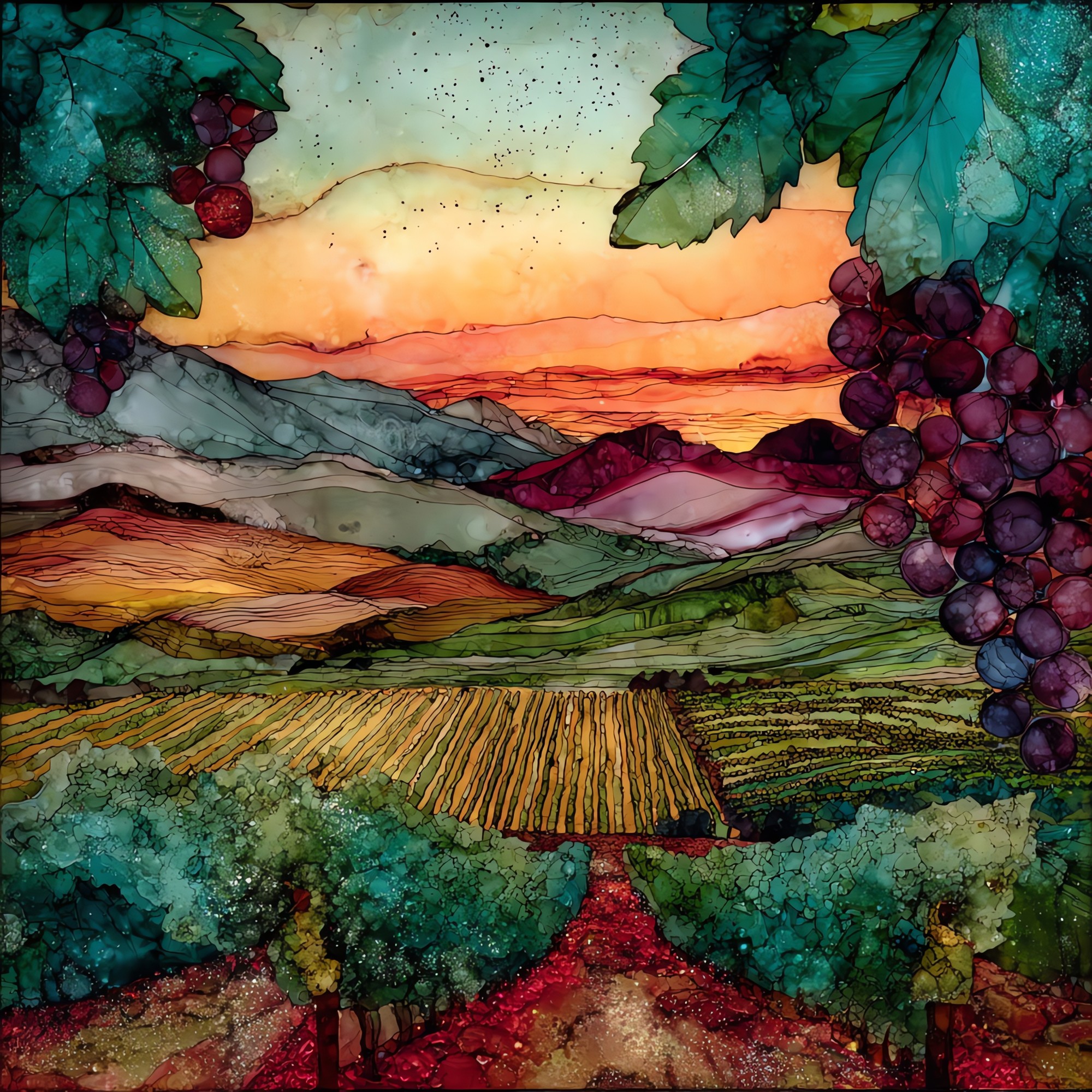
Burgundy Cote de Beaune
shown on ceramic, 12-inch tileFrance
below Beaune, where the limestone slope tips east

Burgundy Cote de Beaune

— the gold the September sun leaves in the rows.

Where it lives

Not only on a wall.

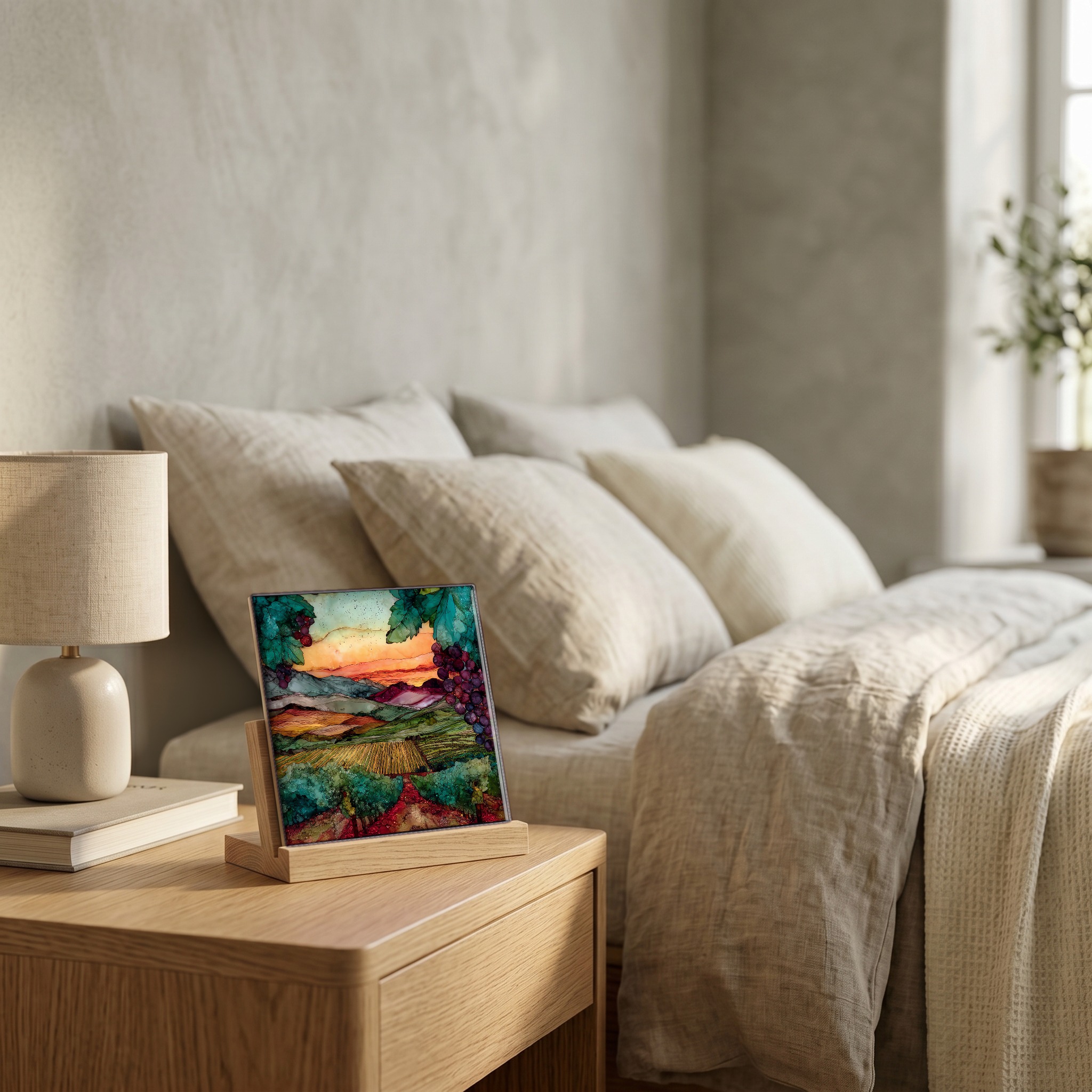
A small tile on the nightstand catching the morning. A larger one above the fire. Yours, wherever you spend the slow hours.
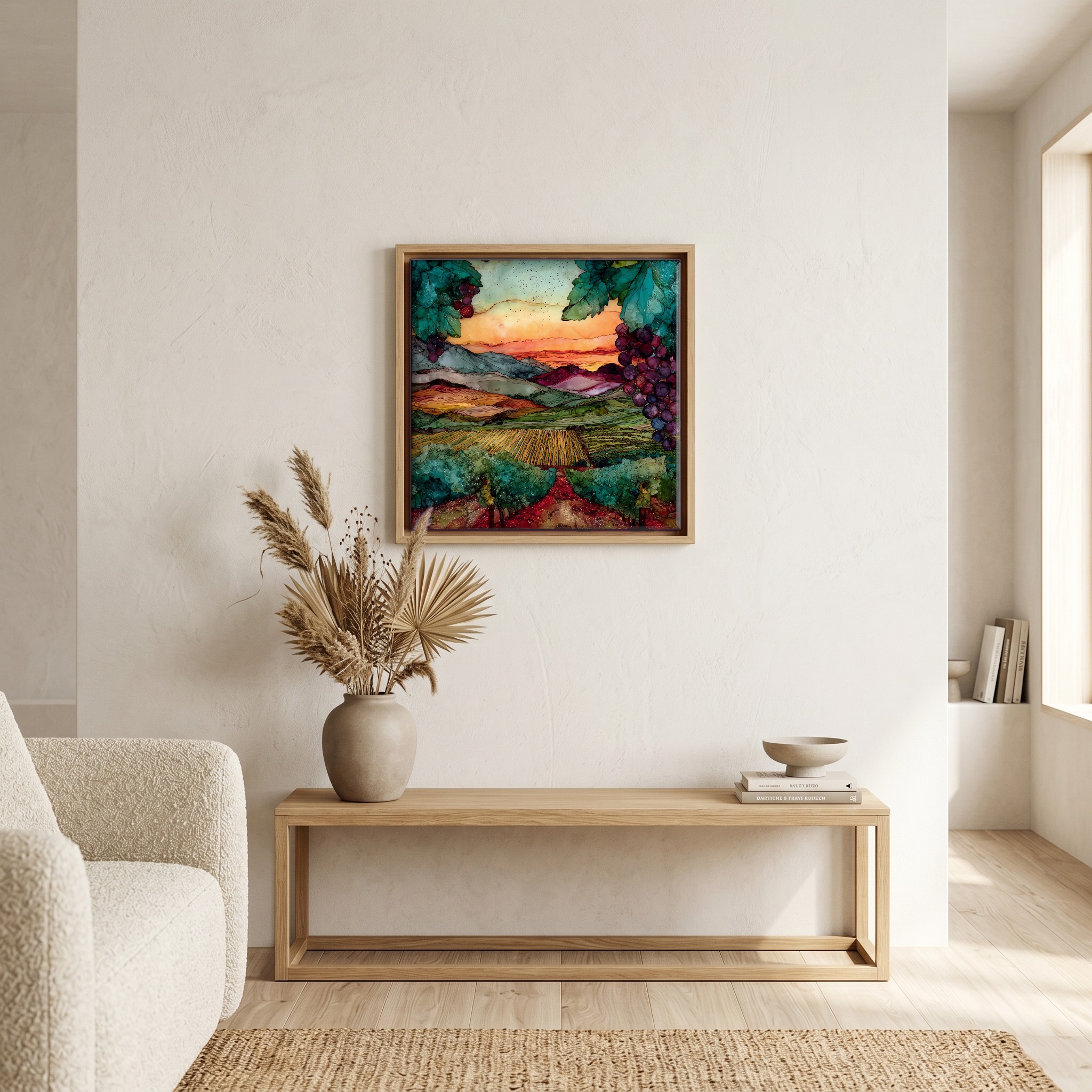
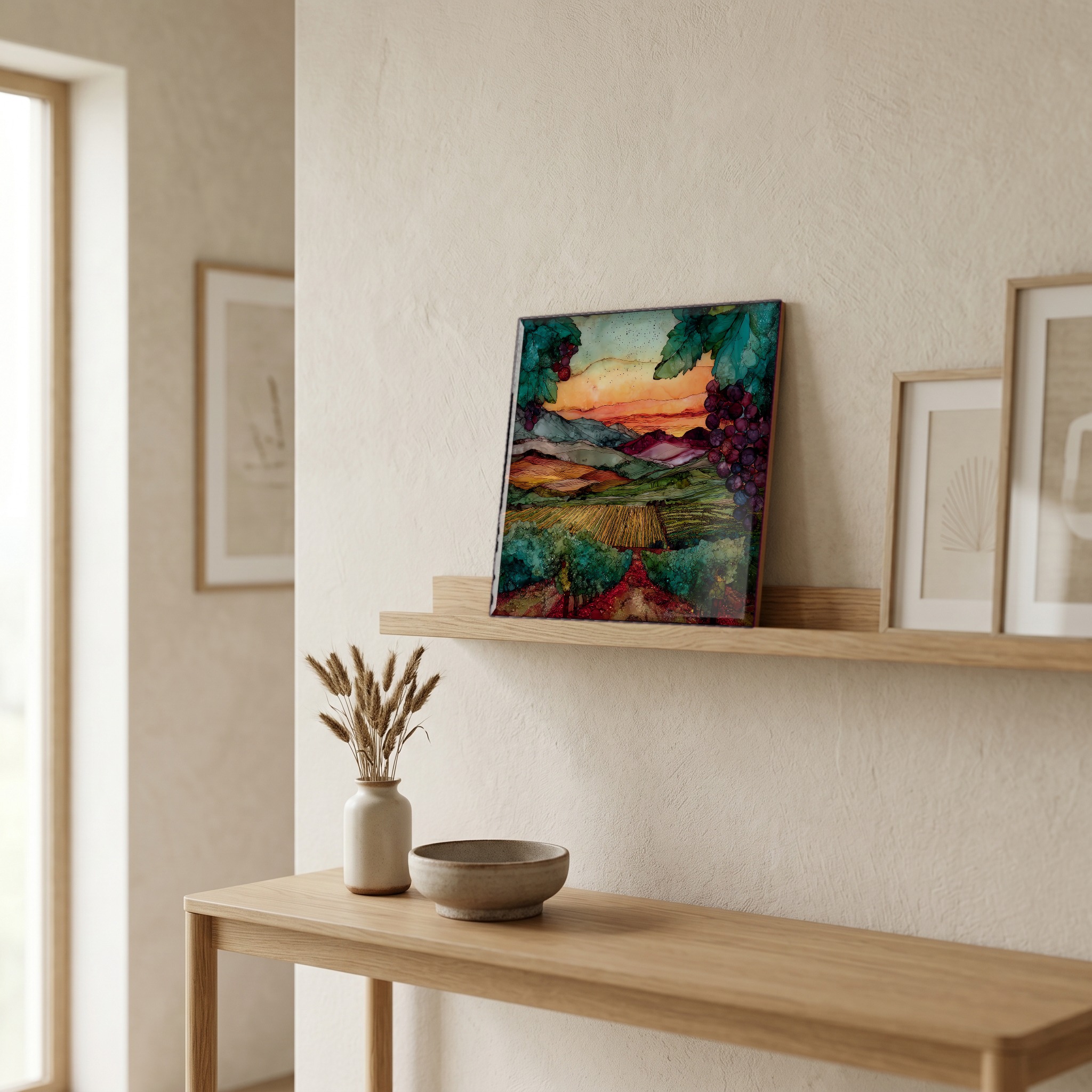
Above the bench, in a warm oak surround.
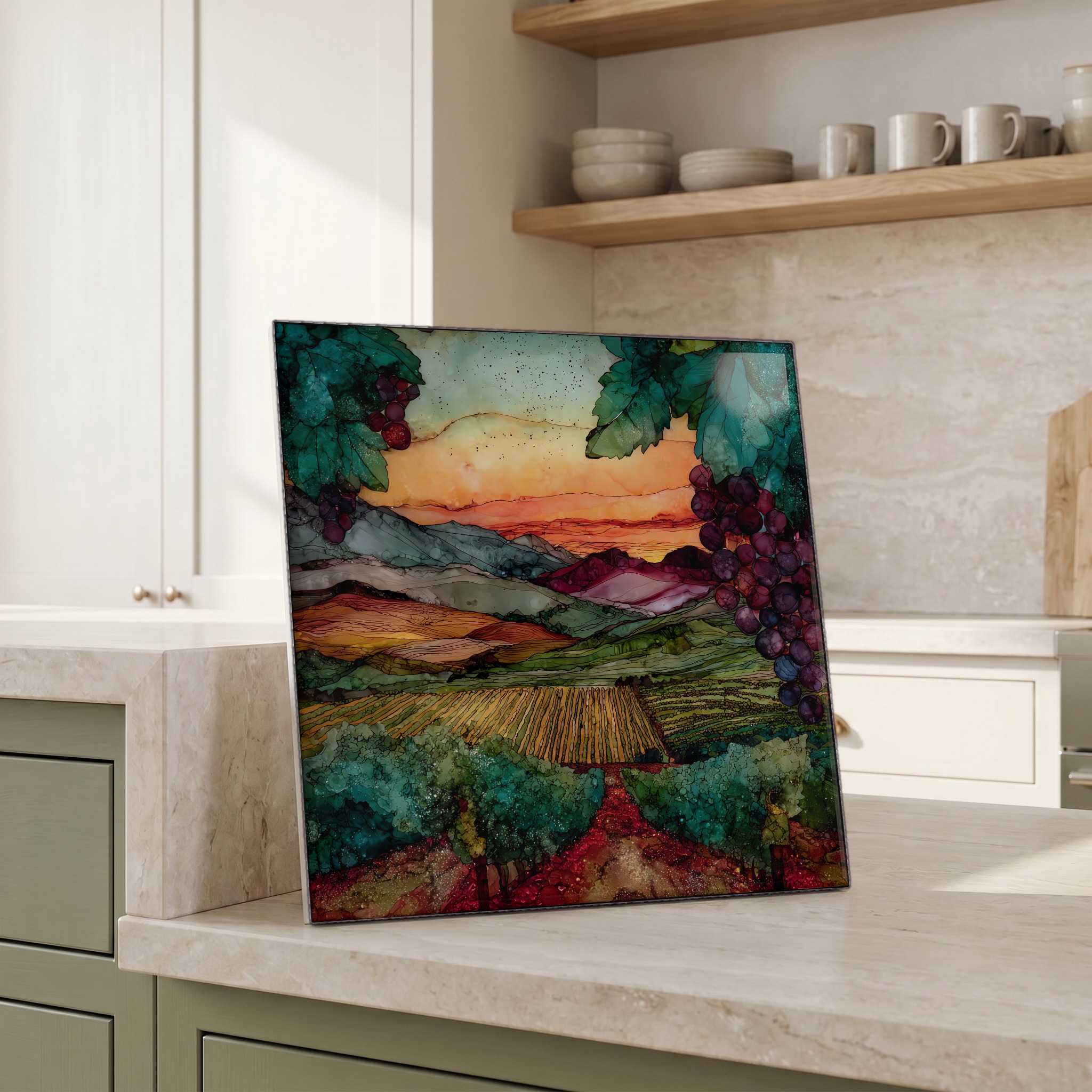
Beside the kettle, propped on the counter.
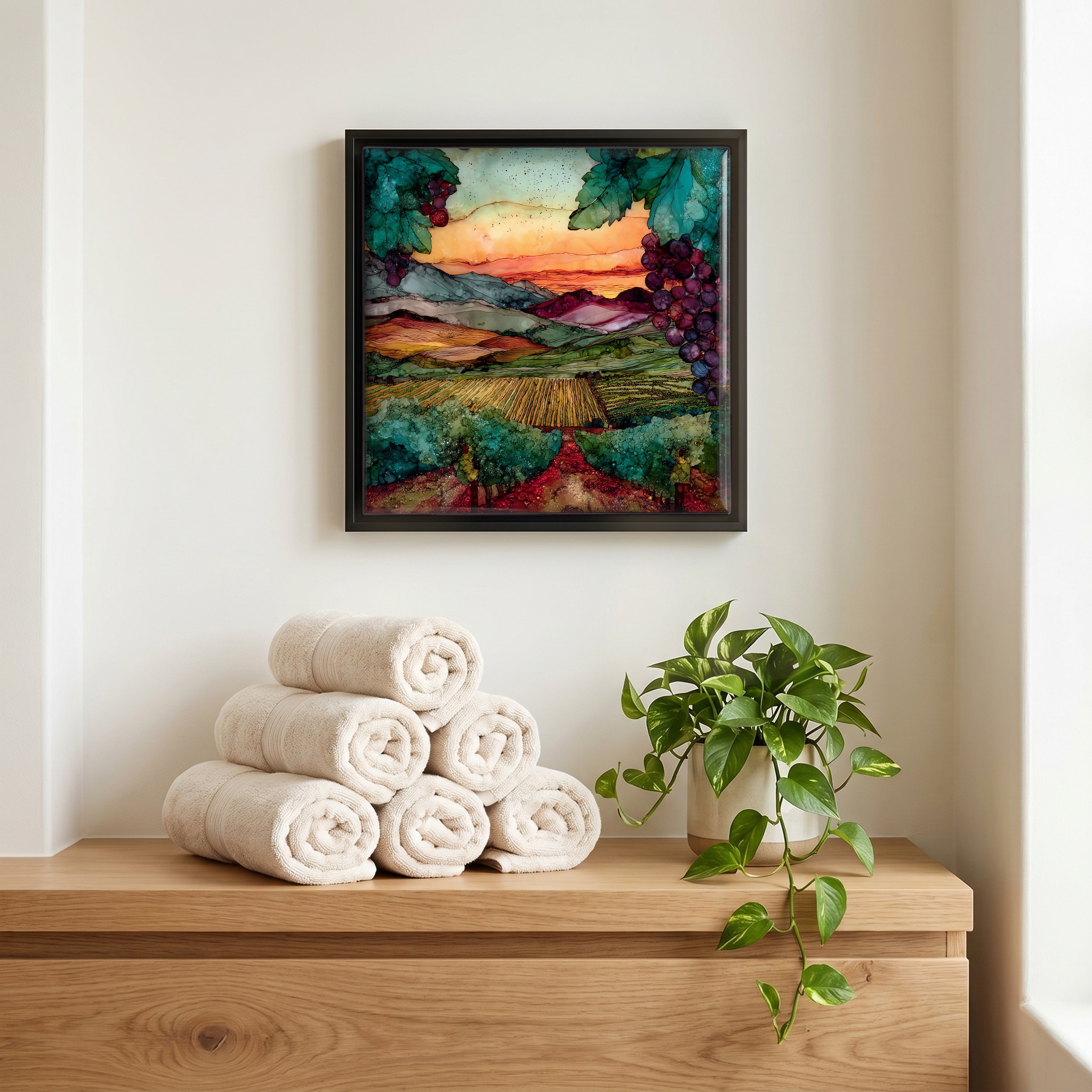
Above the linens, in a slim black surround.
On the nightstand, on a light oak stand.
On a picture ledge, where the light comes in.
a note from the studio

A twenty-five-kilometre run of east-facing slope below the Hautes-Côtes, where the Côte d'Or escarpment turns south of Beaune. The vineyards are not one big estate; they are climats, small named parcels sometimes the width of a footpath, that the Cistercians began mapping in the twelfth century and UNESCO recognised in 2015. Pinot Noir on the upper slopes around Pommard and Volnay, Chardonnay on the limestone shelf at Meursault and Puligny-Montrachet. In late September the rows go gold for about a week. The polychrome roof of the Hospices de Beaune is visible across the plain.
from the studio
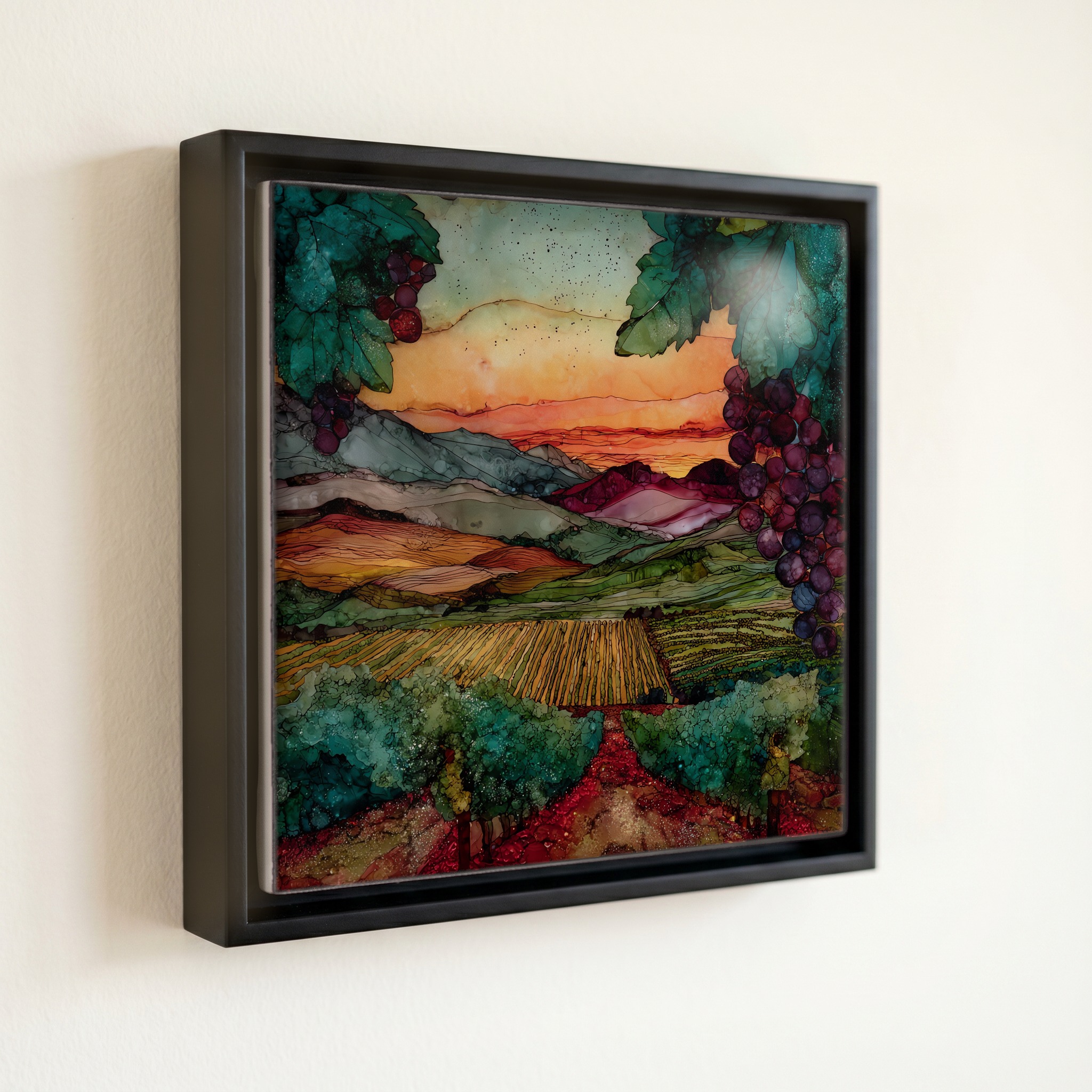
shown in a slim black floating frame · 6 × 6 in
— bring it home

Burgundy Cote de Beaune, on ceramic.

Each tile is finished by hand in our Knoxville studio. Artwork is slowly infused into the ceramic surface under high heat and pressure, and rests beneath a thin glossy finish. The colour lives in the surface, not on top of it.

What kind of piece?
One tile — square or rectangle.
How big?
the popular one — counter, shelf, nightstand
6 × 6 in · 15 cm · 1.6 lb
Surface finish
A clear glossy finish — the artwork reads as if under resin. Ideal for show-pieces and framed wall art.
How it sits
A hidden cleat — sits ¼″ proud of the wall.
$58
Hand-finished and shipped from our studio at the foot of the Smokies. On your wall in about ten days.
size
6 × 6 in
15 cm
weighs
1.6 lb
solid in the hand
surface
ceramic, hand-finished
art rests beneath a thin glossy finish
from
Knoxville, TN
our family studio, at the foot of the Smokies
— start a Coaster Set

Pick any four 4-inch tiles — National Parks you've been to, a Smokies set, the four seasons of one place. $ for a set of , cork-backed, ready to live on the table.
comes gift-ready
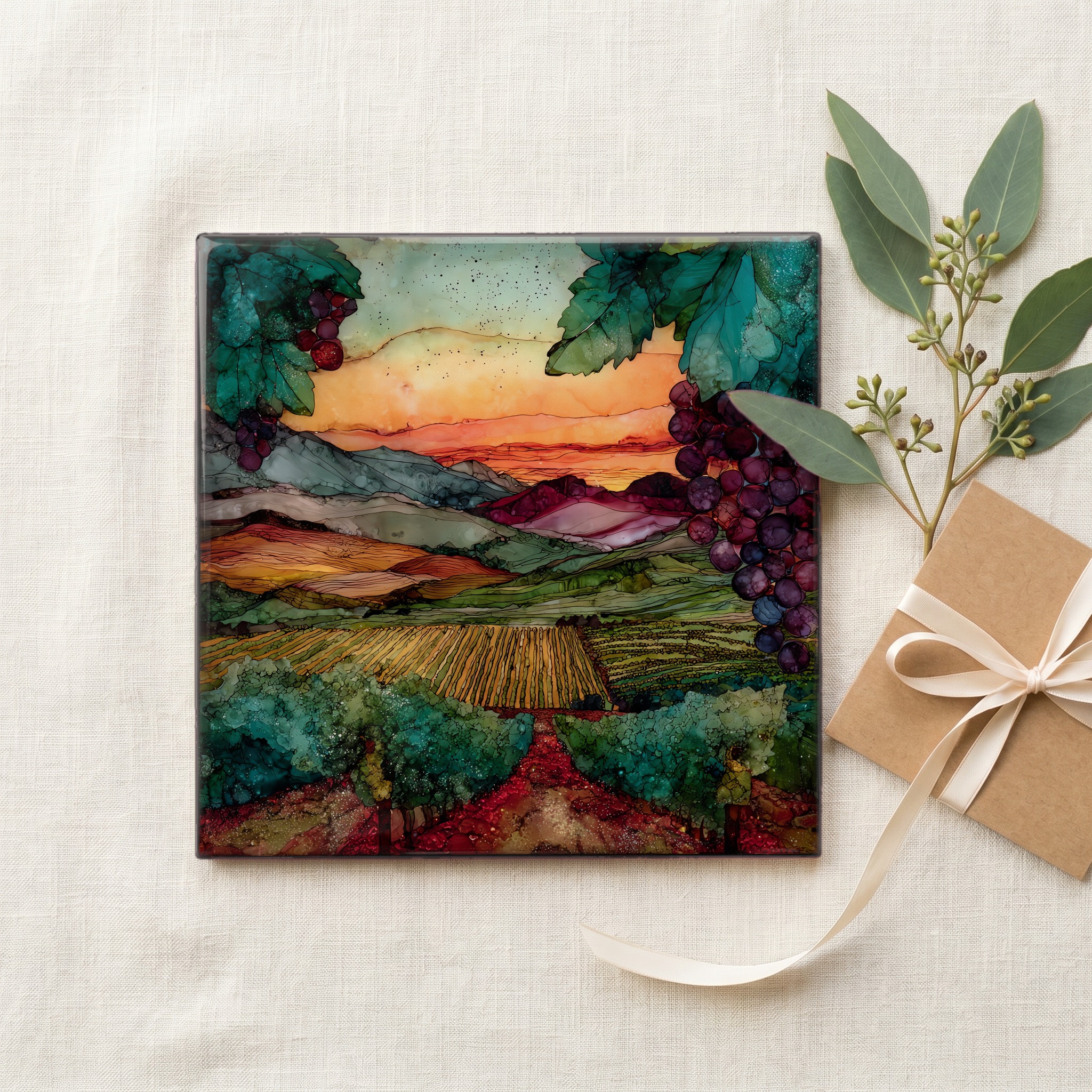
comes gift-ready

Each tile ships in a kraft box, tied with cream ribbon, with a handwritten note from the studio if you'd like to add one.
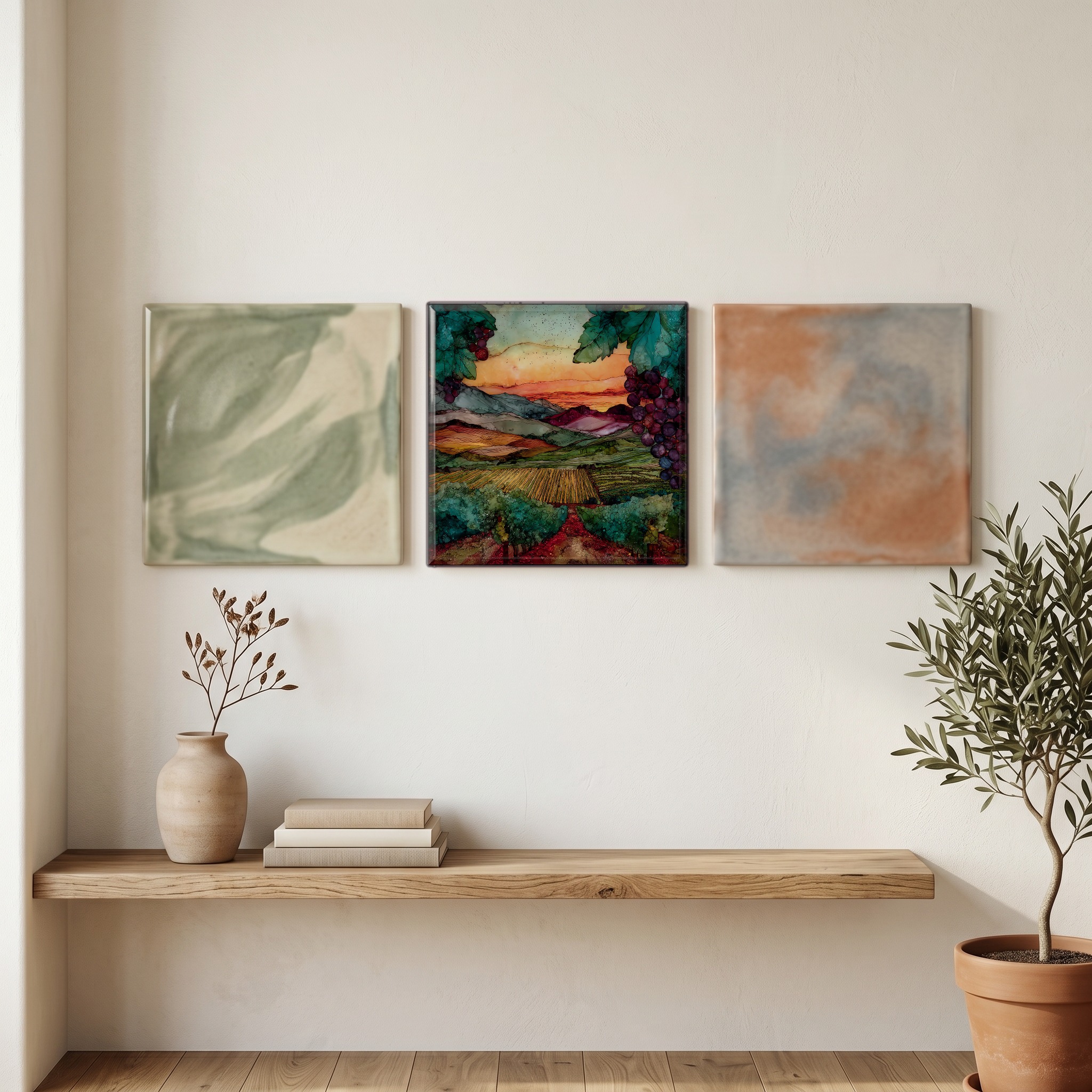
or build a grouping
or build a grouping

Three or five different vistas, hung together — a chapter of places you've been, or want to go.

about Burgundy Cote de Beaune

The place, in three passes.

A little of what's known, in case you fall down the rabbit hole — or want to go see it yourself.
the place

The Côte de Beaune is the southern half of the Côte d'Or escarpment, the eastern flank of a low limestone ridge in the Burgundy region of eastern France. The run is roughly 25 kilometres long, from the village of Ladoix-Serrigny in the north to the Maranges at the southern end, with the town of Beaune at its midpoint. Vineyards face east and southeast at elevations between 220 and 380 metres, sheltered from western weather by the wooded Hautes-Côtes behind them. The whole strip is part of the Climats du vignoble de Bourgogne, inscribed by UNESCO in 2015 as a cultural landscape of named parcels stretching back to monastic estate-mapping in the eleventh and twelfth centuries.

the stone

The defining feature is limestone: specifically, the Middle Jurassic marl and oolitic limestone of the Bajocian and Bathonian stages, weathered into thin brown soils over fractured rock. The slope dips gently east at five to ten degrees, just enough that water drains and morning sun reaches the vines before noon. Within that geology the appellations split by metre rather than by hectare. Pommard sits on iron-rich brown soil that gives a structured red wine; Meursault sits on paler limestone that gives a broad-shouldered white; Puligny-Montrachet sits on a stonier rise where the soil thins to almost nothing. The Romans planted here in the first century AD, and the Cistercians of Cîteaux Abbey, founded in 1098, drew the first parcel maps that the modern climats still follow.

the season

The vineyards turn gold for a short window in late September and early October, between the start of the harvest (the vendange, declared each year by the local prefecture as the ban des vendanges) and the first hard frost of November. Most domaines pick by hand because the climat parcels are small: a single grower may own half a hectare in Volnay, a tenth of a hectare in Meursault, and a single row in Chambertin further north. The third weekend of November brings the Hospices de Beaune auction at the Hôtel-Dieu, held without interruption since 1859 and administered by Christie's since 2005, where each year's wine is sold by the barrel for the hospice's charitable work.

where
France · Beaune, Côte-d'Or
within
Climats du Vignoble de Bourgogne (UNESCO)
position
47.0244° N · 4.8392° E
the neighborhood

What's nearby.

A handful of named places within an hour's walk or short drive. Some we've already painted; some we will.
at the lake
Hospices de Beaune (Hôtel-Dieu)
15th-century hospital, polychrome-tile roof
5 km SW
Pommard
red-wine village
7 km SW
Volnay
red-wine village
8 km SW
Meursault
white-wine village
12 km SW
Puligny-Montrachet
grand-cru white-wine village
14 km SW
Chassagne-Montrachet
grand-cru white-wine village
6 km N
Aloxe-Corton
Corton-hill village
5 km NW
Savigny-lès-Beaune
wine village
N
Burgundy Cote de Beaune
Hospices de Beaune (Hôtel-Dieu)
Pommard
Volnay
Meursault
Puligny-Montrachet
Chassagne-Montrachet
Aloxe-Corton
common questions

What people ask.

A few questions we get about Burgundy Cote de Beaune — and about bringing the piece home.
about the place

The Côte de Beaune is a 25-kilometre strip of vineyards on the eastern flank of the Côte d'Or escarpment in Burgundy, eastern France. It runs south from Ladoix-Serrigny through the town of Beaune to the Maranges, sitting between the Saône plain and the wooded Hautes-Côtes.

The two halves of the Côte d'Or are split at the town of Beaune. The Côte de Nuits to the north is almost entirely Pinot Noir reds, including Romanée-Conti and Chambertin. The Côte de Beaune to the south produces both reds (Pommard, Volnay) and the world's most celebrated dry Chardonnays (Meursault, Montrachet).

A climat is a named parcel of vines with its own soil and microclimate, often only a few hectares. Cistercian monks from Cîteaux Abbey, founded in 1098, began mapping these distinctions to track which slopes gave which wines. UNESCO inscribed the climats as a cultural landscape in 2015.

Pinot Noir reds from the upper slopes at Pommard, Volnay, and Aloxe-Corton; Chardonnay whites from the lower limestone shelf at Meursault, Puligny-Montrachet, and Chassagne-Montrachet. Montrachet itself is widely considered the most expensive dry white wine in the world.

The harvest, called the vendange, usually begins in mid- to late September. The start date is set each year by the local prefecture as the ban des vendanges. Most domaines pick by hand because the climat parcels are small, often under a hectare per grower.

A charity auction held the third weekend of November at the Hôtel-Dieu in Beaune, selling that year's wine by the barrel from vineyards bequeathed to the hospice over six centuries. The sale has run without interruption since 1859 and has been administered by Christie's since 2005.

Yes. The Climats du vignoble de Bourgogne, which includes the entire Côte de Beaune alongside the Côte de Nuits, was inscribed on the UNESCO World Heritage List in July 2015 as a cultural landscape recognising more than a thousand years of vineyard demarcation.

about the piece in your home

It's met that brief many times. The piece reads as a vineyard at the golden moment before harvest, which any Burgundy drinker recognises. A Small or Medium with a handwritten studio note carries well; the Coaster Set works as a thank-you to a host who pours the good bottles.

The palette runs through warm gold, ochre, vine-green, and the soft violet of Pinot grapes. It carries Old-World French, Modern Farmhouse, and Mediterranean rooms well, and reads as a quiet accent in a Minimalist or Japandi interior where colour is otherwise restrained.

Yes. The Burgundian-Provençal palette has been one of the steady through-lines of European-modern design for the past several years, particularly in kitchens and dining rooms where wine, food, and warm earth tones already live together.

Above a console, a single Large reads at the right scale. Above a sofa or a sideboard, a four-tile Mural carries the room; over a dining table or a long credenza, a nine-tile Mural becomes the focal point of the meal.

Yes. Order in the Dura Satin or Matte finish for any room that sees steam, splatter, or temperature swing. The tile is hand-finished with the colour slowly infused into the ceramic surface under high heat and pressure, so it holds up in a working kitchen and a cool cellar alike.

A soft microfibre cloth and water. The surface is sealed beneath a thin finish; for the Dura Satin and Matte versions in a kitchen or bath, a dilute kitchen cleaner is also safe. Avoid abrasive pads.

Yes. Every WenderVista piece is original to the studio, curated by Reid Wender and hand-finished in Knoxville, Tennessee. We do not license or syndicate the work; what you see here lives only on a WenderVista tile.

if this one stayed with you

A few you might also love.

Hand-picked by the eye that found Sorapis. Same air, same kind of quiet.