Wender·Vista
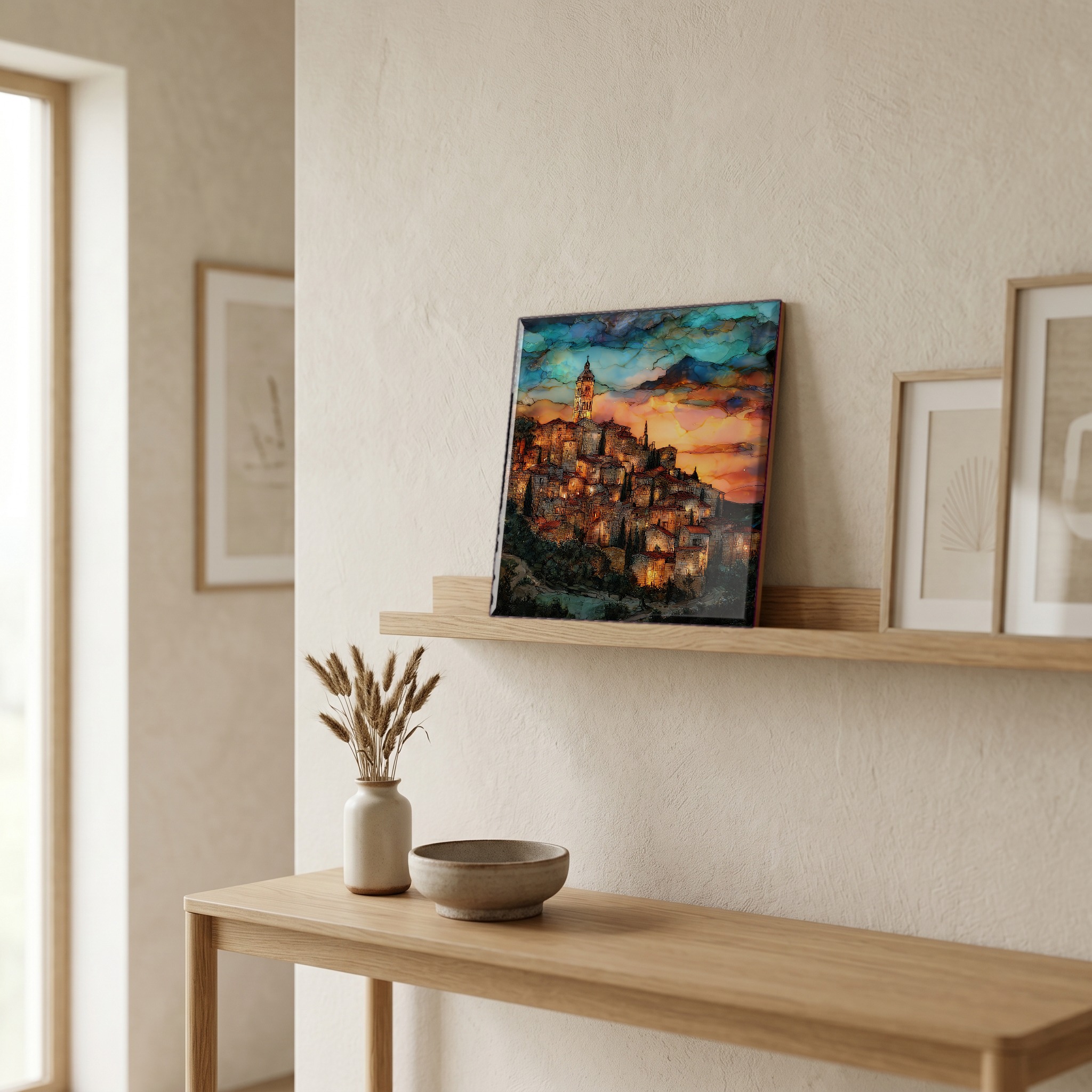
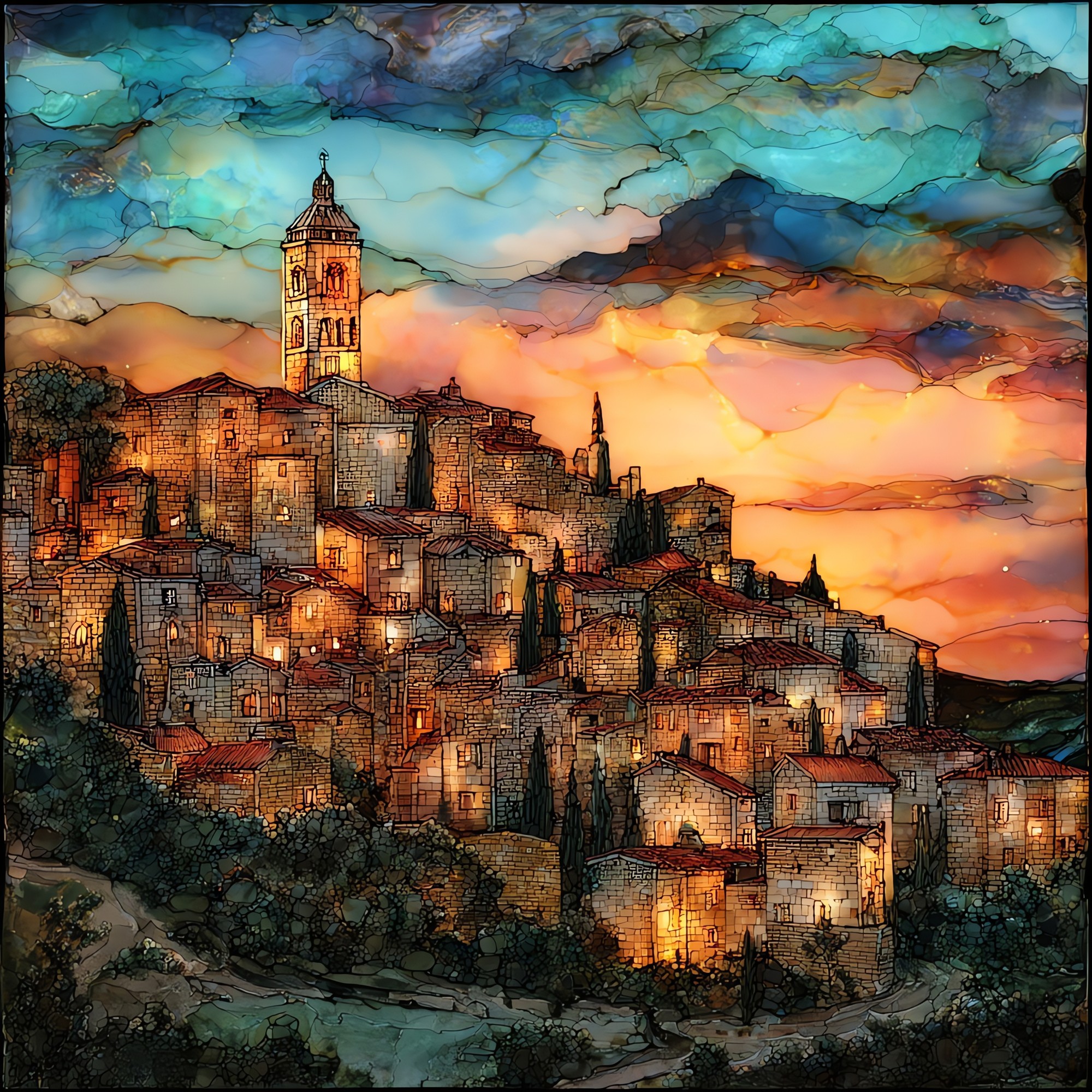
Bonnieux Perched Village
shown on ceramic, 12-inch tileFrance
on the north slope of the Luberon, in central Provence

Bonnieux Perched Village

— stone the colour of late afternoon.

Where it lives

Not only on a wall.

A small tile on the nightstand catching the morning. A larger one above the fire. Yours, wherever you spend the slow hours.
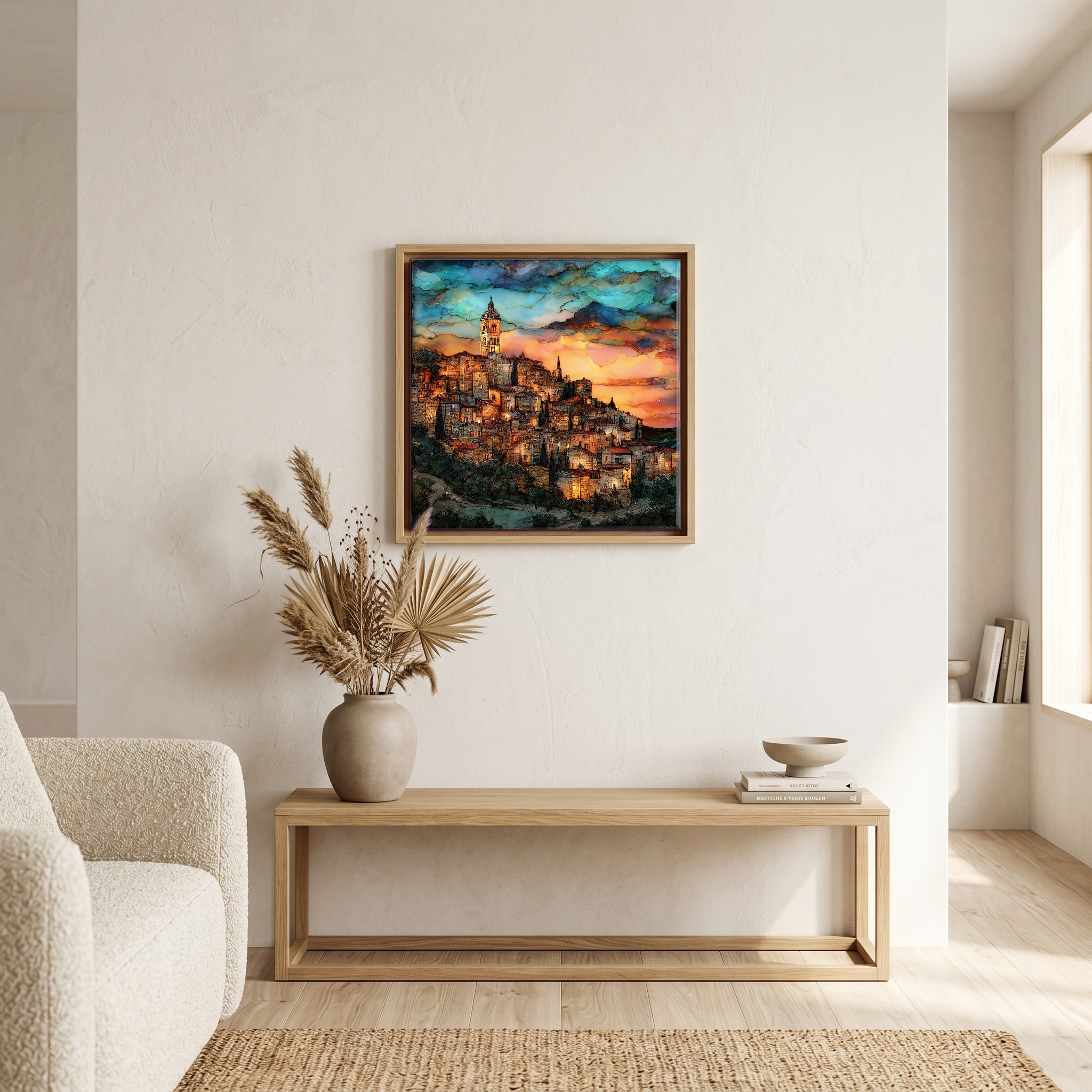
Above the bench, in a warm oak surround.
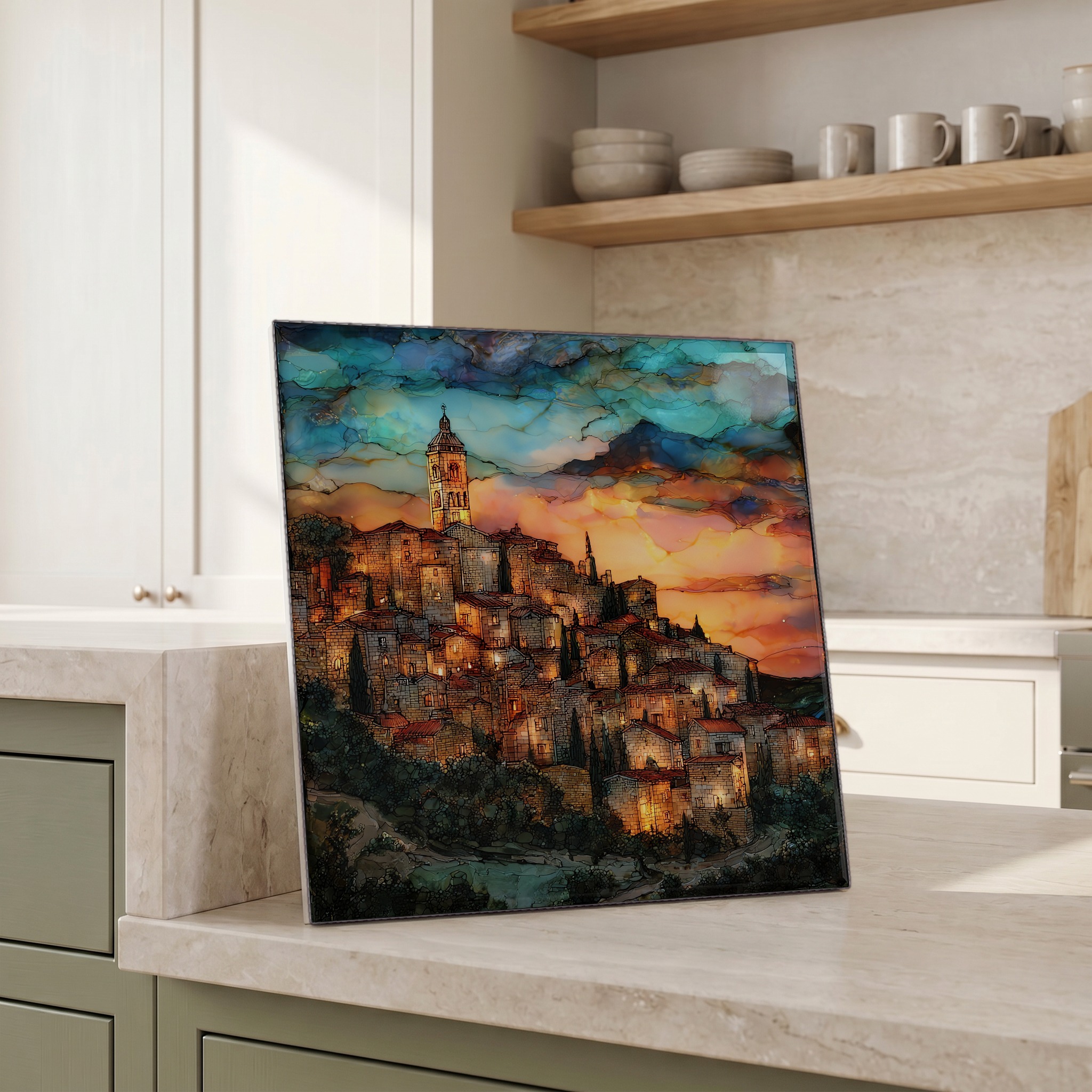
Beside the kettle, propped on the counter.
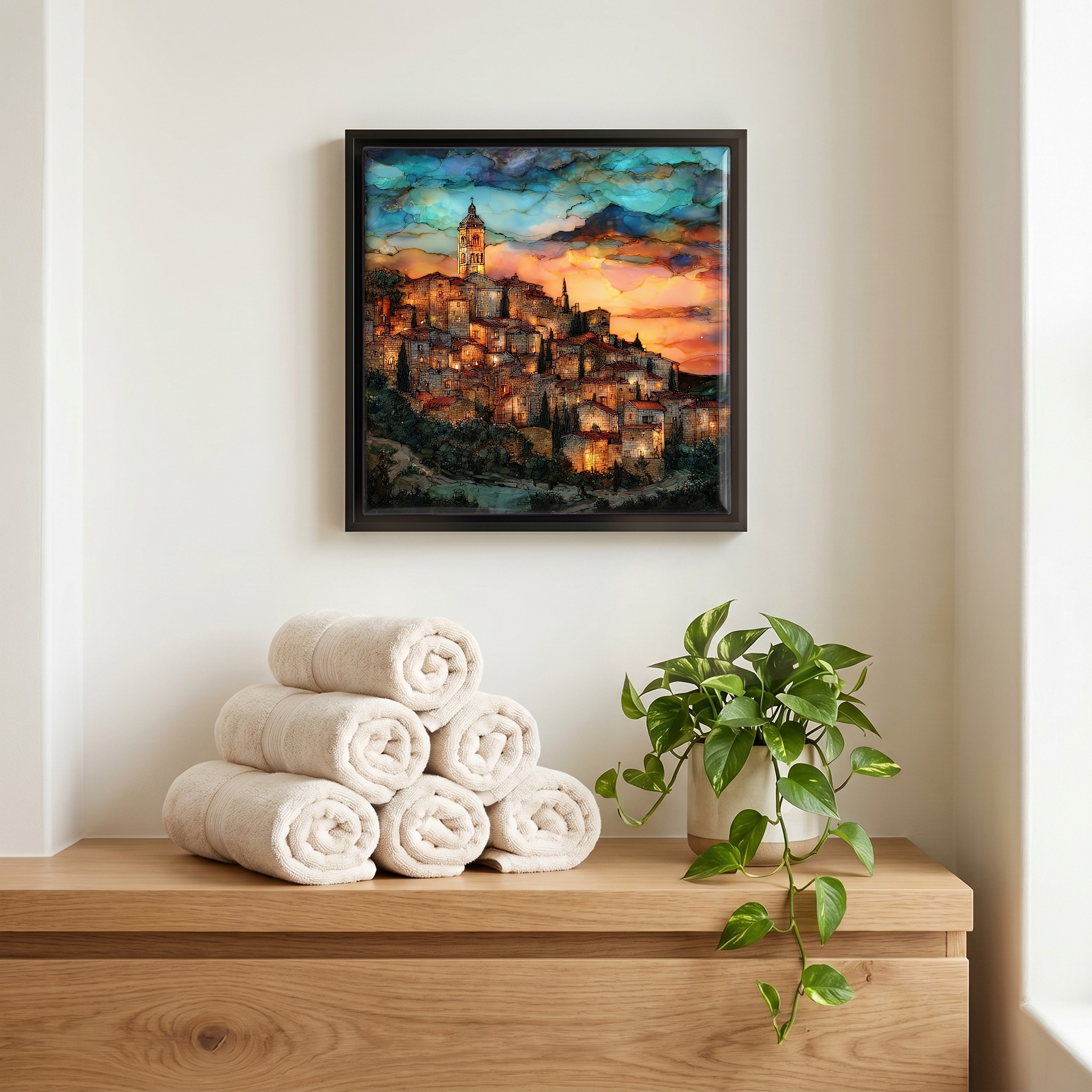
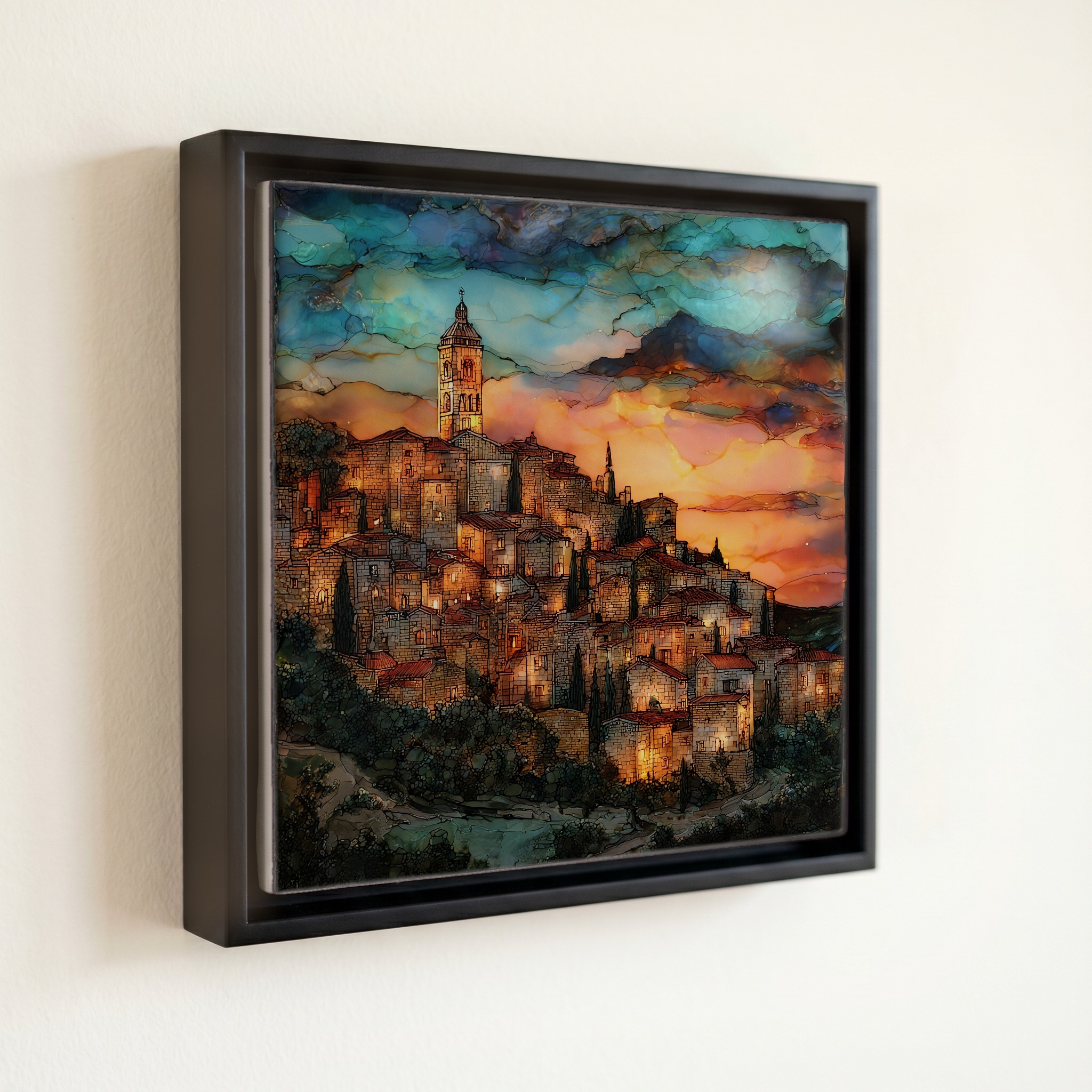
Above the linens, in a slim black surround.
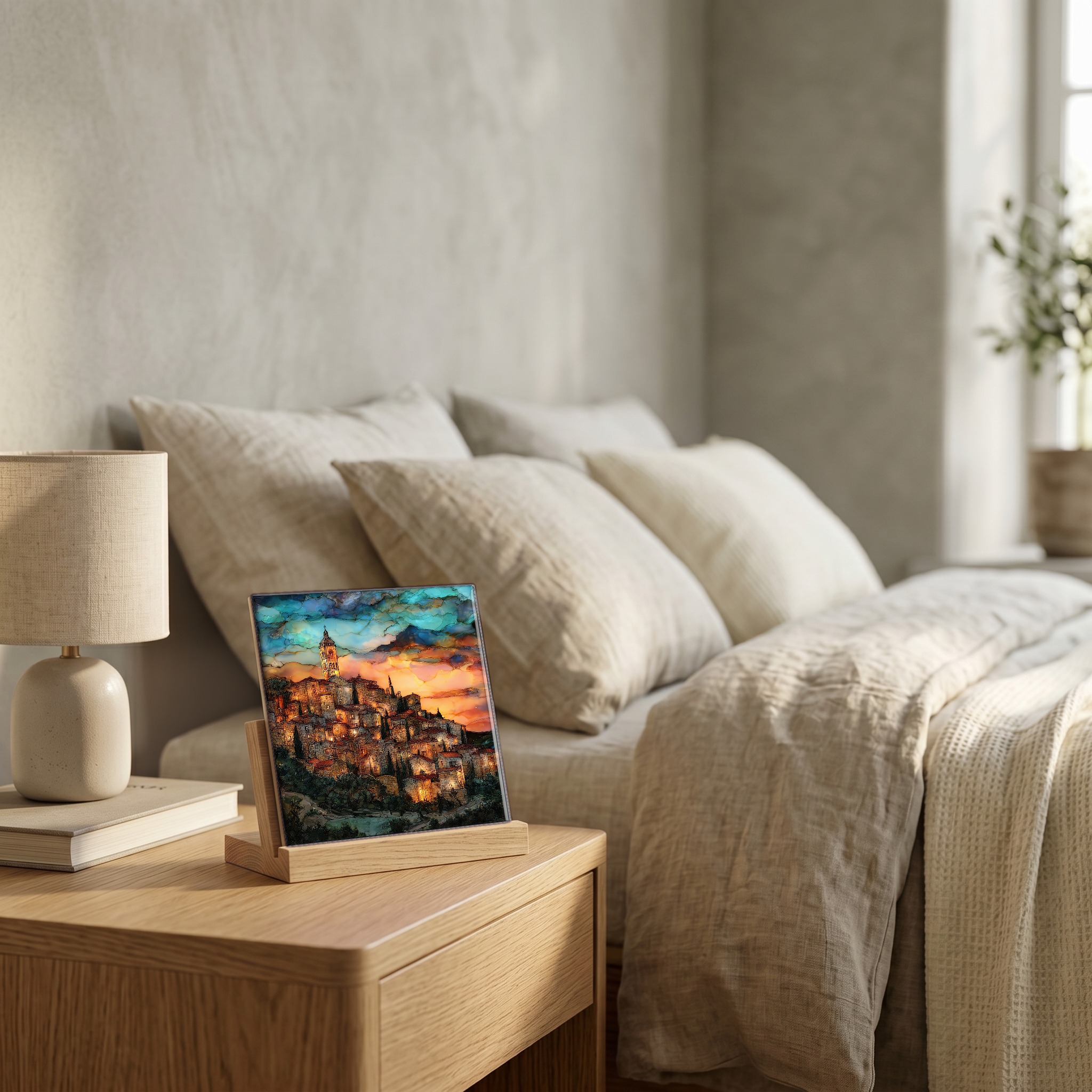
On the nightstand, on a light oak stand.
On a picture ledge, where the light comes in.
a note from the studio

One of the perched villages of the Luberon, on the north slope of the massif. The houses stack up the hillside in pale Provençal stone, ending at a small 12th-century church set among cedars at the summit. The road from Cavaillon climbs through vines and orchards to reach it. Late afternoon is the village's hour. The stone takes a colour that doesn't quite belong to any other time of day. Across the valley, Lacoste sits on its own hill with the half-ruined château of Sade above the rooftops.
from the studio
shown in a slim black floating frame · 6 × 6 in
— bring it home

Bonnieux Perched Village, on ceramic.

Each tile is finished by hand in our Knoxville studio. Artwork is slowly infused into the ceramic surface under high heat and pressure, and rests beneath a thin glossy finish. The colour lives in the surface, not on top of it.

What kind of piece?
One tile — square or rectangle.
How big?
the popular one — counter, shelf, nightstand
6 × 6 in · 15 cm · 1.6 lb
Surface finish
A clear glossy finish — the artwork reads as if under resin. Ideal for show-pieces and framed wall art.
How it sits
A hidden cleat — sits ¼″ proud of the wall.
$58
Hand-finished and shipped from our studio at the foot of the Smokies. On your wall in about ten days.
size
6 × 6 in
15 cm
weighs
1.6 lb
solid in the hand
surface
ceramic, hand-finished
art rests beneath a thin glossy finish
from
Knoxville, TN
our family studio, at the foot of the Smokies
— start a Coaster Set

Pick any four 4-inch tiles — National Parks you've been to, a Smokies set, the four seasons of one place. $ for a set of , cork-backed, ready to live on the table.
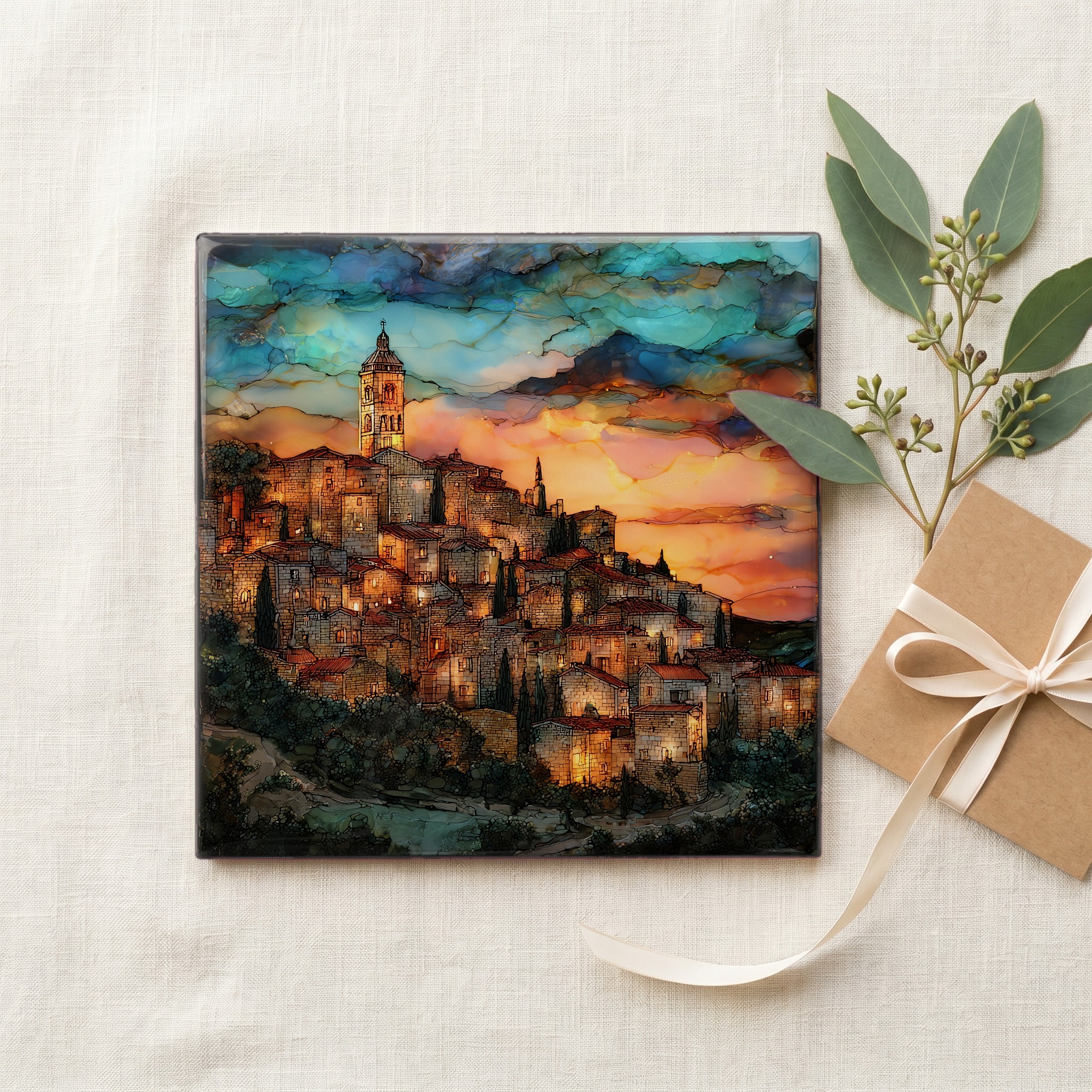
comes gift-ready
comes gift-ready

Each tile ships in a kraft box, tied with cream ribbon, with a handwritten note from the studio if you'd like to add one.
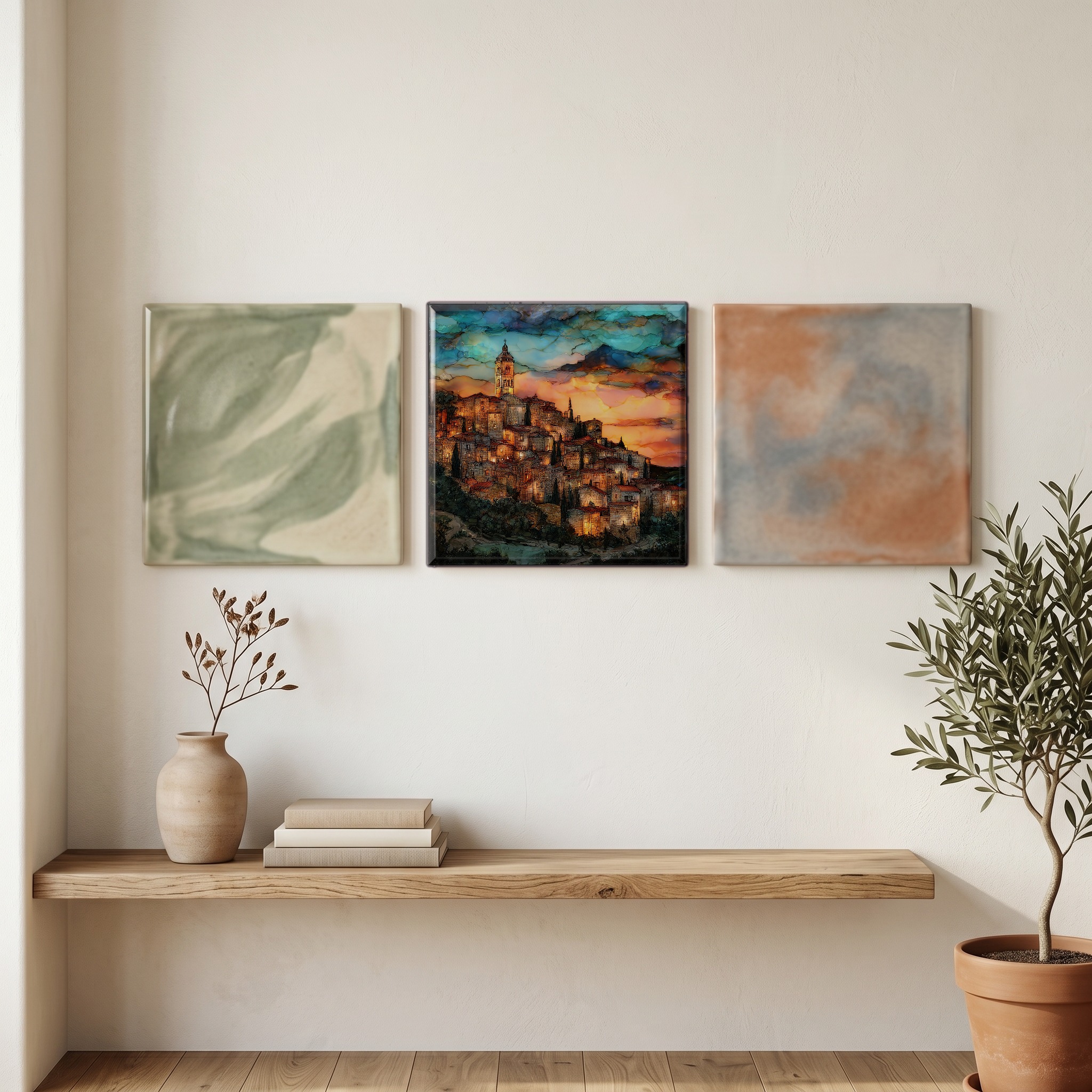
or build a grouping
or build a grouping

Three or five different vistas, hung together — a chapter of places you've been, or want to go.

about Bonnieux Perched Village

The place, in three passes.

A little of what's known, in case you fall down the rabbit hole — or want to go see it yourself.
the place

Bonnieux is a commune in the Vaucluse department of Provence-Alpes-Côte d'Azur, on the north slope of the Luberon massif. The village climbs the hillside in tiers between roughly 300 and 425 metres elevation, with the 12th-century Église Haute set at the summit beside a stand of Atlas cedars. The commune sits within the Luberon Regional Natural Park, established in 1977 and recognised by UNESCO as a biosphere reserve. The D36 connects Bonnieux to Apt, about eleven kilometres to the north, and to Lourmarin on the south side of the massif. Across the valley to the west, Lacoste rises on its own hill with the ruined château of the Marquis de Sade above the rooftops. The commune counts roughly 1,400 residents.

the stone

The houses of Bonnieux are built from local Luberon limestone, a pale calcareous stone quarried for centuries in the surrounding valleys. The colour shifts with the hour: cream at midday, honey in late afternoon, deeper amber at the end of the day. The village climbs in tiered terraces along the hillside, with stepped lanes and stone vaulting connecting one level to the next. At the summit, the Église Haute dates to the 12th century and served as the parish church until 1870, when a new church was built lower in the village beside the main road. A walled cemetery beside the old church holds graves several hundred years old. Northwest of the village, the Roman Pont Julien crosses the Calavon on three arches, in place since around 3 BC.

the light

The Luberon sits under what generations of French painters have called the lumière de Provence, a high, dry southern light that reads as gold in the late afternoon and rose at sunset. Cézanne worked under it near Aix, south of the massif; Van Gogh painted under it at Saint-Rémy and Arles, west, in the Alpilles. The mistral wind, blowing down the Rhône valley from the north for around a hundred days a year, scours the air to a clarity that flattens distance and saturates colour. From the summit of the village, the view runs across the Calavon valley to Mont Ventoux, fifty kilometres to the north, its limestone summit holding light long after the village below has gone into shadow. The Atlas cedars planted above the village in 1862 stand dark against that light.

where
France · Bonnieux, Vaucluse
within
Luberon Regional Natural Park
elevation
425 m · 1,394 ft
position
43.8244° N · 5.3097° E
the neighborhood

What's nearby.

A handful of named places within an hour's walk or short drive. Some we've already painted; some we will.
3 km NW
Lacoste
perched village
7 km W
Ménerbes
perched village
5 km N
Pont Julien
Roman bridge
12 km N
Roussillon
ochre village
17 km NW
Gordes
perched village
11 km NE
Apt
market town
3 km S
Forêt des Cèdres
cedar forest
13 km SE
Lourmarin
perched village
N
Bonnieux Perched Village
Lacoste
Ménerbes
Pont Julien
Roussillon
Gordes
Apt
Forêt des Cèdres
common questions

What people ask.

A few questions we get about Bonnieux Perched Village — and about bringing the piece home.
about the place

Bonnieux is a perched village in the Vaucluse department of Provence-Alpes-Côte d'Azur, on the north slope of the Luberon massif in southeastern France. It sits roughly eleven kilometres south of Apt and fifty kilometres east of Avignon, within the Luberon Regional Natural Park.

The village is built in tiered terraces up the side of a steep limestone hill, with the oldest houses near the summit and newer construction along the flatter ground below. The 12th-century Église Haute crowns the top beside a stand of cedars. Several Luberon villages share this layout, including Gordes, Roussillon, Ménerbes, and Lacoste.

The Église Haute, sometimes called the Vieille Église, dates to the 12th century and stands at the highest point of the village. It served as the parish church until 1870, when a new church was built on flatter ground lower down. The old church is surrounded by a walled cemetery and reached by a long stone stairway.

Late April through October is the active season, with surrounding lavender fields blooming from mid-June into July. July and August are the hottest months and the most crowded. September and October bring cooler days and the vineyards turning; many visitors prefer that light over high summer.

Bonnieux is reached by road from Apt to the north or from Lourmarin and Aix-en-Provence to the south, with the D36 and D943 the main approaches. The nearest TGV station is Avignon, about an hour's drive west, and Marseille airport is roughly an hour and a half south.

The view from the summit of the village runs north across the Calavon valley toward Mont Ventoux, fifty kilometres away, with Roussillon and Gordes visible on the far ridges. West, Lacoste sits on its own hill with the ruined château of the Marquis de Sade above the rooftops. South, the Forêt des Cèdres begins almost immediately above the village.

The Forêt des Cèdres is a planted forest of Atlas cedars covering several hundred hectares along the ridge south of the village. The first cedars were planted in 1862, using seed brought from the Atlas Mountains of Algeria. A signed walking circuit runs through the forest with views across the Luberon and out to Mont Ventoux.

about the piece in your home

It's a fitting gift for anyone who carries Provence with them, whether they once spent a season in the Luberon or return there each summer. Bonnieux has the perched-village silhouette that reads as Provence at a glance, and the studio's treatment gives the golden stone an evening colour. A Small or Medium with a handwritten note carries well.

The piece reads well in Mediterranean-modern interiors, in Provençal traditional rooms with warm woods and linen, and in Coastal-modern rooms that lean to warm rather than cool palettes. The golden-amber colour notes and the deep blues in the sky make it a strong anchor on a plaster or pale-clay wall.

Warm minimalism has moved away from cool greys toward honey, terracotta, and Provençal cream tones, which is where this Bonnieux tile lives. It also works in Mediterranean revival interiors, which pair limewashed plaster with stone and aged wood. A single Large or a 4-tile Mural in a Glossy finish reads as the room's focal point.

Above a standard three-seat sofa, a single Large tile (around 18 inches square) reads from across the room, while a 4-tile Mural fills the wall above a longer sofa or a console. For a more presentation-scale piece, a 9-tile Mural runs roughly four feet square and anchors a dining room or stair landing.

Yes, in a Dura Satin or Matte finish. Both finishes are scratch-resistant and rated for vertical wet installation, which is why they are our default for backsplashes, shower walls, and powder rooms. The Glossy finish is for show-pieces and framed wall art and should stay away from steam and water.

Microfibre cloth and water are enough for everyday cleaning. The colour is slowly infused into the ceramic surface under high heat and pressure and sits beneath a thin protective finish, so it does not fade with cleaning. Avoid abrasive pads and bleach-based sprays, which can dull the surface over time.

Yes. Every WenderVista piece is finished in our studio at the foot of the Smoky Mountains in Knoxville, Tennessee. We do not license stock art and we do not resell other studios' work. Reid Wender chooses every place that enters the atlas and signs off on every finished piece.

if this one stayed with you

A few you might also love.

Hand-picked by the eye that found Sorapis. Same air, same kind of quiet.