Wender·Vista
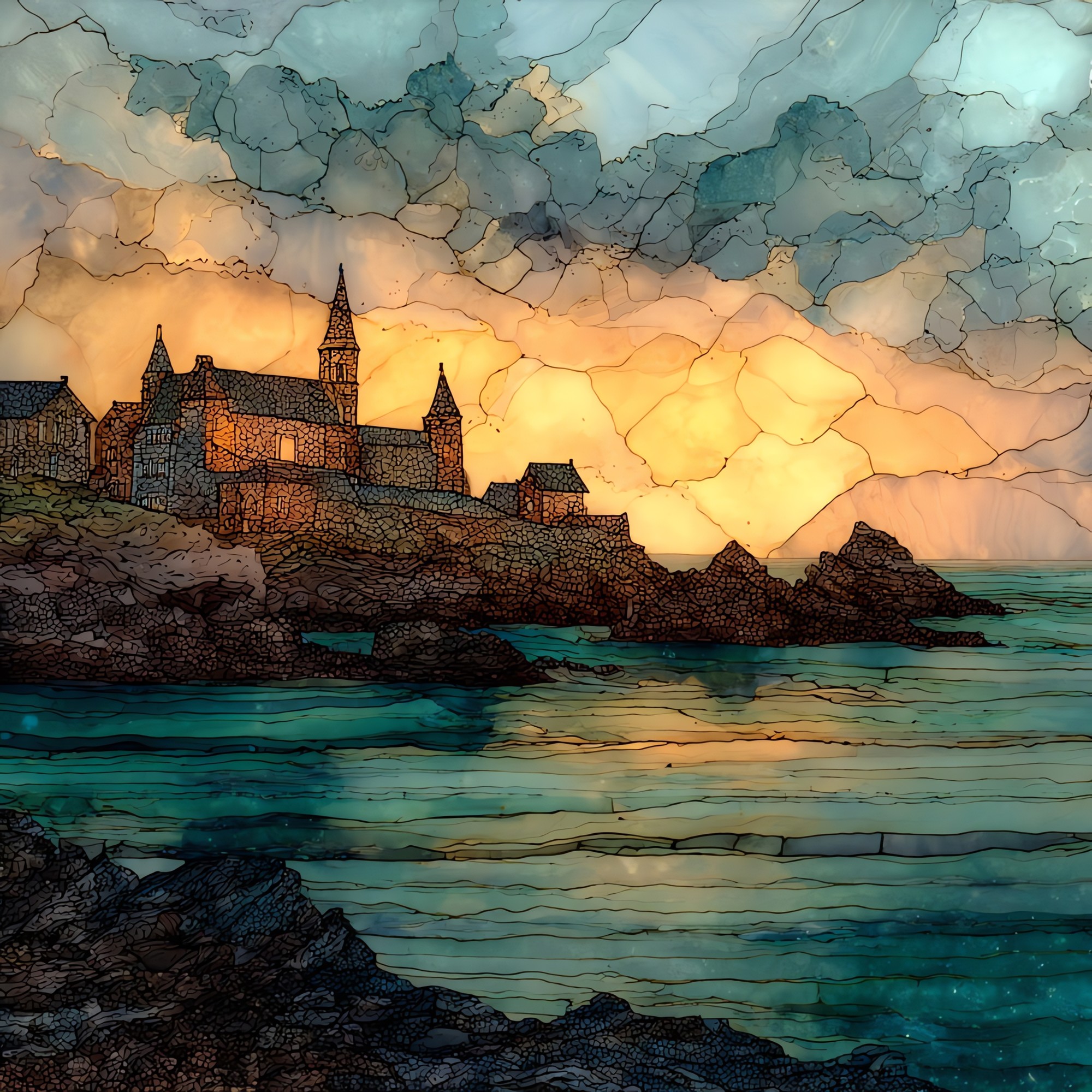
Belle-Ile-en-Mer Aiguilles
shown on ceramic, 12-inch tileFrance
off the south coast of Brittany

Belle-Ile-en-Mer Aiguilles

— the white the Atlantic leaves between the towers.

Where it lives

Not only on a wall.

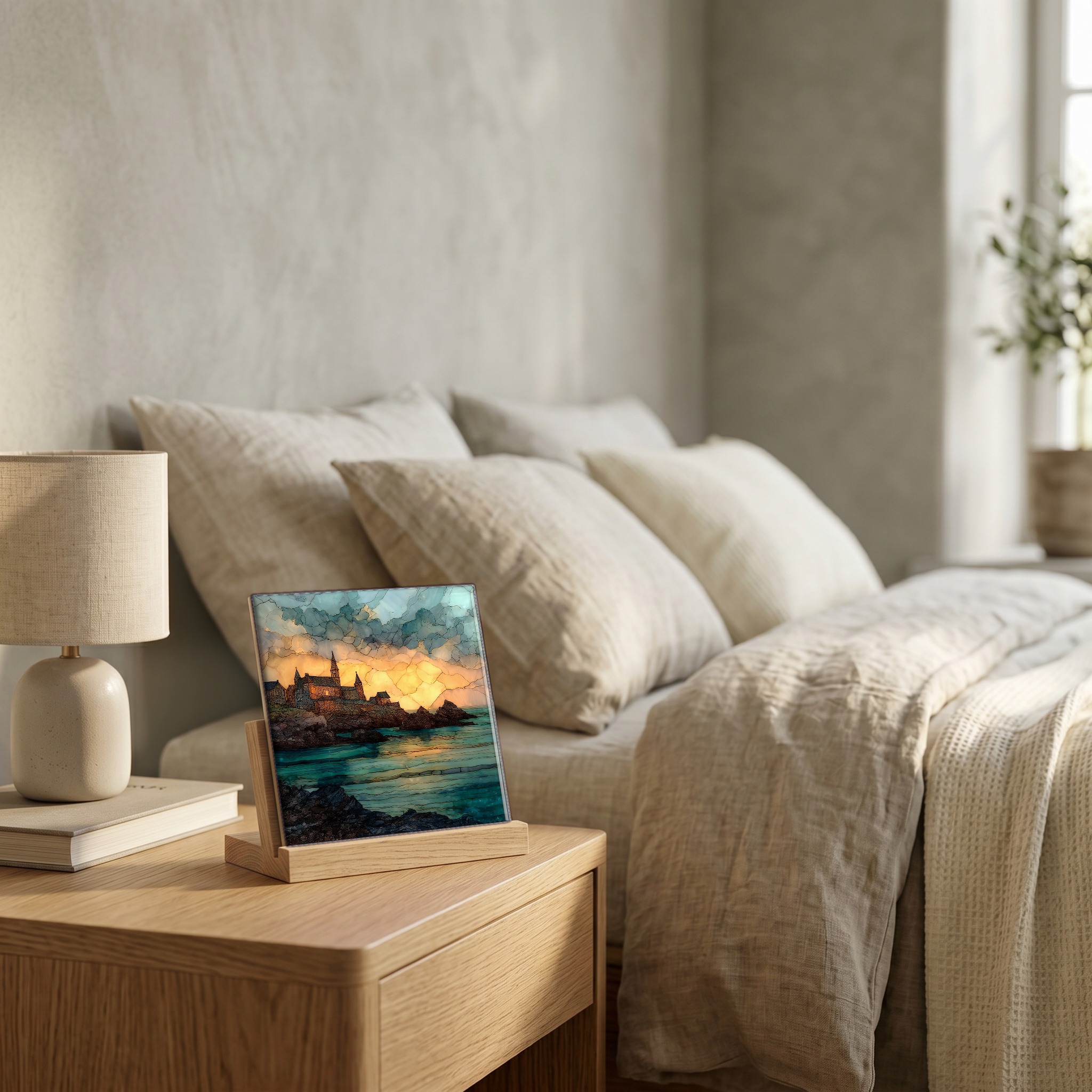
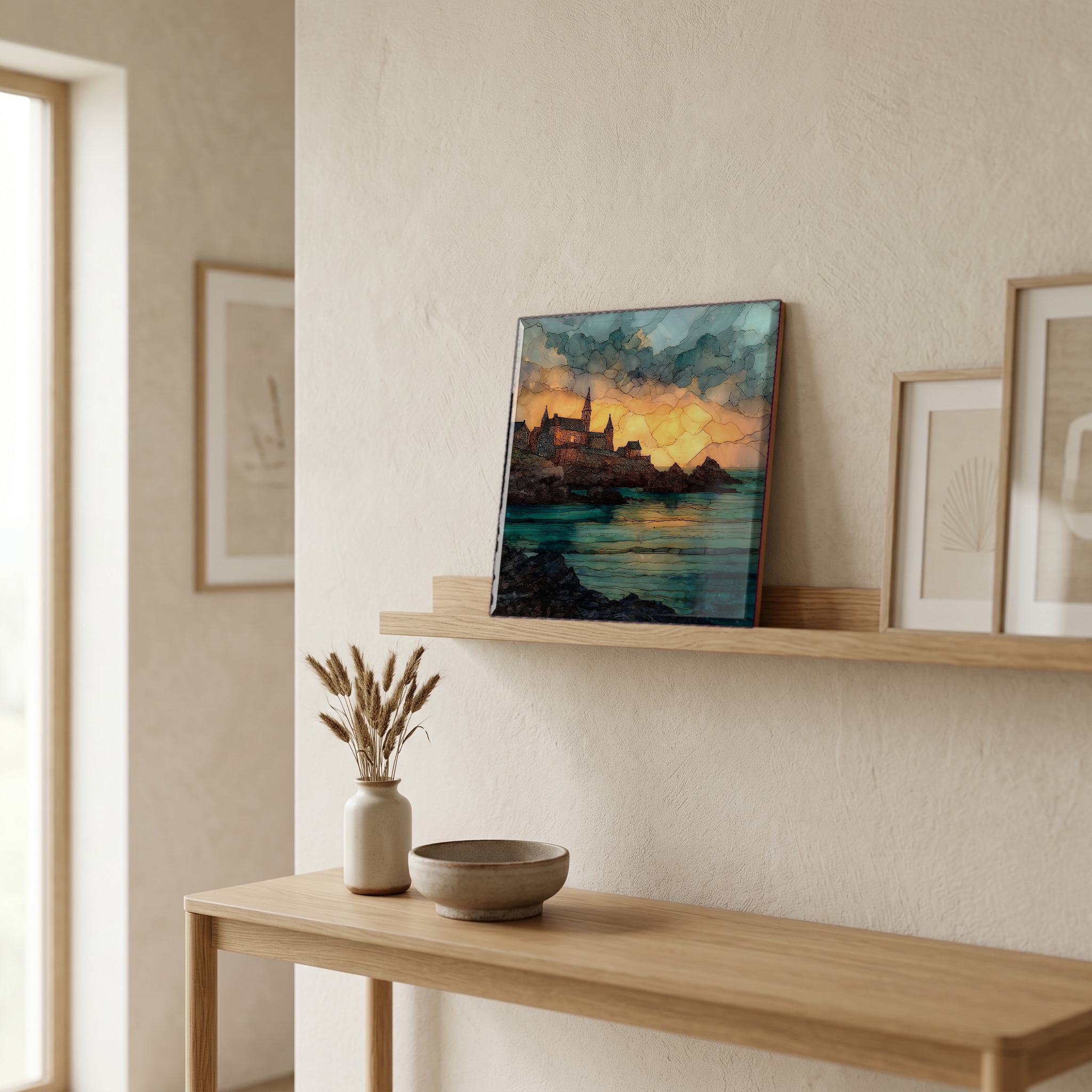
A small tile on the nightstand catching the morning. A larger one above the fire. Yours, wherever you spend the slow hours.
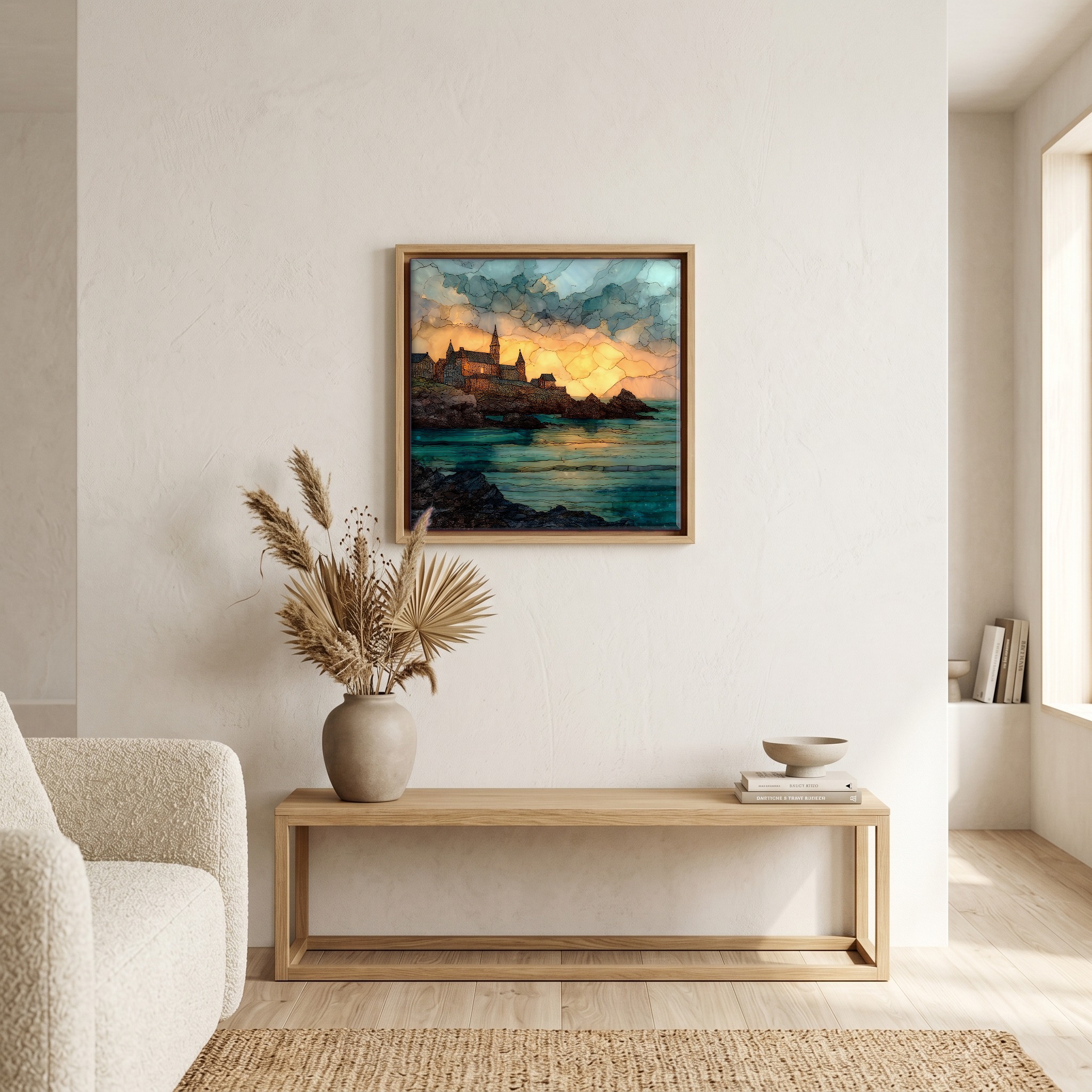
Above the bench, in a warm oak surround.
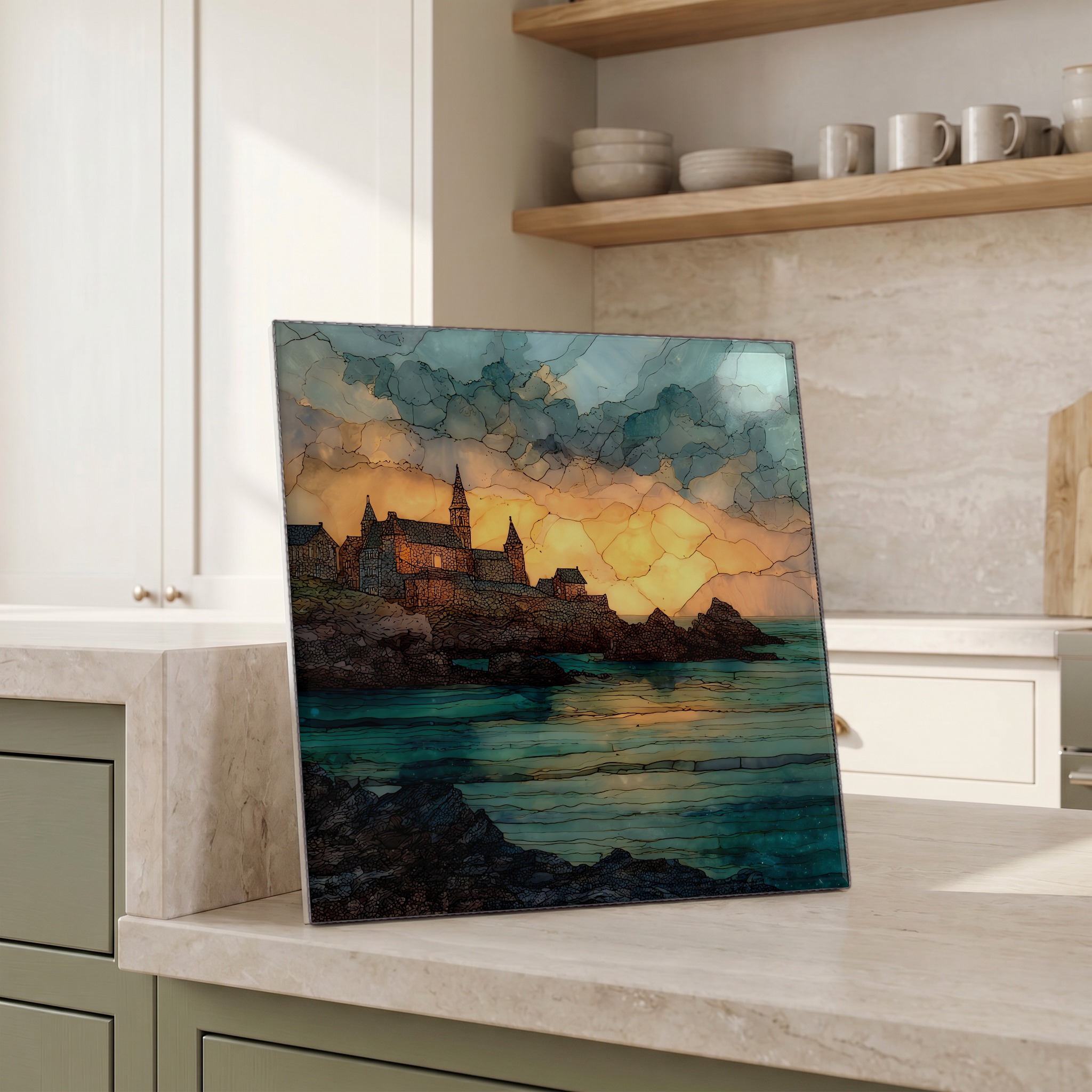
Beside the kettle, propped on the counter.
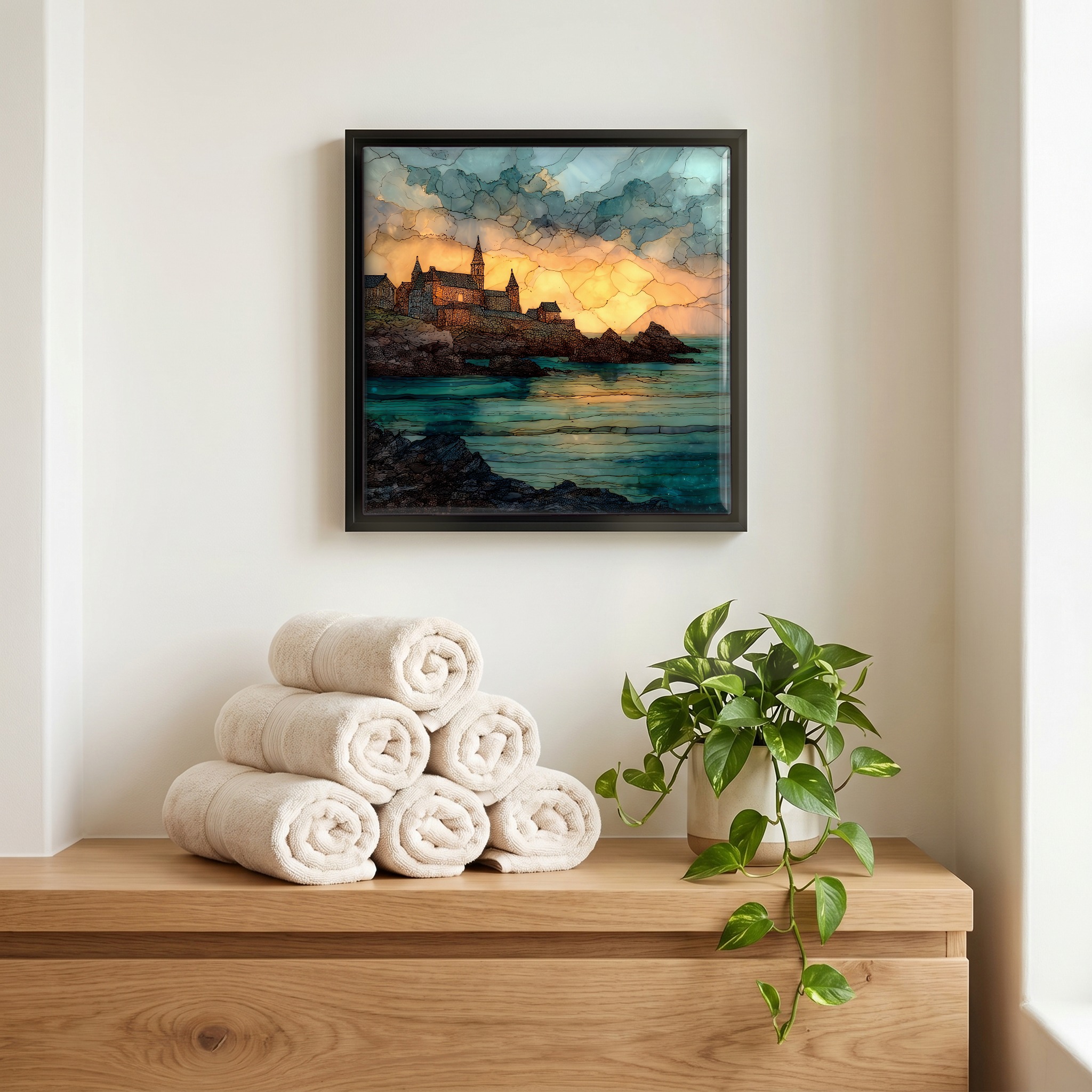
Above the linens, in a slim black surround.
On the nightstand, on a light oak stand.
On a picture ledge, where the light comes in.
a note from the studio

The Côte Sauvage of Belle-Île-en-Mer, the wild Atlantic coast where the cliffs break down into needle-shaped stacks of dark mica-schist. Monet came in September of 1886, planned a short stay, remained nearly ten weeks, painted thirty-nine canvases of the rocks and cliffs along this coast. The locals call them the Aiguilles de Port Coton, port of cotton, for the foam the surf leaves between the towers when the wind is up. Ferry from Quiberon, forty-five minutes. Best in the late afternoon when the sun cuts low across the water and the rocks turn black against the white. Nobody hurries here.
from the studio
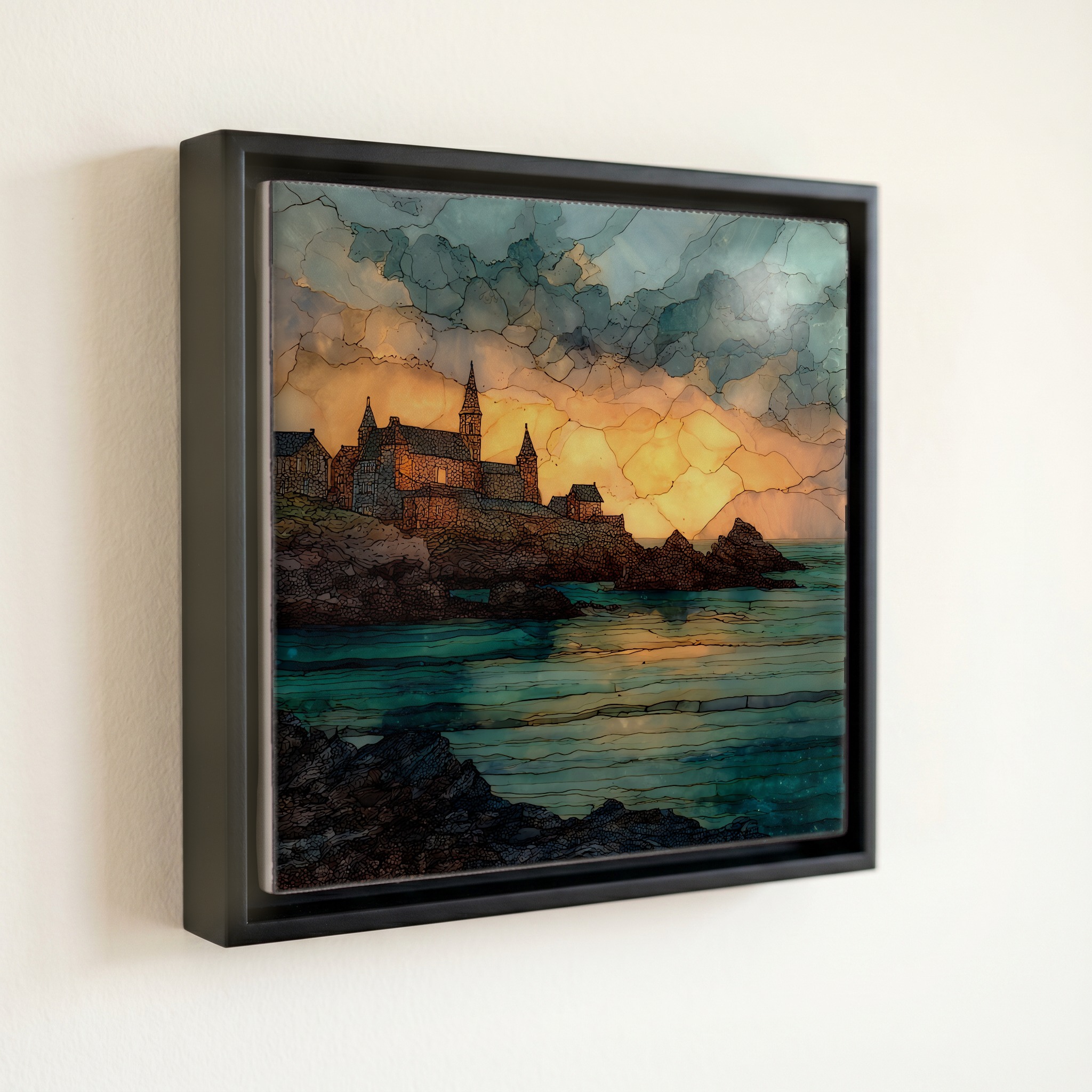
shown in a slim black floating frame · 6 × 6 in
— bring it home

Belle-Ile-en-Mer Aiguilles, on ceramic.

Each tile is finished by hand in our Knoxville studio. Artwork is slowly infused into the ceramic surface under high heat and pressure, and rests beneath a thin glossy finish. The colour lives in the surface, not on top of it.

What kind of piece?
One tile — square or rectangle.
How big?
the popular one — counter, shelf, nightstand
6 × 6 in · 15 cm · 1.6 lb
Surface finish
A clear glossy finish — the artwork reads as if under resin. Ideal for show-pieces and framed wall art.
How it sits
A hidden cleat — sits ¼″ proud of the wall.
$58
Hand-finished and shipped from our studio at the foot of the Smokies. On your wall in about ten days.
size
6 × 6 in
15 cm
weighs
1.6 lb
solid in the hand
surface
ceramic, hand-finished
art rests beneath a thin glossy finish
from
Knoxville, TN
our family studio, at the foot of the Smokies
— start a Coaster Set

Pick any four 4-inch tiles — National Parks you've been to, a Smokies set, the four seasons of one place. $ for a set of , cork-backed, ready to live on the table.
comes gift-ready
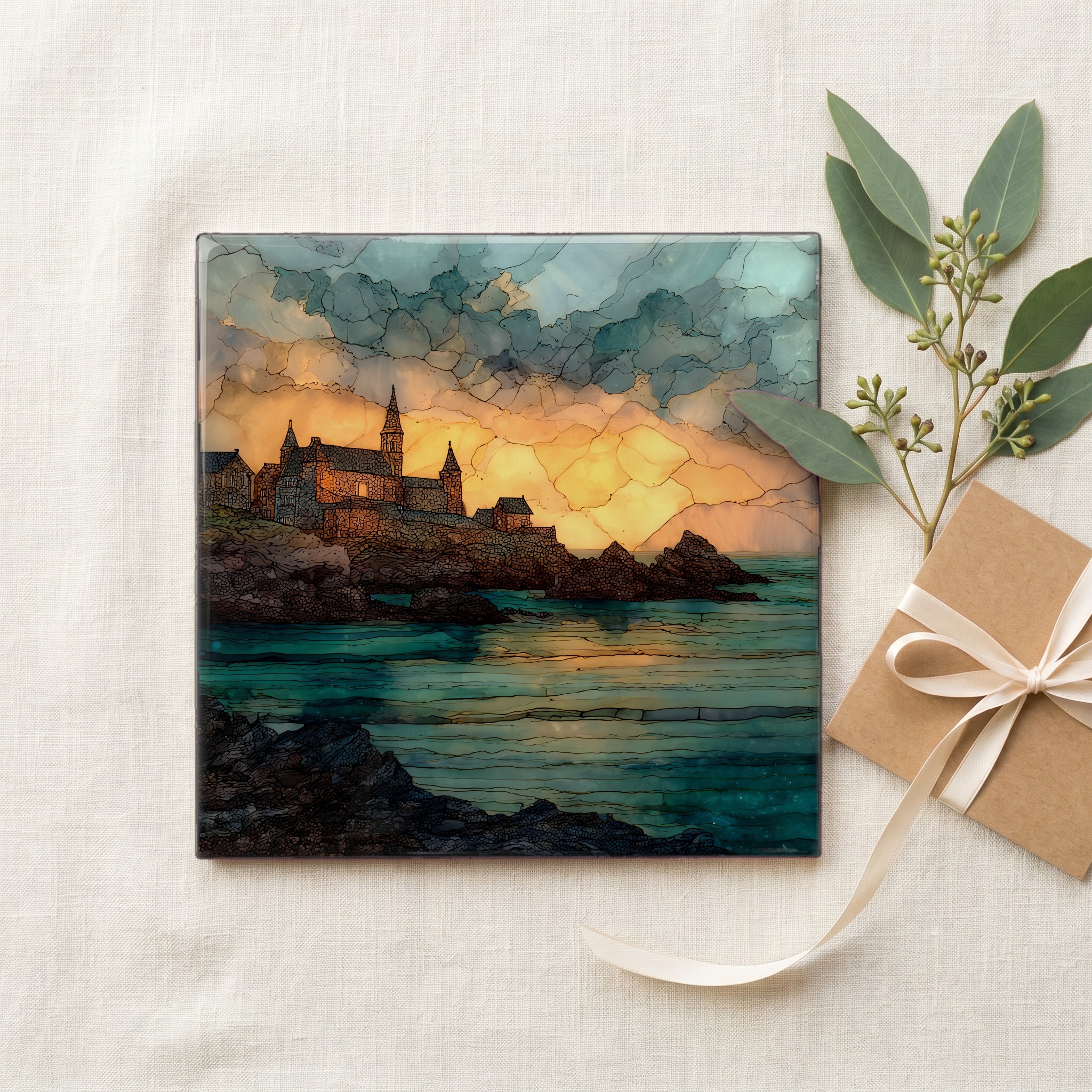
comes gift-ready

Each tile ships in a kraft box, tied with cream ribbon, with a handwritten note from the studio if you'd like to add one.
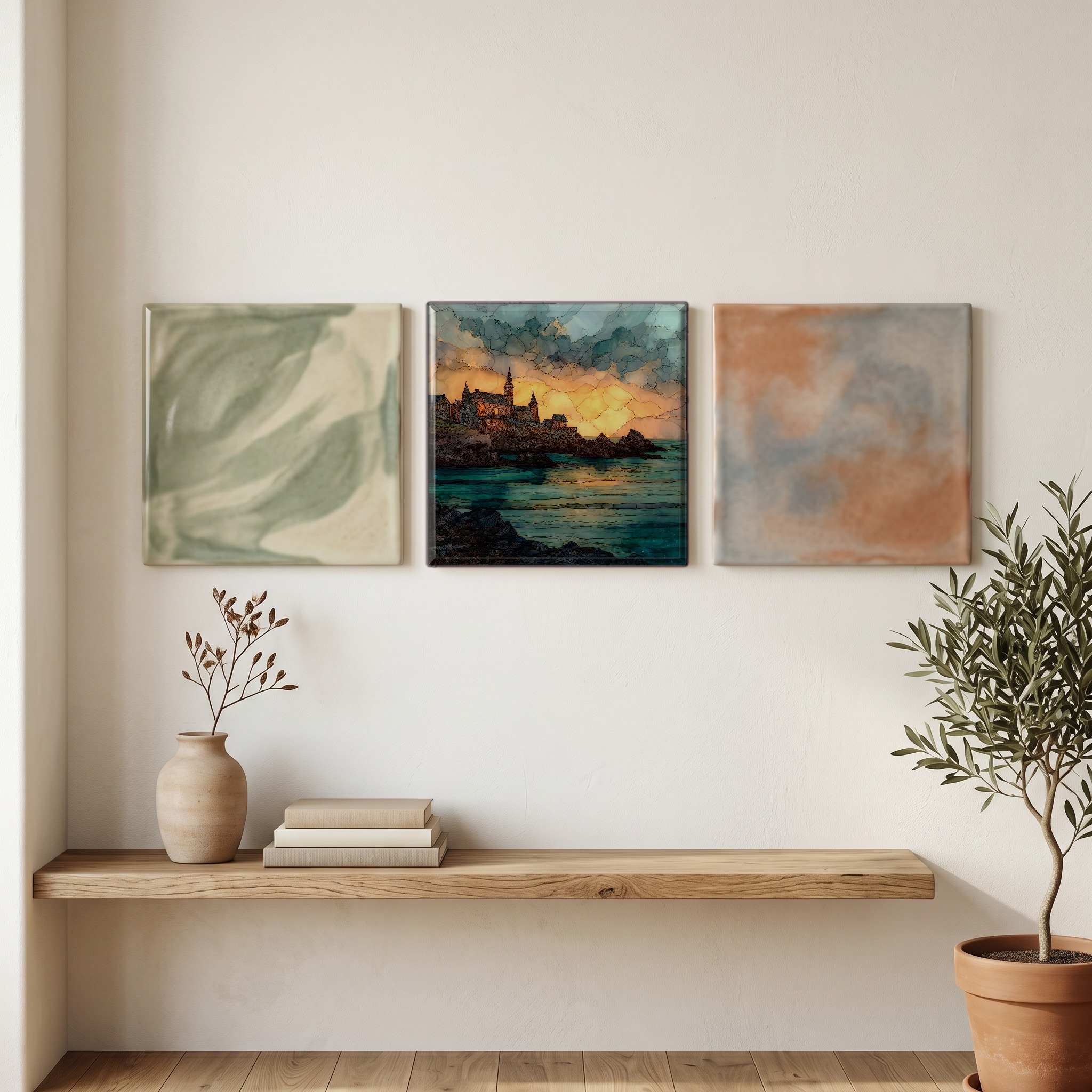
or build a grouping
or build a grouping

Three or five different vistas, hung together — a chapter of places you've been, or want to go.

about Belle-Ile-en-Mer Aiguilles

The place, in three passes.

A little of what's known, in case you fall down the rabbit hole — or want to go see it yourself.
the place

Belle-Île-en-Mer is the largest of Brittany's Atlantic islands, lying about fourteen kilometres off the southern tip of the Quiberon Peninsula in the Morbihan department. The Aiguilles de Port Coton are a cluster of pyramid-shaped sea stacks on the Côte Sauvage, the island's exposed Atlantic flank, in the commune of Bangor. The site sits a short cliff walk from a coastal road pull-off near the Phare de Goulphar, the island's principal lighthouse. Public ferries operated by Compagnie Océane run from Quiberon to the main port at Le Palais, a crossing of about forty-five minutes.

the stone

The needles are eroded outcrops of mica-schist, a metamorphic rock that runs through the basement geology of southern Brittany. Atlantic swell from the open ocean meets the cliff head-on, scouring softer veins out of the rock and leaving the harder cores standing as towers. Claude Monet first saw them in September 1886, on what he intended as a short visit; he stayed until late November and produced thirty-nine canvases of the Belle-Île coast, the first major marine series of his career. The cliffs and the surrounding Côte Sauvage are protected as a classified site administered with the French Conservatoire du Littoral.

the visit

Access is via Compagnie Océane ferries from Quiberon's Port-Maria to Le Palais, with the crossing taking about forty-five minutes. From Le Palais, the south coast site is roughly a twenty-minute drive or an hour by bike. The clifftop trail above the Aiguilles is part of the GR340 long-distance footpath, which circles the entire island in about eighty-five kilometres. The site is open at all hours and free of charge. Wind from the open Atlantic is constant, and the cliff path is unfenced in places, so caution is warranted near the edge.

where
France · Bangor, Morbihan, Brittany
position
47.3100° N · 3.2200° W
the neighborhood

What's nearby.

A handful of named places within an hour's walk or short drive. Some we've already painted; some we will.
2 km E
Bangor
village
2 km E
Phare de Goulphar
lighthouse
6 km NW
Plage de Donnant
Atlantic beach
9 km NE
Le Palais
harbour town
12 km N
Sauzon
fishing harbour
15 km N
Pointe des Poulains
headland
N
Belle-Ile-en-Mer Aiguilles
Bangor
Phare de Goulphar
Plage de Donnant
Le Palais
Sauzon
Pointe des Poulains
common questions

What people ask.

A few questions we get about Belle-Ile-en-Mer Aiguilles — and about bringing the piece home.
about the place

The Aiguilles de Port Coton are a cluster of sea stacks on the Côte Sauvage of Belle-Île-en-Mer, the largest of Brittany's Atlantic islands. They lie in the commune of Bangor on the island's Atlantic-facing south coast, about fourteen kilometres off the Quiberon Peninsula in the Morbihan department.

Monet arrived on Belle-Île in September 1886 intending a short stay and remained until late November, producing thirty-nine canvases of the Côte Sauvage. The Aiguilles appear in roughly a dozen of them. He wrote that the wild Atlantic light and the dark teeth of the coast were unlike anything he had painted before.

The name means Cotton Port, after the white foam the Atlantic surf leaves between the rocks when the swell is running. The cotton metaphor is documented in local usage well before Monet's time and remains the common explanation today.

Public ferries from Quiberon's Port-Maria reach Le Palais in about forty-five minutes, operated by Compagnie Océane on a daily schedule. From Le Palais, the south coast and the Aiguilles are a twenty-minute drive, roughly fifteen kilometres along the island roads.

Late afternoon, when the sun cuts low across the water and the towers go dark against the white surf, is the classic photographer's hour. June through September offers the most reliable weather; the island is exposed to North Atlantic storms from November through March.

There is no safe access to the rocks themselves; they sit in the surf zone below sheer cliffs. The cliff path along the GR340 long-distance trail offers the standard viewpoints and is unfenced in places. Visitors stay well back from the edge in wind, which is most days.

Yes. The actress bought a former coastal fort above the Pointe des Poulains on the island's north tip in 1894 and summered there until her death in 1923. The site, now called the Domaine Sarah Bernhardt, is open as a small museum, several hours' walk from the Aiguilles around the Côte Sauvage.

about the piece in your home

It has been a meaningful gift for many of our customers connected to the Breton coast. Belle-Île and the Côte Sauvage are touchstones for anyone from southern Brittany, and the Aiguilles are familiar from Monet's series as much as from a weekend ferry crossing. The Small with a handwritten note from the studio carries well; the Medium suits a hallway.

The deep Atlantic blues and the dark stained-glass treatment land easily in Coastal-modern, French-country, and Jewel-tone Maximalist rooms. The piece reads as fine art rather than beach decor, so it sits well alongside other framed work rather than driving a theme.

Coastal-modern in 2026 has moved toward darker, moodier palettes (dark teal, granite, dusk-blue) and away from the bleached white-and-rope look of the prior decade. The Aiguilles tile reads in this newer register, with the surf showing as white against the dark of the rock and water.

A single Large fills the space above a standard six-foot console. Above a sofa or a longer credenza, a four-tile Mural in a two-by-two grid, or a nine-tile Mural in three-by-three, holds the wall. The Triptych works for narrow vertical bays.

Yes. Order the Dura Satin or Matte finish for any installation that will see steam, splash, or vertical placement near a stove. The colour lives in the ceramic surface and will not fade or scratch under household conditions. The Glossy finish is for framed wall art only.

A soft microfibre cloth and clean water. No abrasive pads, no ammonia or bleach cleaners. The colour is slowly infused into the ceramic surface under high heat and pressure and will not wear off, but harsh chemicals can dull the finish over years of regular contact.

Yes. Every Wender Studios piece comes out of a single studio in Knoxville, Tennessee, under the eye of Reid Wender. There is no licensing; the work cannot be bought from any other source. Each tile is hand-finished before it leaves the building.

if this one stayed with you

A few you might also love.

Hand-picked by the eye that found Sorapis. Same air, same kind of quiet.