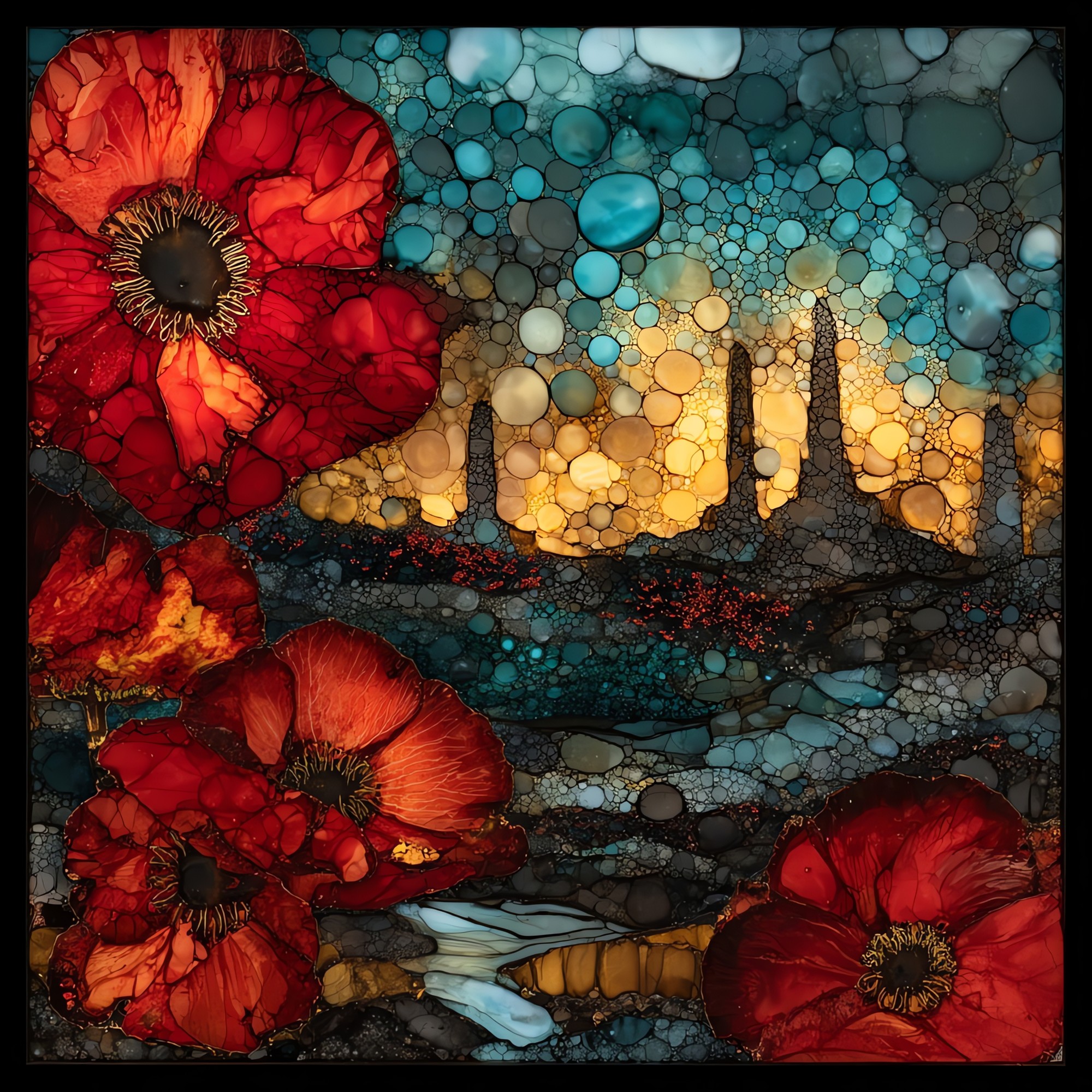
Wender·Vista
Bayeux Commonwealth War Cemetery
shown on ceramic, 12-inch tileFrance
just inland from the Normandy beaches

Bayeux Commonwealth War Cemetery

rows of white, kept by Normandy grass.

Where it lives

Not only on a wall.

A small tile on the nightstand catching the morning. A larger one above the fire. Yours, wherever you spend the slow hours.
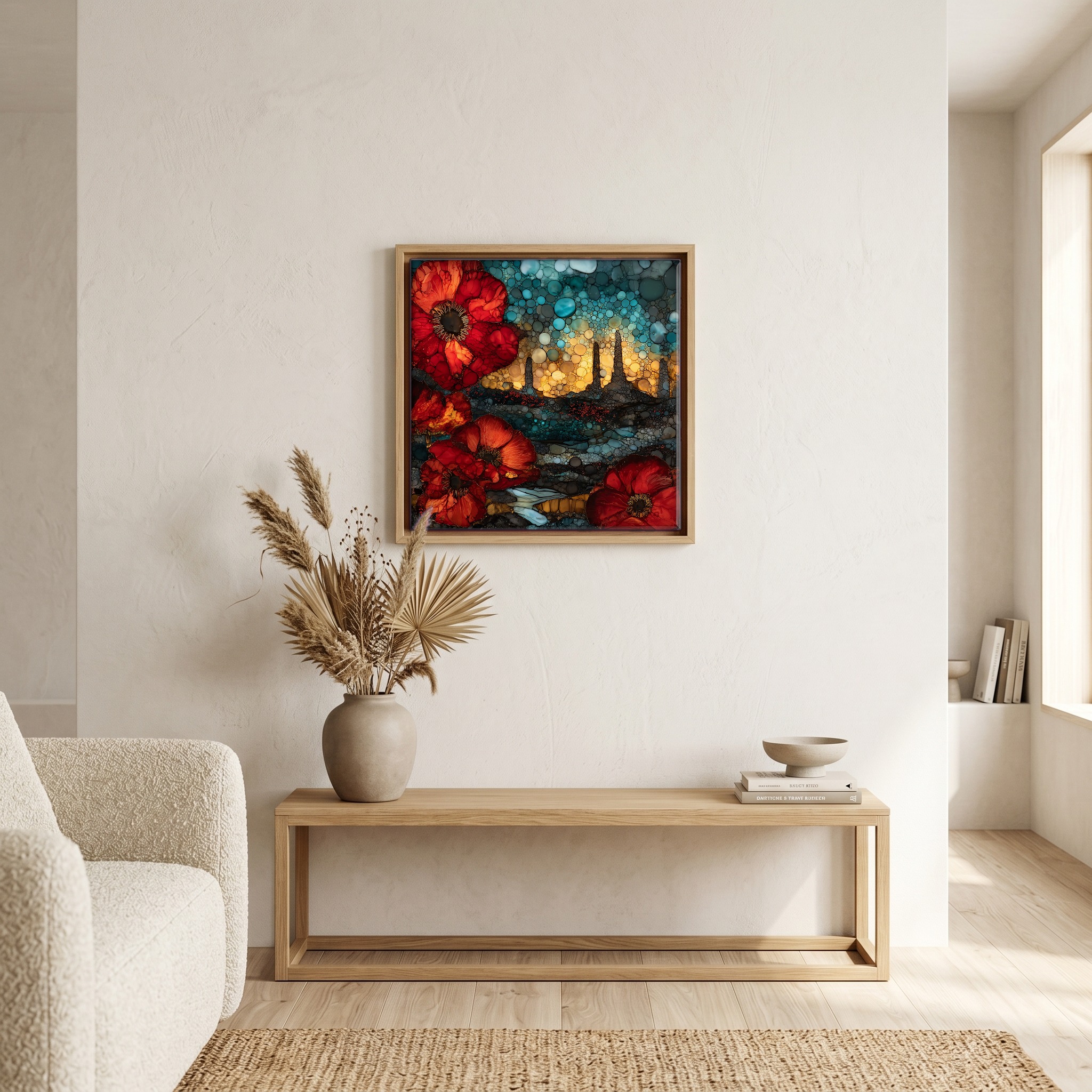
Above the bench, in a warm oak surround.
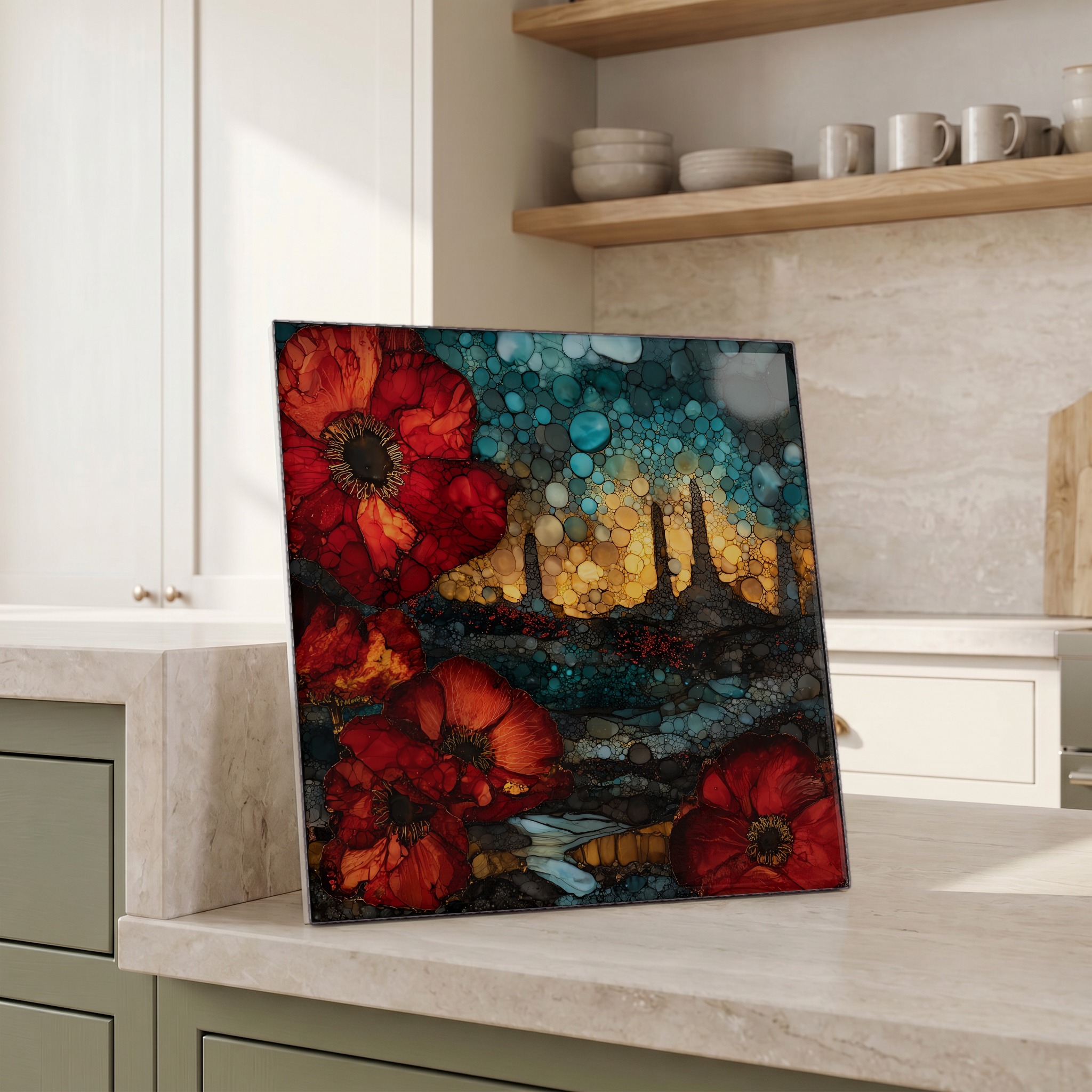
Beside the kettle, propped on the counter.
Above the linens, in a slim black surround.
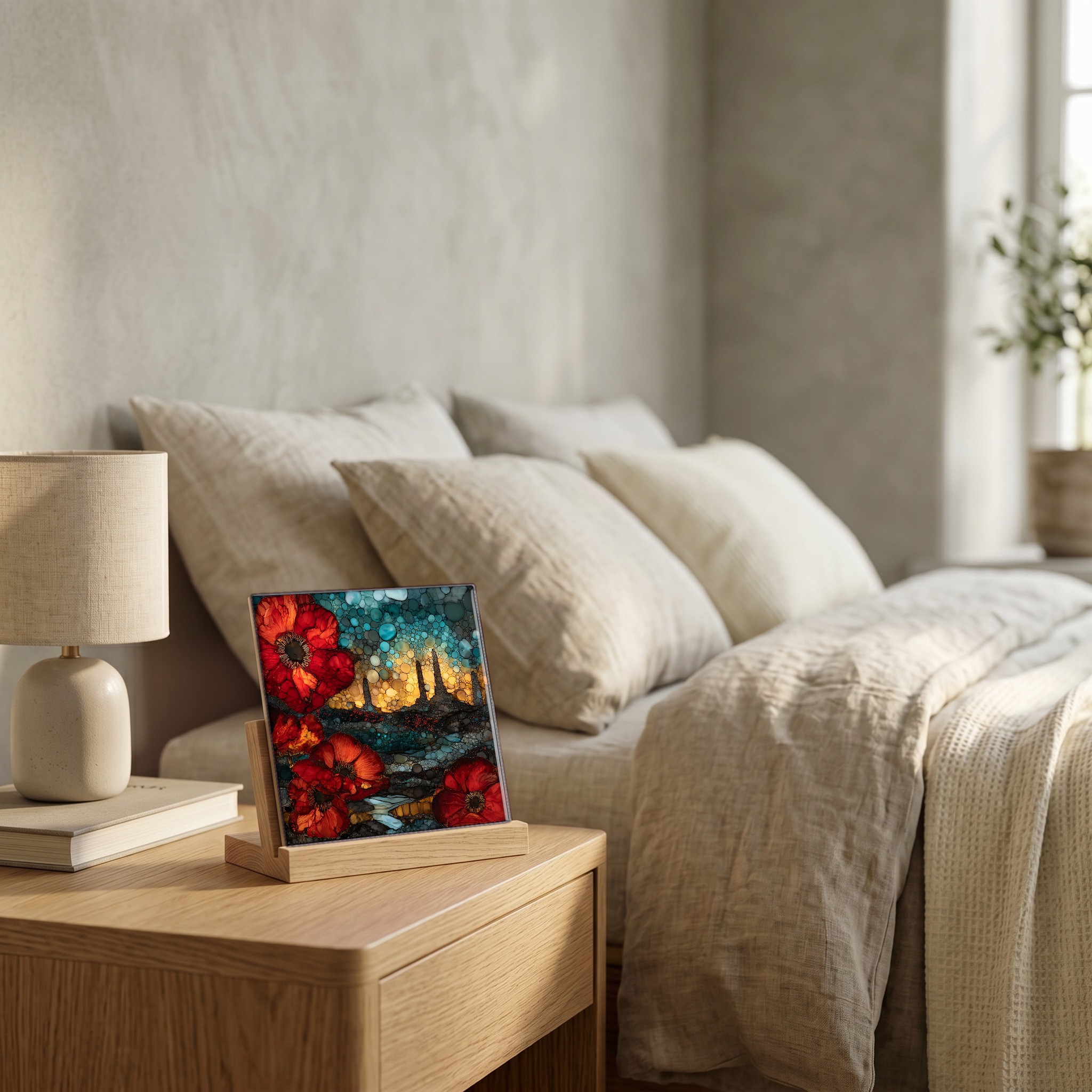
On the nightstand, on a light oak stand.
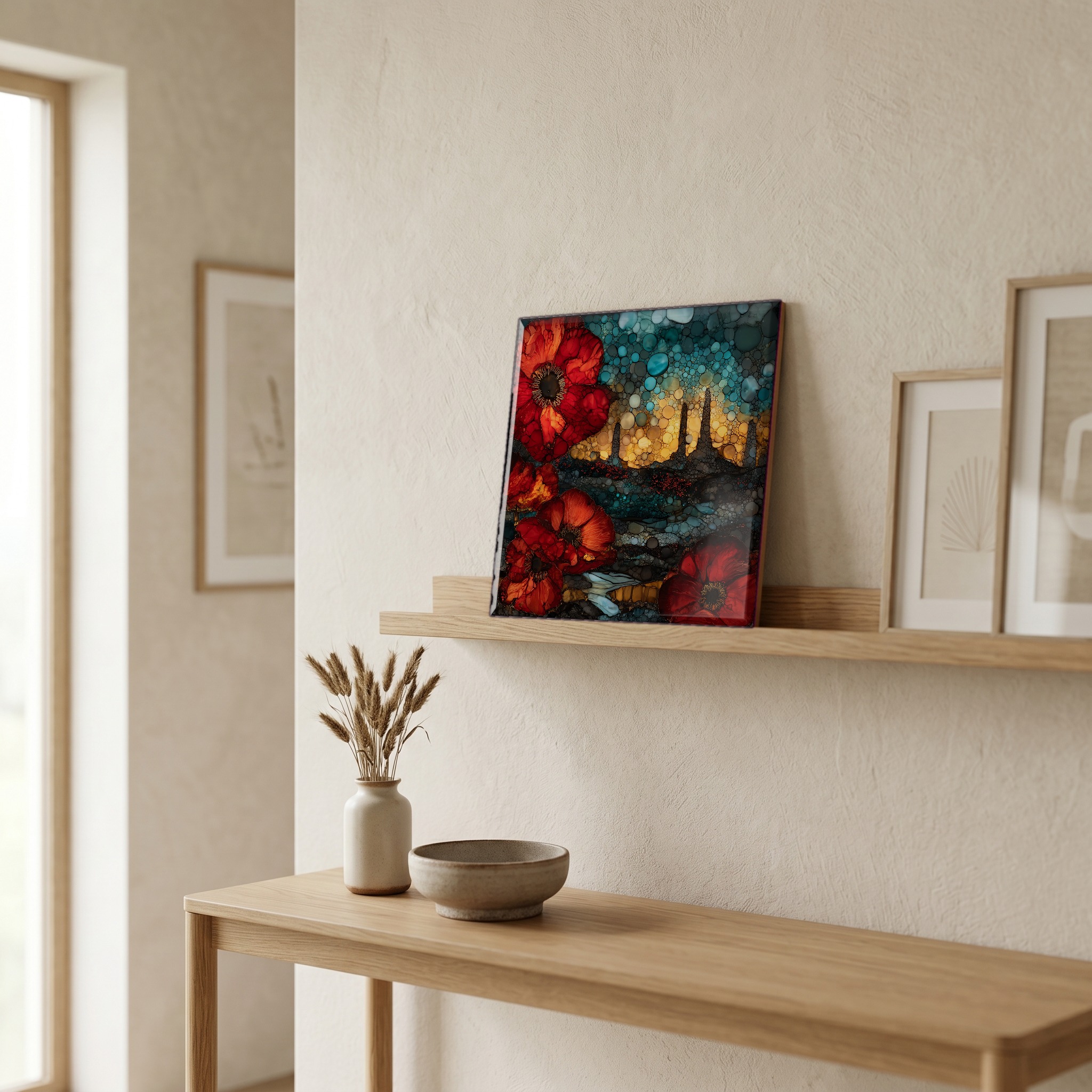
On a picture ledge, where the light comes in.
a note from the studio

The largest Commonwealth war cemetery in Normandy, on the inland side of Bayeux. 4,648 Commonwealth headstones in long rows on a green lawn, designed by Sir Philip Hepworth and completed in 1952. Most of the men died in the weeks after D-Day. Five hundred more graves, the majority German, lie in the same grass, kept by the same hands. Across the road, the Bayeux Memorial names more than 1,800 with no known grave. Bayeux was the first French town liberated, on June 7th, 1944. People come, walk the rows slowly, and leave. The town keeps going, with its cathedral and the Bayeux Tapestry, a few minutes away.
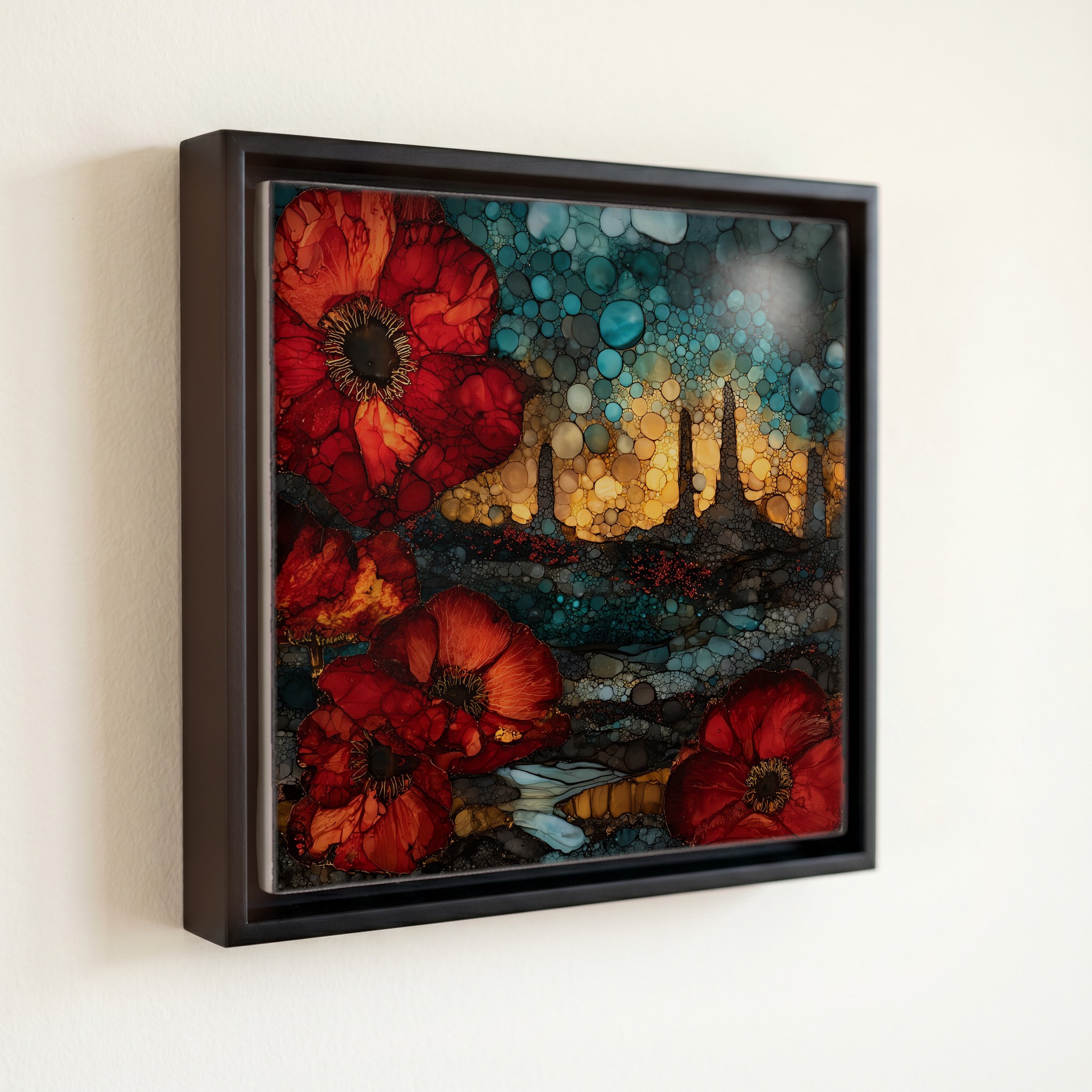
from the studio
shown in a slim black floating frame · 6 × 6 in
— bring it home

Bayeux Commonwealth War Cemetery, on ceramic.

Each tile is finished by hand in our Knoxville studio. Artwork is slowly infused into the ceramic surface under high heat and pressure, and rests beneath a thin glossy finish. The colour lives in the surface, not on top of it.

What kind of piece?
One tile — square or rectangle.
How big?
the popular one — counter, shelf, nightstand
6 × 6 in · 15 cm · 1.6 lb
Surface finish
A clear glossy finish — the artwork reads as if under resin. Ideal for show-pieces and framed wall art.
How it sits
A hidden cleat — sits ¼″ proud of the wall.
$58
Hand-finished and shipped from our studio at the foot of the Smokies. On your wall in about ten days.
size
6 × 6 in
15 cm
weighs
1.6 lb
solid in the hand
surface
ceramic, hand-finished
art rests beneath a thin glossy finish
from
Knoxville, TN
our family studio, at the foot of the Smokies
— start a Coaster Set

Pick any four 4-inch tiles — National Parks you've been to, a Smokies set, the four seasons of one place. $ for a set of , cork-backed, ready to live on the table.

comes gift-ready
comes gift-ready

Each tile ships in a kraft box, tied with cream ribbon, with a handwritten note from the studio if you'd like to add one.
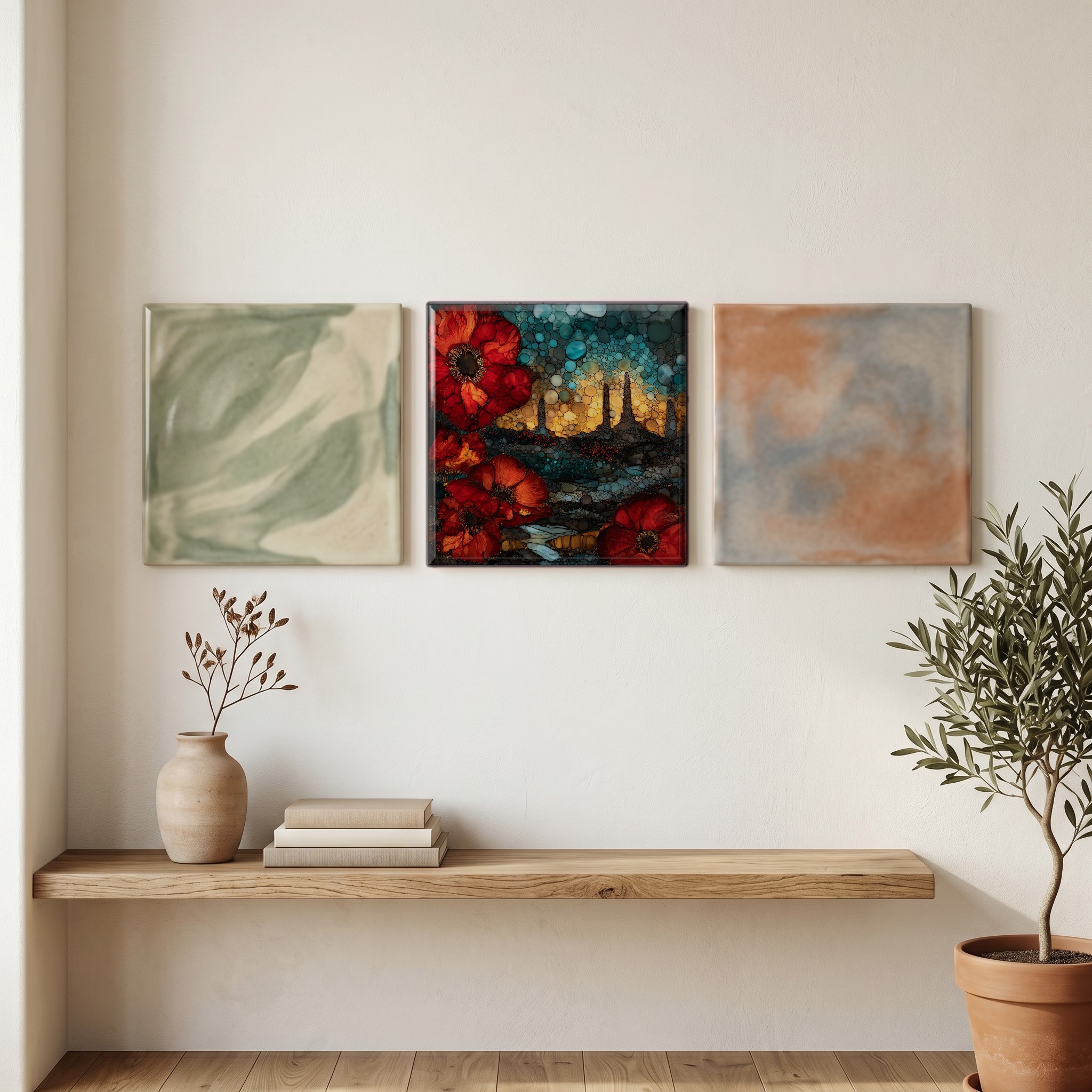
or build a grouping
or build a grouping

Three or five different vistas, hung together — a chapter of places you've been, or want to go.

about Bayeux Commonwealth War Cemetery

The place, in three passes.

A little of what's known, in case you fall down the rabbit hole — or want to go see it yourself.
the place

Bayeux Commonwealth War Cemetery sits on Boulevard Fabian Ware, on the southwest edge of Bayeux in Normandy, about ten kilometres inland from the D-Day beaches at Gold and Omaha. It is the largest Commonwealth Second World War cemetery in France, holding 4,648 Commonwealth burials, 338 of them unidentified. A further 500 graves hold soldiers of other nationalities, the majority of them German. The Commonwealth War Graves Commission, founded by Sir Fabian Ware, took the land here in 1944, and the cemetery was completed in 1952. Most of those buried died in the Battle of Normandy that began on 6 June 1944. Across the road, the Bayeux Memorial names more than 1,800 Commonwealth servicemen who died in the campaign and have no known grave.

the stone

The cemetery is the work of Sir Philip Hepworth, the British architect who designed several Commonwealth cemeteries in France after the Second World War. Headstones are the standard Portland stone the Commission uses across its sites, 76 centimetres tall, set in long parallel rows on a low green lawn. Each is carved with a regimental badge, a name, an age, and where the family wished it, a personal inscription. The Cross of Sacrifice stands at the front; the Stone of Remembrance, designed by Sir Edwin Lutyens, sits at the centre of the lawn. Across the road, the Bayeux Memorial carries a Latin frieze: Nos a Gulielmo victi victoris patriam liberavimus, meaning 'we, once conquered by William, have liberated the conqueror's native land.' William the Conqueror set out from Normandy in 1066.

the visit

The cemetery is open to the public free of charge, every day, during daylight hours. Boulevard Fabian Ware runs along its eastern boundary, with parking on the road and at the adjacent Mémorial de la Bataille de Normandie museum. The Bayeux Memorial faces the cemetery across the road and is open in the same hours. Visitors are asked to walk quietly between the rows and to leave the personal inscriptions, regimental badges, and any small mementoes left by families undisturbed. The Bayeux town centre, the cathedral, and the Bayeux Tapestry museum are all within fifteen minutes' walk. The Commonwealth War Graves Commission maintains the cemetery; full lists of the dead, with photographs of every headstone, are searchable on their public register.

where
France · Bayeux, Calvados, Normandy
position
49.2745° N · 0.7027° W
the neighborhood

What's nearby.

A handful of named places within an hour's walk or short drive. Some we've already painted; some we will.
1 km N
Bayeux Cathedral
Norman Gothic cathedral
1 km N
Bayeux Tapestry Museum
museum of the 11th-century embroidery
10 km N
Arromanches-les-Bains
Gold Beach town, Mulberry harbour remains
15 km NW
Omaha Beach
D-Day landing beach
20 km NW
Normandy American Cemetery
American war cemetery, Colleville-sur-Mer
28 km NW
Pointe du Hoc
Ranger landing point and memorial
N
Bayeux Commonwealth War Cemetery
Bayeux Cathedral
Bayeux Tapestry Museum
Arromanches-les-Bains
Omaha Beach
Normandy American Cemetery
Pointe du Hoc
common questions

What people ask.

A few questions we get about Bayeux Commonwealth War Cemetery — and about bringing the piece home.
about the place

It is the largest Commonwealth Second World War cemetery in France, holding 4,648 Commonwealth burials of soldiers who died in the Battle of Normandy from 6 June 1944. It lies on Boulevard Fabian Ware in Bayeux, on the inland side of the D-Day beaches.

The 4,648 Commonwealth burials are mostly British, with smaller numbers of Canadian, Australian, New Zealand, South African, Polish, Czech, French, and Italian dead. A further 500 graves hold soldiers of other nationalities, the majority German. 338 Commonwealth graves are unidentified.

Sir Philip Hepworth, the British architect, designed Bayeux War Cemetery for the Imperial (now Commonwealth) War Graves Commission. The Stone of Remembrance at its centre was designed by Sir Edwin Lutyens, the architect responsible for the Cenotaph in Whitehall.

The frieze reads Nos a Gulielmo victi victoris patriam liberavimus, which translates as 'we, once conquered by William, have liberated the conqueror's native land.' It refers to William the Conqueror, who sailed from Normandy to invade England in 1066.

The Commonwealth War Graves Commission took the land at Bayeux in 1944, immediately after the town's liberation on 7 June. The cemetery was completed in 1952. It is maintained by the Commission to this day.

The Bayeux Memorial stands directly opposite the cemetery on Boulevard Fabian Ware. It carries the names of more than 1,800 Commonwealth servicemen who died in the early Normandy campaign and have no known grave. Hepworth designed both.

Bayeux was the first French town liberated after D-Day, on 7 June 1944, the day after the landings. It was largely undamaged by the fighting, which spared its cathedral and the 11th-century tapestry depicting the Norman conquest of England.

about the piece in your home

It's been a meaningful gift for our customers with ties to the Normandy campaign. A Small or Medium with a handwritten note from the studio works for a Remembrance Day or anniversary gift. The artwork reads quiet rather than heroic, which is what most families seek in a remembrance piece.

The palette is muted whites, greens, and soft greys, with the stained-glass colour work kept restrained. It sits well in classic, traditional English, and minimalist interiors, and in any room where the wall is meant to be still: a study, a library, a hallway.

Yes. The piece reads as quiet remembrance rather than heroic battle imagery, which suits a memorial wall. A Triptych or small Mural works well above a sideboard or console, and a Coaster Set pairs naturally with a larger piece for an everyday remembrance.

Above a standard sofa, a single Large is the most common choice; above a wider sofa or sideboard, a 4-tile Mural reads stronger. For a hallway or a stair landing, a 9-tile Mural fills the wall properly.

Yes, with the Dura Satin or Matte finish. Both are scratch-resistant and built for vertical installation in showers, backsplashes, or anywhere humidity is a factor. The Glossy finish is reserved for framed wall pieces in dry rooms.

A soft microfibre cloth and warm water is enough for any of the three finishes. No abrasive cleaners, no glass spray. The colour lives in the ceramic surface and will not fade with normal cleaning over decades.

Yes. Every WenderVista piece is original to the studio, painted in our stained-glass and alcohol-ink language, then slowly infused into the ceramic surface under high heat and pressure. No licensing, no shared catalogue. The work is finished by hand in Knoxville, Tennessee.

if this one stayed with you

A few you might also love.

Hand-picked by the eye that found Sorapis. Same air, same kind of quiet.