Wender·Vista
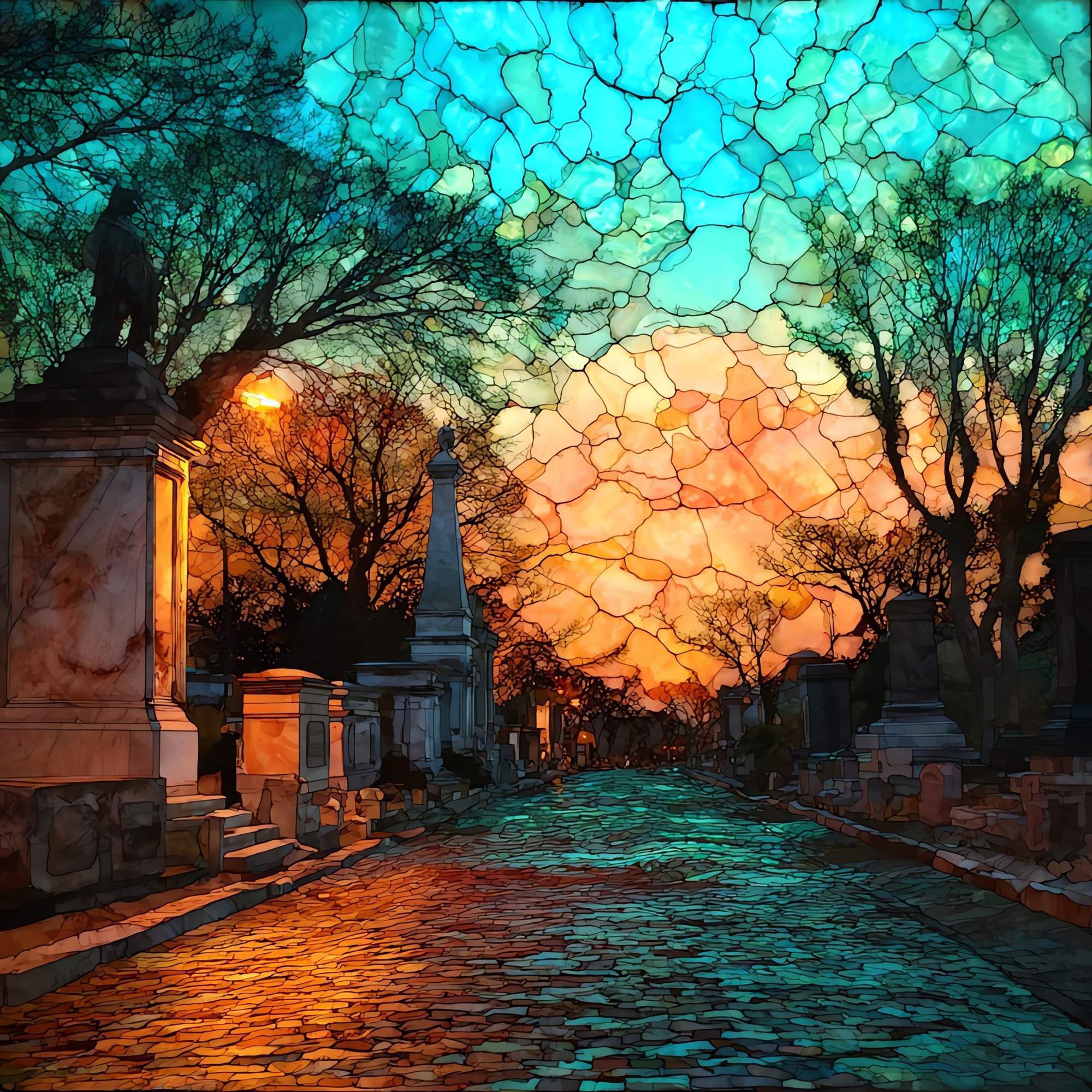
Avenue Foch
shown on ceramic, 12-inch tileFrance
between the Arc de Triomphe and the Bois de Boulogne

Avenue Foch

the wide quiet under the chestnuts.

Where it lives

Not only on a wall.

A small tile on the nightstand catching the morning. A larger one above the fire. Yours, wherever you spend the slow hours.
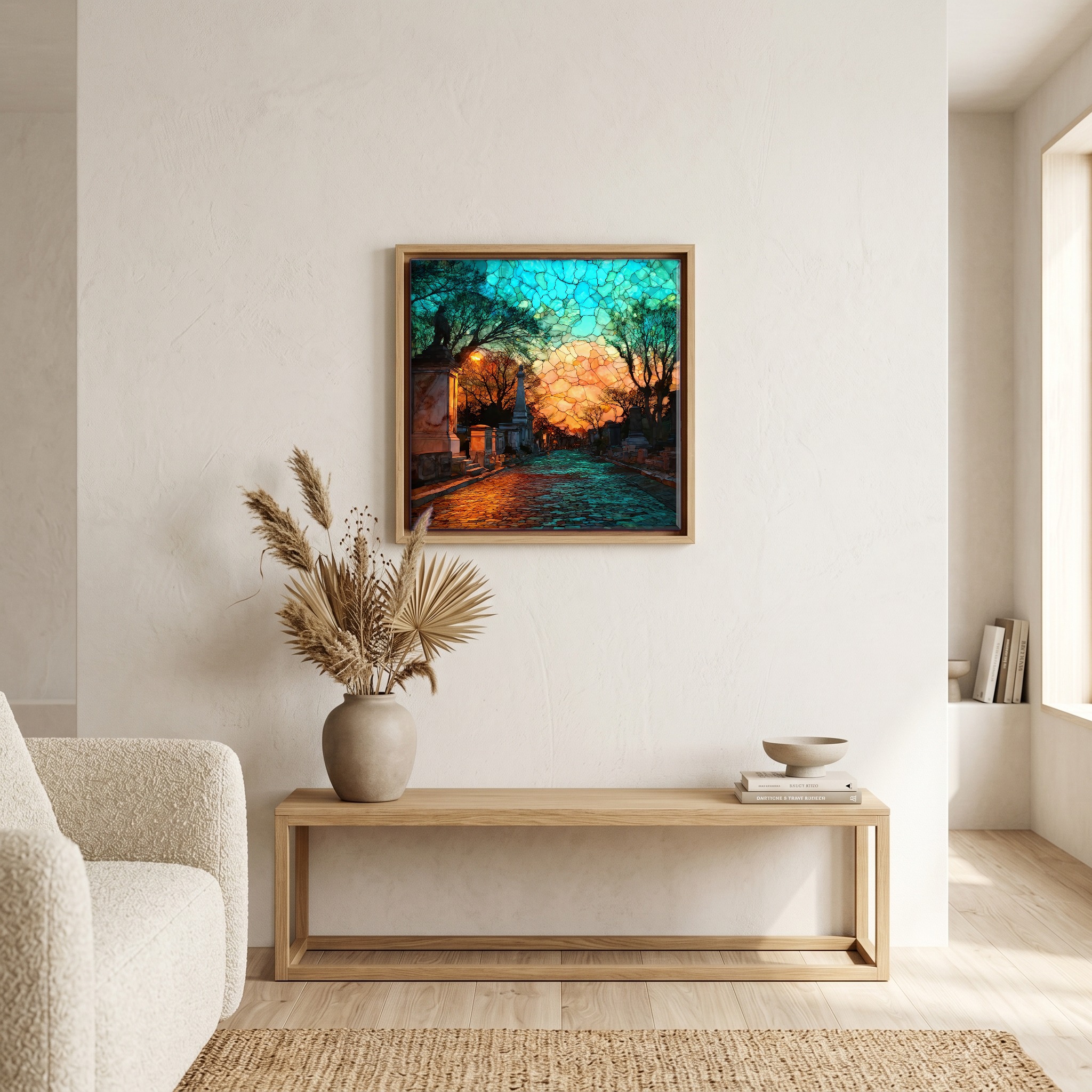
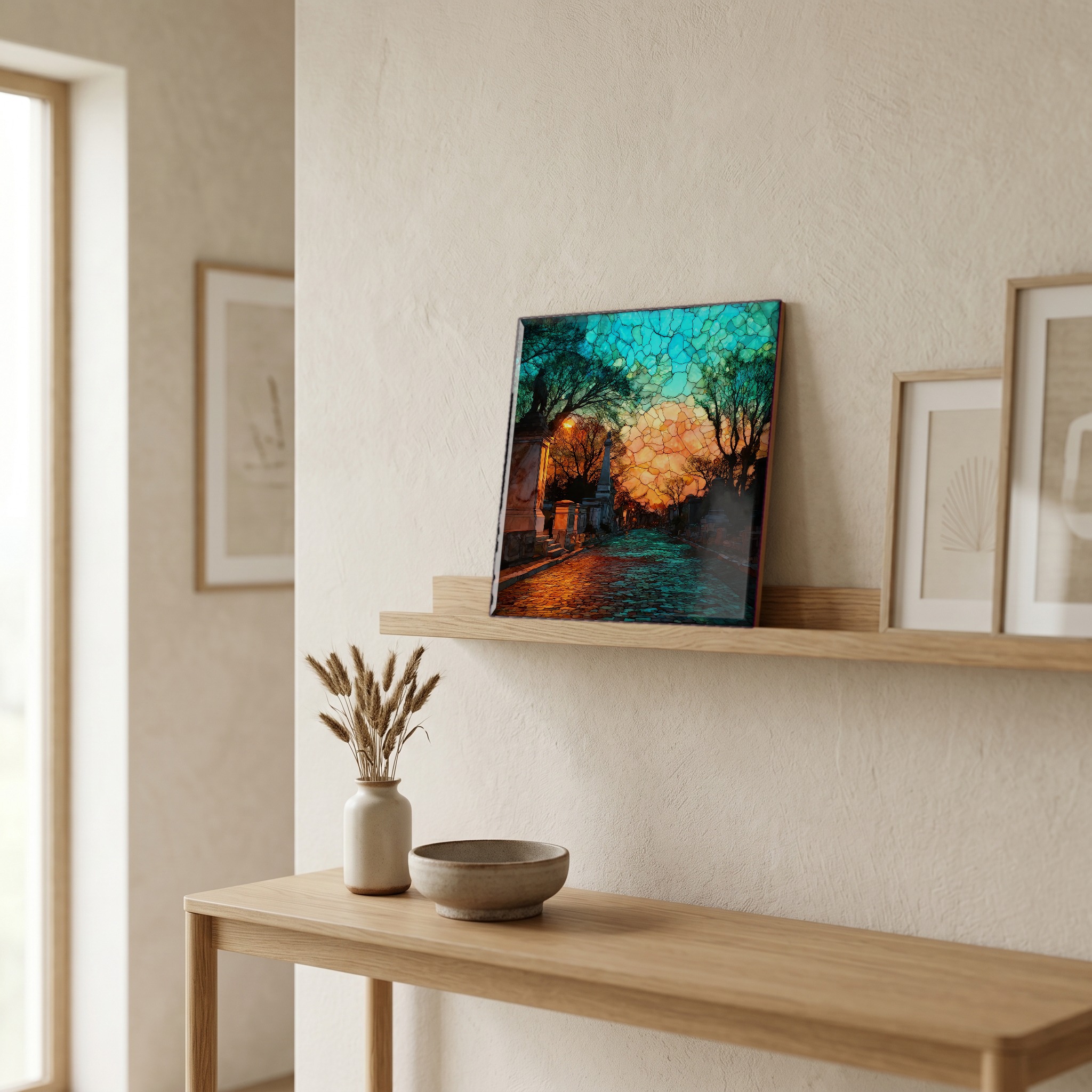
Above the bench, in a warm oak surround.
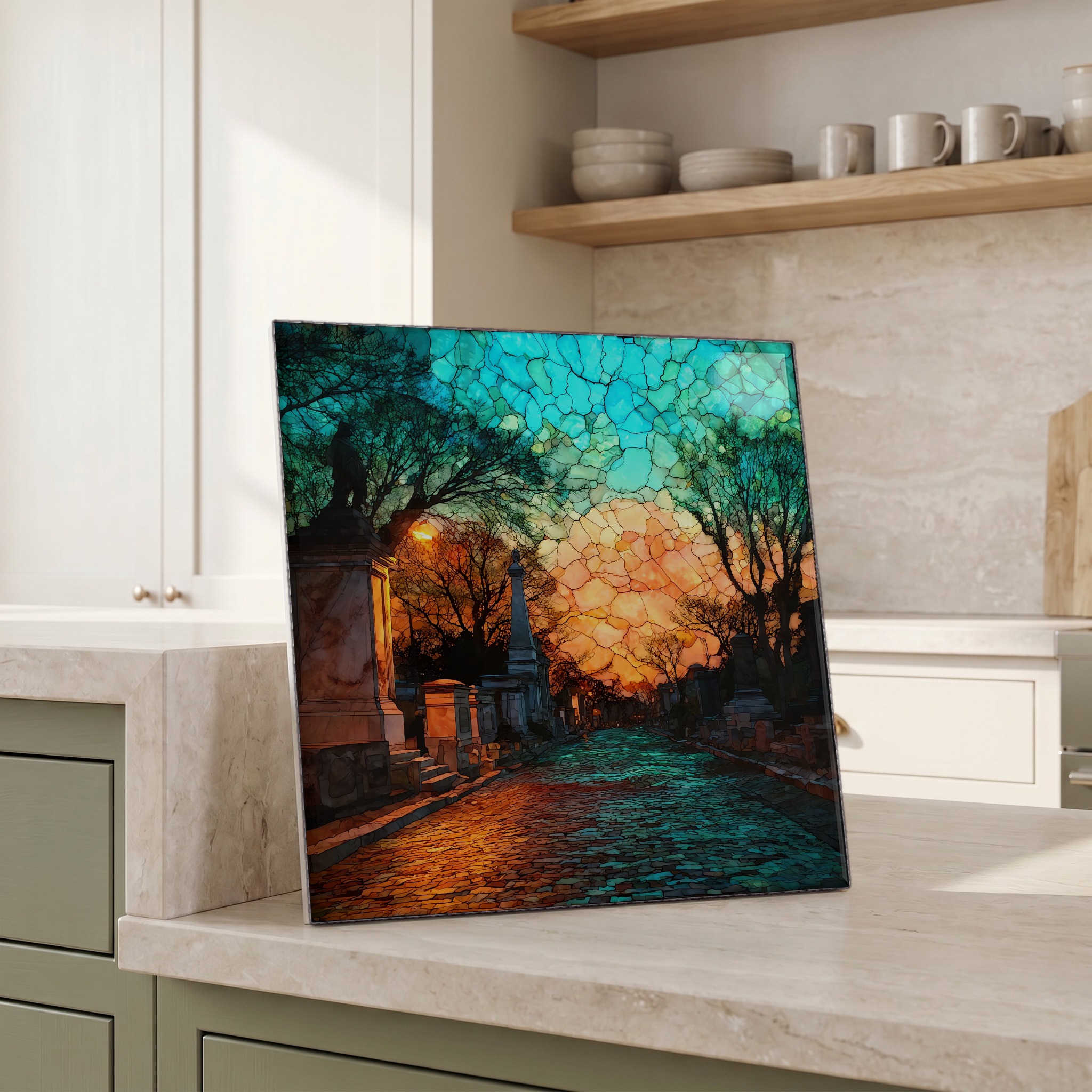
Beside the kettle, propped on the counter.
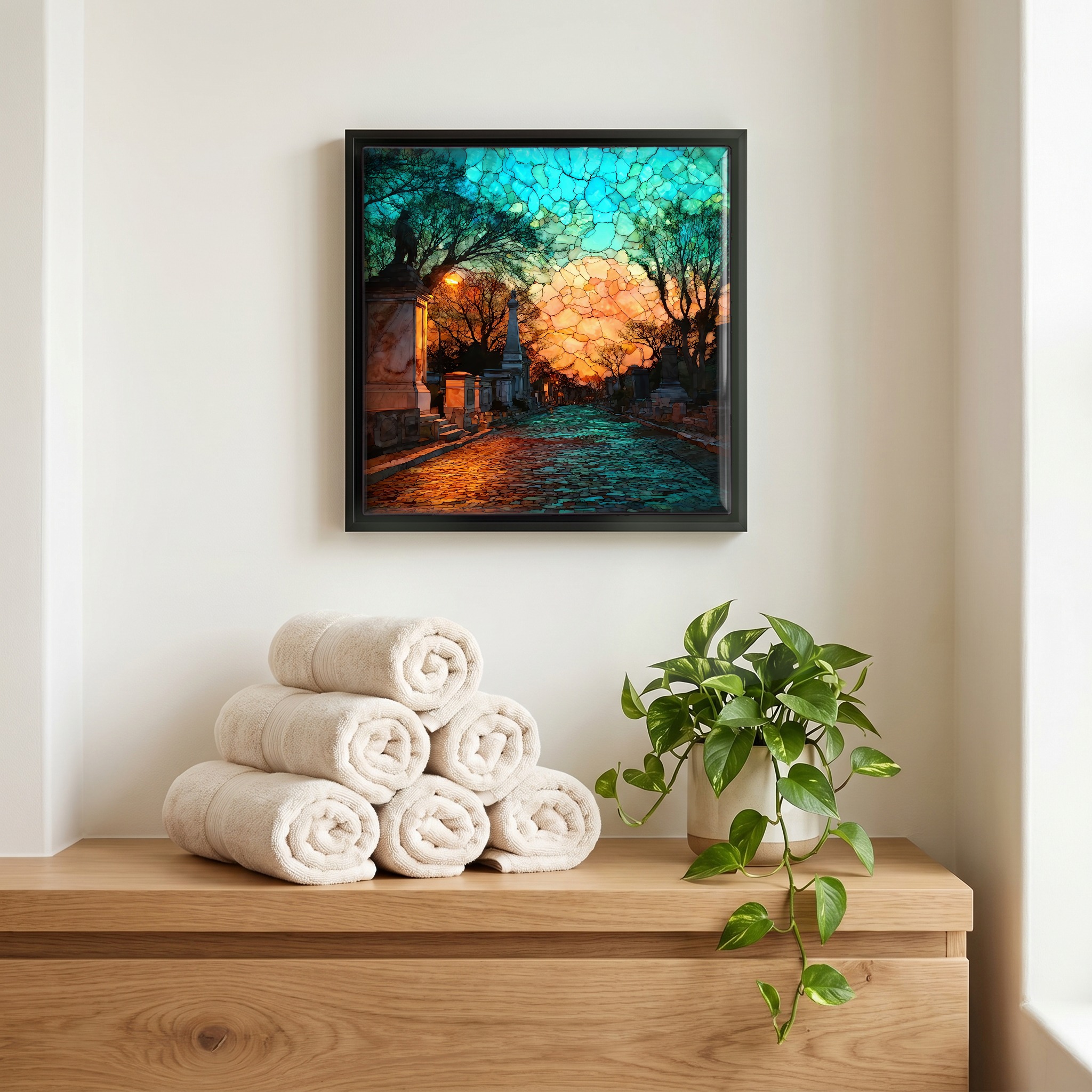
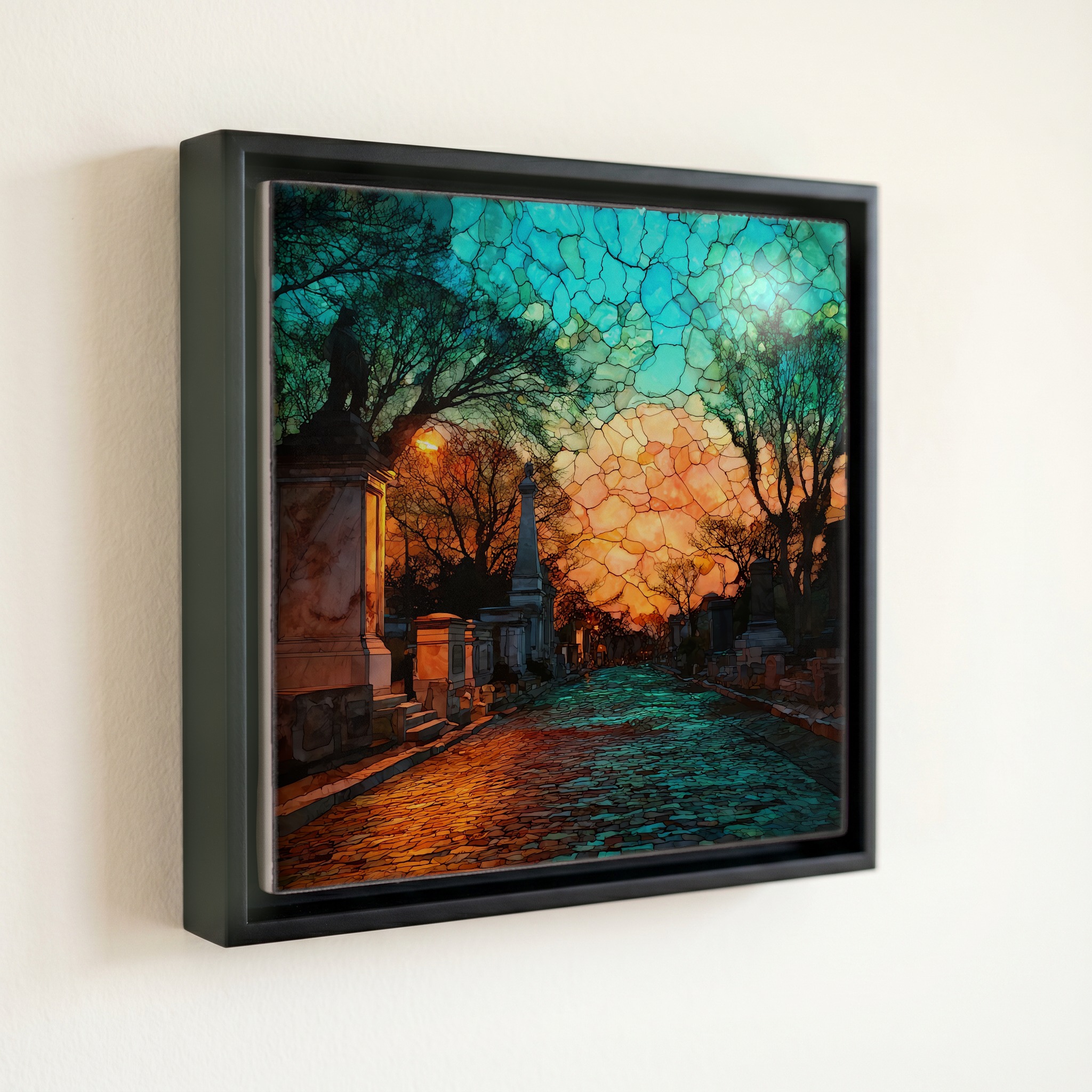
Above the linens, in a slim black surround.
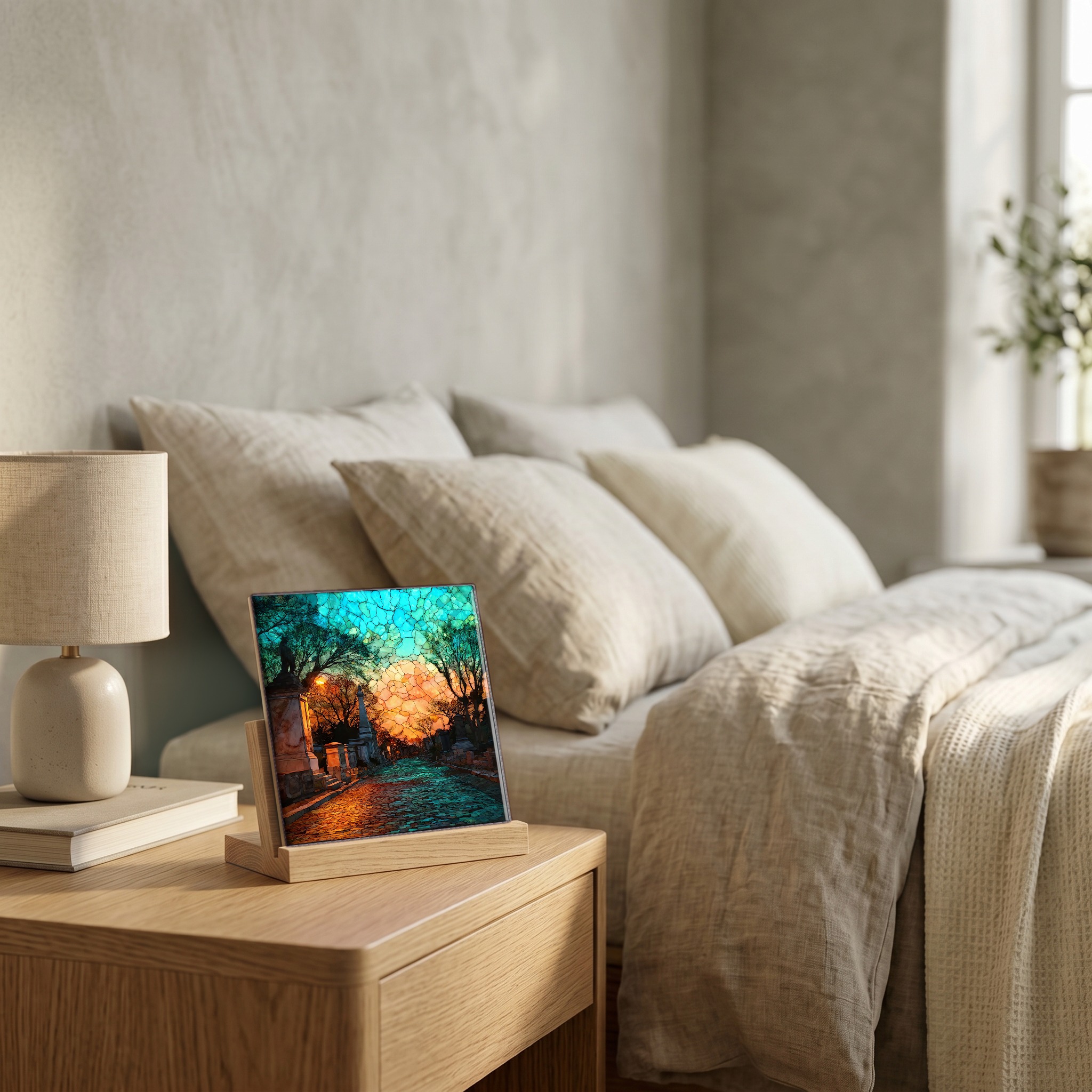
On the nightstand, on a light oak stand.
On a picture ledge, where the light comes in.
a note from the studio

One of the widest avenues in Paris, opened under Napoleon III in the 1850s and named first for the Empress Eugénie, then in 1929 for the Marshal who held the Allied line in 1918. The chestnut canopies and grassy side allées run for a kilometre and a quarter, from the Arc de Triomphe out to the gates of the Bois de Boulogne. Mansions sit back behind their gates. Embassies share the postcode with families who have lived here for four generations. It's a long walk, and the grass strips along the centre carry as much foot traffic as the pavements.
from the studio
shown in a slim black floating frame · 6 × 6 in
— bring it home

Avenue Foch, on ceramic.

Each tile is finished by hand in our Knoxville studio. Artwork is slowly infused into the ceramic surface under high heat and pressure, and rests beneath a thin glossy finish. The colour lives in the surface, not on top of it.

What kind of piece?
One tile — square or rectangle.
How big?
the popular one — counter, shelf, nightstand
6 × 6 in · 15 cm · 1.6 lb
Surface finish
A clear glossy finish — the artwork reads as if under resin. Ideal for show-pieces and framed wall art.
How it sits
A hidden cleat — sits ¼″ proud of the wall.
$58
Hand-finished and shipped from our studio at the foot of the Smokies. On your wall in about ten days.
size
6 × 6 in
15 cm
weighs
1.6 lb
solid in the hand
surface
ceramic, hand-finished
art rests beneath a thin glossy finish
from
Knoxville, TN
our family studio, at the foot of the Smokies
— start a Coaster Set

Pick any four 4-inch tiles — National Parks you've been to, a Smokies set, the four seasons of one place. $ for a set of , cork-backed, ready to live on the table.
comes gift-ready
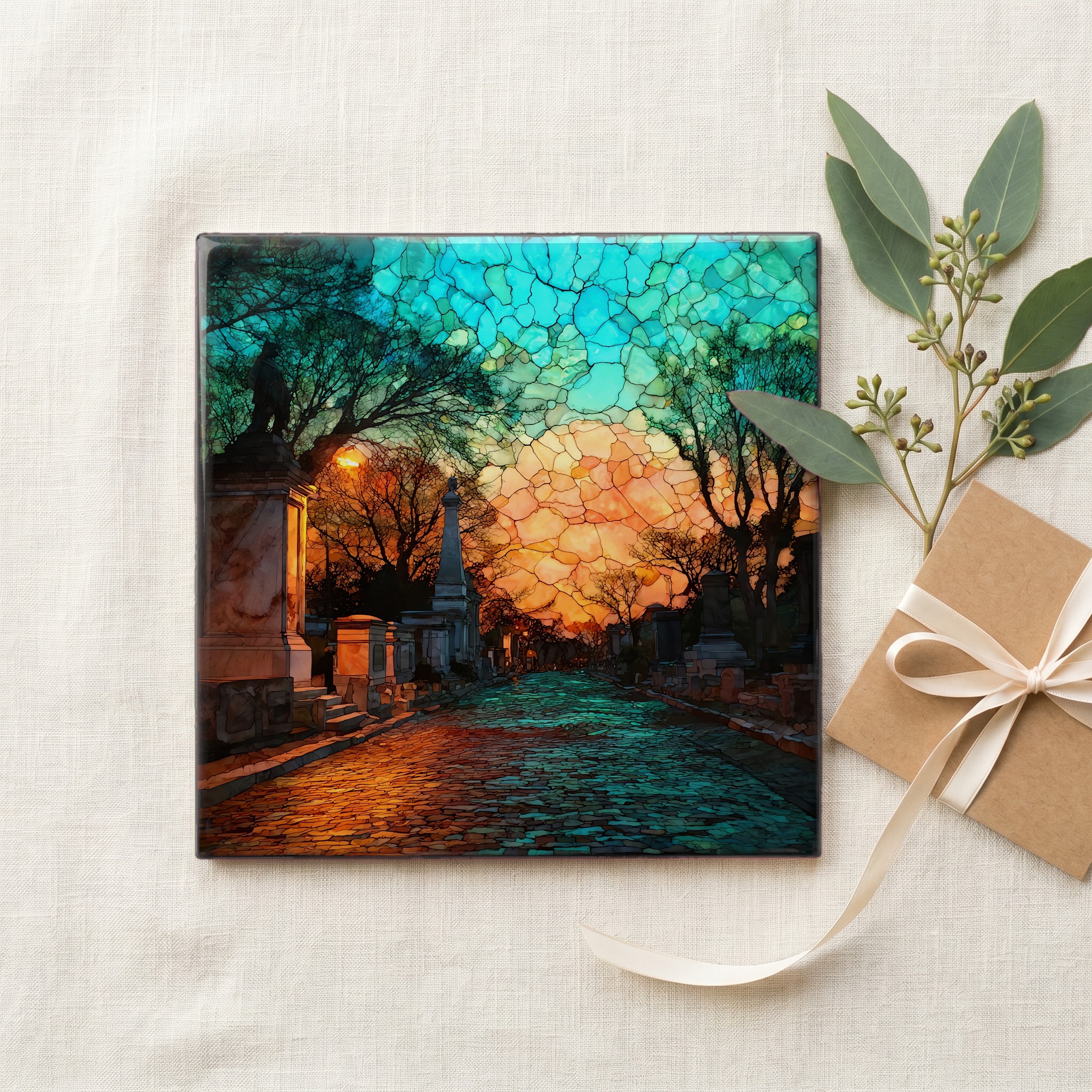
comes gift-ready

Each tile ships in a kraft box, tied with cream ribbon, with a handwritten note from the studio if you'd like to add one.
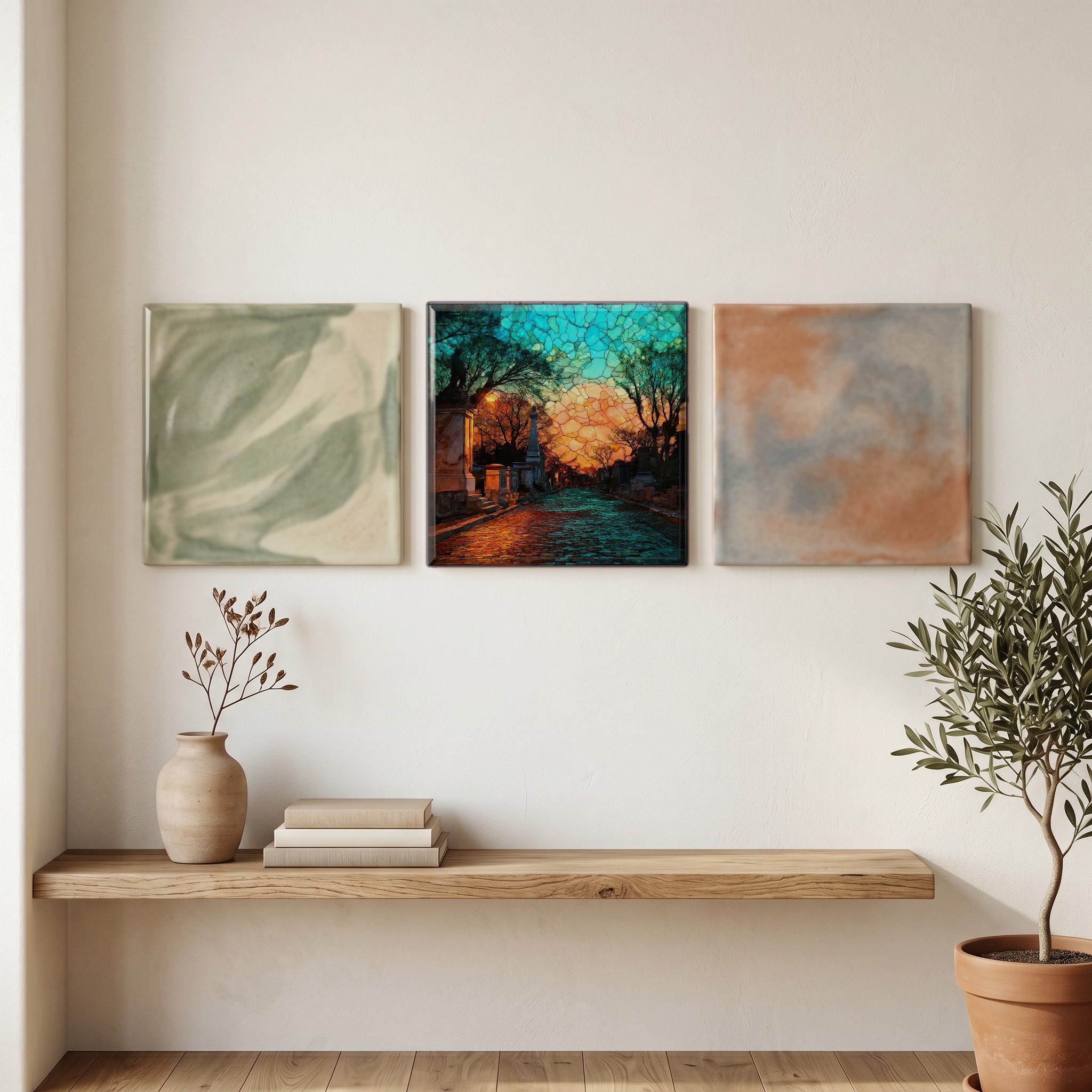
or build a grouping
or build a grouping

Three or five different vistas, hung together — a chapter of places you've been, or want to go.

about Avenue Foch

The place, in three passes.

A little of what's known, in case you fall down the rabbit hole — or want to go see it yourself.
the place

Avenue Foch runs for about 1.3 kilometres through the 16th arrondissement of western Paris, from the Place Charles de Gaulle at the Arc de Triomphe to the Porte Dauphine, where it opens onto the Bois de Boulogne. At roughly 120 metres across, it is one of the widest avenues in the city, with paved roadways flanking deep grass allées and double rows of chestnut trees. The avenue was laid out in the 1850s by the engineer Adolphe Alphand under Baron Haussmann, on the orders of Napoleon III, and originally named Avenue de l'Impératrice for the Empress Eugénie. It has been renamed twice since: Avenue du Bois de Boulogne in 1875 after the fall of the Second Empire, then Avenue Foch in 1929, the year Marshal Ferdinand Foch died.

the stone

The buildings along Avenue Foch are largely late nineteenth and early twentieth century, hôtels particuliers in the Beaux-Arts and Second Empire idioms, built within the boulevard system Baron Haussmann drew across Paris in the 1860s. Façades of pale Lutetian limestone, mansard slate roofs, wrought-iron balconies, and deep set-backs behind ornamental gates. Many of the buildings now serve as foreign embassies and consulates; others remain private residences passed through generations. The address has been considered among the most expensive in Europe for more than a century, and resale prices on the avenue routinely set the upper bound of the Paris residential market.

the silence

For an avenue that begins at the busiest roundabout in Paris, Avenue Foch is unusually quiet. The width, roughly 120 metres curb to curb, does much of the work. Vehicle traffic is held to two narrow roadways at the centre, while the outer thirds of the avenue are given over to lawn, gravel paths, benches, and the double rows of chestnuts. Residents walk dogs on the grass in the morning. The Bois de Boulogne, the 845-hectare park at the avenue's western end, draws joggers and pram-pushers past the apartment gates and out into the trees. On a still afternoon, the loudest sound on the median is gravel underfoot.

where
France · Paris, Île-de-France
position
48.8720° N · 2.2860° E
the neighborhood

What's nearby.

A handful of named places within an hour's walk or short drive. Some we've already painted; some we will.
at the lake
Arc de Triomphe
triumphal arch· on a tile
at the lake
Bois de Boulogne
urban park
1 km E
Champs-Élysées
avenue
2 km SE
Trocadéro
plaza
3 km SE
Eiffel Tower
monument
4 km W
Grande Arche de la Défense
modern monument
3 km E
Place de la Concorde
plaza
N
Avenue Foch
Arc de Triomphe
Bois de Boulogne
Champs-Élysées
Trocadéro
Eiffel Tower
Grande Arche de la Défense
Place de la Concorde
common questions

What people ask.

A few questions we get about Avenue Foch — and about bringing the piece home.
about the place

Avenue Foch is in the 16th arrondissement of western Paris. It runs about 1.3 kilometres from the Place Charles de Gaulle at the Arc de Triomphe out to the Porte Dauphine at the eastern edge of the Bois de Boulogne.

The avenue is named for Marshal Ferdinand Foch (1851–1929), the French general who served as Supreme Allied Commander on the Western Front in the final months of the First World War. It was renamed in his honour the year he died.

Avenue Foch is roughly 120 metres curb to curb, which makes it one of the widest avenues in the city. The width is largely given over to lawn allées and double rows of chestnut trees, with two narrow roadways carrying traffic down the centre.

The avenue was opened in the 1850s as Avenue de l'Impératrice, in honour of the Empress Eugénie, wife of Napoleon III. After the fall of the Second Empire it was renamed Avenue du Bois de Boulogne in 1875, then Avenue Foch in 1929.

The combination of width, the chestnut canopy, the grass allées, and the procession of nineteenth-century hôtels particuliers has made Avenue Foch a benchmark Paris address since the Belle Époque. Resale prices on the avenue routinely set the upper bound of the Paris residential market.

The Bois de Boulogne, the 845-hectare park on the western edge of Paris, twice the size of New York's Central Park. It was redesigned in the 1850s by Adolphe Alphand under Napoleon III, in the same programme that produced Avenue Foch itself.

about the piece in your home

It's been a meaningful gift for many of our customers with ties to the city. Avenue Foch is the long green corridor most Parisians associate with the 16th, the residential quiet between the Arc de Triomphe and the Bois de Boulogne. A Coaster or a Small with a handwritten note from the studio carries well.

The chestnut greens, limestone whites, and slate of the painted treatment sit well in three palettes: traditional Parisian-apartment with brass and warm wood, contemporary gallery walls with cream and matte black, and quiet Japandi rooms. A single Medium or Large carries the wall.

It works for both. European Modern has leaned toward muted, painterly art that names a place without illustrating it. The studio's stained-glass linework reads warmer and more textural than the usual black-and-white Paris photograph, and pairs well with a small framed Arc de Triomphe or Eiffel Tower.

A single Large is the usual choice above a sofa. For a longer wall or a more architectural look, a four-tile Mural reads as one painting, and a nine-tile Mural gives the avenue its full processional length. Above a console, a Medium is the right weight.

Yes, in the Dura Satin or Matte finish, which are scratch-resistant and built for vertical installation. The Glossy finish is for show-pieces and framed wall art and is not recommended in wet rooms.

A soft microfibre cloth and a little water. No abrasive scrubbers and no household chemicals; the colour lives in the ceramic surface and does not need treatment.

Yes. Every WenderVista painting is made in-house by Reid Wender, the studio's curator and eye. The work is not licensed from any other artist or stock library, and no two place-paintings repeat in the catalogue.

if this one stayed with you

A few you might also love.

Hand-picked by the eye that found Sorapis. Same air, same kind of quiet.