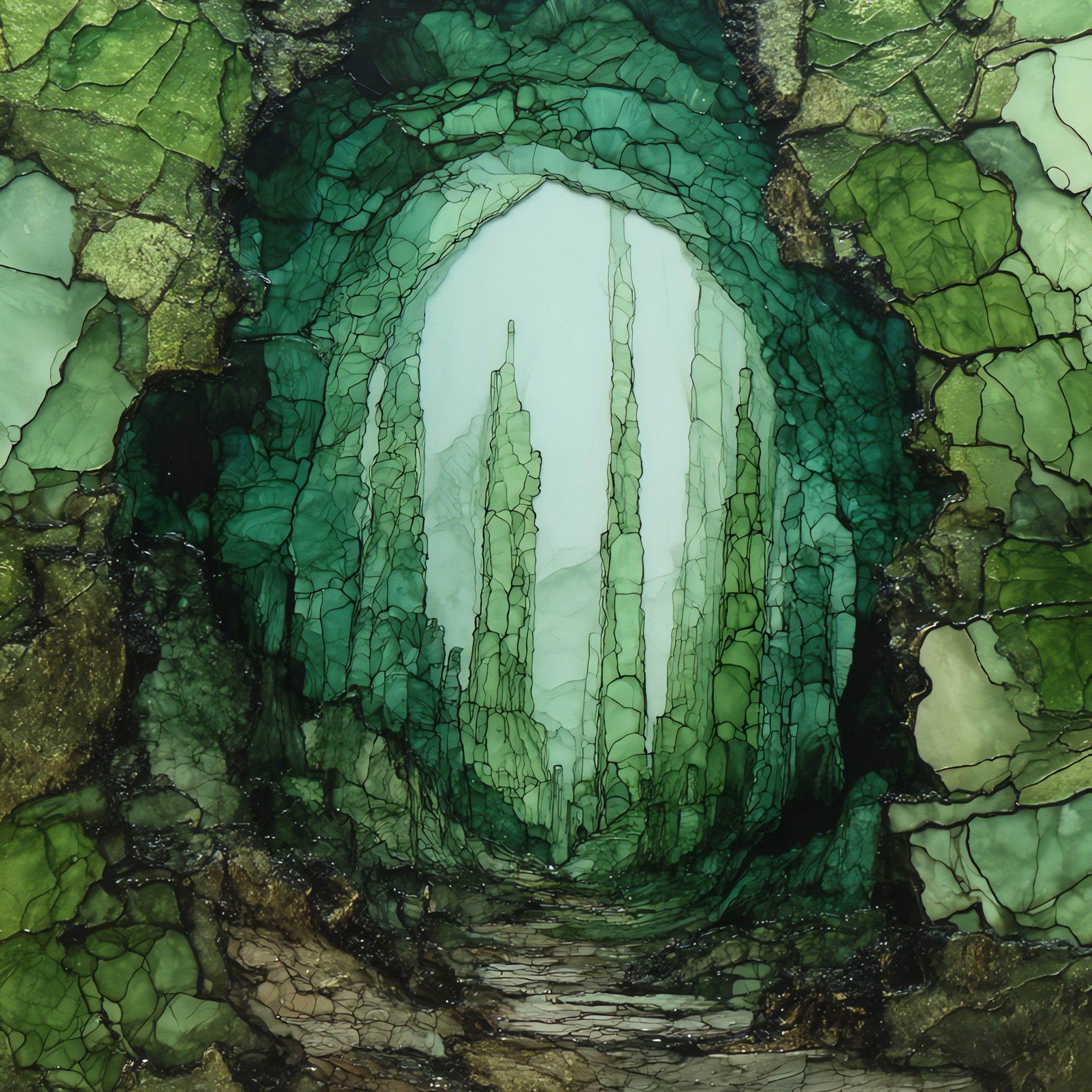
Aven Armand
— the cathedral the water grew in the dark.
Not only on a wall.
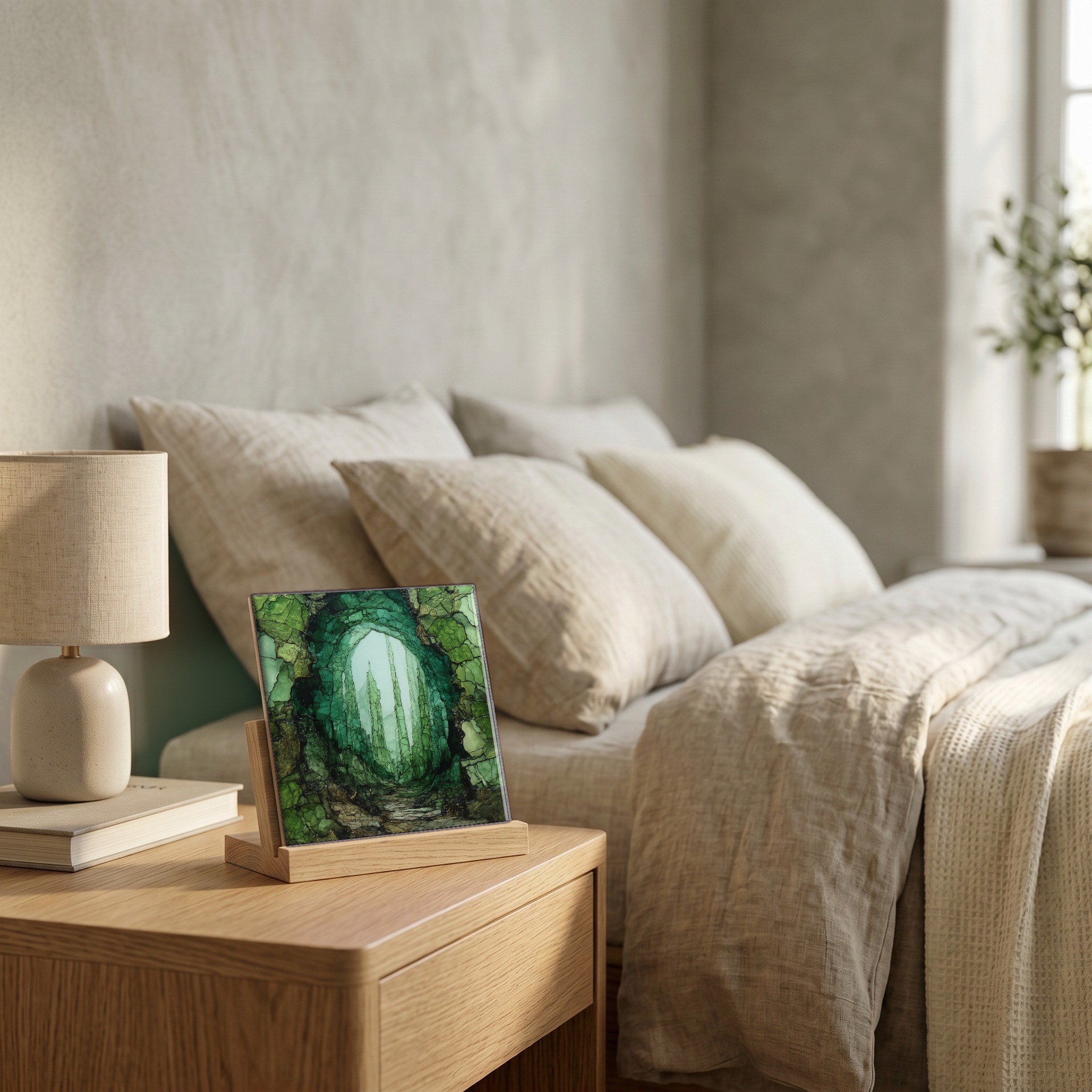
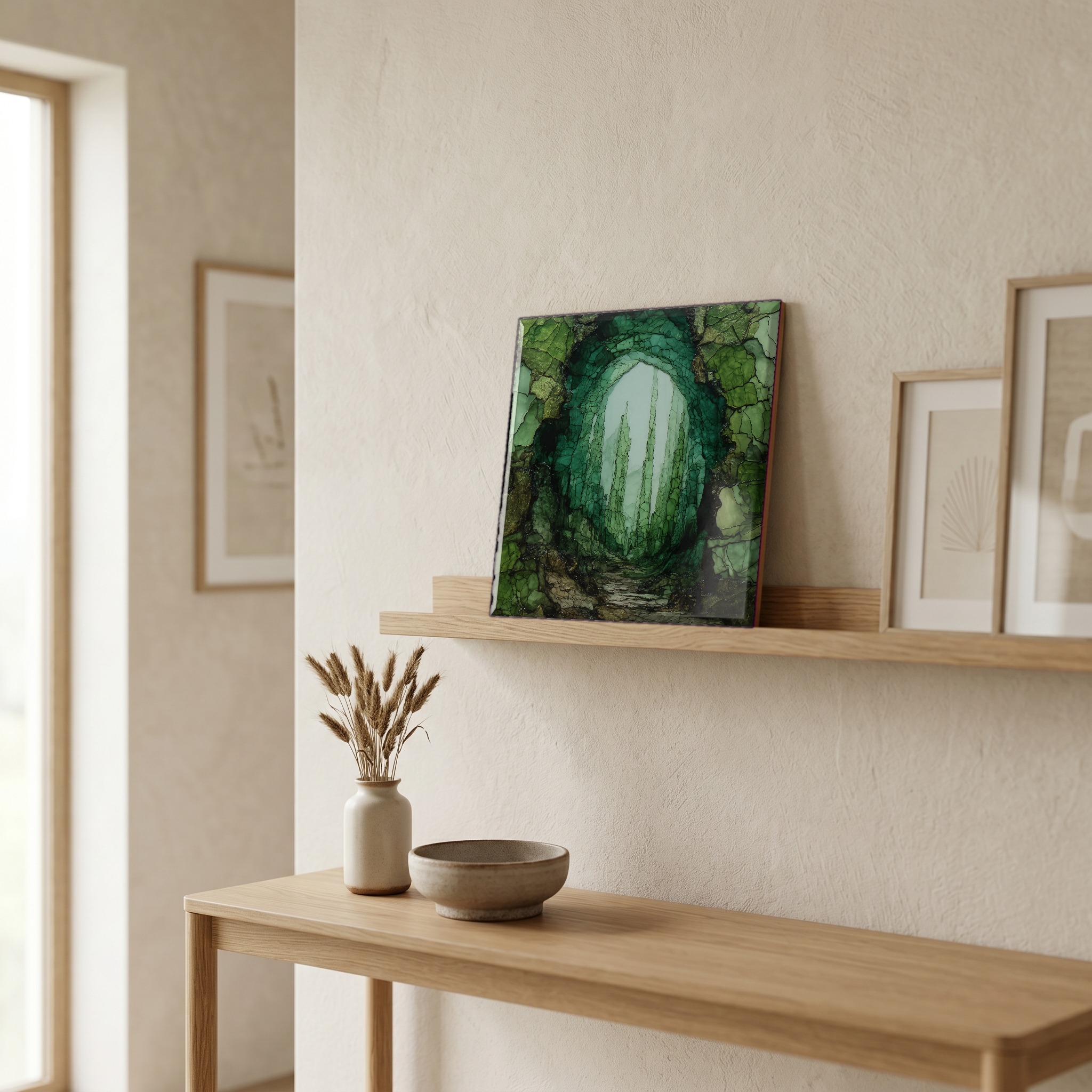
“A chamber opened in the limestone plateau of the Causse Méjean, roughly the size of a small cathedral nave. Louis Armand, a locksmith from Le Rozier, was lowered down the natural shaft on a September day in 1897 and came back up speaking of a forest he had no words for. Four hundred calcite stalagmites stand on the floor, some over thirty metres tall, grown drip by drip from the limestone above. The cave keeps the same temperature all year, around ten degrees. A funicular descends a 200-metre tunnel cut in the late 1920s, when the chamber was opened to visitors.
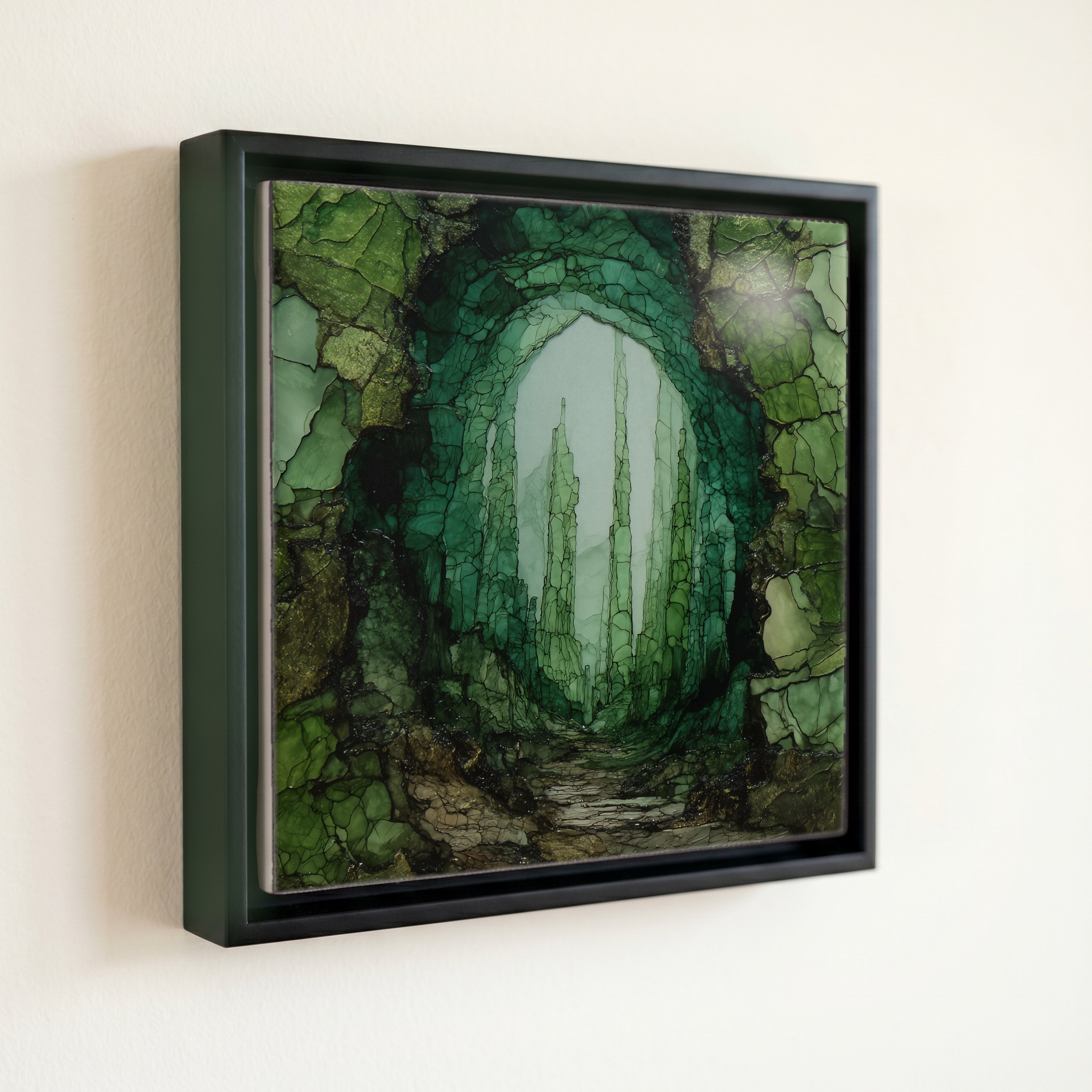
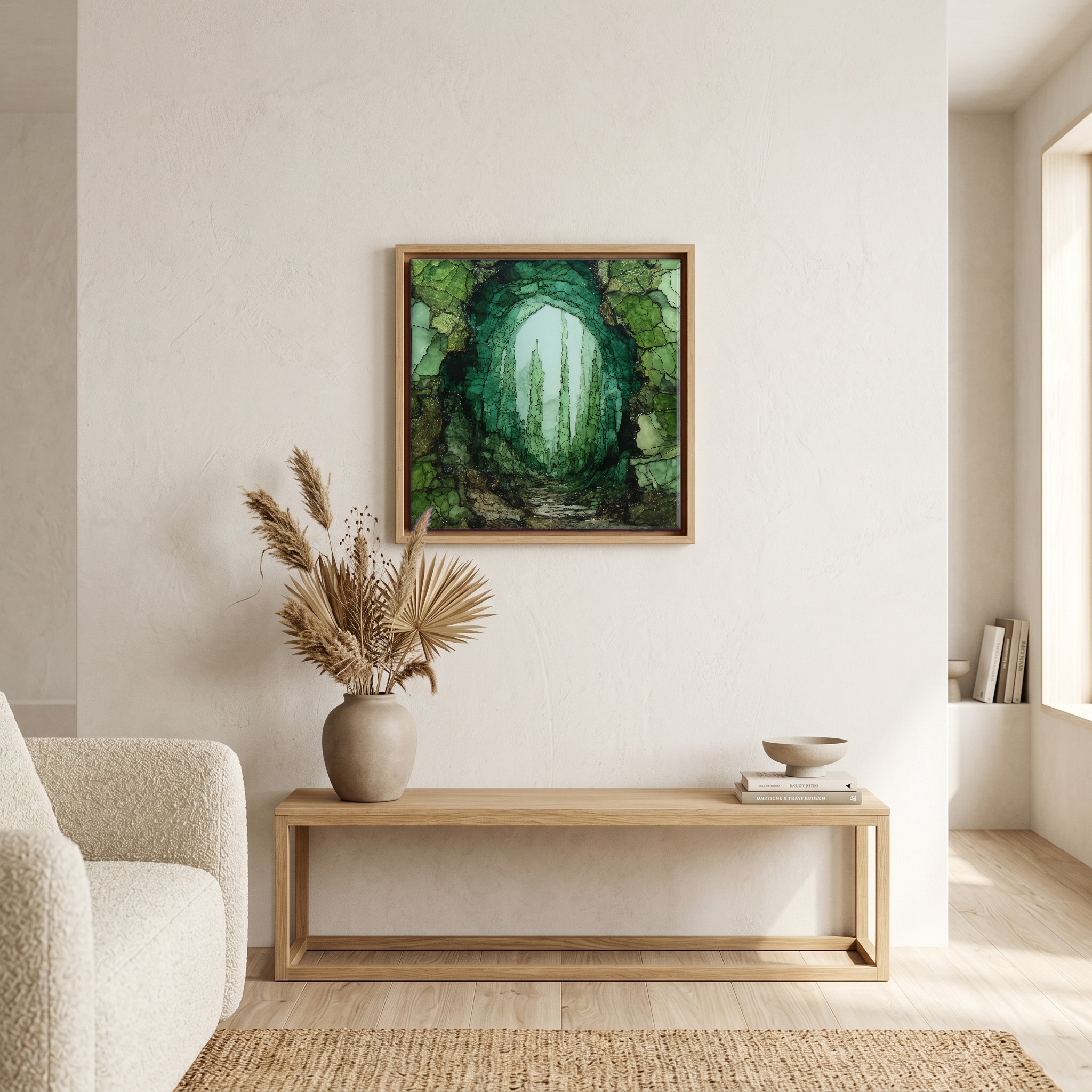
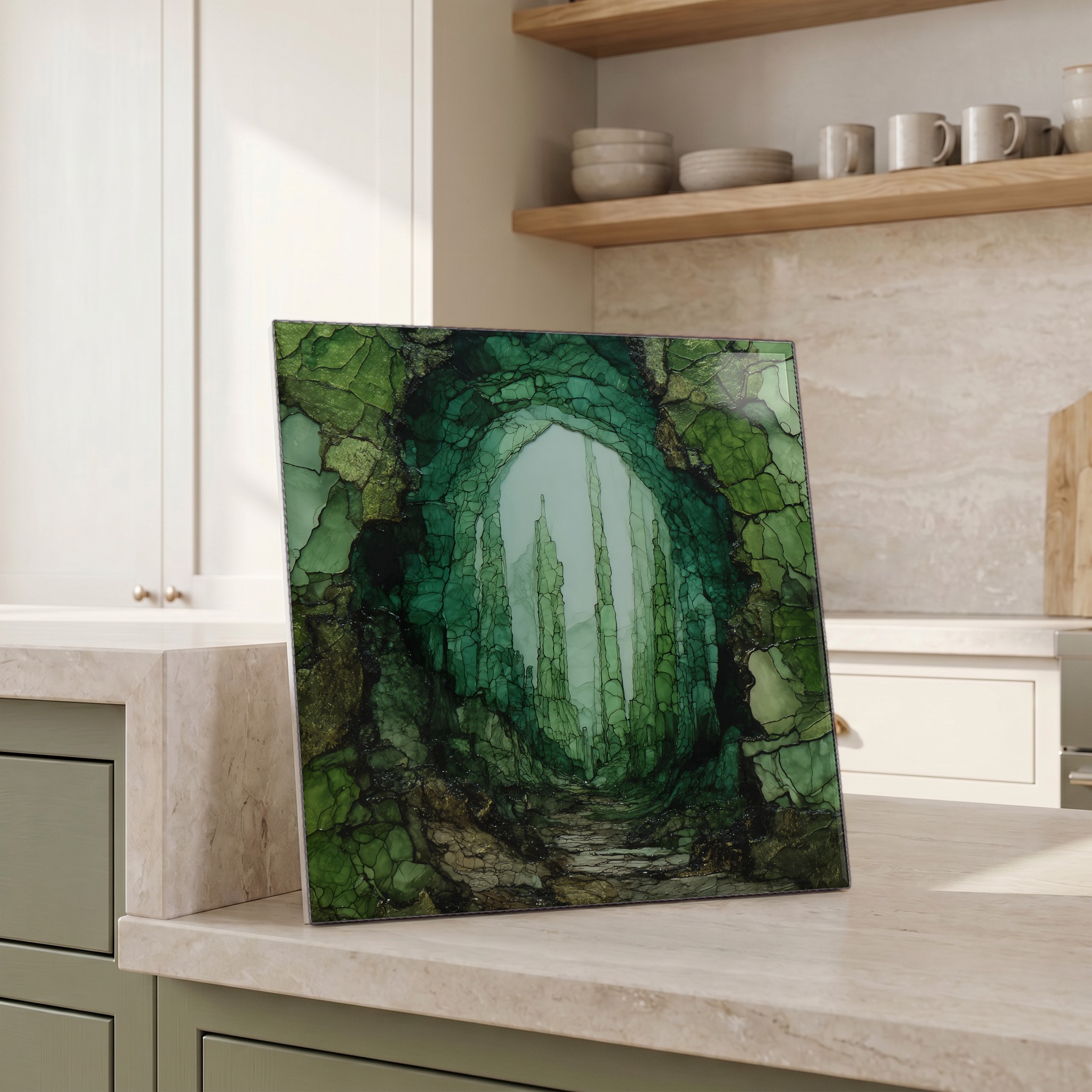
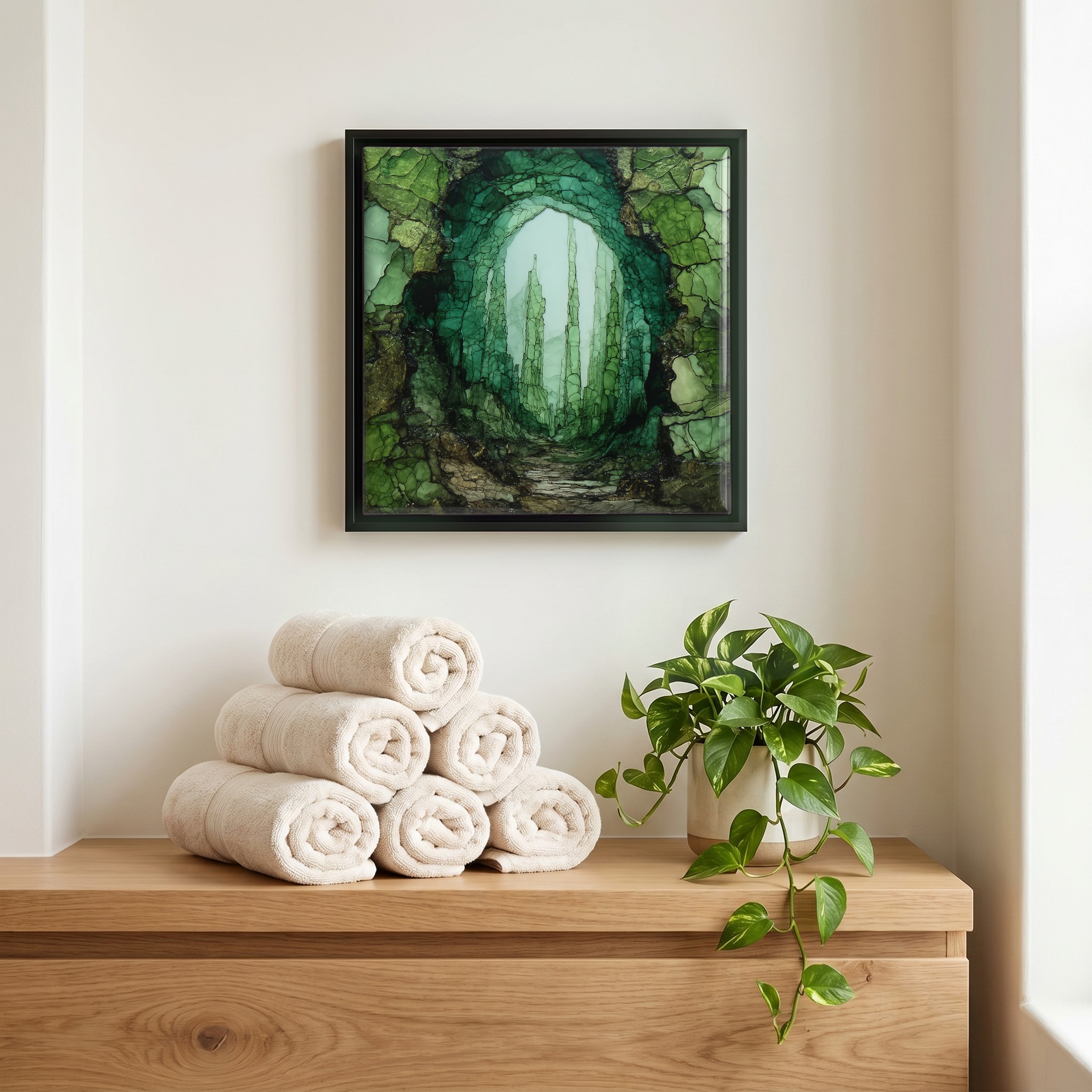
Aven Armand, on ceramic.
Each tile is finished by hand in our Knoxville studio. Artwork is slowly infused into the ceramic surface under high heat and pressure, and rests beneath a thin glossy finish. The colour lives in the surface, not on top of it.
Pick any four 4-inch tiles — National Parks you've been to, a Smokies set, the four seasons of one place. $ for a set of , cork-backed, ready to live on the table.
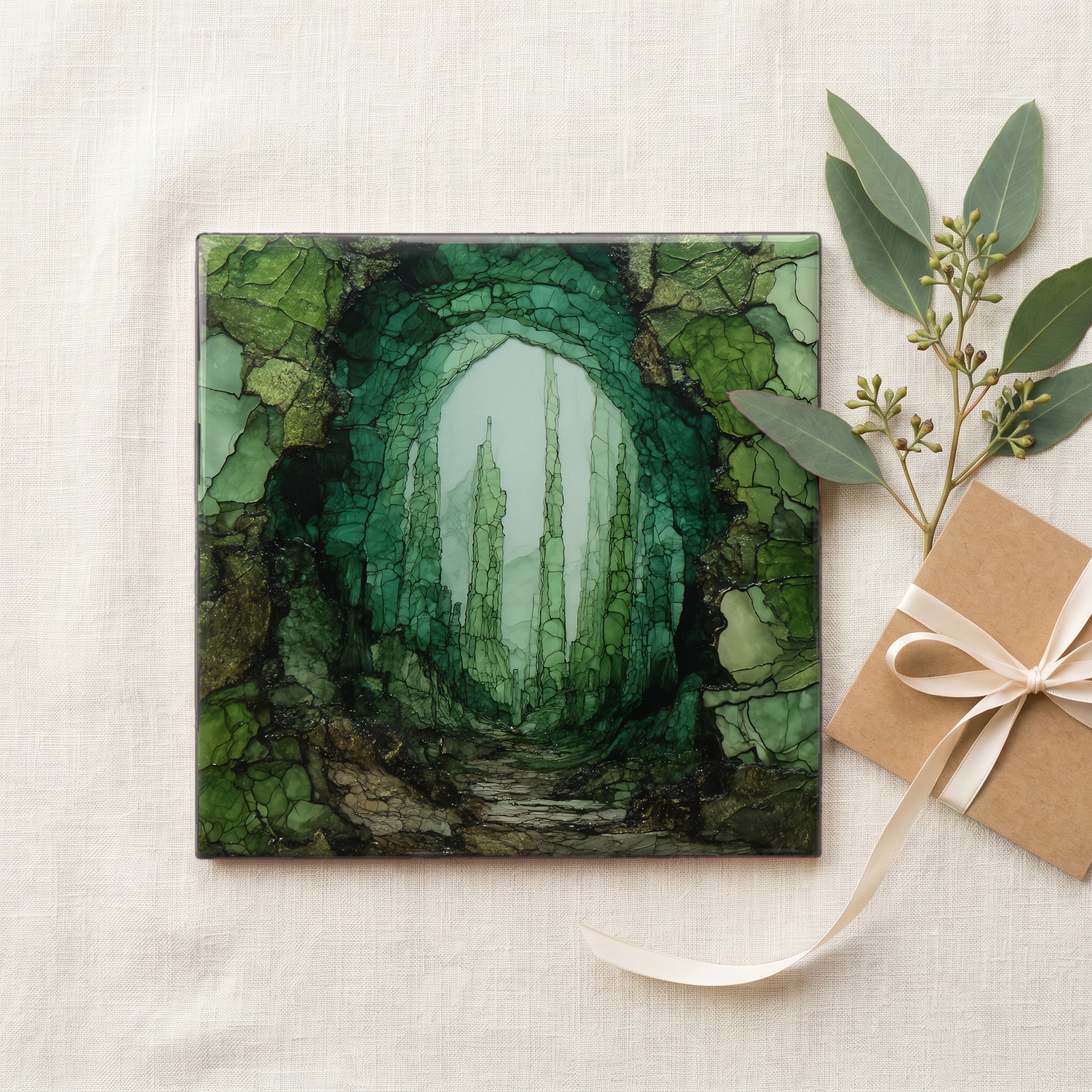
Each tile ships in a kraft box, tied with cream ribbon, with a handwritten note from the studio if you'd like to add one.
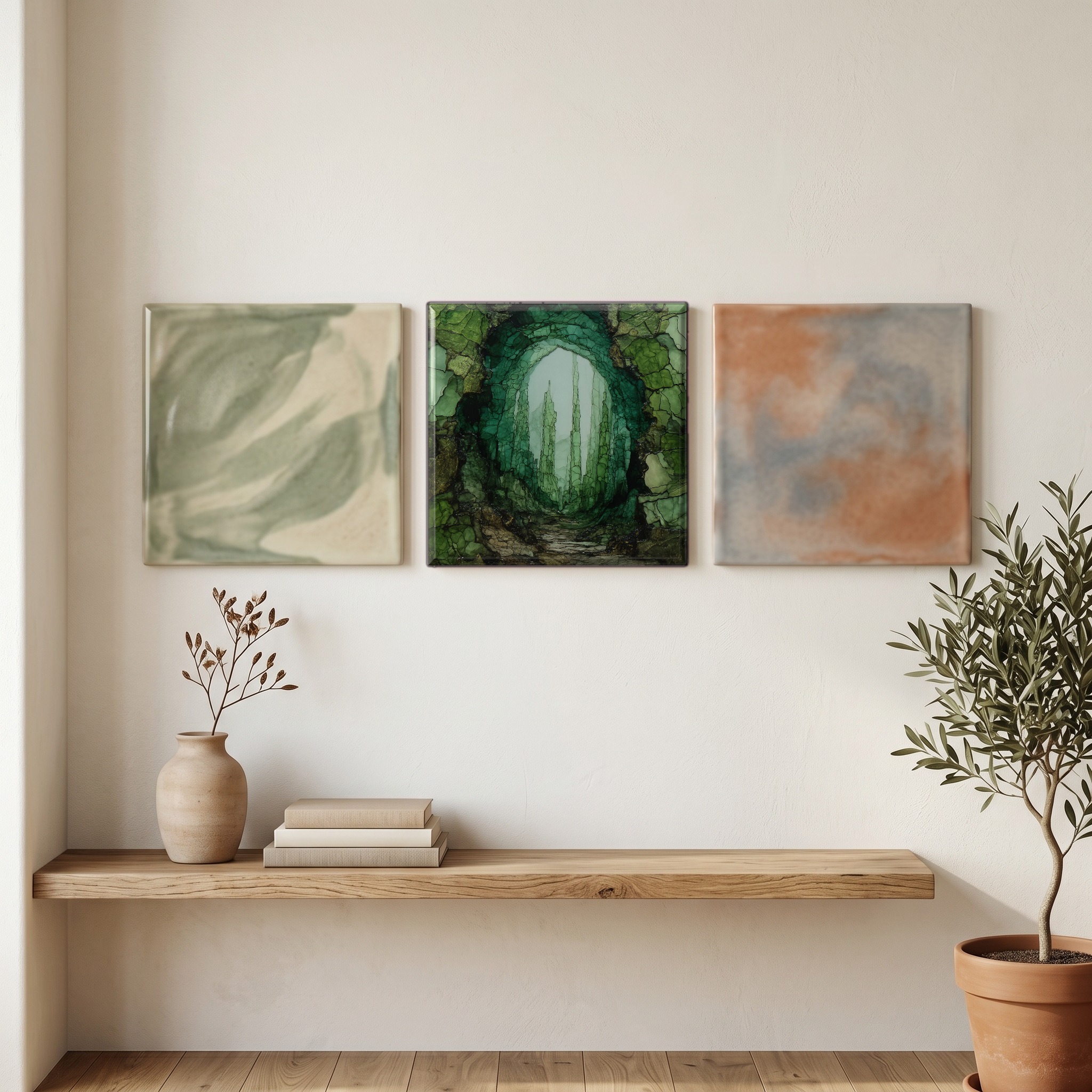
Three or five different vistas, hung together — a chapter of places you've been, or want to go.
The place, in three passes.
The Aven Armand opens into the Causse Méjean, a limestone plateau of about 340 square kilometres in the Lozère department of southern France. The chamber lies roughly 100 metres below the surface, reached today by a 200-metre funicular tunnel that descends from the visitor centre near the village of Hures-la-Parade. The plateau sits within the Cévennes National Park, the largest national park in mainland France, and forms part of the UNESCO-listed Causses and Cévennes Mediterranean agro-pastoral cultural landscape, inscribed in 2011. The nearest town is Meyrueis, about eight kilometres east through the limestone gorges of the Jonte and the Tarn.
The chamber holds what Édouard-Alfred Martel, the French speleologist who led the 1897 expedition with Louis Armand, called the Forêt Vierge — a Virgin Forest of roughly 400 stalagmites grown by mineral-saturated rainwater dripping for hundreds of thousands of years onto the cavern floor. The Grande Stalagmite rises about 30 metres from the floor and is generally cited as the tallest stalagmite in any cave open to the public anywhere in the world. Each column has its own form: thin discs stacked like saucers, palm-frond crowns of translucent calcite, fluted shafts that glow when the lights come up one section at a time. The chamber holds at about ten degrees all year.
The cave is open from late March through early November, with the longest hours during the French summer school holidays in July and August. A funicular train descends a 200-metre tunnel cut in 1926 and 1927; the natural shaft, a 75-metre vertical drop that Louis Armand rappelled down on hemp rope in September 1897, is no longer used for access. Visits are guided and take about an hour, with a lighting sequence built into the path that brings the stalagmite forest up section by section. The site is operated under concession from the commune of Hures-la-Parade and reached by car on the D986 between Meyrueis and Le Massegros.