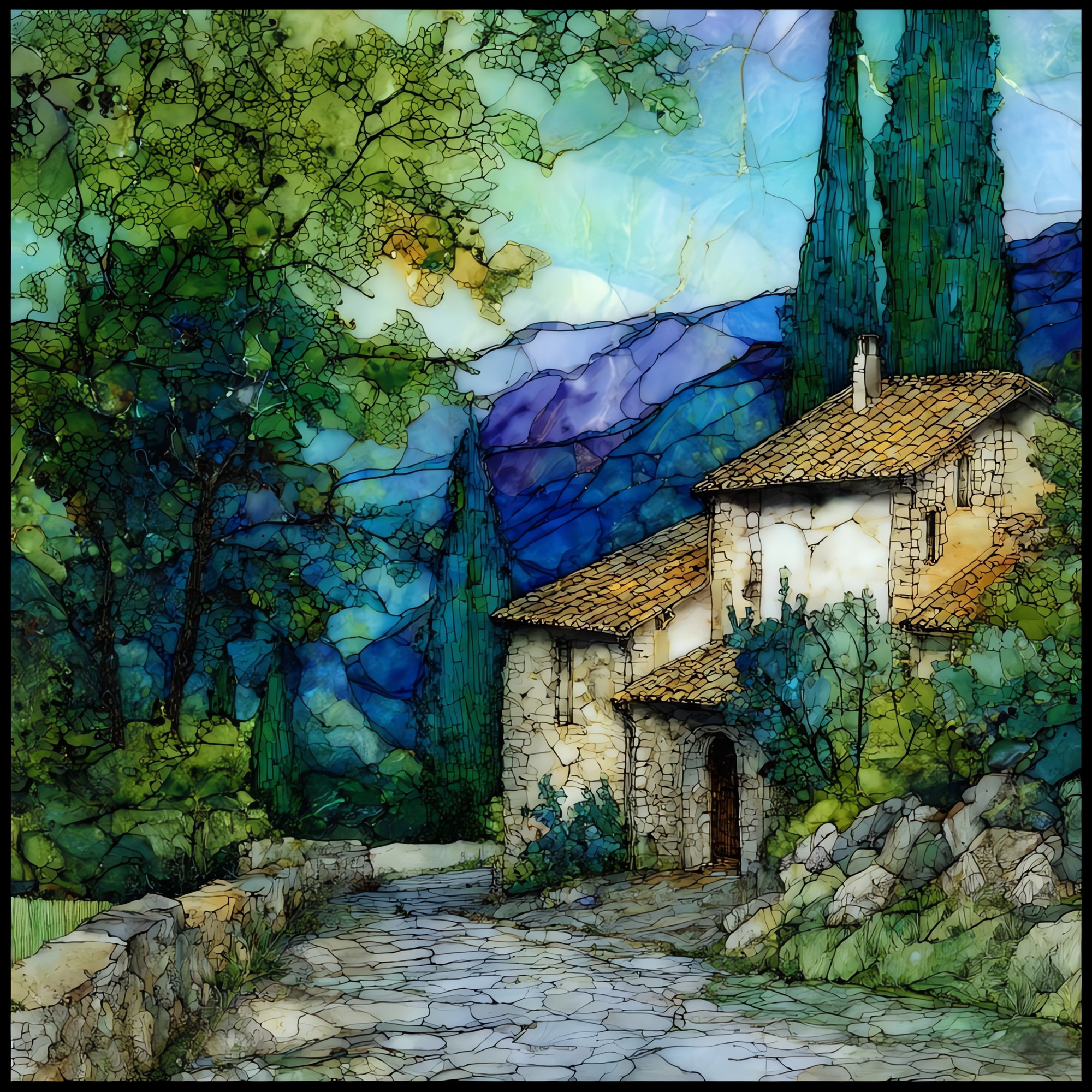
Wender·Vista
Atelier Cezanne
shown on ceramic, 12-inch tileFrance
on a hill north of Aix-en-Provence

Atelier Cezanne

the light he built a room to hold.

Where it lives

Not only on a wall.

A small tile on the nightstand catching the morning. A larger one above the fire. Yours, wherever you spend the slow hours.
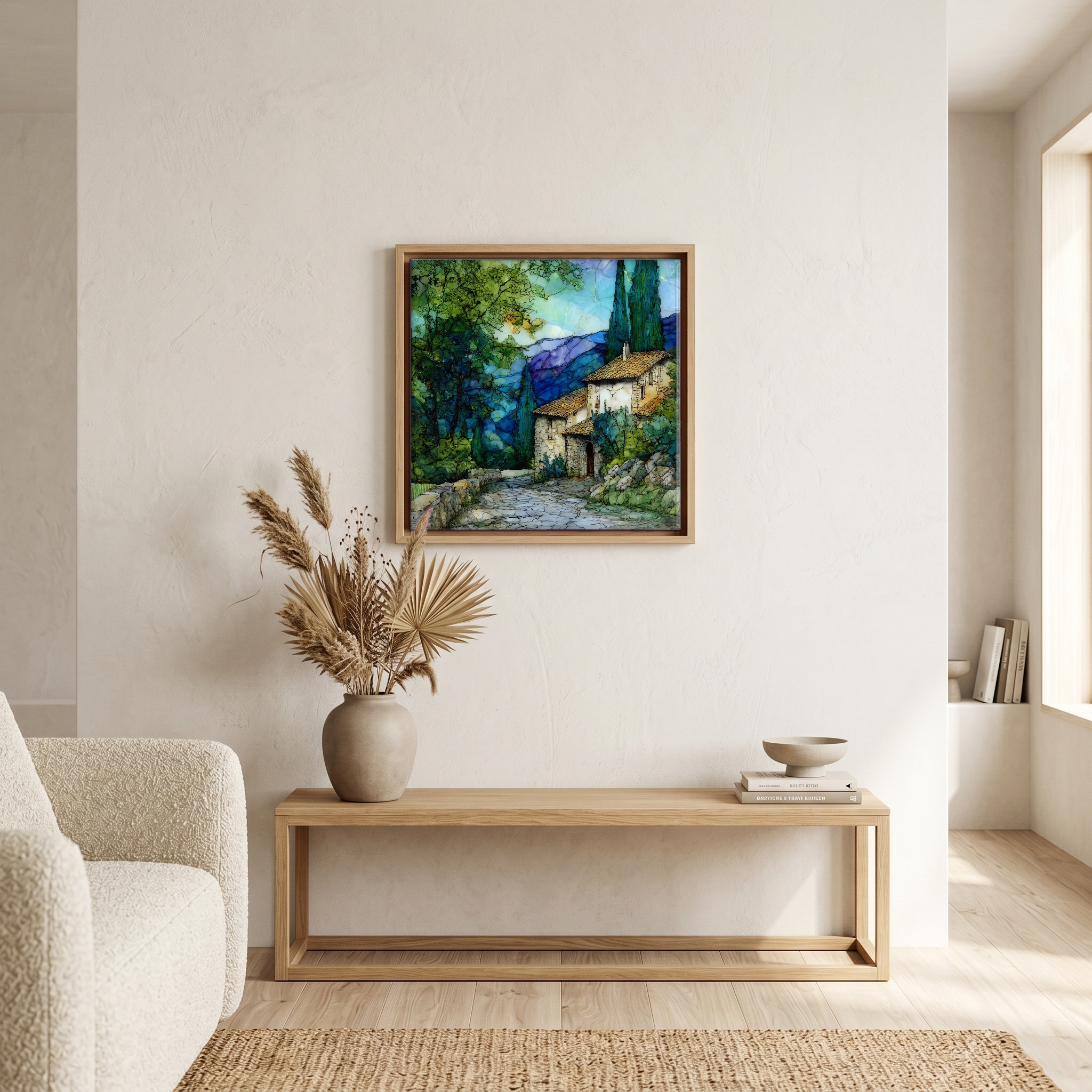
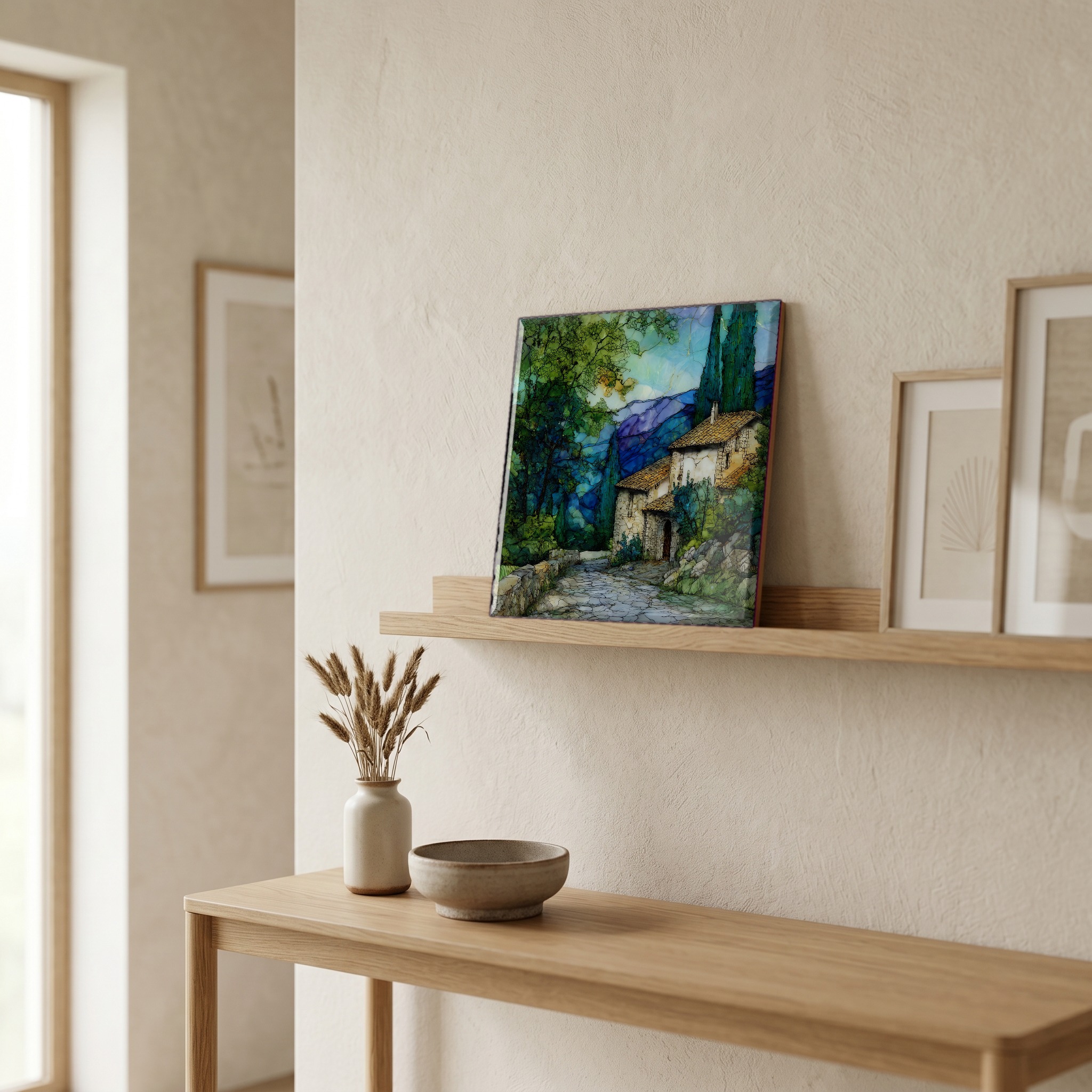
Above the bench, in a warm oak surround.
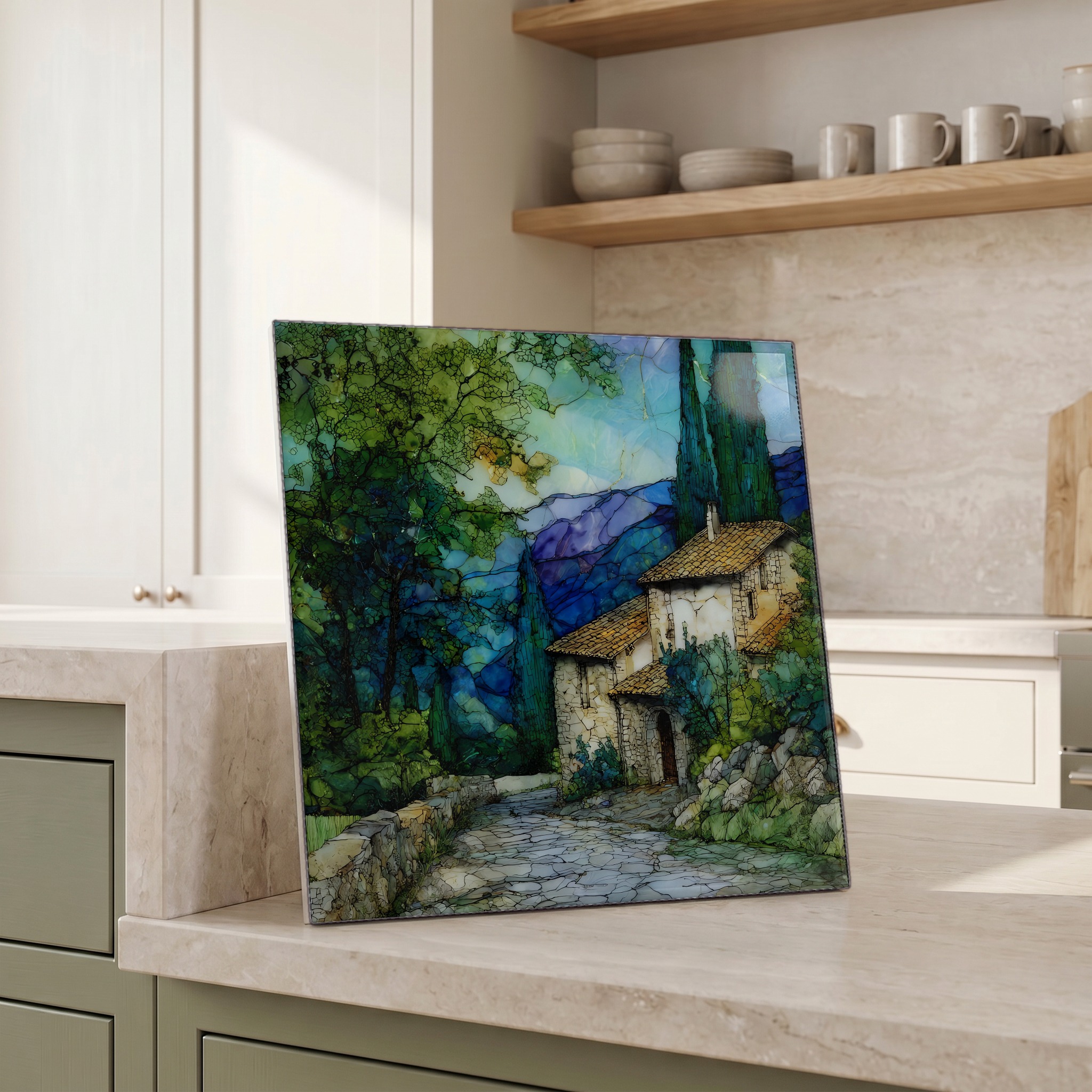
Beside the kettle, propped on the counter.
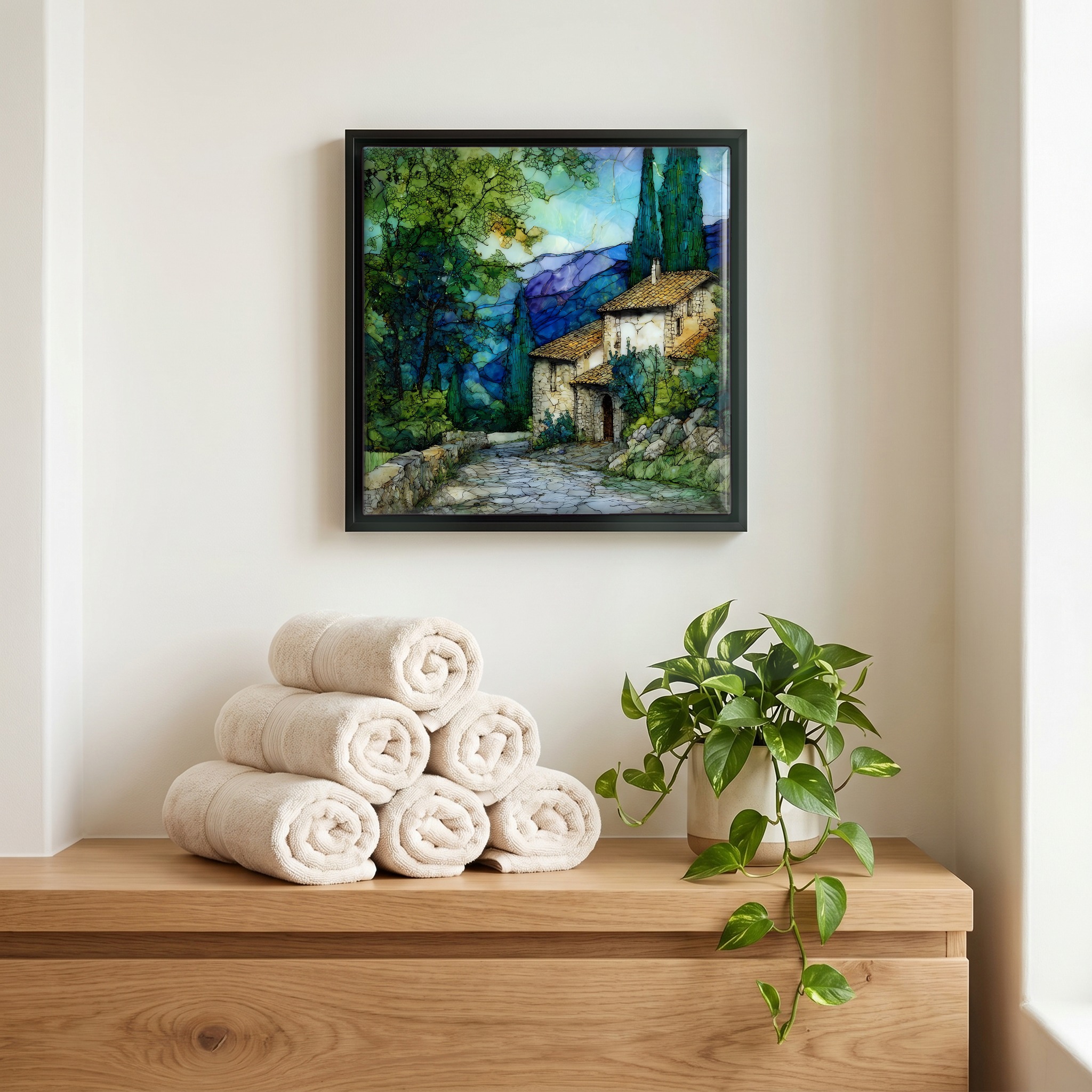
Above the linens, in a slim black surround.
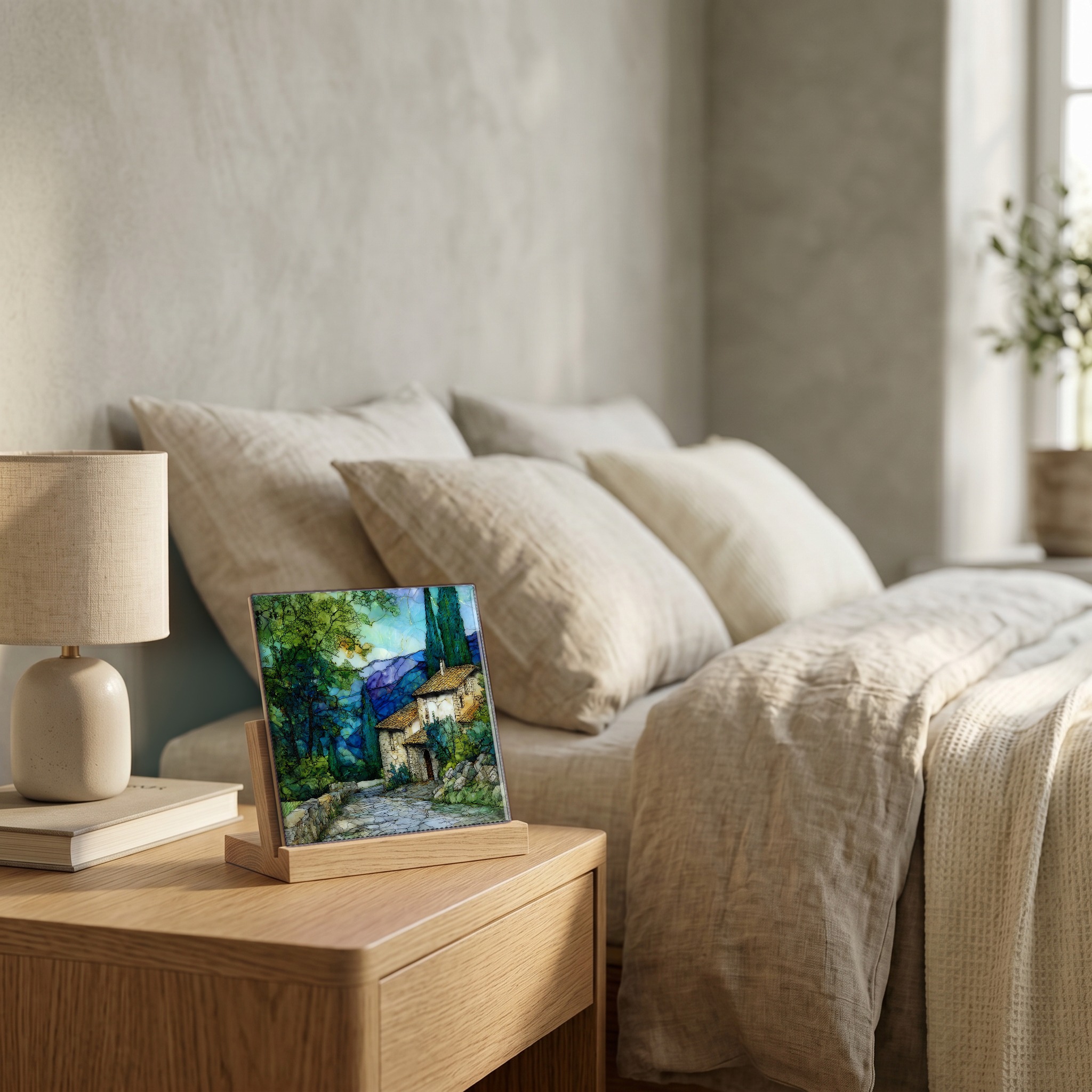
On the nightstand, on a light oak stand.
On a picture ledge, where the light comes in.
a note from the studio

On a hill north of Aix-en-Provence, the room Cézanne built for himself in 1902 and worked in until his death in 1906. North light through tall windows, designed to stay even through the day. A slot in the corner of the wall so the large Bathers canvases could come and go. His work coat still on its peg, the plaster cupid on the shelf, the pottery and paper flowers he kept arranging. Outside, olive and fig trees, and the path that climbs another ten minutes to where he painted Mont Sainte-Victoire.
from the studio
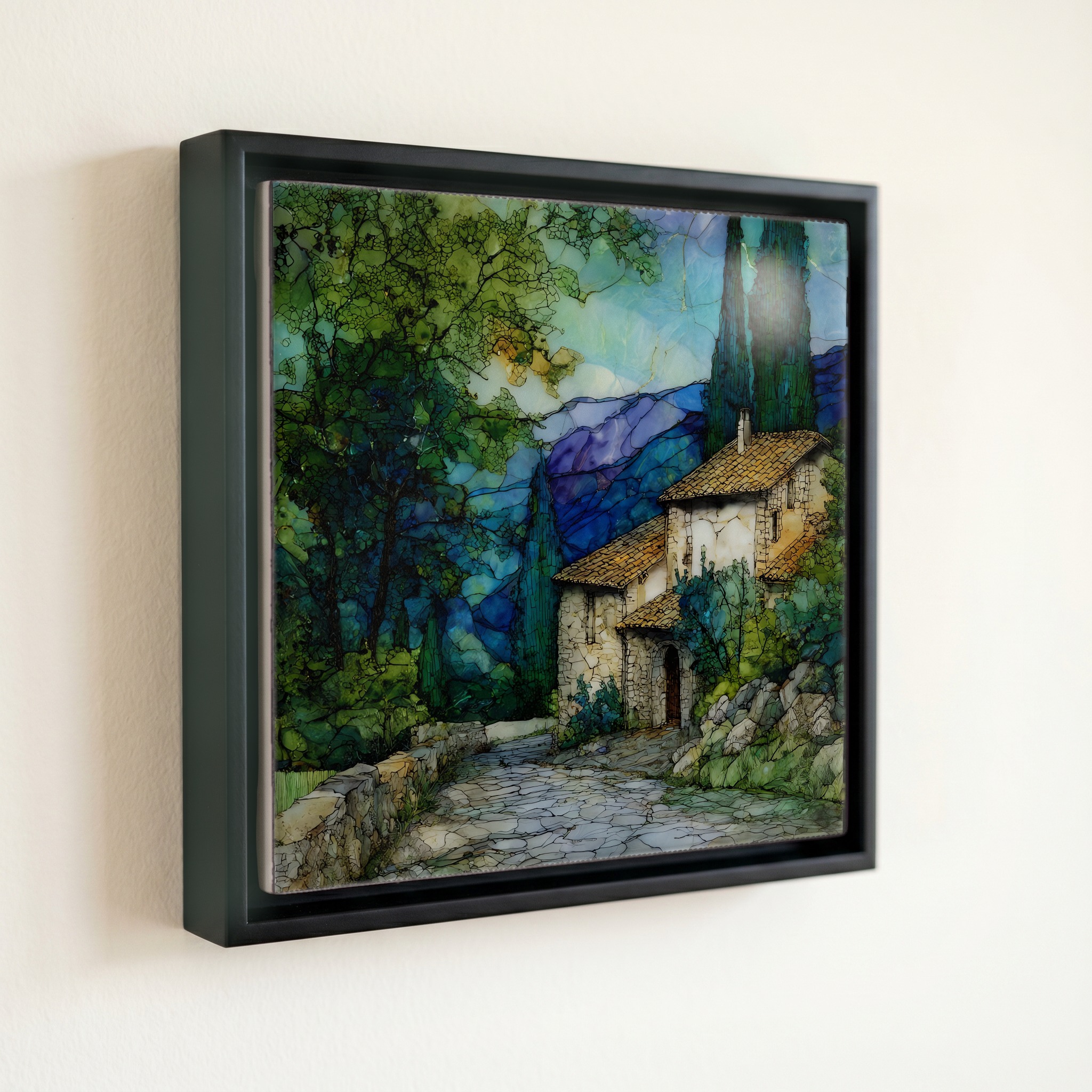
shown in a slim black floating frame · 6 × 6 in
— bring it home

Atelier Cezanne, on ceramic.

Each tile is finished by hand in our Knoxville studio. Artwork is slowly infused into the ceramic surface under high heat and pressure, and rests beneath a thin glossy finish. The colour lives in the surface, not on top of it.

What kind of piece?
One tile — square or rectangle.
How big?
the popular one — counter, shelf, nightstand
6 × 6 in · 15 cm · 1.6 lb
Surface finish
A clear glossy finish — the artwork reads as if under resin. Ideal for show-pieces and framed wall art.
How it sits
A hidden cleat — sits ¼″ proud of the wall.
$58
Hand-finished and shipped from our studio at the foot of the Smokies. On your wall in about ten days.
size
6 × 6 in
15 cm
weighs
1.6 lb
solid in the hand
surface
ceramic, hand-finished
art rests beneath a thin glossy finish
from
Knoxville, TN
our family studio, at the foot of the Smokies
— start a Coaster Set

Pick any four 4-inch tiles — National Parks you've been to, a Smokies set, the four seasons of one place. $ for a set of , cork-backed, ready to live on the table.
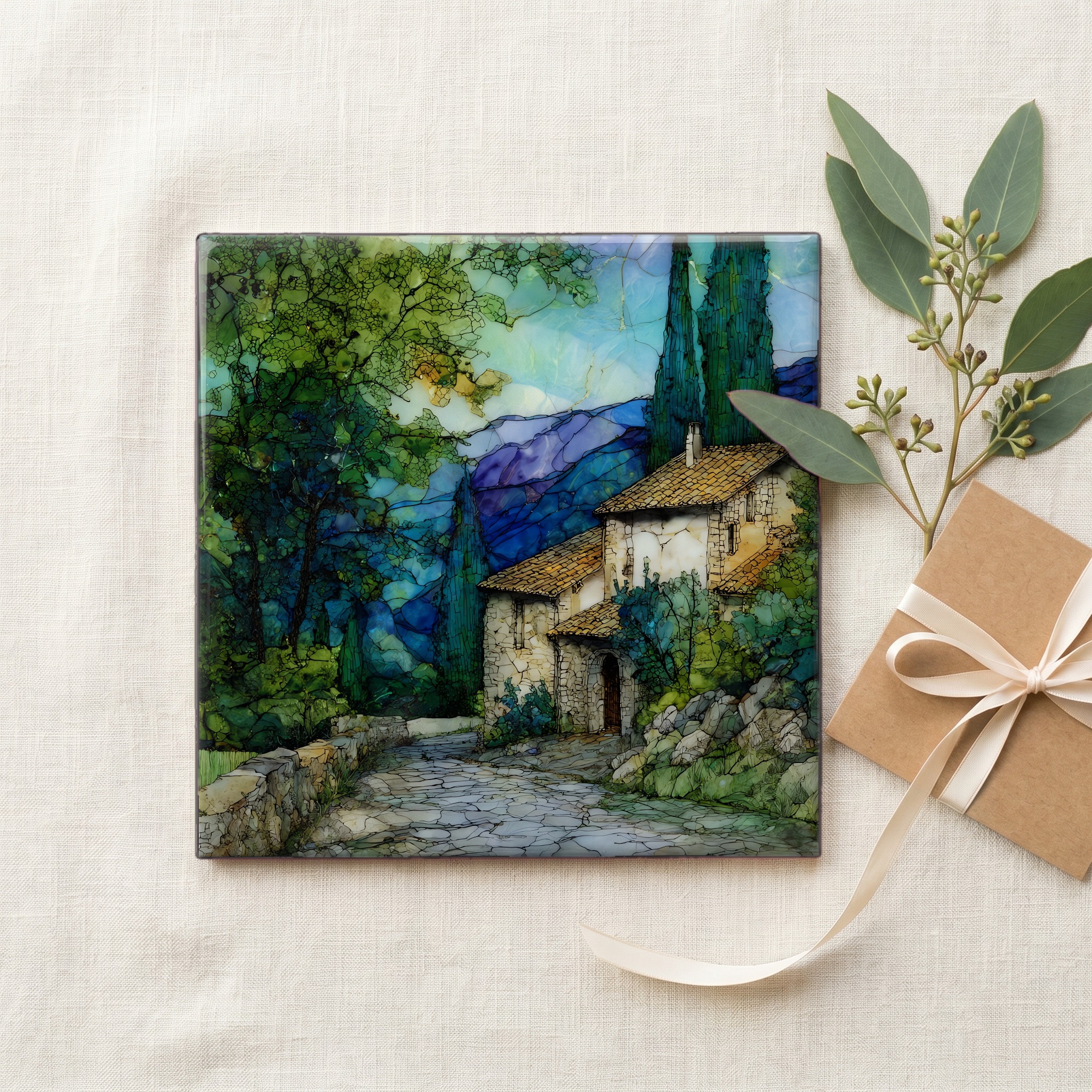
comes gift-ready
comes gift-ready

Each tile ships in a kraft box, tied with cream ribbon, with a handwritten note from the studio if you'd like to add one.
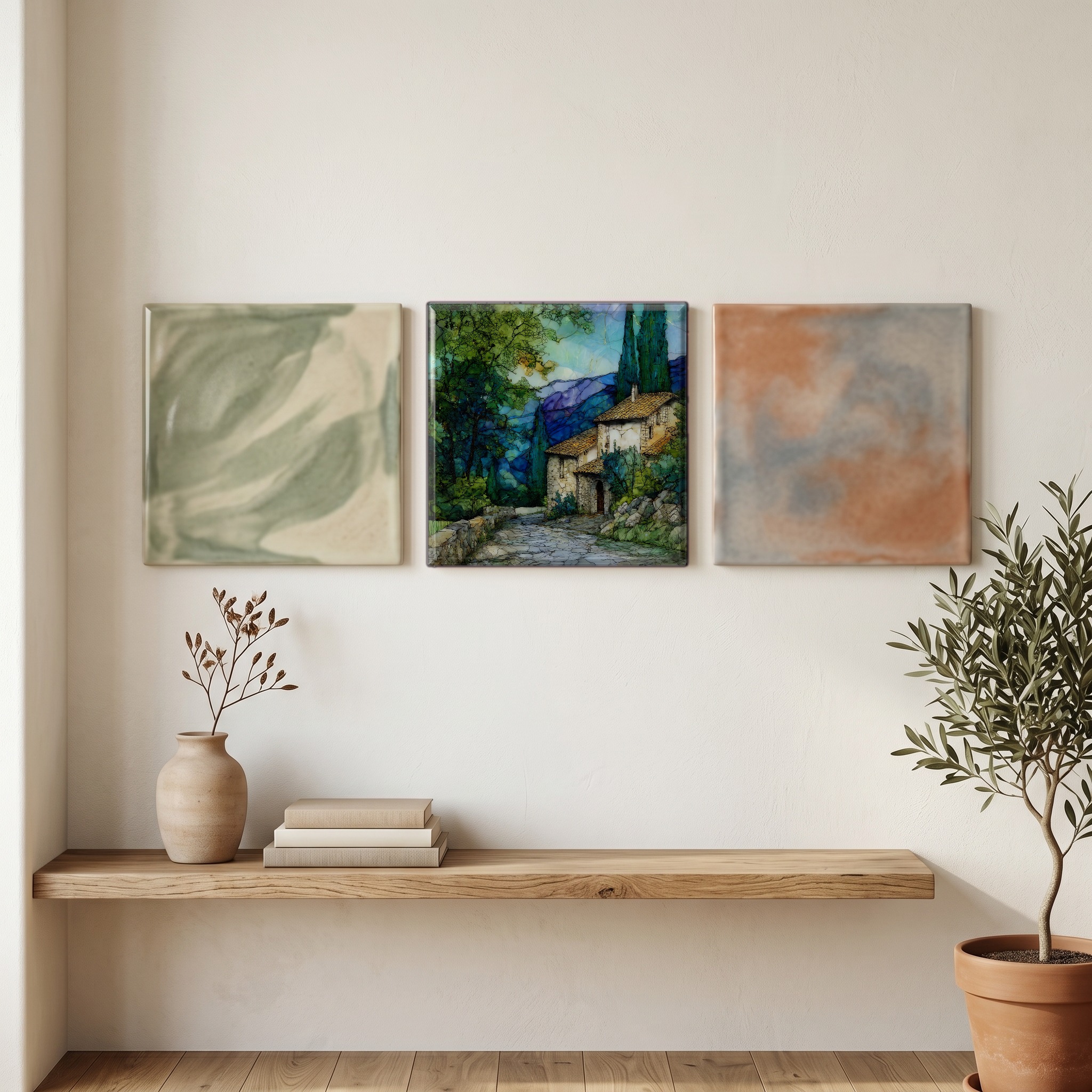
or build a grouping
or build a grouping

Three or five different vistas, hung together — a chapter of places you've been, or want to go.

about Atelier Cezanne

The place, in three passes.

A little of what's known, in case you fall down the rabbit hole — or want to go see it yourself.
the place

Atelier Cézanne, also called Atelier des Lauves, sits on a low hill on what is now avenue Paul Cézanne, about 1.5 kilometres north of the historic centre of Aix-en-Provence in the Bouches-du-Rhône department of Provence-Alpes-Côte d'Azur. Paul Cézanne bought the small property in November 1901, drew his own plans for a working studio, and moved into the finished building in September 1902. He worked there nearly every day until his death in October 1906. The grounds, about 7,000 square metres, are planted with olive and fig trees. A short walk up the hill leads to the Terrain des Peintres, the spot from which Cézanne painted some of his 44 oil studies of Mont Sainte-Victoire.

the light

The studio's upper floor is built around a tall north-facing wall of glass, Cézanne's solution to the painter's oldest problem, the sun that keeps moving. North light is indirect, cool, and remarkably even from morning to late afternoon; what falls on the still-life table at nine sits there nearly unchanged at four. Two smaller south-facing windows bring in a warmer counter-light when he wanted it. The room itself is generous and high-ceilinged, sized for the late Bathers canvases he was finishing between 1902 and 1906; a tall vertical slot in one wall, just wide enough to let those large paintings in and out.

the visit

The studio is open daily during the summer season, from late June to the end of September, nine to seven, with shorter hours through October and the first days of November. The site closes for the winter. Access is by guided tour only, in French or English, lasting about an hour; booking is required through the Aix-en-Provence Tourist Office. Full admission is €9.50, reduced €7.50, with free entry for visitors under thirteen and several social categories. After a major restoration of the building and its objects, the studio reopened on 28 June 2025 as part of the city's Cézanne 2025 programme.

where
France · Aix-en-Provence, Bouches-du-Rhône
the neighborhood

What's nearby.

A handful of named places within an hour's walk or short drive. Some we've already painted; some we will.
1 km N
Terrain des Peintres
painting viewpoint
10 km E
Mont Sainte-Victoire
mountain
2 km SW
Jas de Bouffan
country house
3 km E
Bibémus Quarries
quarry
2 km S
Cathédrale Saint-Sauveur d'Aix
cathedral
2 km S
Cours Mirabeau
boulevard
N
Atelier Cezanne
Terrain des Peintres
Mont Sainte-Victoire
Jas de Bouffan
Bibémus Quarries
Cathédrale Saint-Sauveur d'Aix
Cours Mirabeau
common questions

What people ask.

A few questions we get about Atelier Cezanne — and about bringing the piece home.
about the place

Atelier Cézanne, also known as Atelier des Lauves, sits at 9 avenue Paul Cézanne, on a low hill about 1.5 kilometres north of central Aix-en-Provence in the Bouches-du-Rhône department of southern France. It is roughly thirty minutes by car from Marseille.

Paul Cézanne bought the small property on the chemin des Lauves in November 1901 and drew the plans himself. Construction took about ten months, and he moved into the new studio in September 1902. He worked there nearly every day until his death in October 1906.

Cézanne made many of his final still lifes and figure compositions in this studio, including the large Bathers canvas now at the Philadelphia Museum of Art. He also walked ten minutes up the hill to the Terrain des Peintres to paint his late views of Mont Sainte-Victoire.

Cézanne had a tall vertical slot built into one wall so his largest canvases, the late Grandes Baigneuses compositions, could be moved in and out of the upper-floor studio. The room is otherwise reached by a narrow staircase a full canvas could not have managed.

Yes. The studio is open daily from late June to early November and reopened in June 2025 after a major restoration. Access is by guided tour only, in French or English, booked through the Aix-en-Provence Tourist Office. Full admission is €9.50; reduced €7.50.

Jas de Bouffan was the Cézanne family country house west of Aix, where Paul painted from his teens onward. Atelier des Lauves is the studio he built for himself in 1902, on a hill north of the city, and used until his death in 1906.

about the piece in your home

It has been a meaningful gift for our customers who care about Cézanne, painting students, and people who have walked the studio in Aix. The Small or Medium reads well as a desk piece or studio talisman; a Coaster with a handwritten note from the studio carries the same intent in smaller form.

The palette (stained-glass blues and greens, warm ochres, a textured oil surface) sits comfortably in Provençal-modern interiors, French country rooms, and gallery-wall arrangements built around art history. It also reads well in a clean Mediterranean-modern or oak-and-linen scheme that lets the colour do the work.

Yes, for the current return to artist-studio aesthetics (exposed wood, well-worn objects, painted surfaces) and for the broader Mediterranean-modern category that has stayed steady through 2025 and 2026. The piece anchors a wall the way an old French print would, without the auction-house price tag.

For most sofas, a single Large reads as one strong painting and centres the wall. Over a console or sideboard, the 4-tile Mural composition gives more presence without overwhelming. For a primary living-room wall, the 9-tile Mural is the room's anchor.

Yes. For bathrooms, showers, and kitchen backsplashes, anywhere with water and steam, order the tile in our Dura Satin or Matte finish. Both are scratch-resistant and built for vertical installation. The Glossy finish is best kept to dry wall art.

A soft microfibre cloth and clean water is all that is needed. For kitchen backsplashes, mild dish soap is fine. Skip abrasive cleaners, bleach, and rough sponges. The colour lives in the ceramic surface and reads its best when it stays smooth.

Yes. Every WenderVista piece is original to the studio, curated by Reid Wender, and produced in-house in Knoxville, Tennessee. We do not license other artists' work or sell open-edition reproductions of museum paintings.

if this one stayed with you

A few you might also love.

Hand-picked by the eye that found Sorapis. Same air, same kind of quiet.