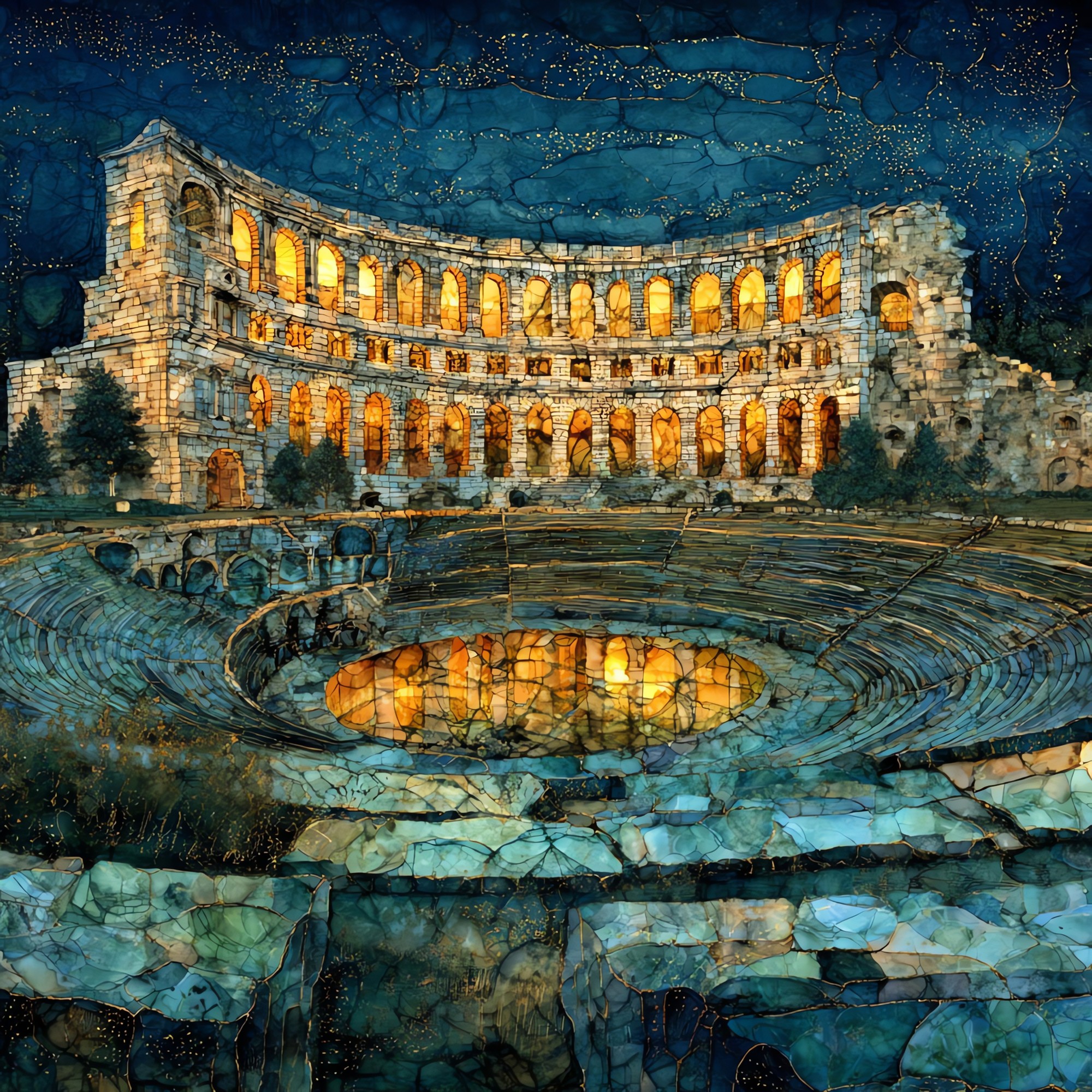
Arles Roman Amphitheatre
— an oval the town never stopped using.
Not only on a wall.
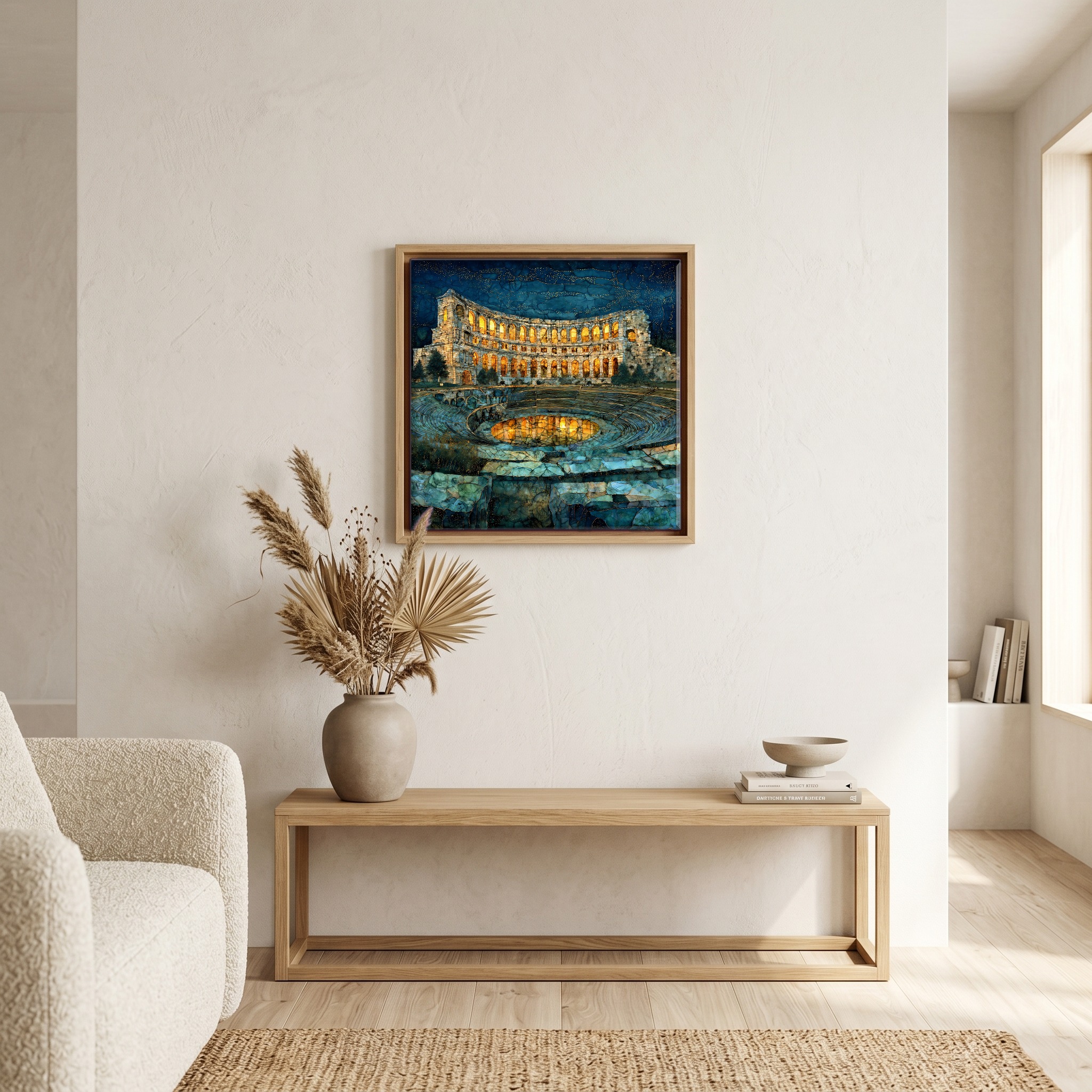
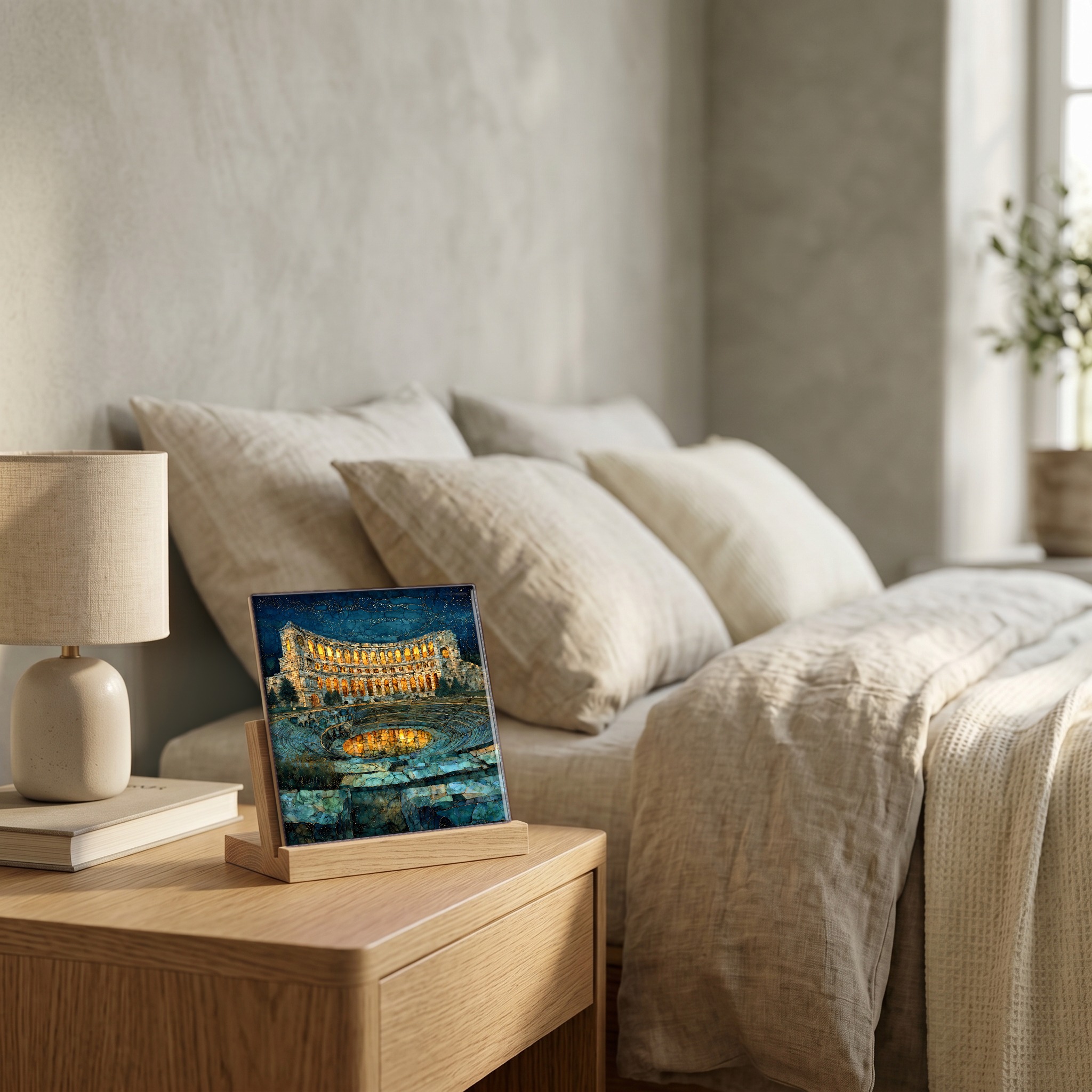
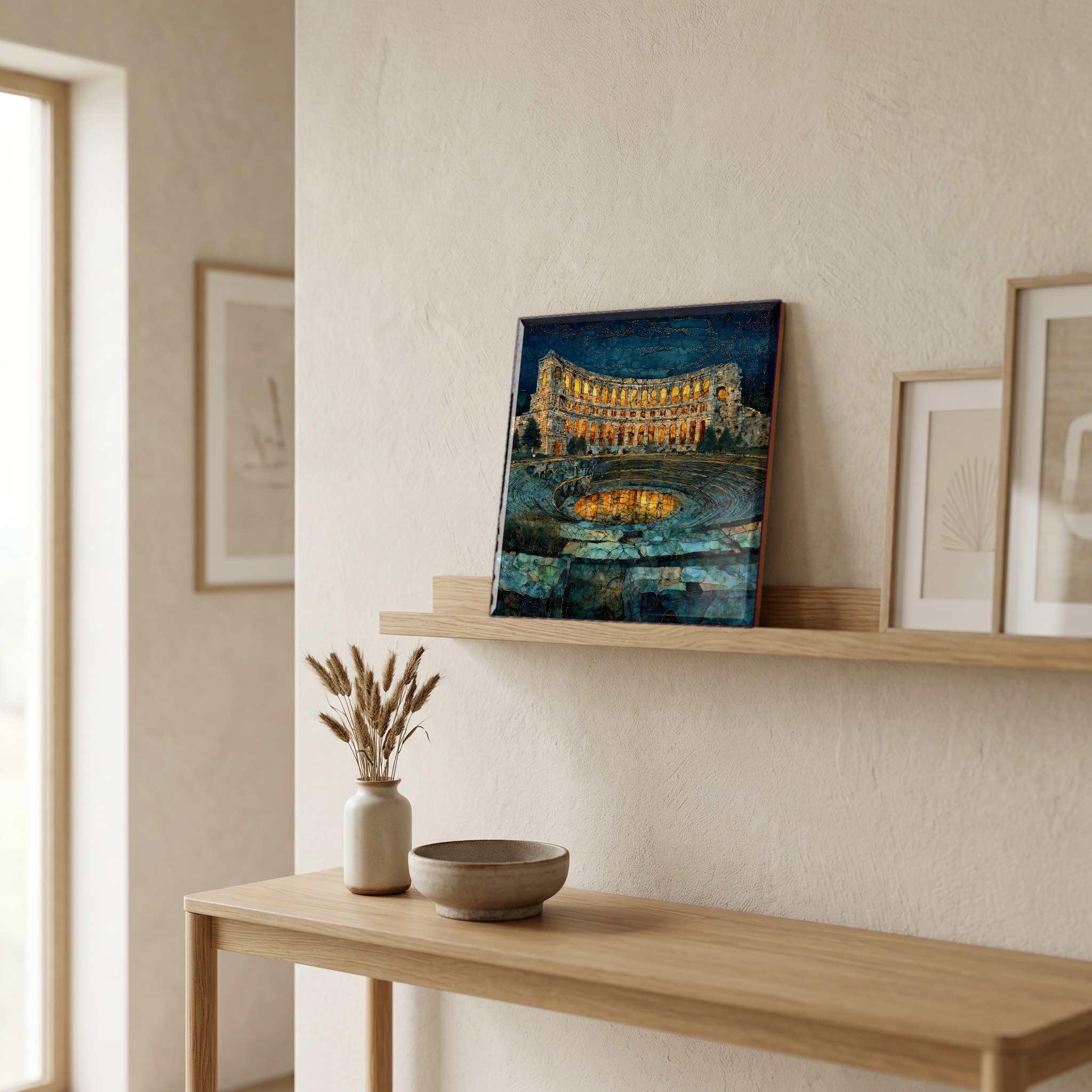
“The amphitheatre Rome built around 90 AD, in the old town of Arles where the Rhône splits for the Camargue. Two tiers of limestone arches, four medieval towers added later when a small town moved into the cavea. The arena outlasted the town it housed. The feria still brings the bulls in, the cheers reaching the same stones that heard them in the year 100. Van Gogh painted the arena in 1888, the crowd pinwheeling below. A short walk from the cloister at Saint-Trophime.
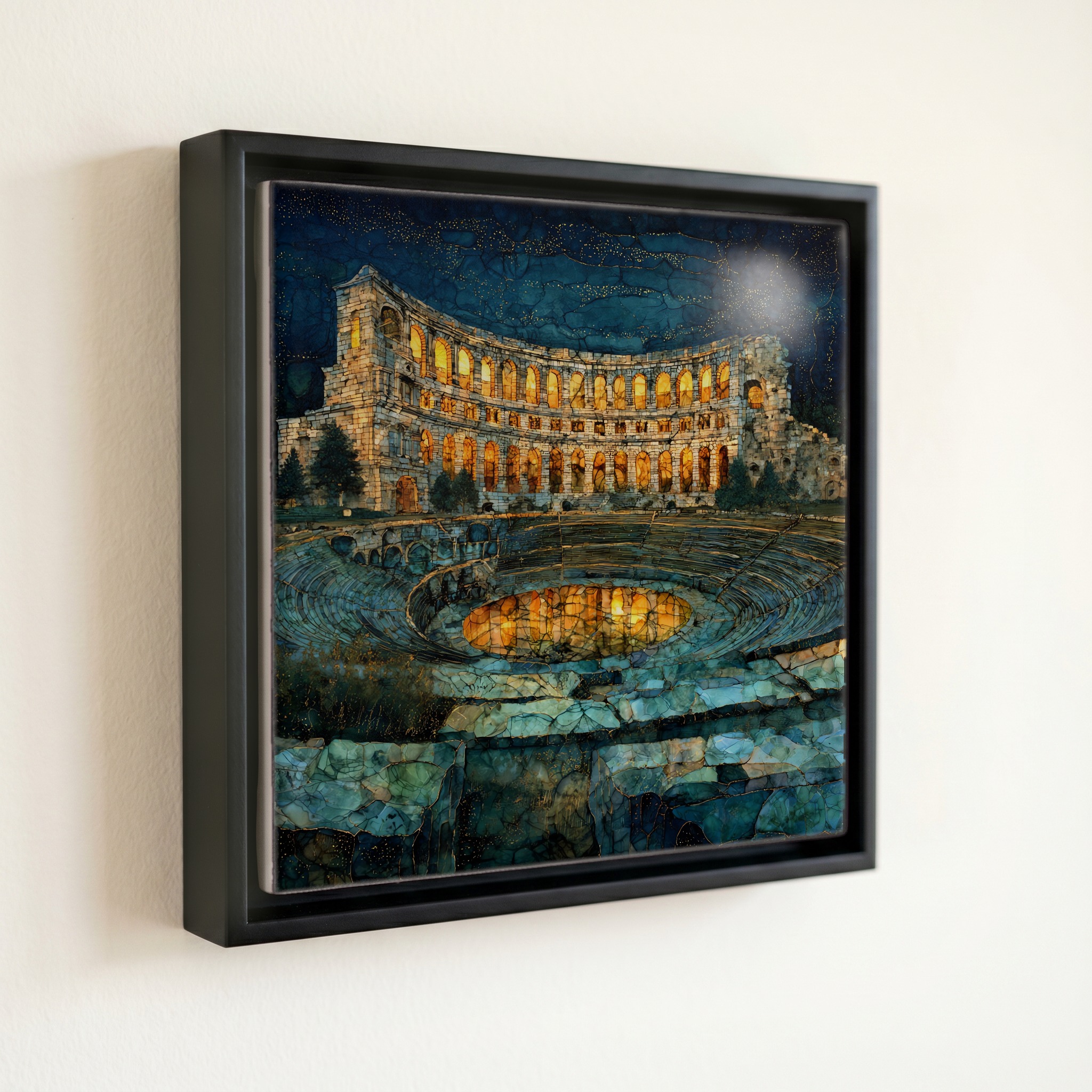
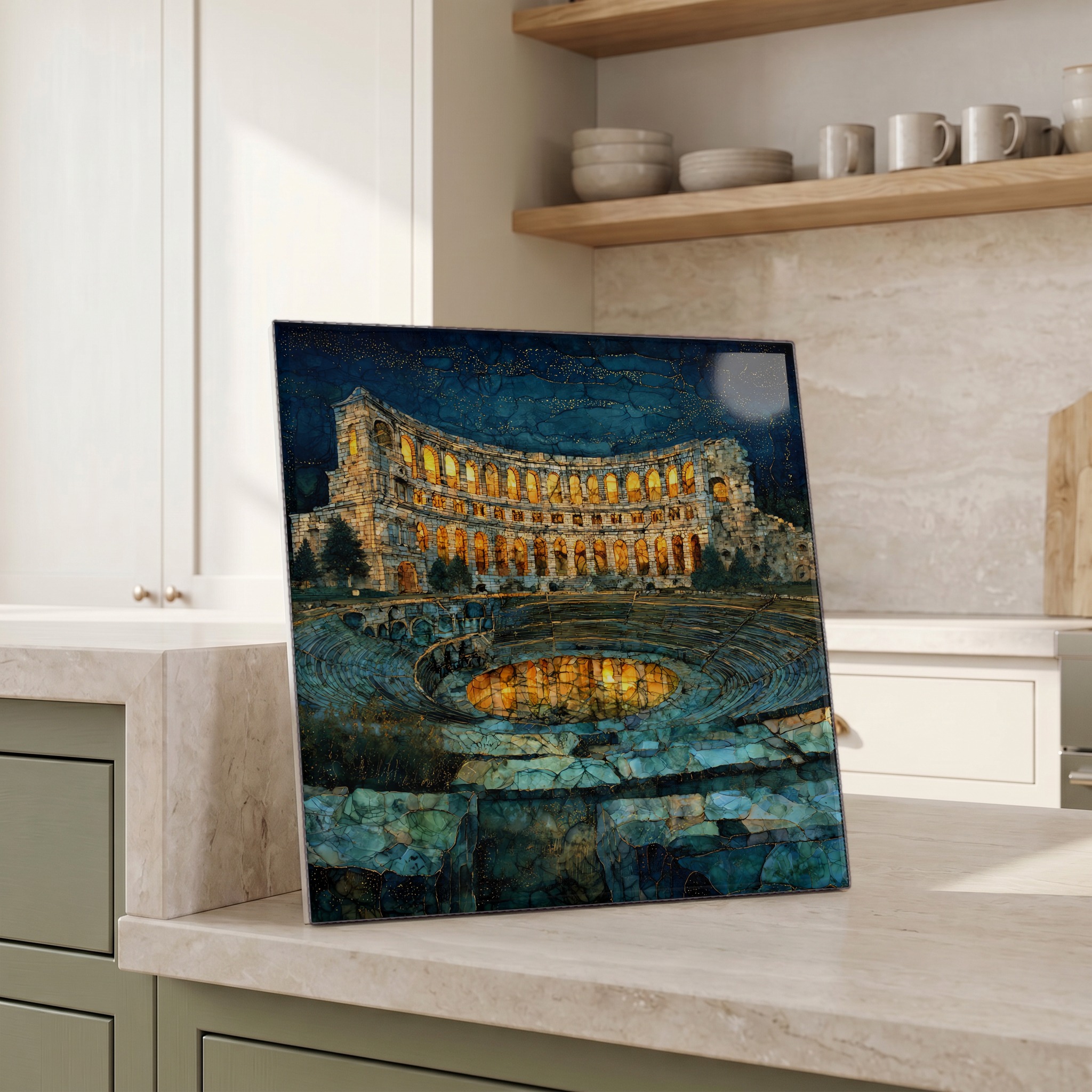
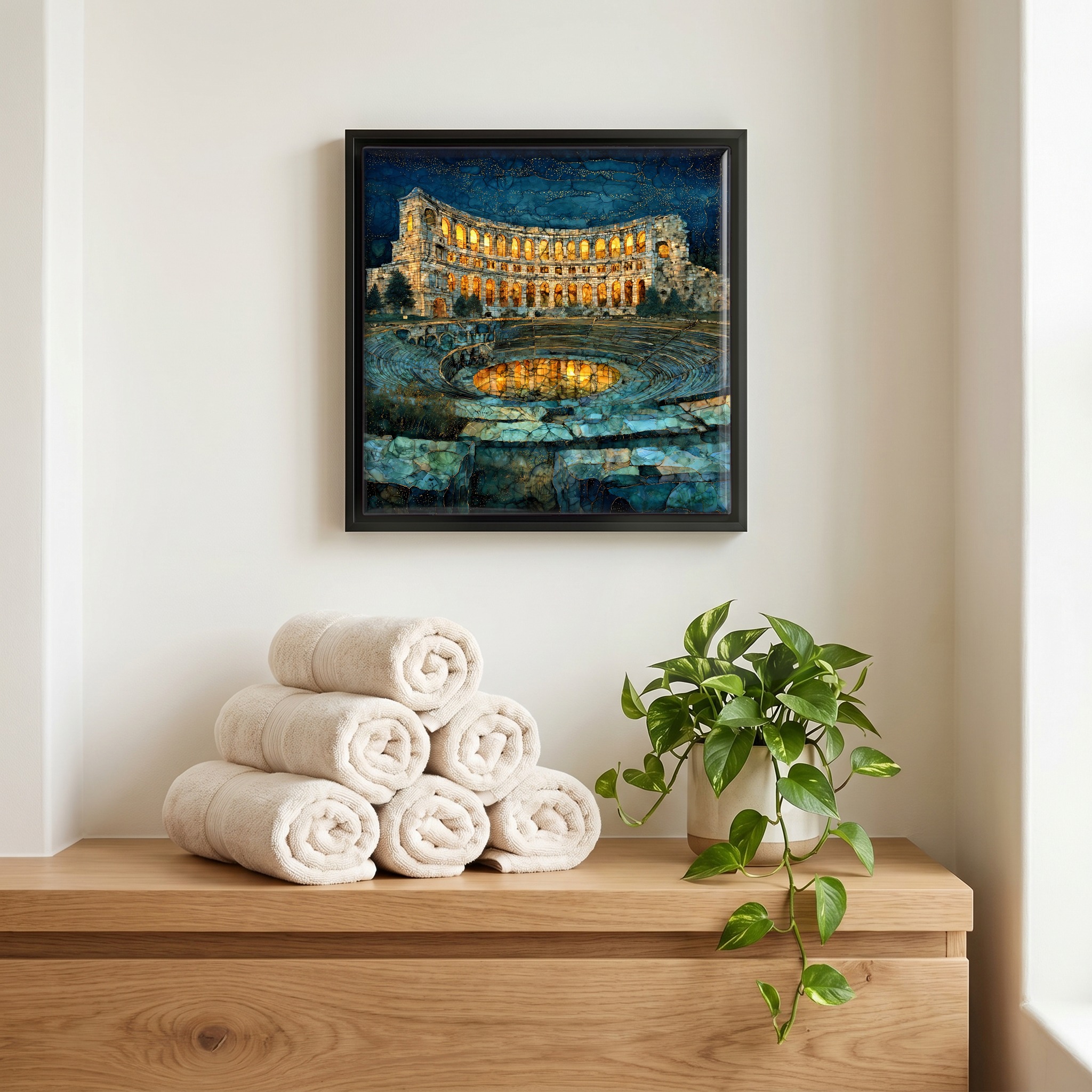
Arles Roman Amphitheatre, on ceramic.
Each tile is finished by hand in our Knoxville studio. Artwork is slowly infused into the ceramic surface under high heat and pressure, and rests beneath a thin glossy finish. The colour lives in the surface, not on top of it.
Pick any four 4-inch tiles — National Parks you've been to, a Smokies set, the four seasons of one place. $ for a set of , cork-backed, ready to live on the table.
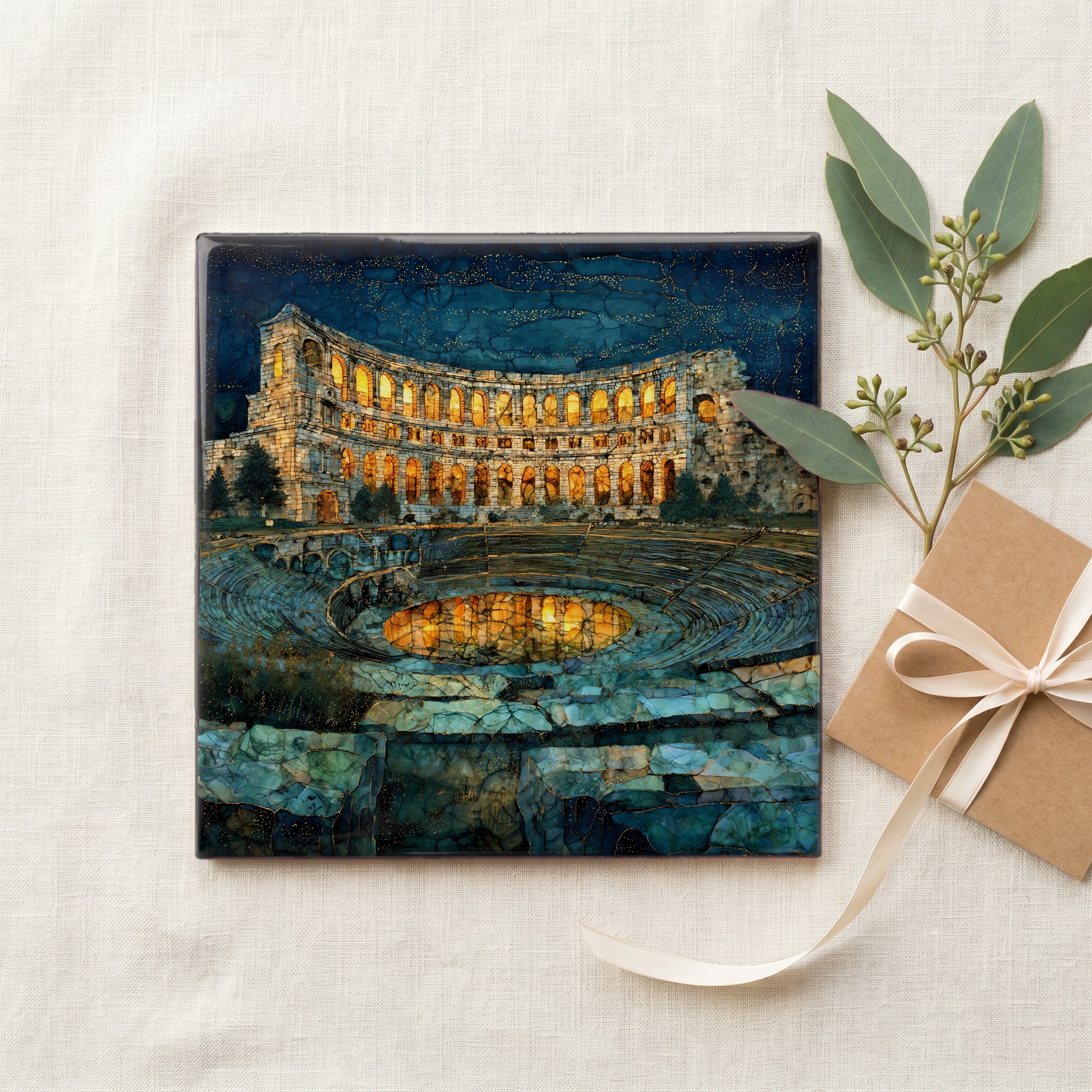
Each tile ships in a kraft box, tied with cream ribbon, with a handwritten note from the studio if you'd like to add one.
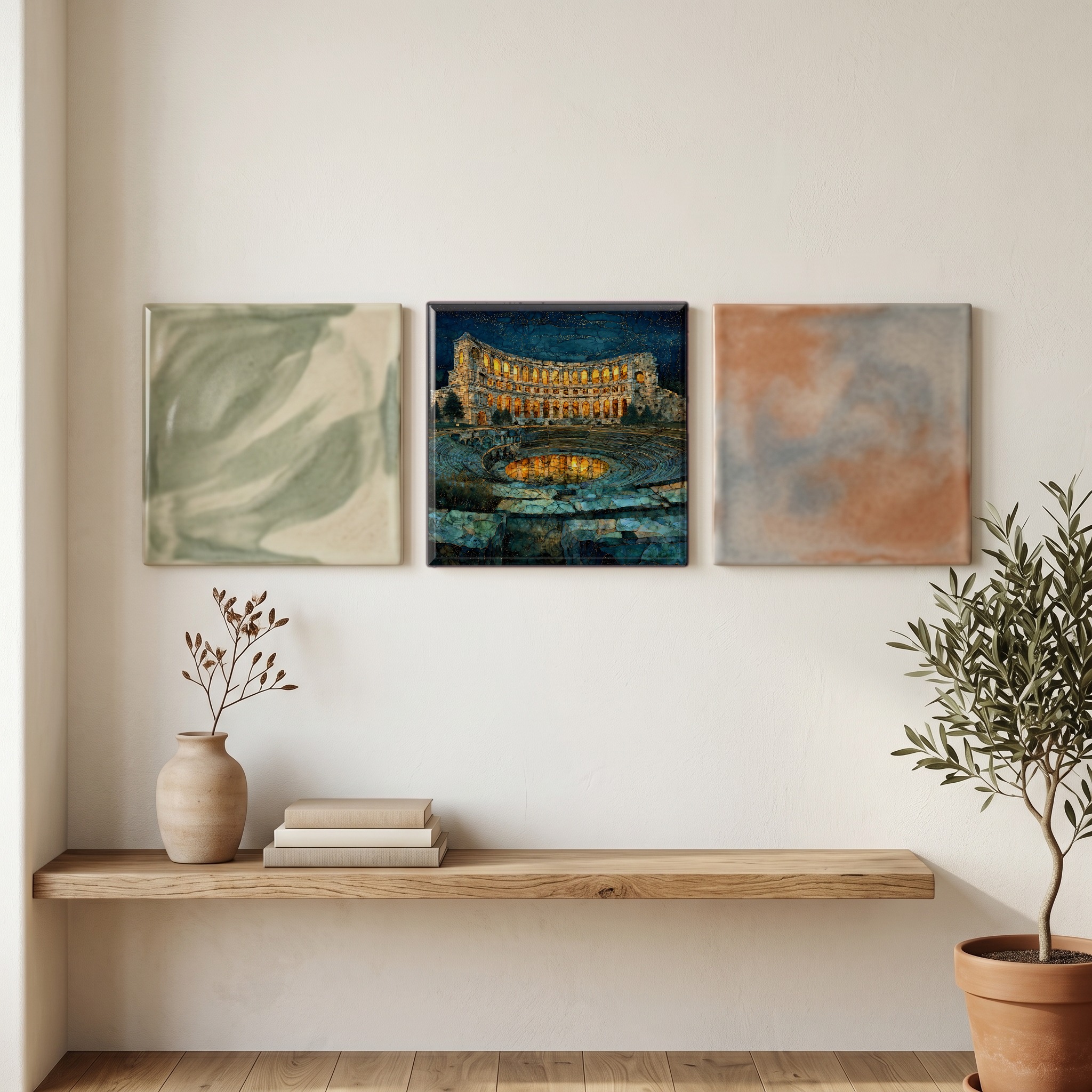
Three or five different vistas, hung together — a chapter of places you've been, or want to go.
The place, in three passes.
Arles sits on the Rhône in the Bouches-du-Rhône department of Provence, about thirty kilometres south of Avignon. The amphitheatre was built around 90 AD, a few years after the Colosseum in Rome, and measures roughly 136 metres on its long axis, 107 metres on its short. Two tiers of sixty arches each carry the elliptical wall, twenty-one metres above the cavea. The town of Arles grew up around the structure and, in the medieval period, into it. UNESCO inscribed Arles' Roman and Romanesque monuments in 1981. The TGV station is a short walk; the Rhône is closer still, three hundred metres west.
The amphitheatre is built from local Provençal limestone, cut from quarries in the foothills of the Alpilles to the east. Roman engineers laid the arena over a foundation of poured concrete and rubble, fitting the dressed stone blocks without mortar in the principal piers. In the fifth century, after the empire receded, the arena was converted into a fortress; four square towers were added at the cardinal points and the arches were walled up. Three of those towers still stand. Over two hundred houses and two chapels were eventually built inside the cavea, a small town locked behind the Roman walls until 1825, when Prosper Mérimée's inspectors began clearing it.
The amphitheatre is still in use, nineteen centuries after its first season. Two ferias dominate the calendar: the Feria de Pâques at Easter and the Feria du Riz in mid-September, which marks the Camargue rice harvest. Both bring Spanish-style corridas alongside the Camargue's own course camarguaise, a bloodless contest in which agile raseteurs try to snatch ribbons from between the horns of a black Camargue bull. Concerts and Provençal pageants fill the off-season. The arena seats about twelve thousand for spectacle today, half its Roman capacity, in keeping with modern safety codes. Tickets are sold through the Office de Tourisme on Boulevard des Lices.