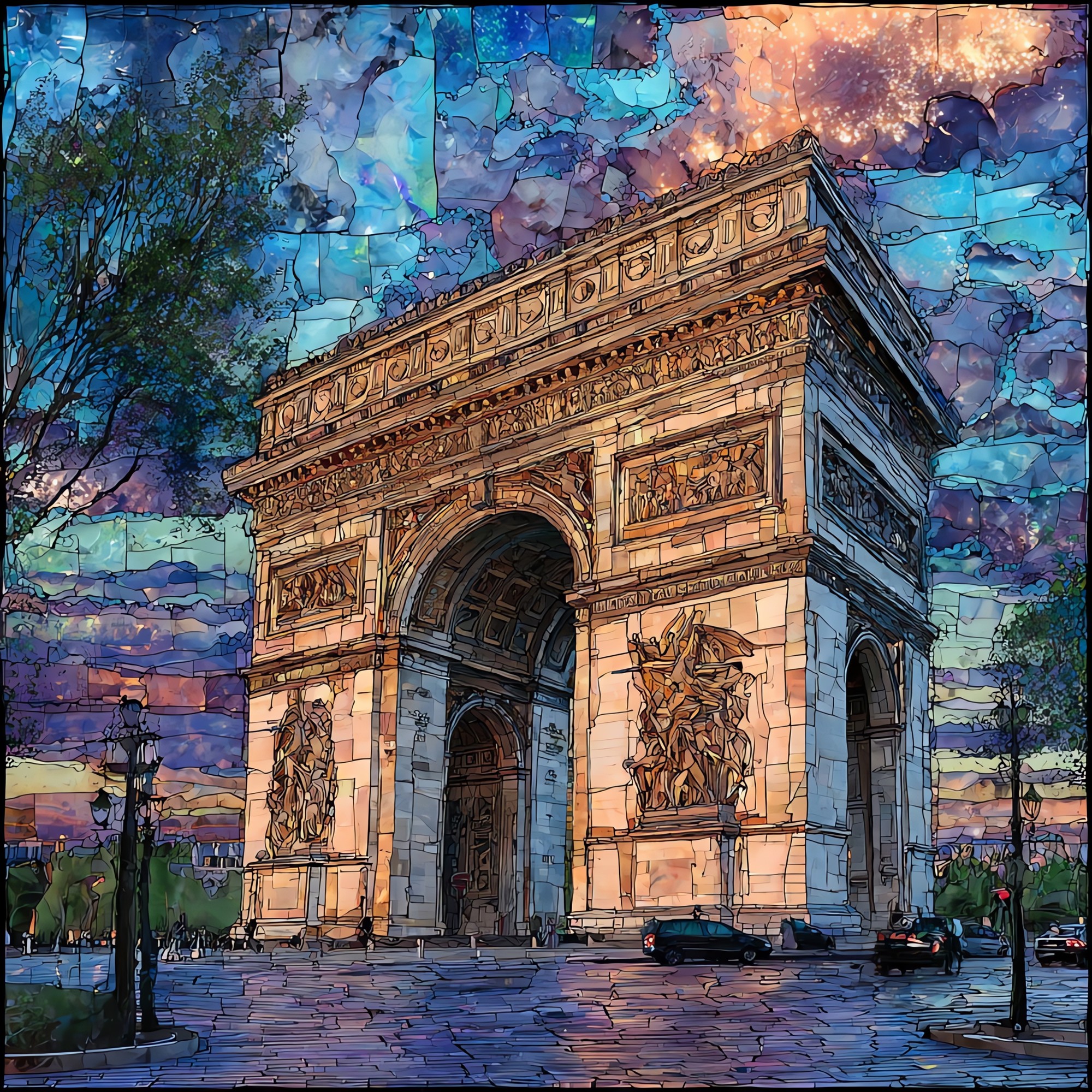
Arc de Triomphe
— a flame that hasn't gone out since 1923.
Not only on a wall.
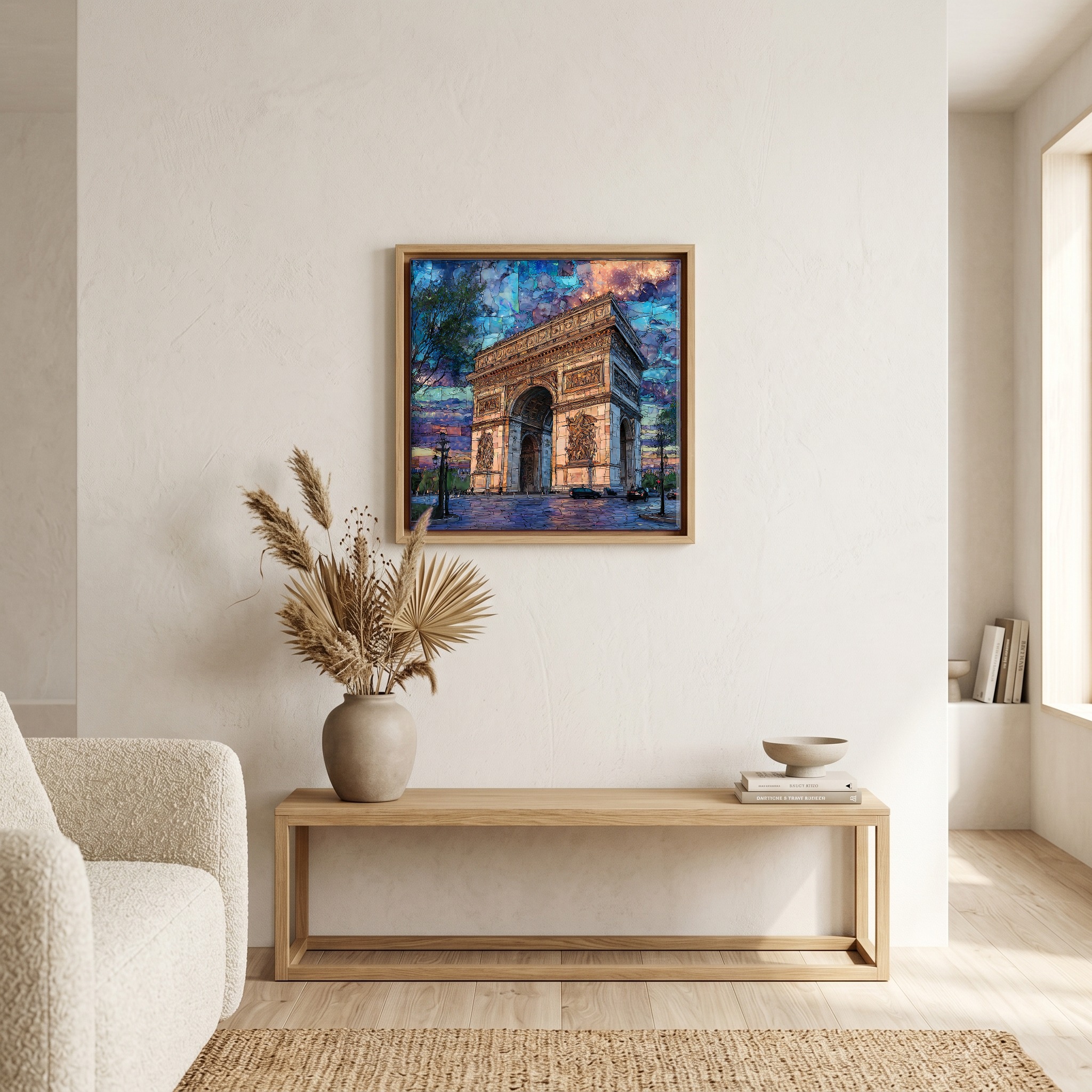
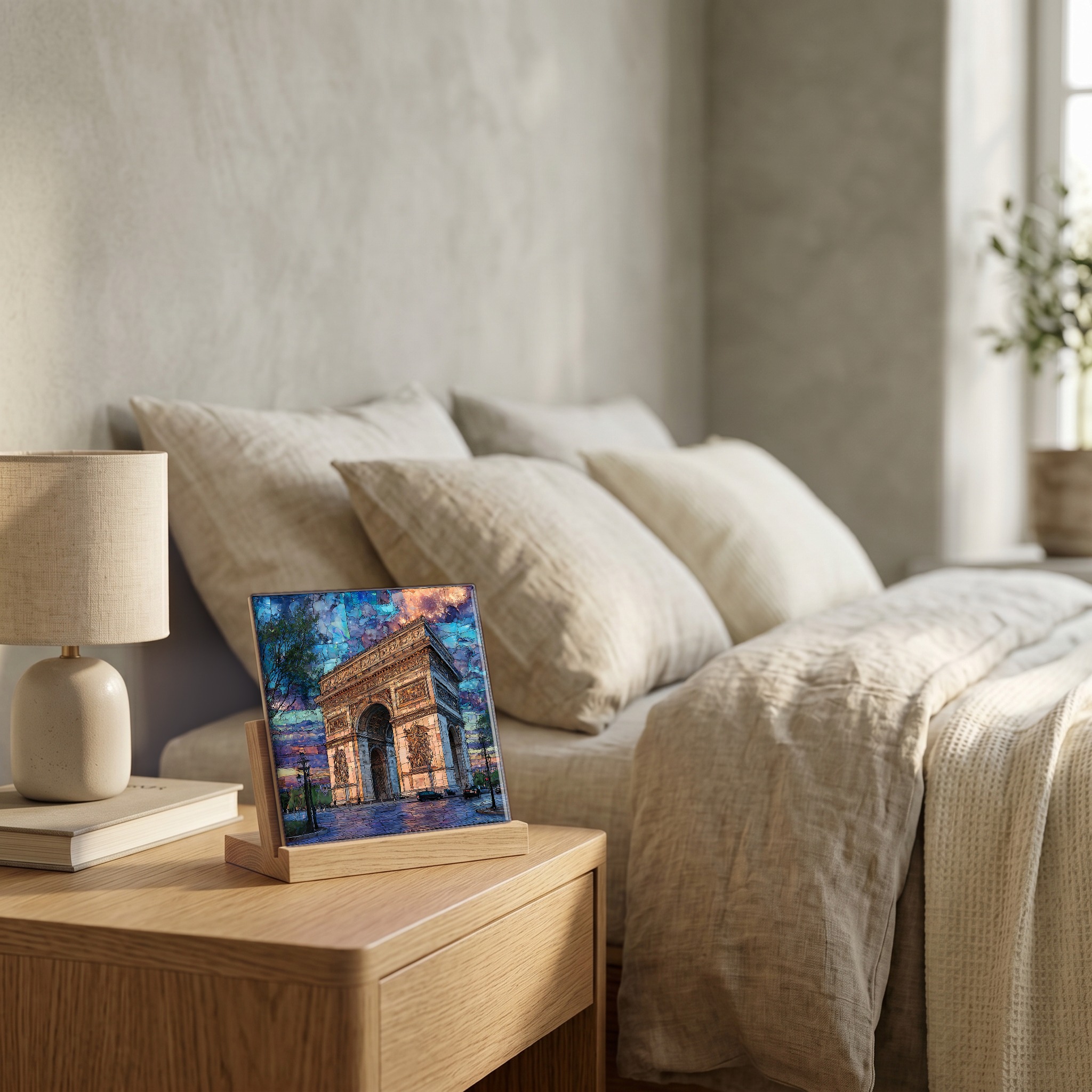
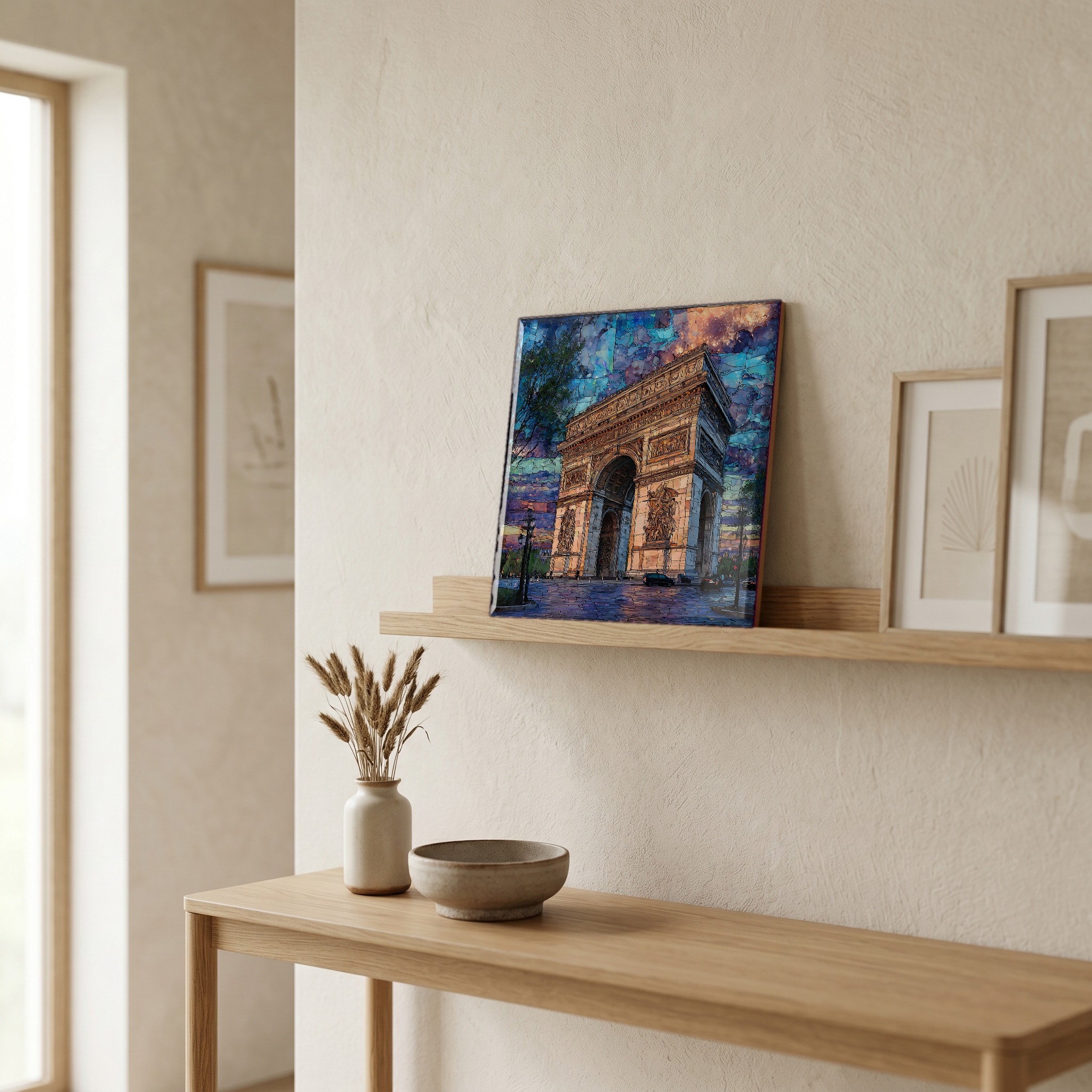
“Fifty metres of stone at the top of the Champs-Élysées, where twelve avenues fan out from a roundabout most Parisians cross by tunnel. Napoleon commissioned it in 1806, after Austerlitz; he didn't live to see it finished. Beneath the central vault, the Tomb of the Unknown Soldier from the first war, and a flame that has been kept lit since 1923. At six-thirty each evening a small group gathers and rekindles it. The traffic keeps going. The names of 158 battles and 660 generals stay carved into the limestone above.
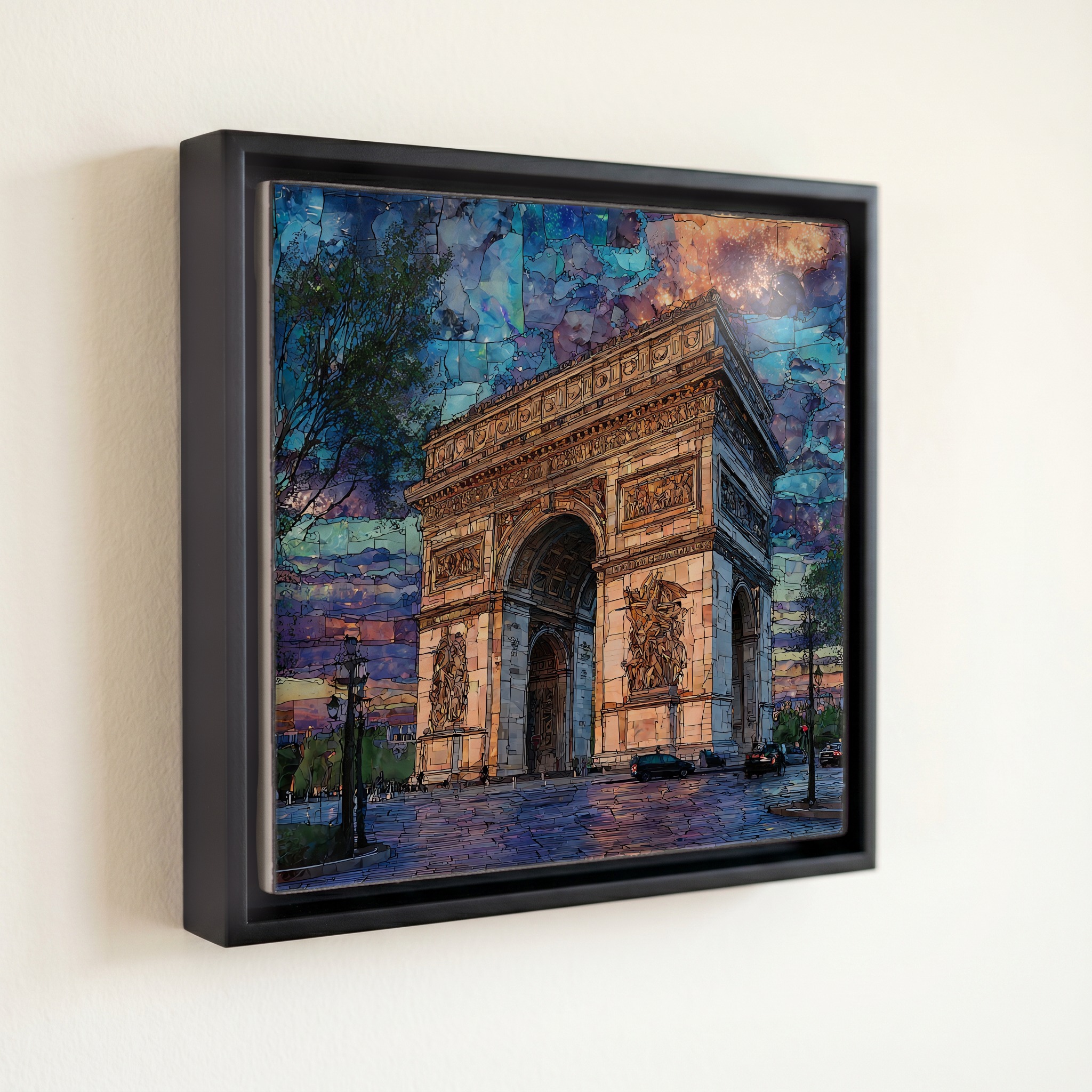
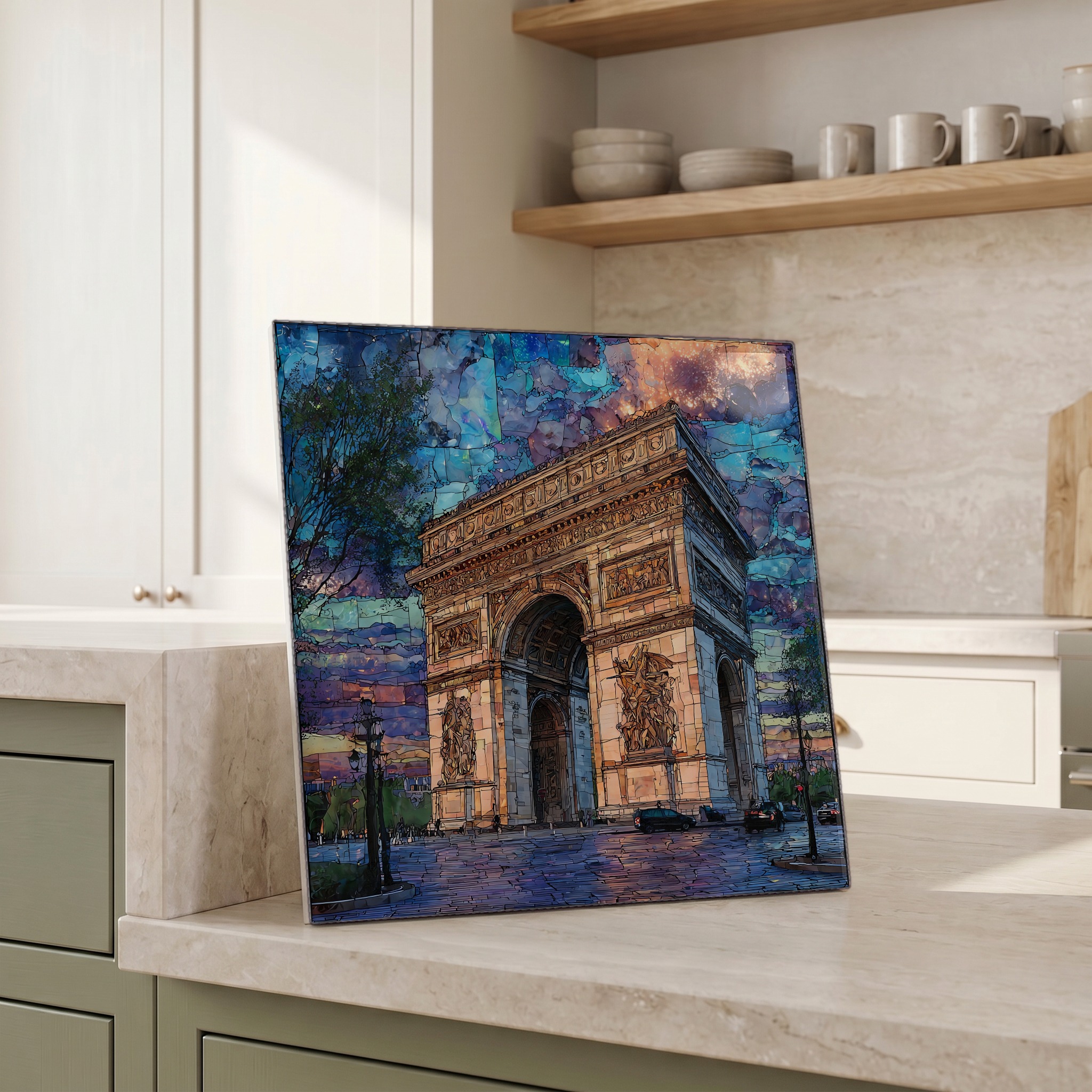
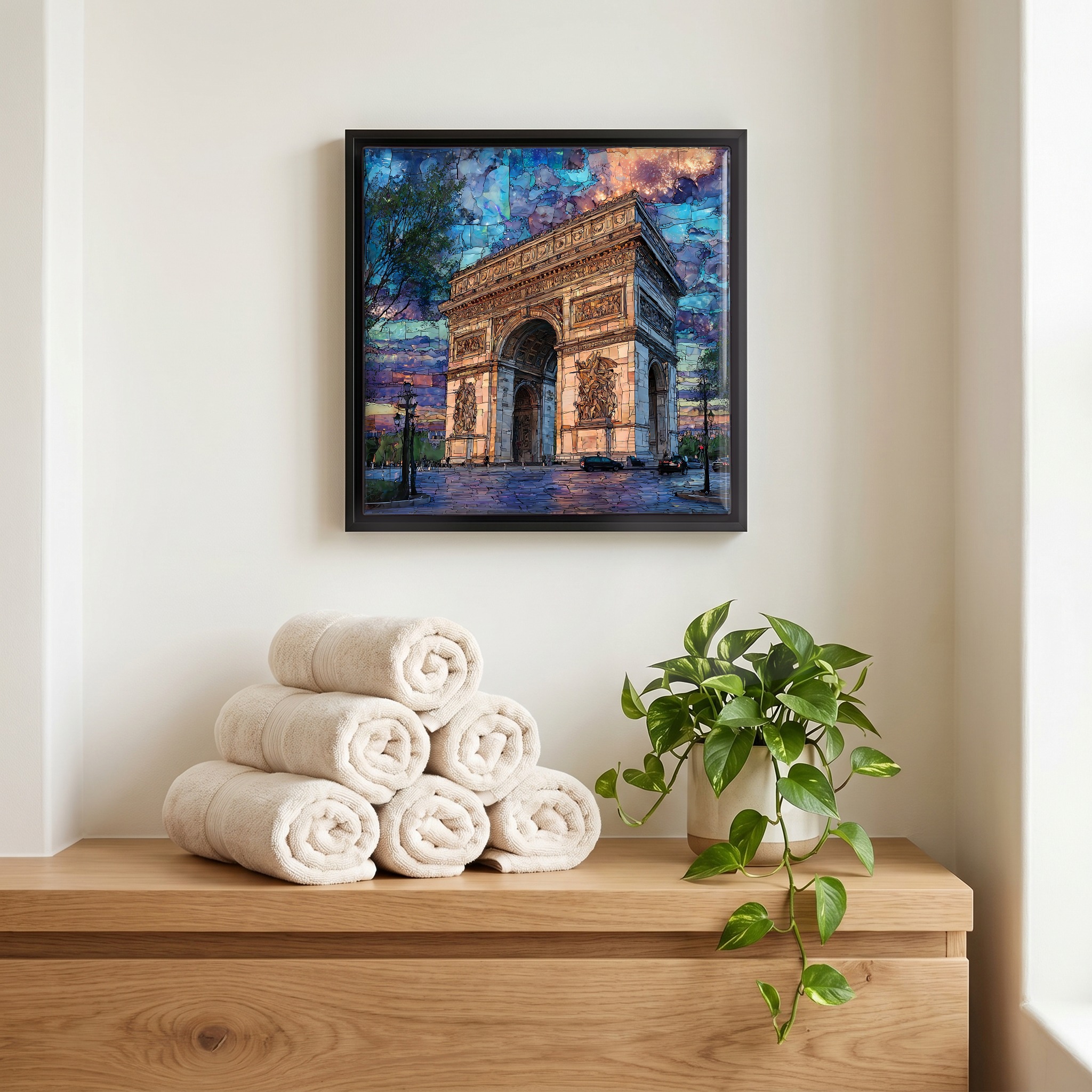
Arc de Triomphe, on ceramic.
Each tile is finished by hand in our Knoxville studio. Artwork is slowly infused into the ceramic surface under high heat and pressure, and rests beneath a thin glossy finish. The colour lives in the surface, not on top of it.
Pick any four 4-inch tiles — National Parks you've been to, a Smokies set, the four seasons of one place. $ for a set of , cork-backed, ready to live on the table.
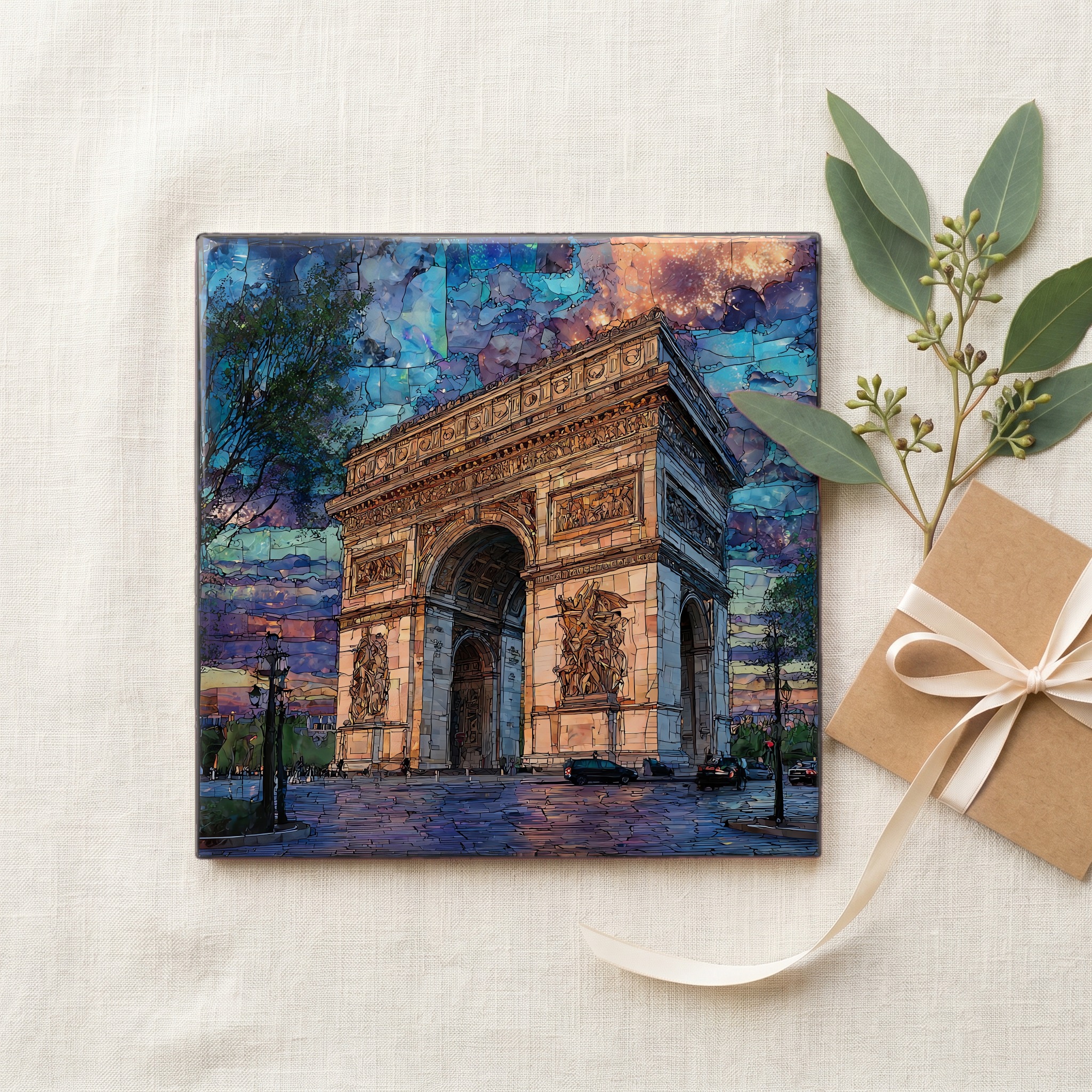
Each tile ships in a kraft box, tied with cream ribbon, with a handwritten note from the studio if you'd like to add one.
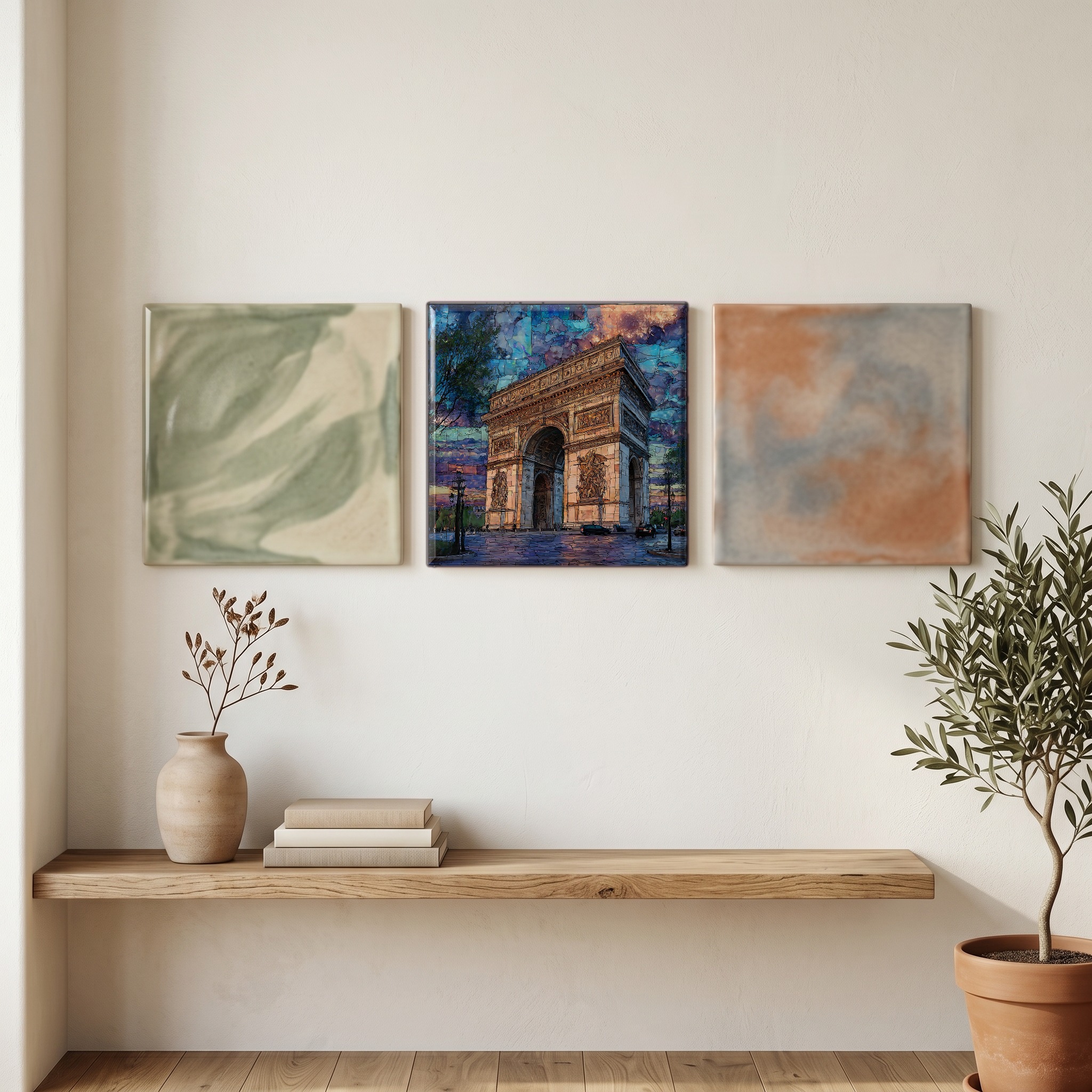
Three or five different vistas, hung together — a chapter of places you've been, or want to go.
The place, in three passes.
The Arc de Triomphe stands at the centre of the Place Charles de Gaulle in the 8th arrondissement of Paris, at the western end of the Champs-Élysées and the eastern end of the Avenue de la Grande Armée. Twelve avenues radiate from the roundabout, the reason the square's older name, Place de l'Étoile, was the star. The monument is fifty metres tall, forty-five wide, twenty-two deep, the second-largest triumphal arch in the world. It sits on the Chaillot rise, on the historic axis that runs from the Louvre through the Tuileries and the Concorde obelisk, west to the modern Grande Arche at La Défense, three and a half kilometres away.
Napoleon commissioned the arch in 1806 after the victory at Austerlitz. The architect Jean Chalgrin oversaw the early years; construction stopped after Napoleon's fall and did not resume in earnest until 1833 under King Louis-Philippe, who inaugurated the finished monument on the 29th of July, 1836, thirty years after the original order. Four large relief groups stand on the four piers. The best known is François Rude's Le Départ de 1792, called La Marseillaise, on the right face toward the Champs-Élysées. The inner walls carry the names of 158 battles and 660 French generals; the names of those who died in the field are underlined.
The arch is open to visitors most days of the year, with brief partial closures on national commemorations. The rooftop terrace is a climb of 284 steps; an elevator serves visitors with reduced mobility for much of the ascent. The view, fifty metres above the Place Charles de Gaulle, looks east down the Champs-Élysées toward the Place de la Concorde and the Louvre, and west toward the Grande Arche de la Défense, three and a half kilometres away. Beneath the central vault, the Tomb of the Unknown Soldier and its flame, kindled in 1923, sit at the base. The rekindling ceremony, performed by representatives of veterans' associations, is at six-thirty each evening.