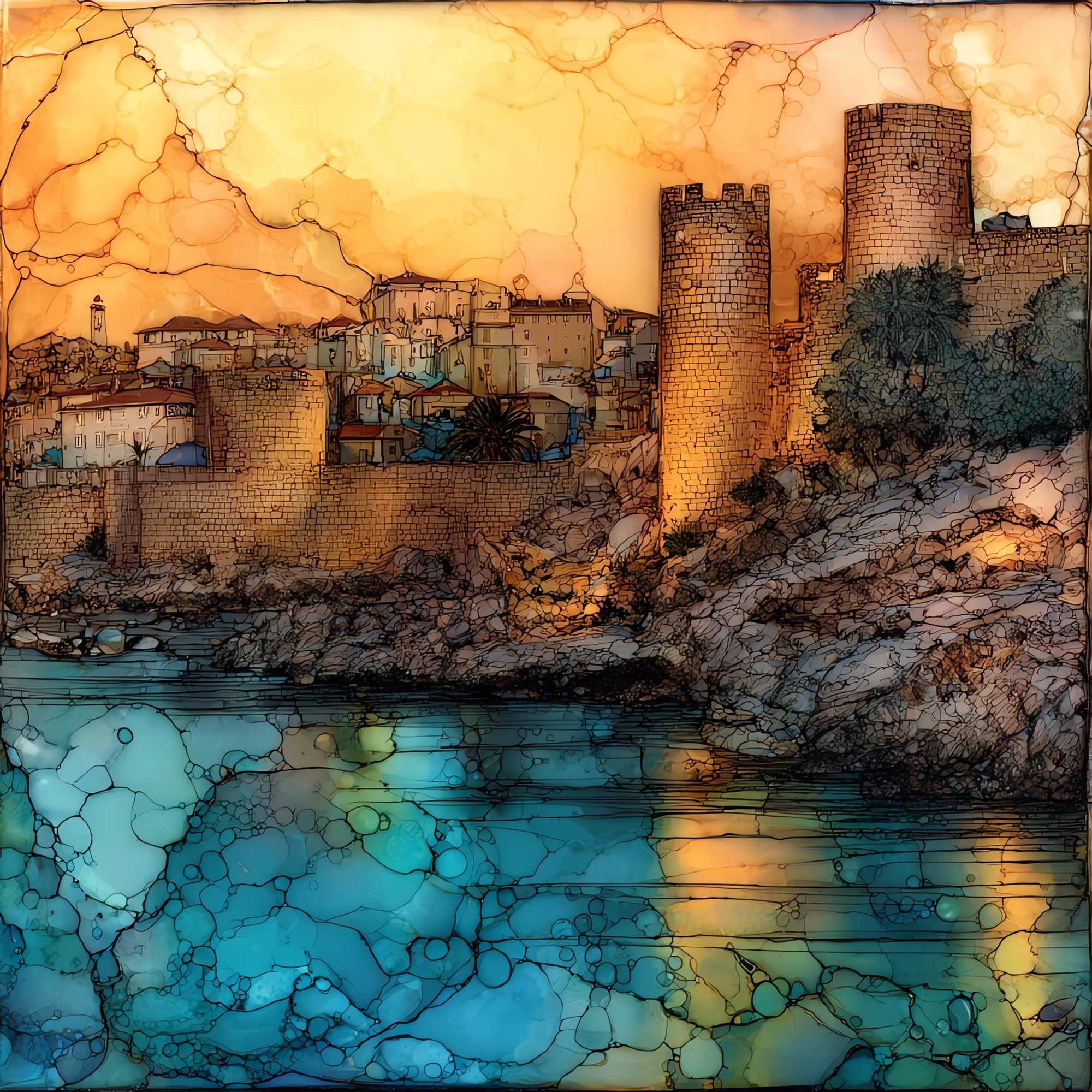
Antibes Ramparts
— — the wall the sea keeps polishing.
Not only on a wall.
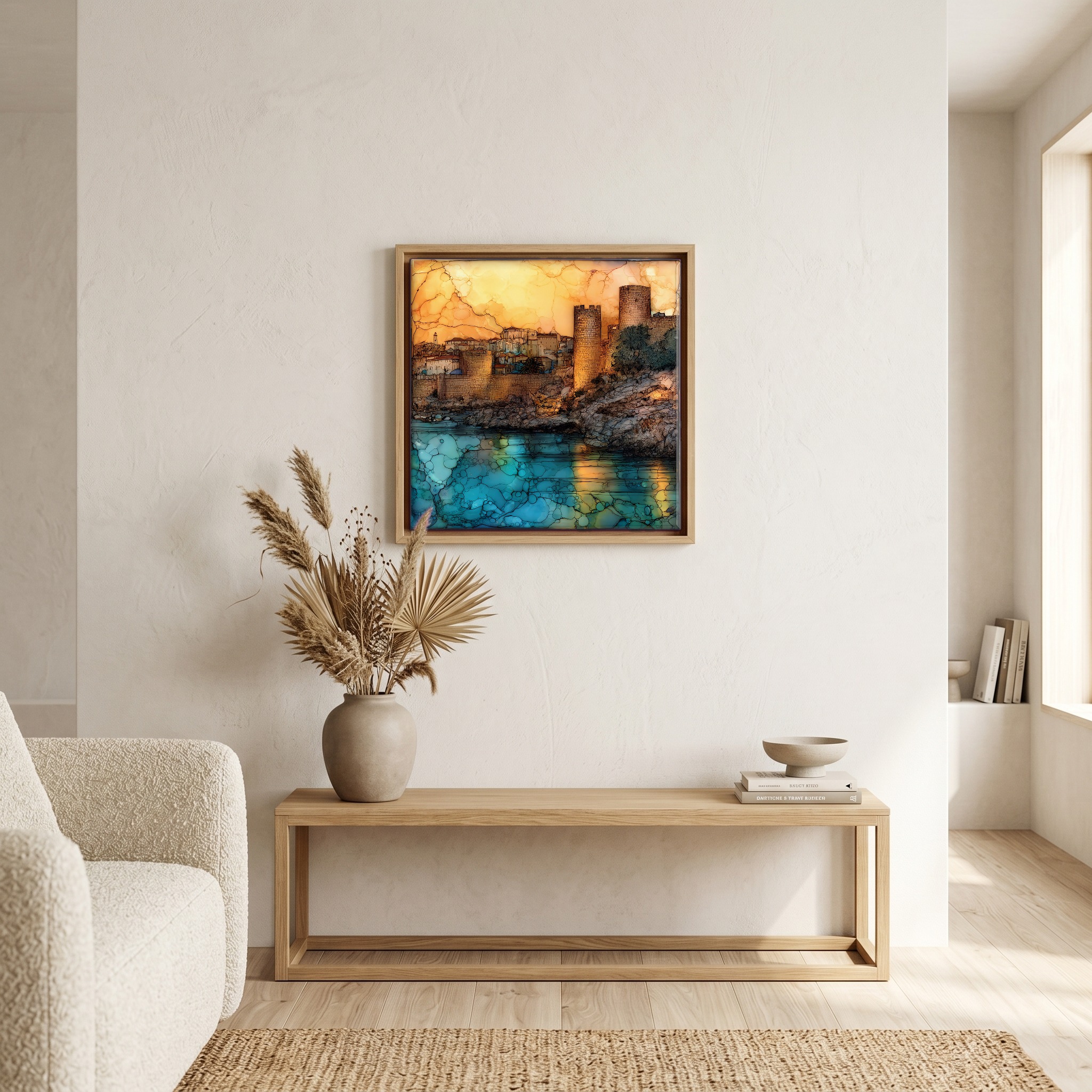
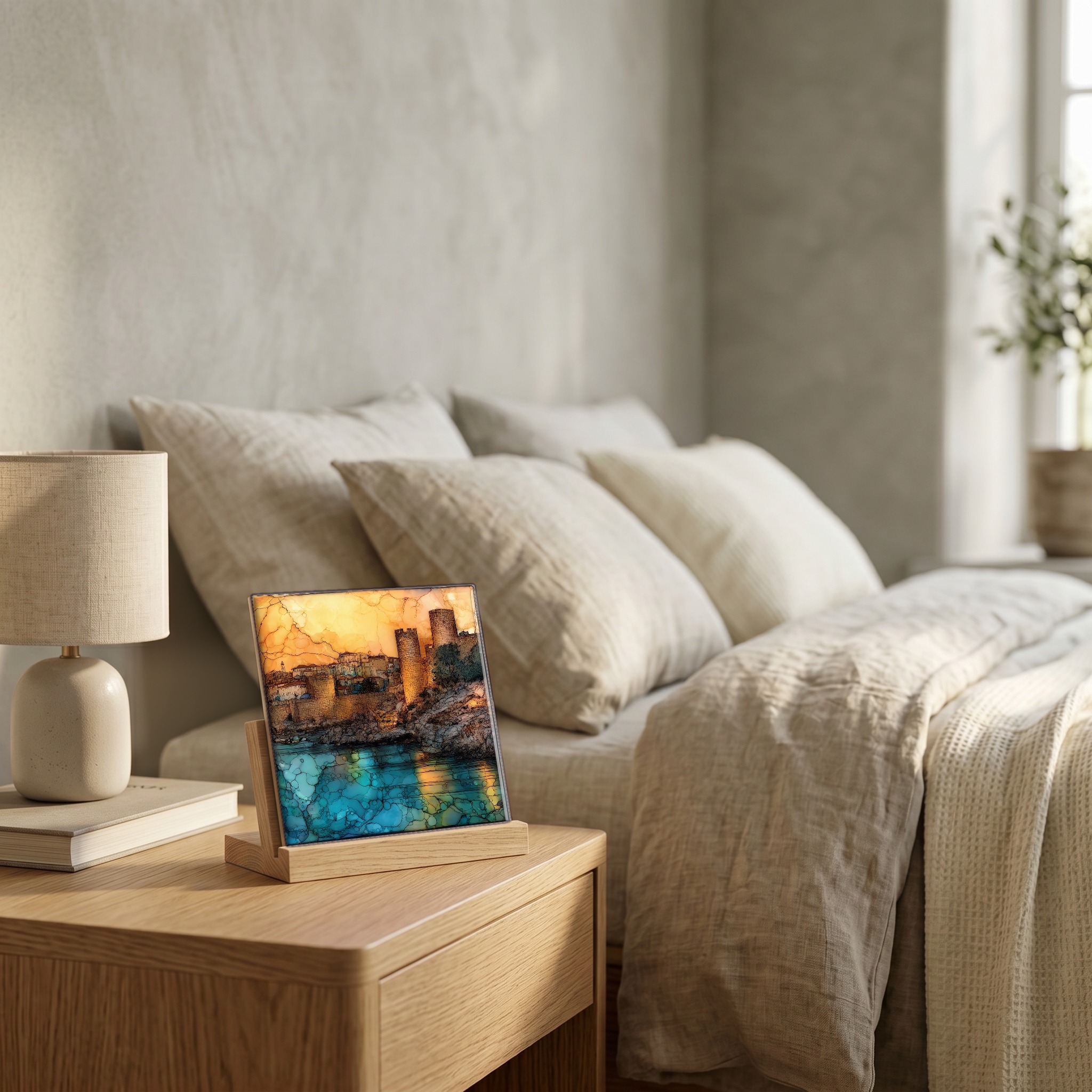
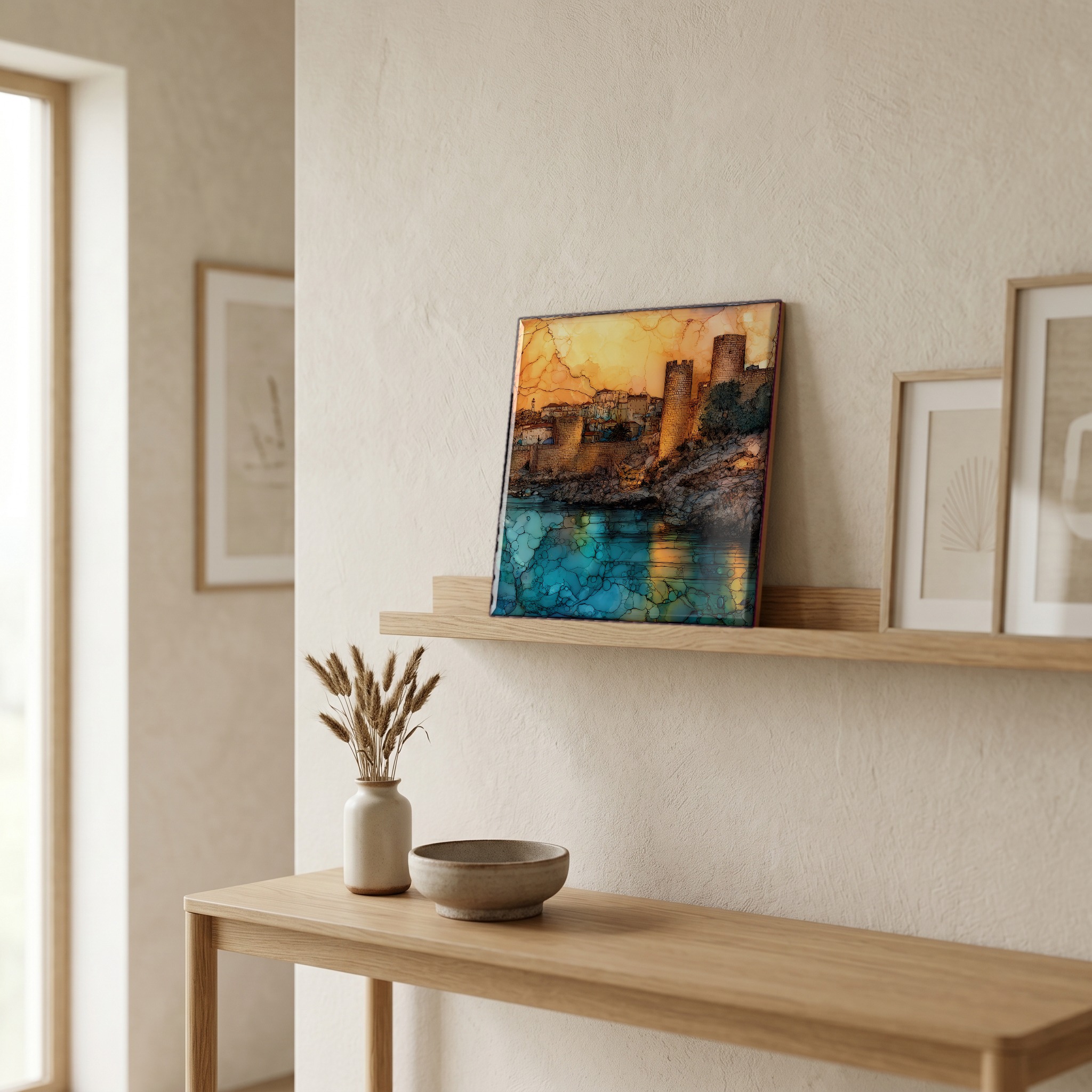
“The walled town sits on a low peninsula on the Côte d'Azur, ringed on the seaward side by stone that goes back to Vauban and earlier. Picasso took a studio inside the Château Grimaldi in 1946. The paintings he left became the first museum dedicated to him, twenty years on. Nicolas de Staël took a studio in the old town in 1954 and painted from a window that looked at the same blue. The seawall heats up in the afternoon. The Mediterranean does the rest. The promenade along the top of the wall is named for an admiral born in the hills above the bay.
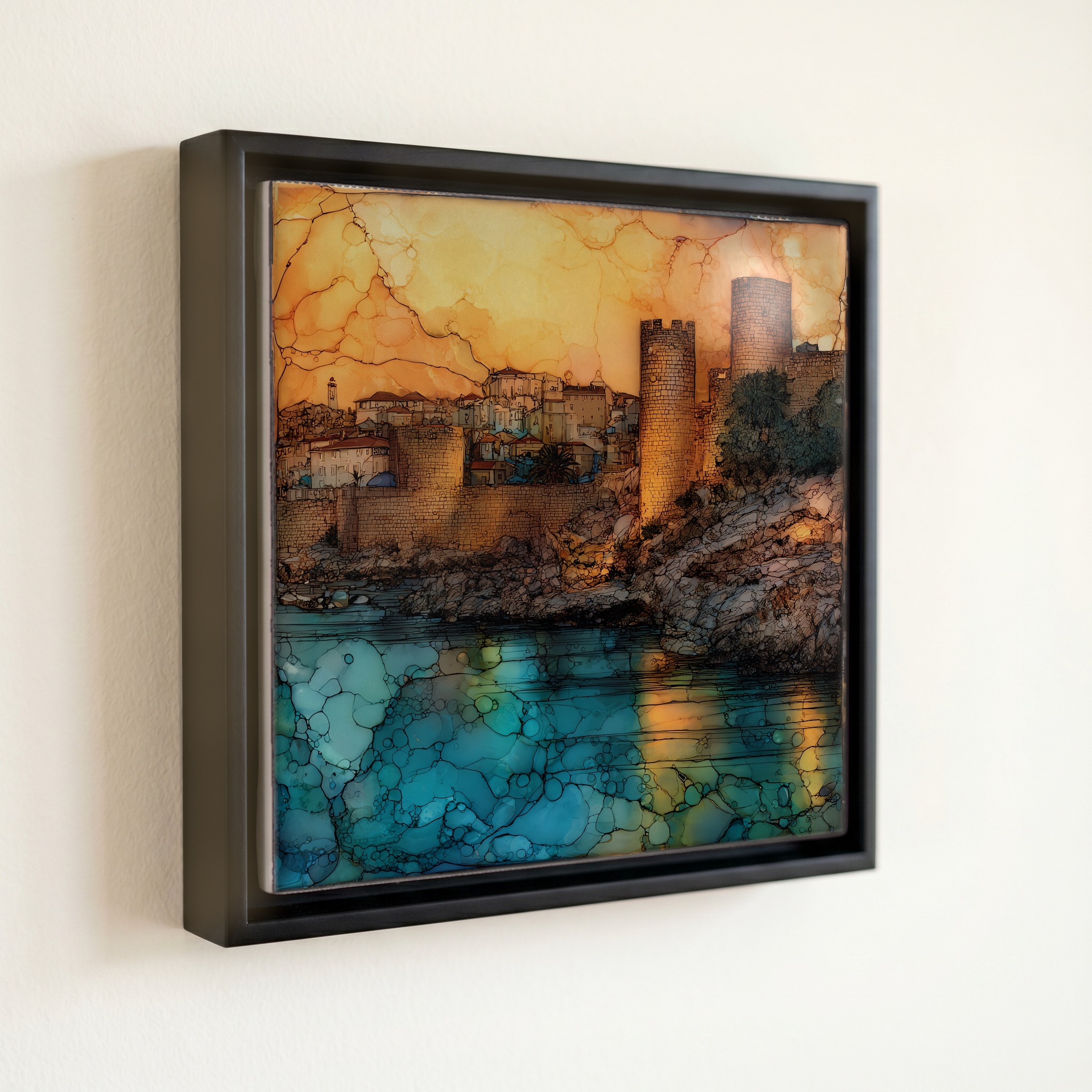
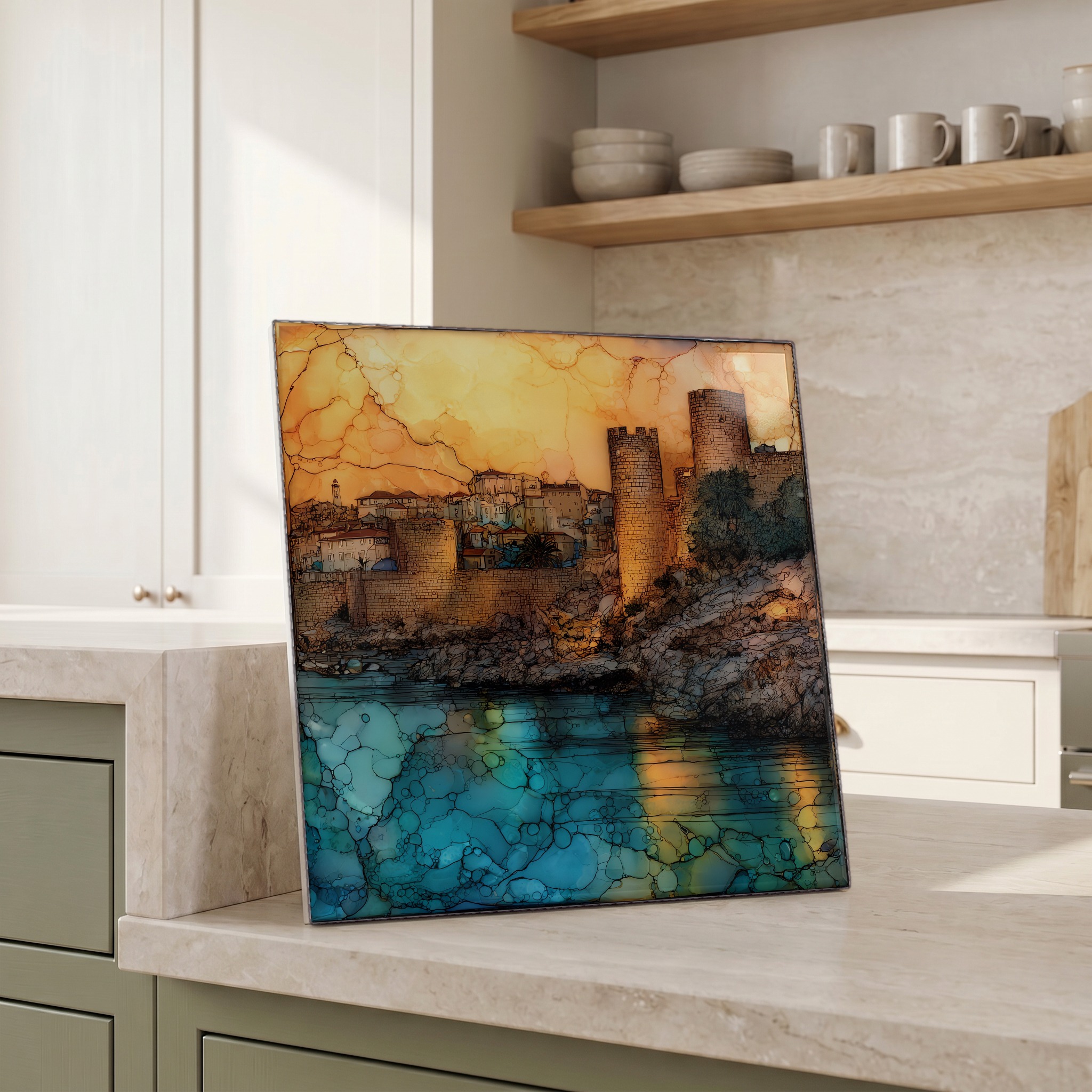
Antibes Ramparts, on ceramic.
Each tile is finished by hand in our Knoxville studio. Artwork is slowly infused into the ceramic surface under high heat and pressure, and rests beneath a thin glossy finish. The colour lives in the surface, not on top of it.
Pick any four 4-inch tiles — National Parks you've been to, a Smokies set, the four seasons of one place. $ for a set of , cork-backed, ready to live on the table.
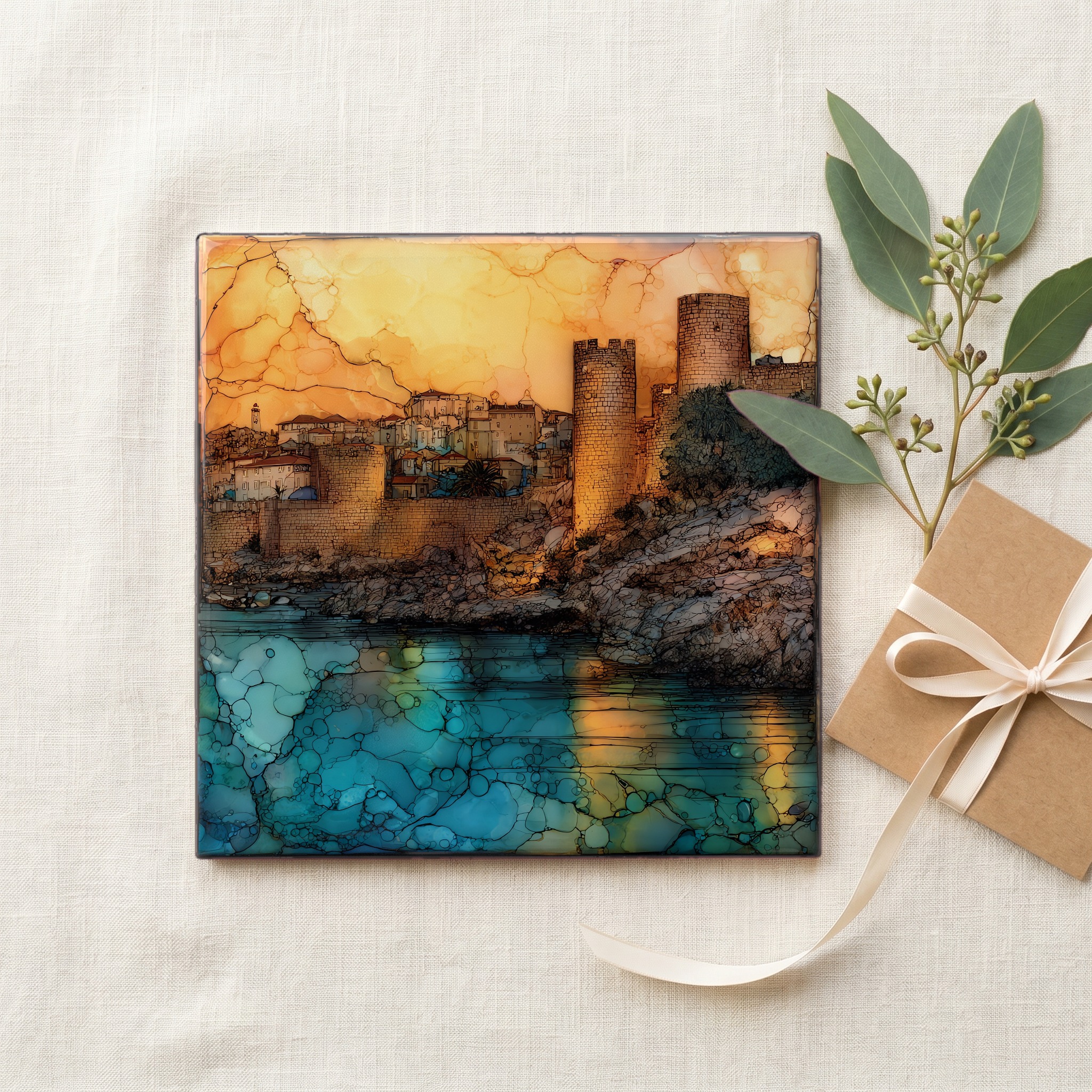
Each tile ships in a kraft box, tied with cream ribbon, with a handwritten note from the studio if you'd like to add one.
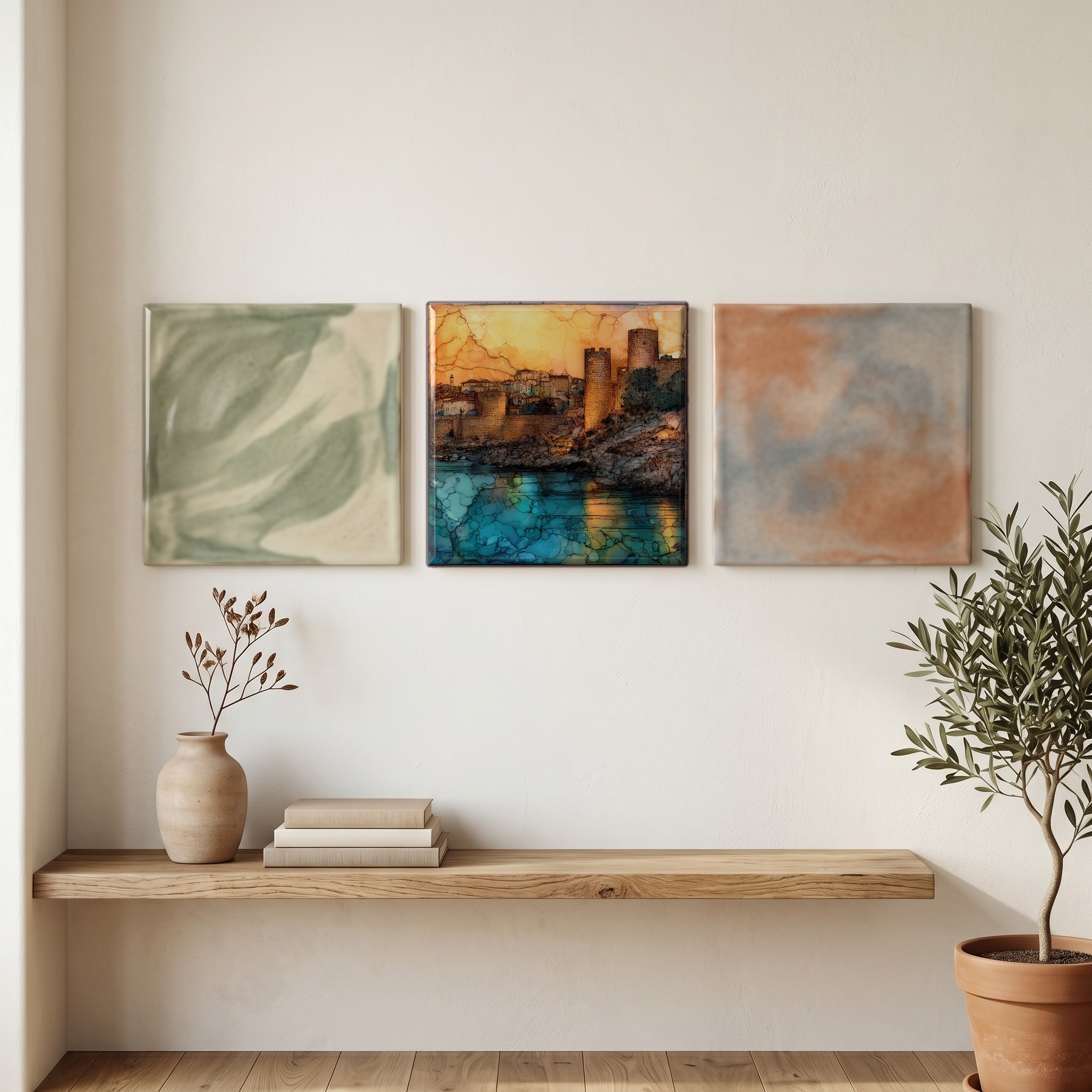
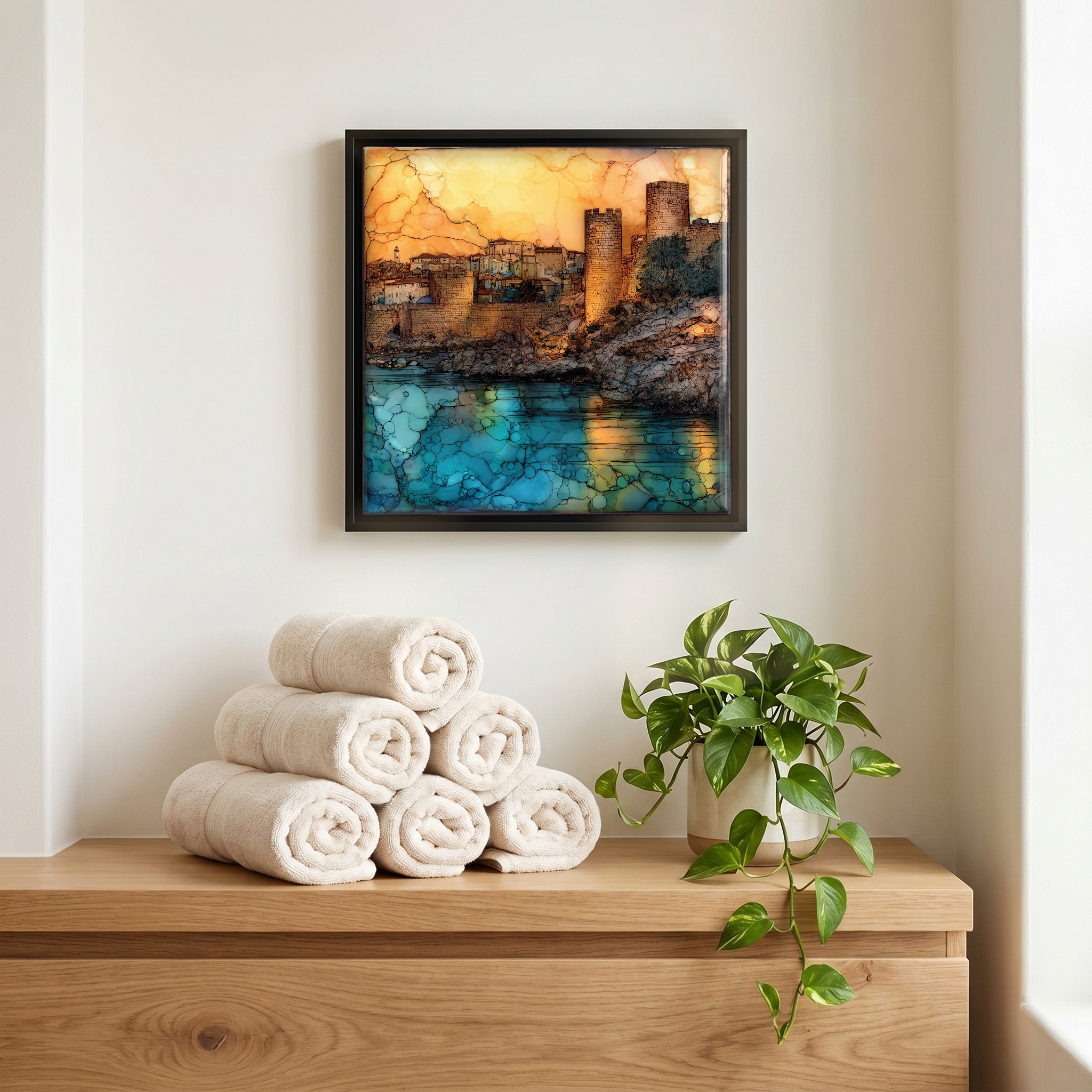
Three or five different vistas, hung together — a chapter of places you've been, or want to go.
The place, in three passes.
Antibes Ramparts wrap the old town on a low peninsula on the Côte d'Azur, in the Alpes-Maritimes department of southeastern France, between Cannes 11 km west and Nice 22 km northeast. The fortifications were rebuilt under Sébastien Le Prestre de Vauban for Louis XIV beginning in 1681, replacing medieval walls that had been laid on the foundations of Antipolis, the Greek colony founded here by Phocaeans from Marseille in the 5th century BCE. The landward walls were demolished in 1894 to let the town expand. The seaward ramparts, the Bastion Saint-André, and Fort Carré (1565) remain. The promenade along the top of the wall is named for François-Joseph-Paul de Grasse, the French admiral born nearby in 1722.
The seaward ramparts are dressed limestone, cut from quarries in the Alpes-Maritimes and laid in long courses that meet the Mediterranean directly. Vauban's program, begun in 1681, reinforced earlier medieval walls with bastions, including the Bastion Saint-André, now home to the Musée d'Histoire et d'Archéologie. Inside the walls, the Château Grimaldi sits on Roman foundations and earlier Greek work; Picasso was offered the upper floors as a studio in autumn 1946 and left behind twenty-three paintings, opening as France's first Picasso museum in 1966. The painter Nicolas de Staël kept a studio in the old town in 1954 and worked from a window facing the sea, until his death there in March 1955.
The Côte d'Azur light brought Claude Monet to Antibes in January 1888; he stayed four months and produced thirty-six canvases of the bay, the cape, and the walled town. The combination of low winter sun, the dust of the Mediterranean atmosphere, and the white limestone of the Maritime Alps behind the bay gives the coast an unusual saturation. Other painters followed: Paul Signac, Henri-Edmond Cross, Pierre Bonnard, and after the war Picasso and de Staël, each chasing the same warm-stone-against-blue contrast. The clearest light arrives after the wind has scoured the haze out of the air and the snow on the Alpes-Maritimes shows behind the town.