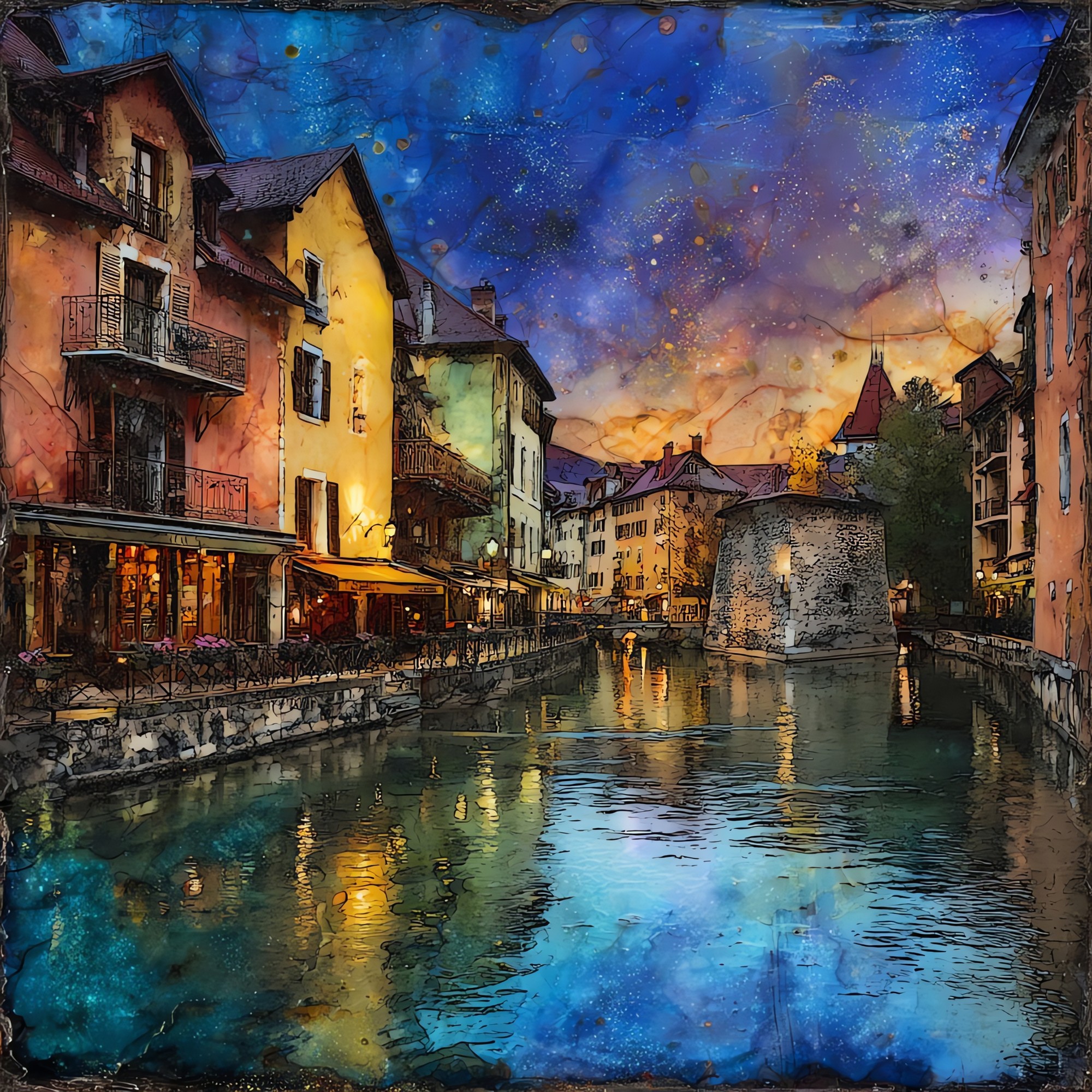
Annecy Old Town
— the colour the river carries from the lake.
Not only on a wall.
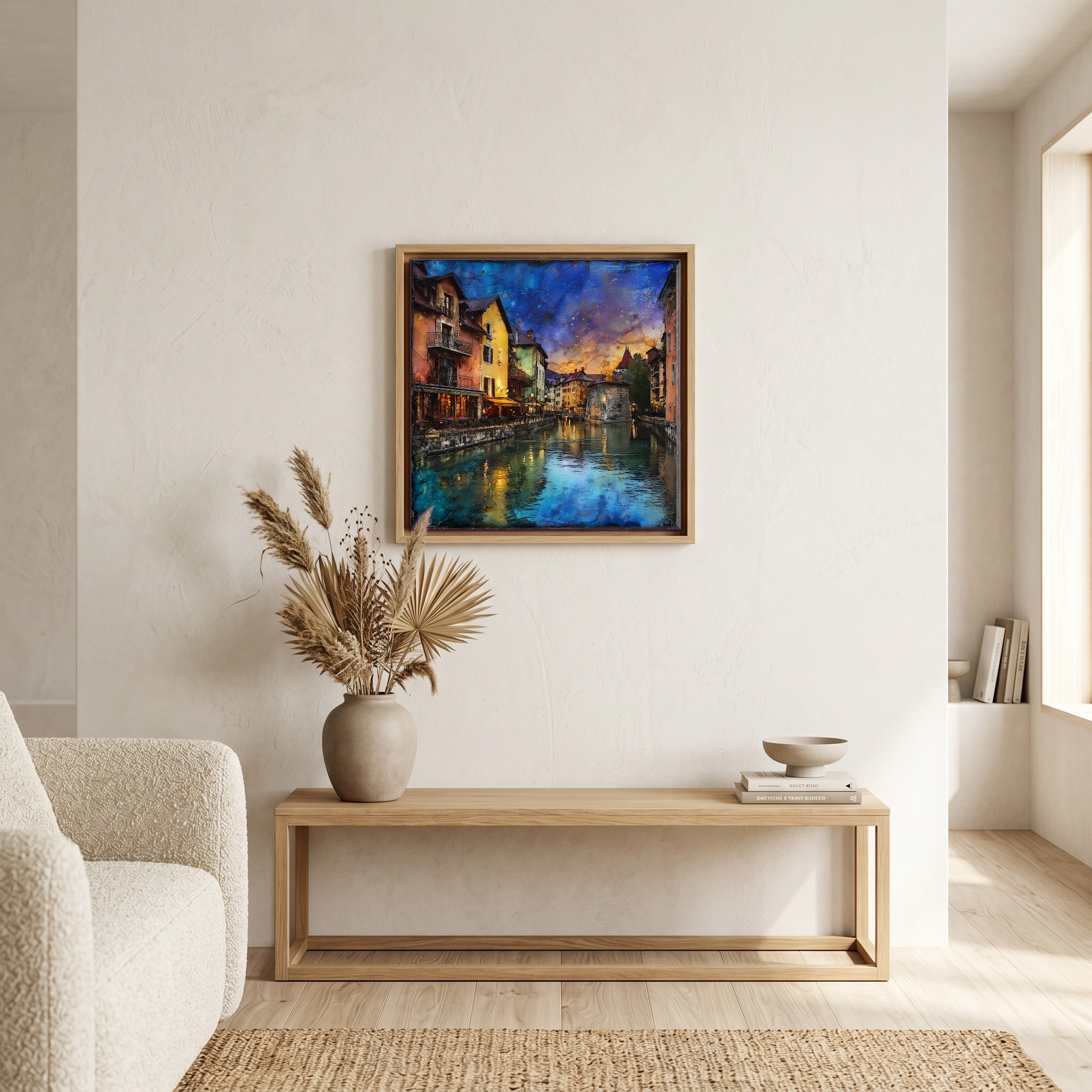
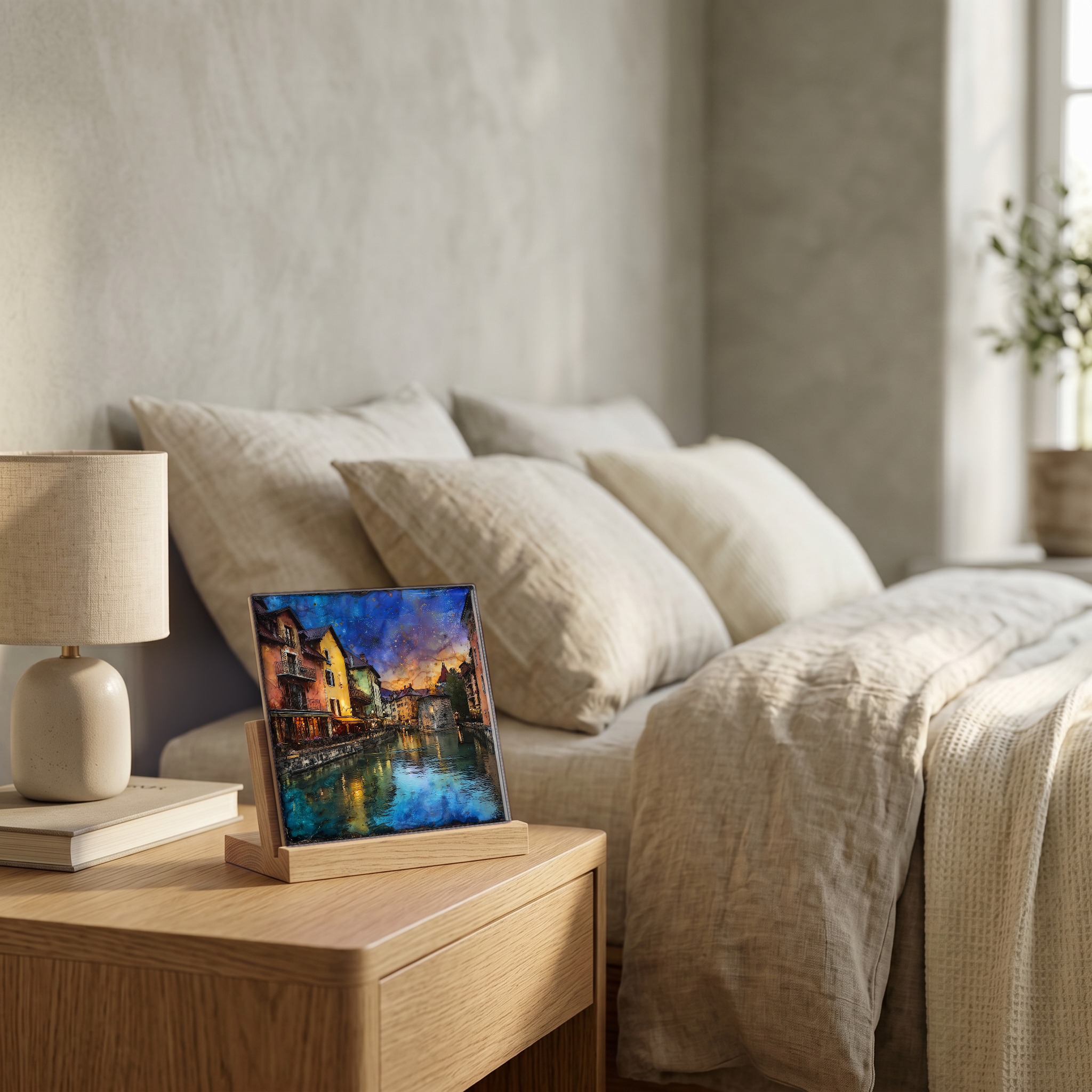
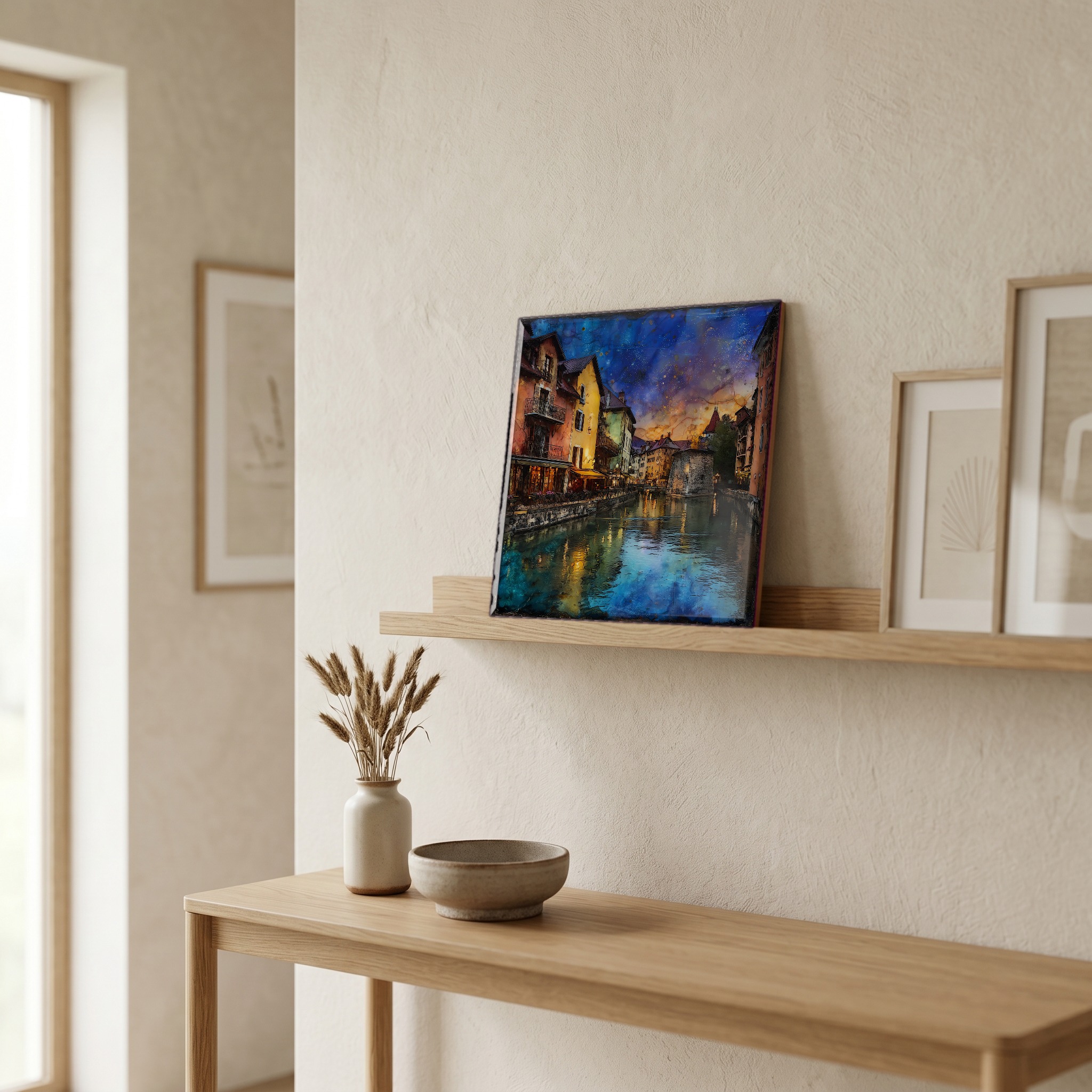
“The Thiou runs three and a half kilometres from Lake Annecy down to the Fier, and most of that stretch happens inside the old town. Pastel houses face the water on both sides. In the middle of one bend sits the Palais de l'Isle, a stone keep on a small triangular island built in the twelfth century, used as a courthouse and then a prison for most of its life. People stop on the bridges and look down. The water moving under their feet is some of the clearest in Europe.
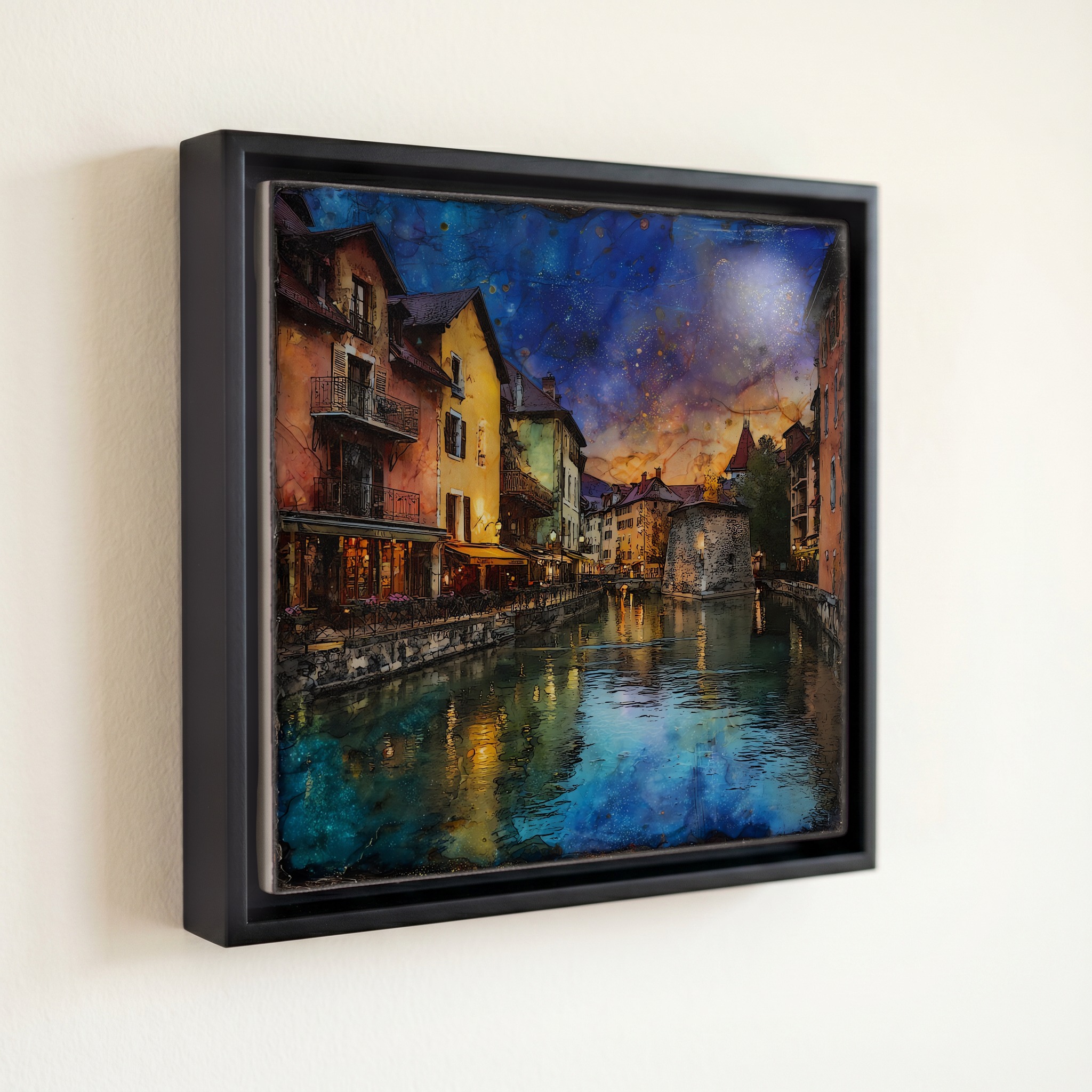
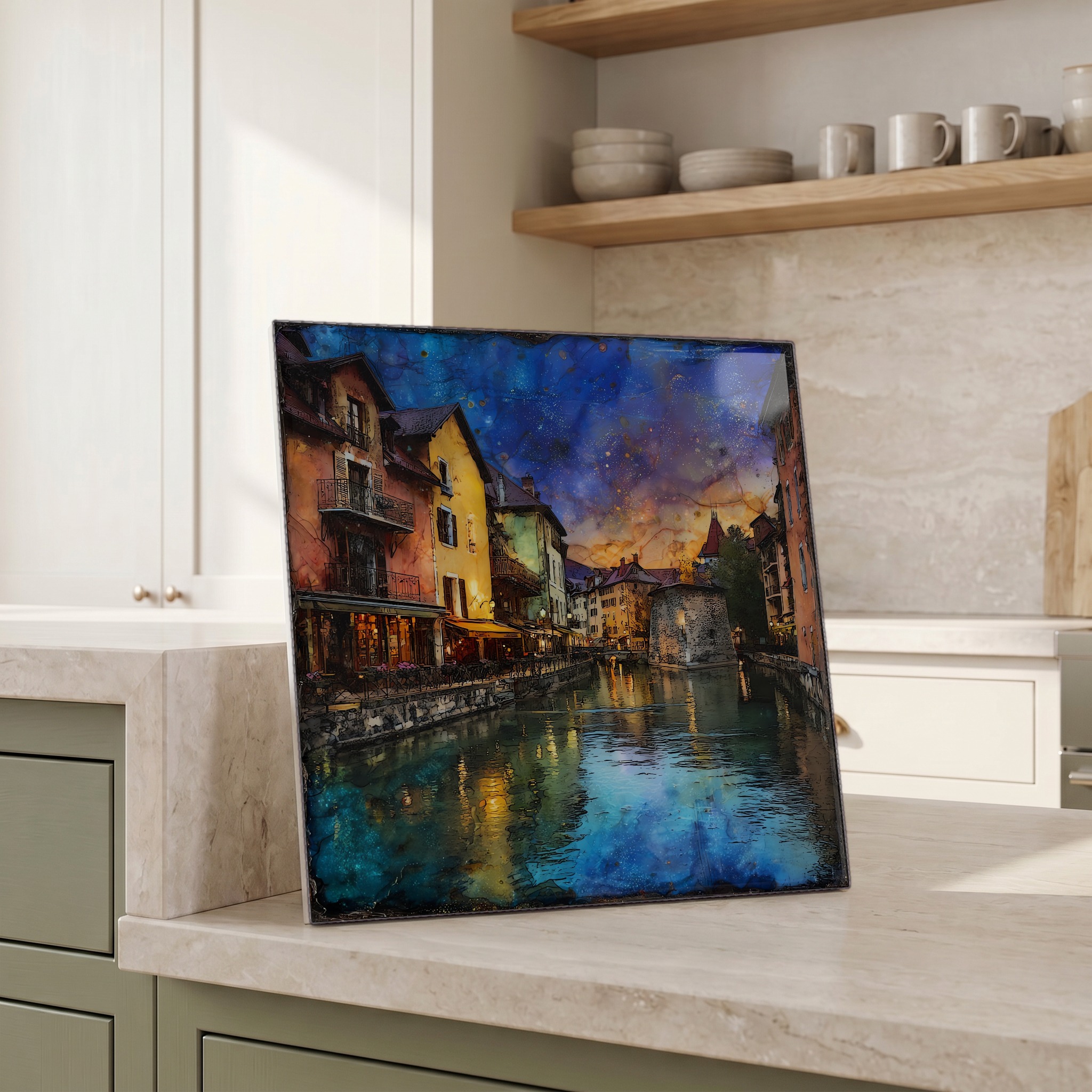
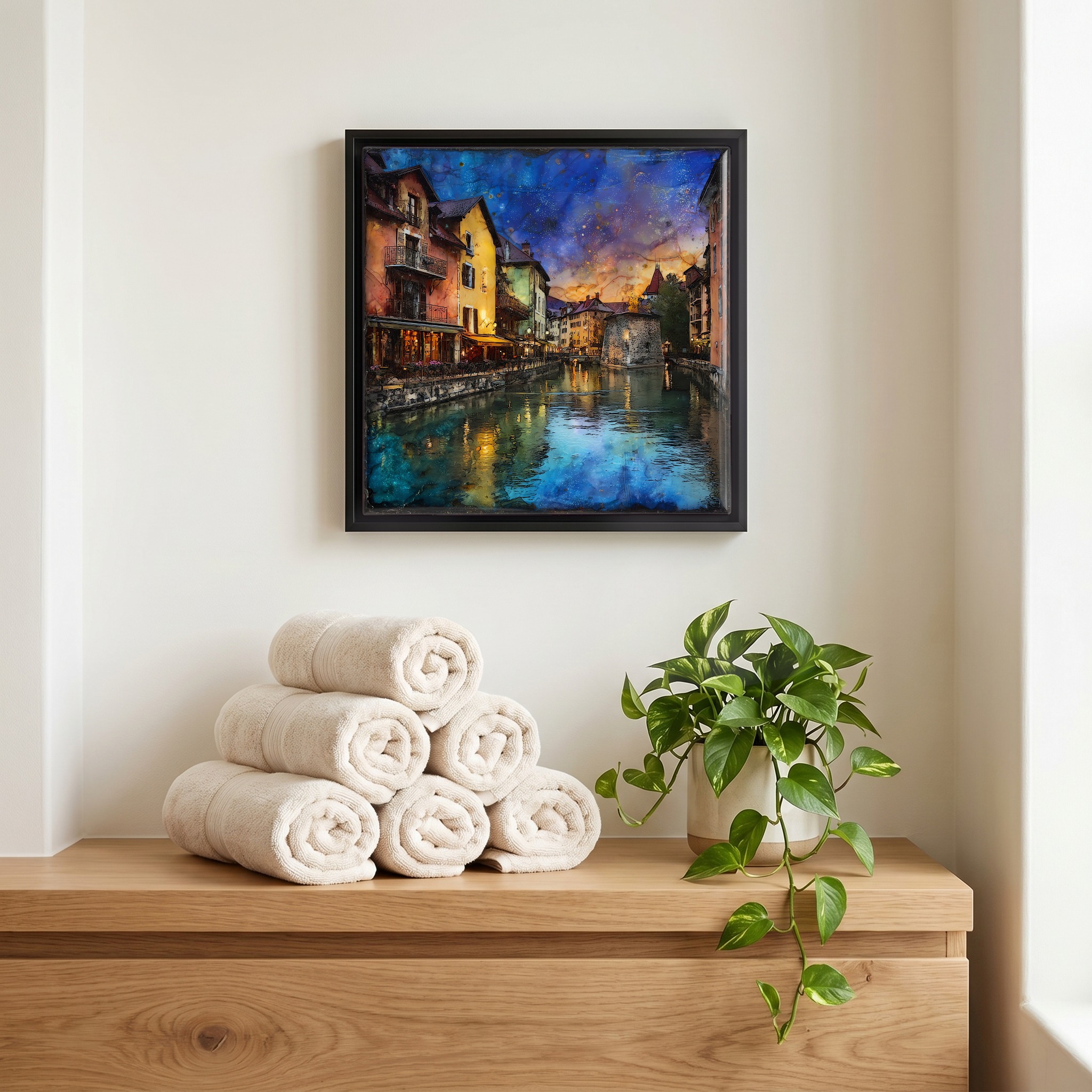
Annecy Old Town, on ceramic.
Each tile is finished by hand in our Knoxville studio. Artwork is slowly infused into the ceramic surface under high heat and pressure, and rests beneath a thin glossy finish. The colour lives in the surface, not on top of it.
Pick any four 4-inch tiles — National Parks you've been to, a Smokies set, the four seasons of one place. $ for a set of , cork-backed, ready to live on the table.
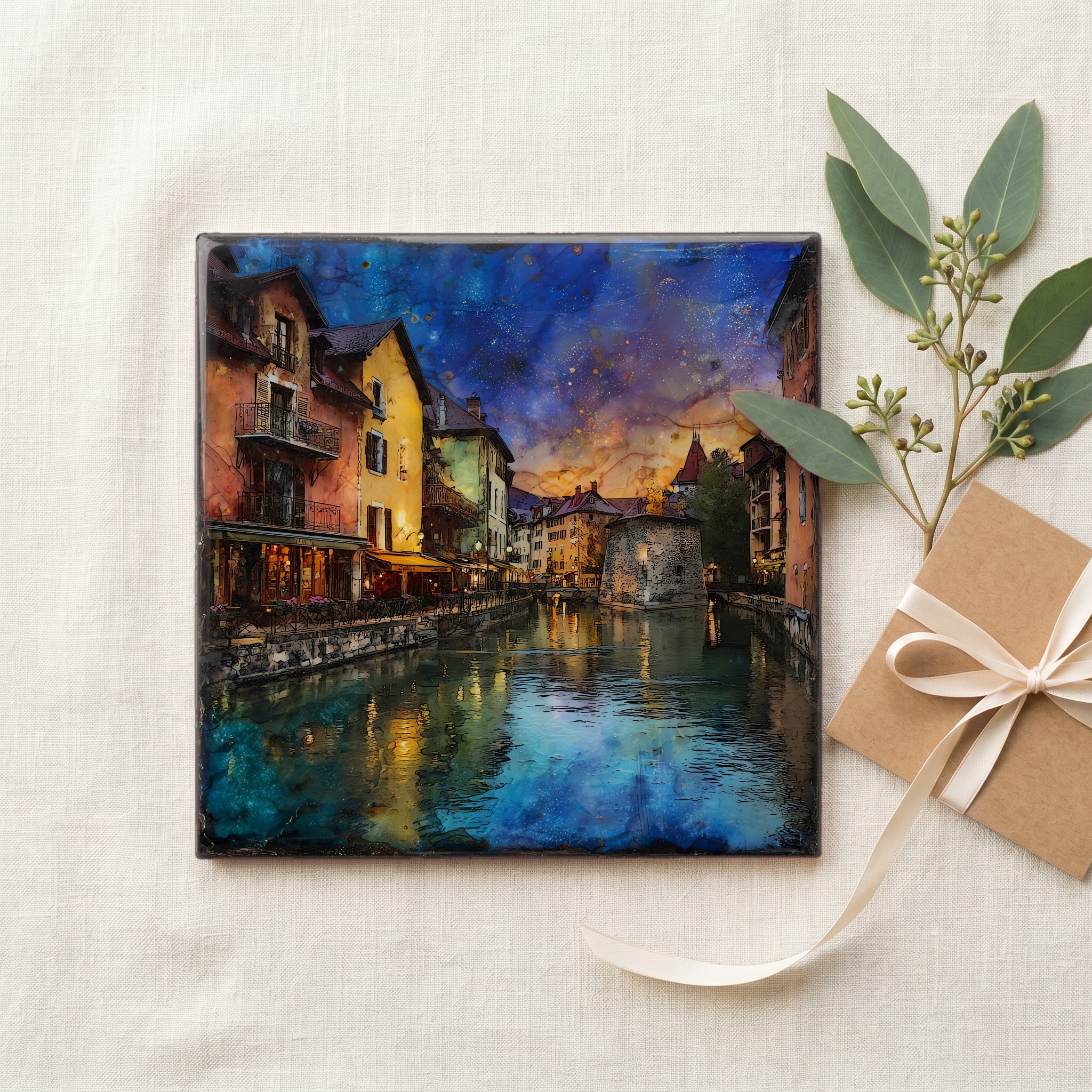
Each tile ships in a kraft box, tied with cream ribbon, with a handwritten note from the studio if you'd like to add one.
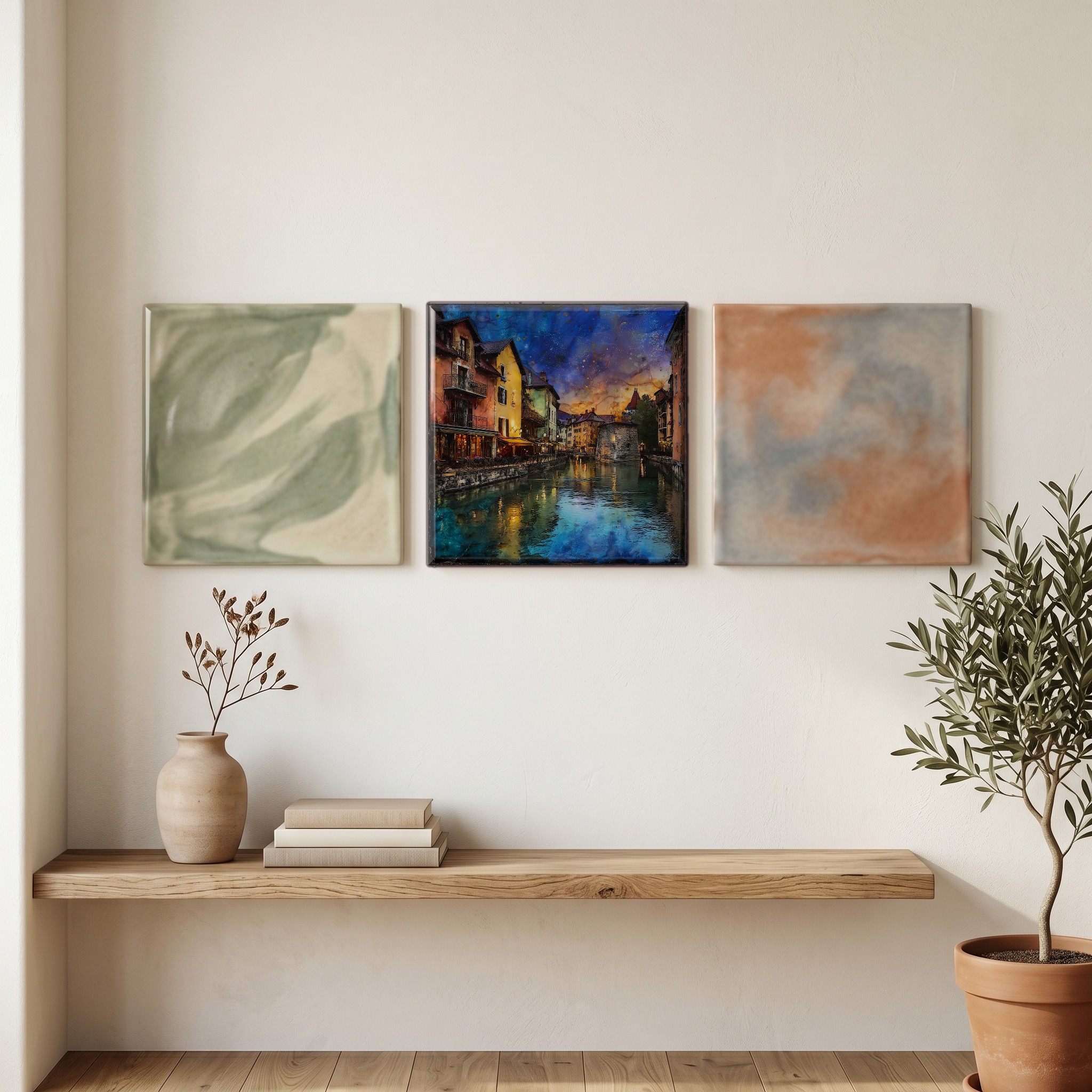
Three or five different vistas, hung together — a chapter of places you've been, or want to go.
The place, in three passes.
Annecy is the prefecture of Haute-Savoie, on the northern shore of Lac d'Annecy in the French Alps, roughly 35 kilometres south of Geneva. The old town (Vieille Ville) sits along the Thiou, the short river that drains the lake into the Fier. The Château d'Annecy, a hilltop castle built between the twelfth and sixteenth centuries by the Counts of Geneva, looks down over the rooftops. The town centre is reached on foot from the lakefront promenade and the Pâquier park, and most of the old-town streets and bridges are closed to cars. The wider commune has a population of around 130,000.
Lake Annecy is fed by mountain streams from the Bornes and Bauges ranges and by underwater springs along its floor. Its small catchment renews quickly, and the water is unusually clear. Local water authorities have published it as among the cleanest large lakes in Europe since regular testing began in the 1960s. The Thiou is the lake's only outlet. About three and a half kilometres long, it leaves the lake at the foot of the old town and threads under low bridges between pastel facades. The same green-blue carries down to the Fier, the larger river it joins on its way to the Rhône.
The Palais de l'Isle is the small stone keep on a triangular island where the Thiou divides through the middle of the old town. The earliest stonework dates to the twelfth century, and the building has served as a residence for the lords of Annecy, a mint, a courthouse, and from the seventeenth century onwards as a prison, including holding members of the Resistance during the Second World War. It is now a small museum of local history. The houses lining the canals are mostly three- and four-storey burgher buildings in ochre, rose, and pale yellow plaster, with shutters in greens and blues. The arcaded Rue Sainte-Claire keeps its original ground-floor passages.