Wender·Vista
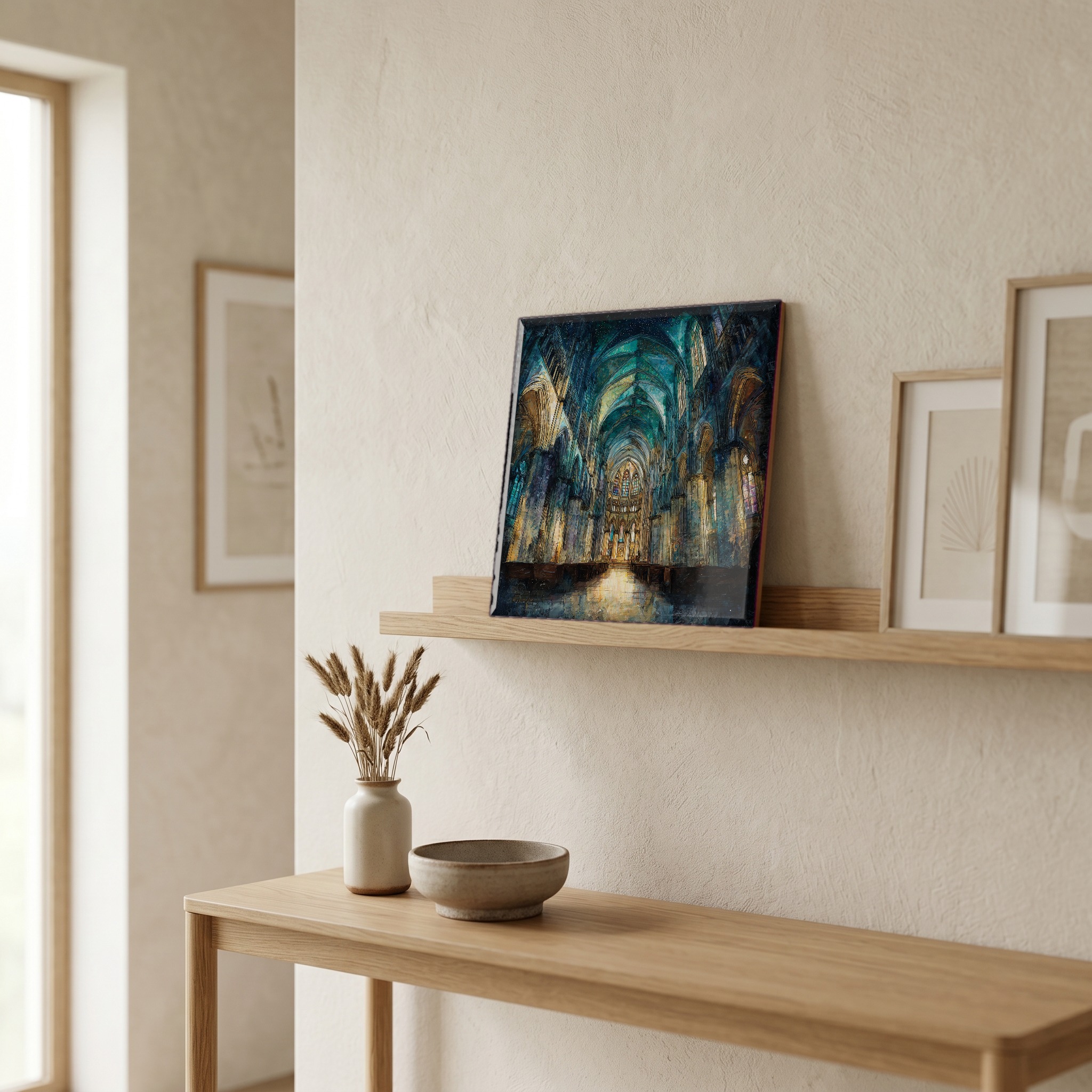
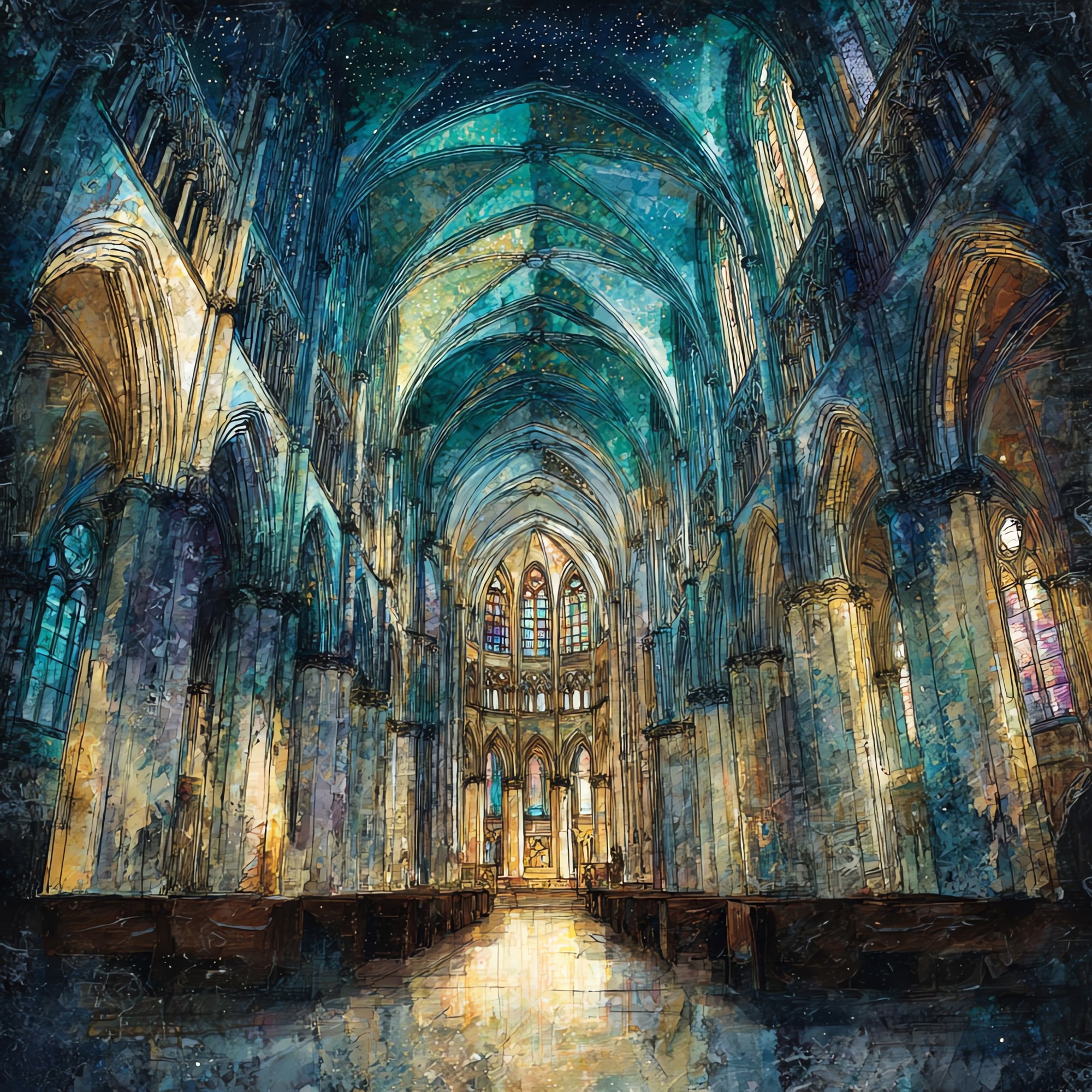
Amiens Cathedral Nave
shown on ceramic, 12-inch tileFrance
in Picardy, north of Paris

Amiens Cathedral Nave

a forest of stone, lit from above.

Where it lives

Not only on a wall.

A small tile on the nightstand catching the morning. A larger one above the fire. Yours, wherever you spend the slow hours.
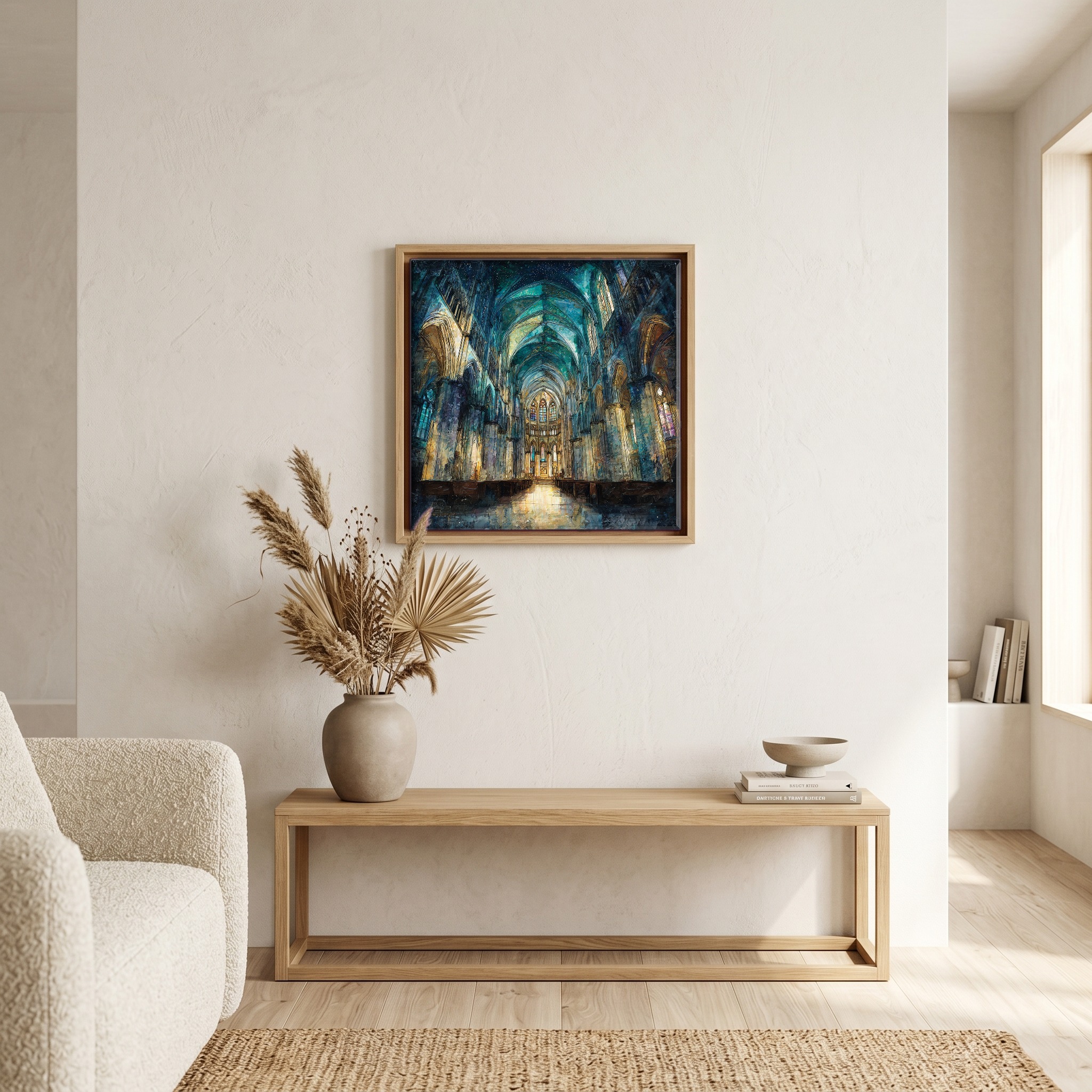
Above the bench, in a warm oak surround.
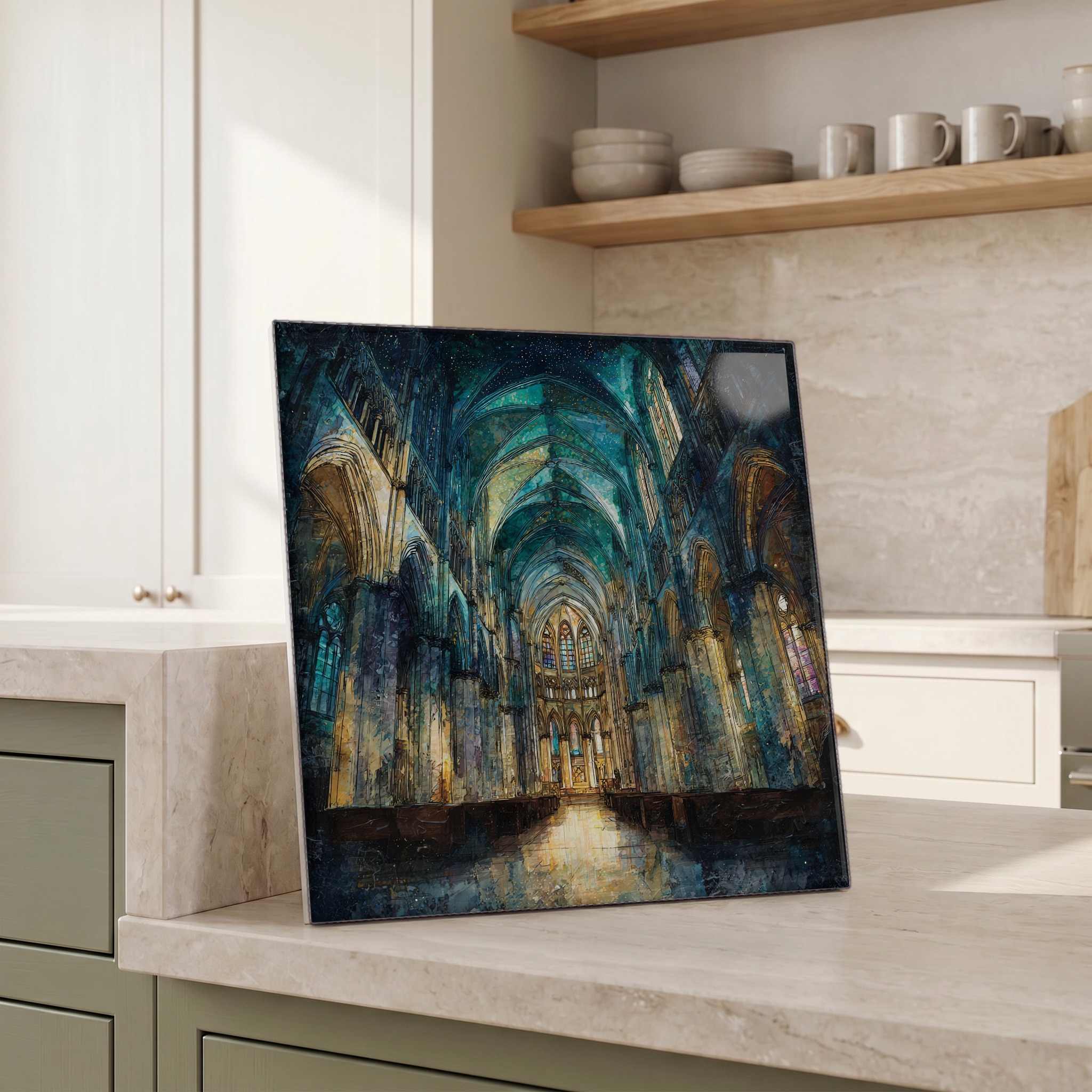
Beside the kettle, propped on the counter.
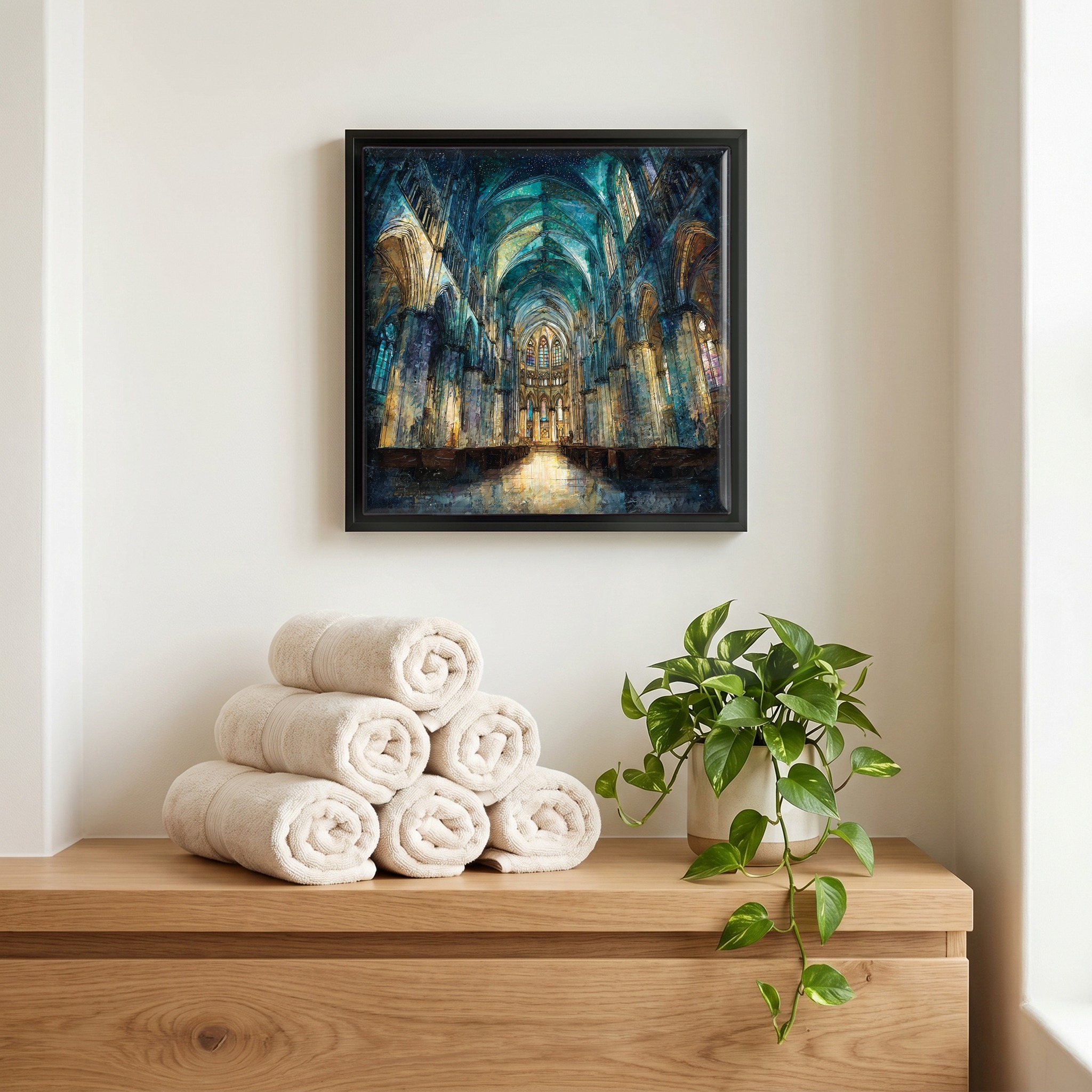
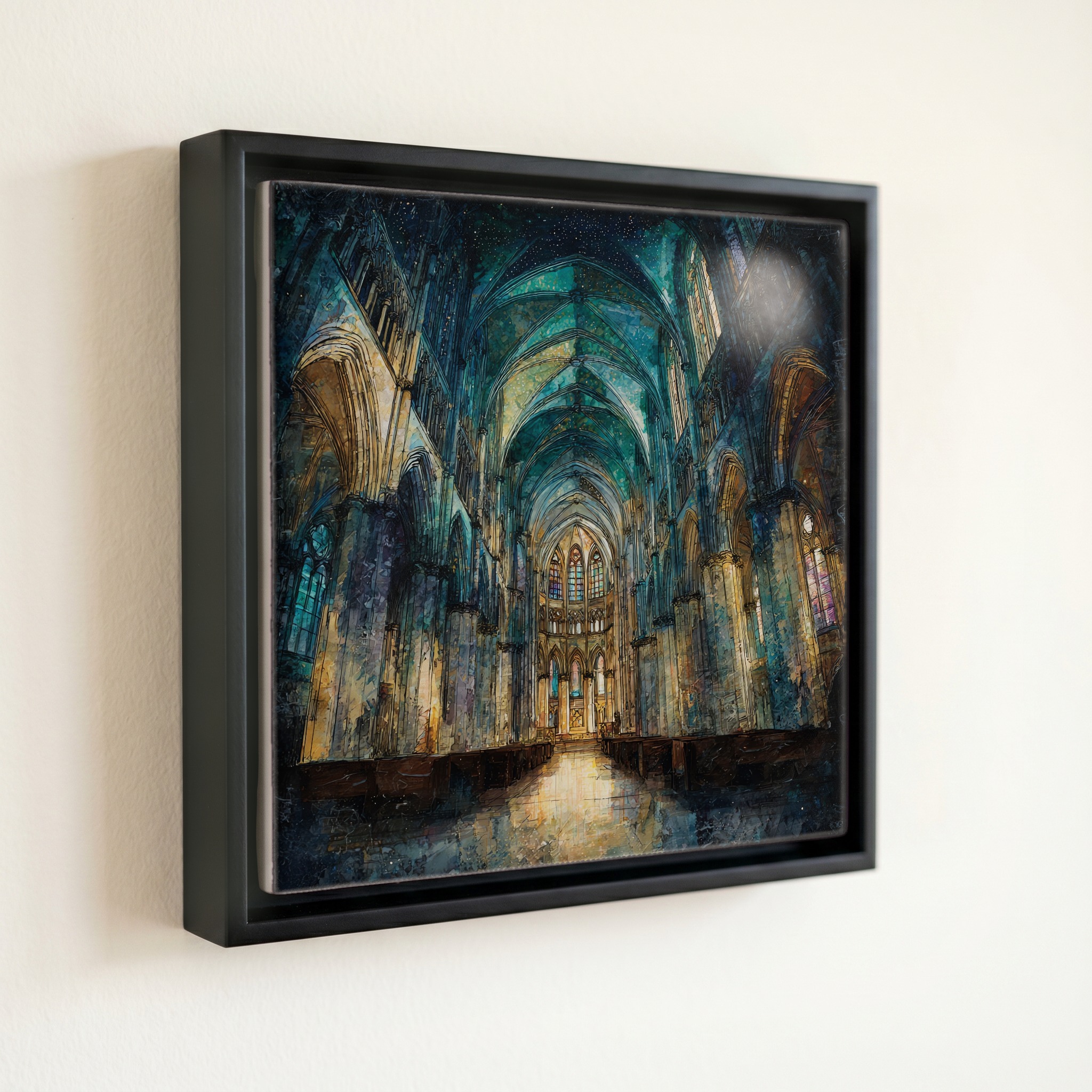
Above the linens, in a slim black surround.
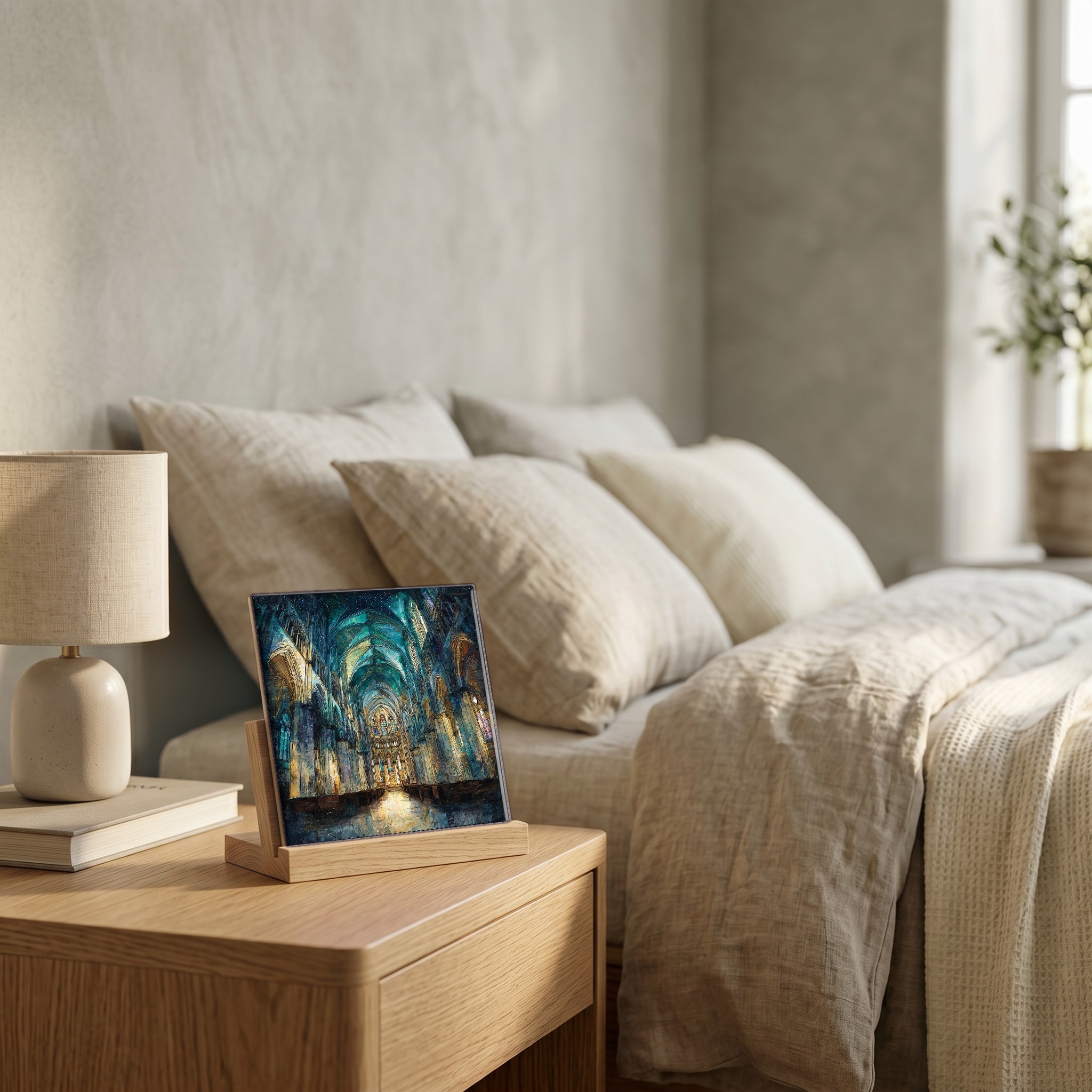
On the nightstand, on a light oak stand.
On a picture ledge, where the light comes in.
a note from the studio

The tallest finished Gothic cathedral in France. The nave climbs forty-two metres above the floor, and the light comes down from the clerestory in long pale columns. Robert de Luzarches drew the plan in 1220; the nave was largely up in sixteen years, fast for the thirteenth century. The labyrinth set into the floor still traces the path pilgrims walked on their knees. People walk in, look up, and stop talking.
from the studio
shown in a slim black floating frame · 6 × 6 in
— bring it home

Amiens Cathedral Nave, on ceramic.

Each tile is finished by hand in our Knoxville studio. Artwork is slowly infused into the ceramic surface under high heat and pressure, and rests beneath a thin glossy finish. The colour lives in the surface, not on top of it.

What kind of piece?
One tile — square or rectangle.
How big?
the popular one — counter, shelf, nightstand
6 × 6 in · 15 cm · 1.6 lb
Surface finish
A clear glossy finish — the artwork reads as if under resin. Ideal for show-pieces and framed wall art.
How it sits
A hidden cleat — sits ¼″ proud of the wall.
$58
Hand-finished and shipped from our studio at the foot of the Smokies. On your wall in about ten days.
size
6 × 6 in
15 cm
weighs
1.6 lb
solid in the hand
surface
ceramic, hand-finished
art rests beneath a thin glossy finish
from
Knoxville, TN
our family studio, at the foot of the Smokies
— start a Coaster Set

Pick any four 4-inch tiles — National Parks you've been to, a Smokies set, the four seasons of one place. $ for a set of , cork-backed, ready to live on the table.
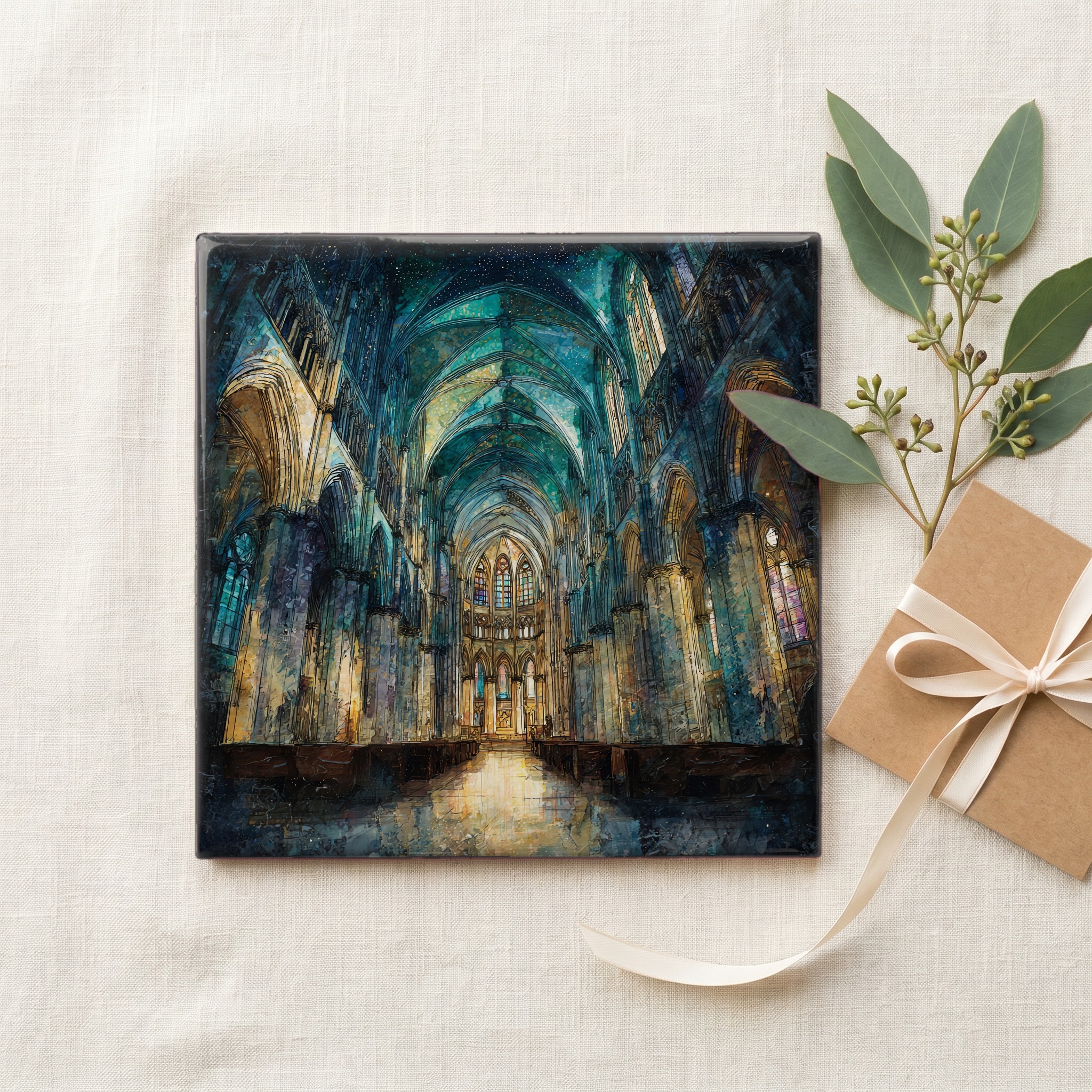
comes gift-ready
comes gift-ready

Each tile ships in a kraft box, tied with cream ribbon, with a handwritten note from the studio if you'd like to add one.
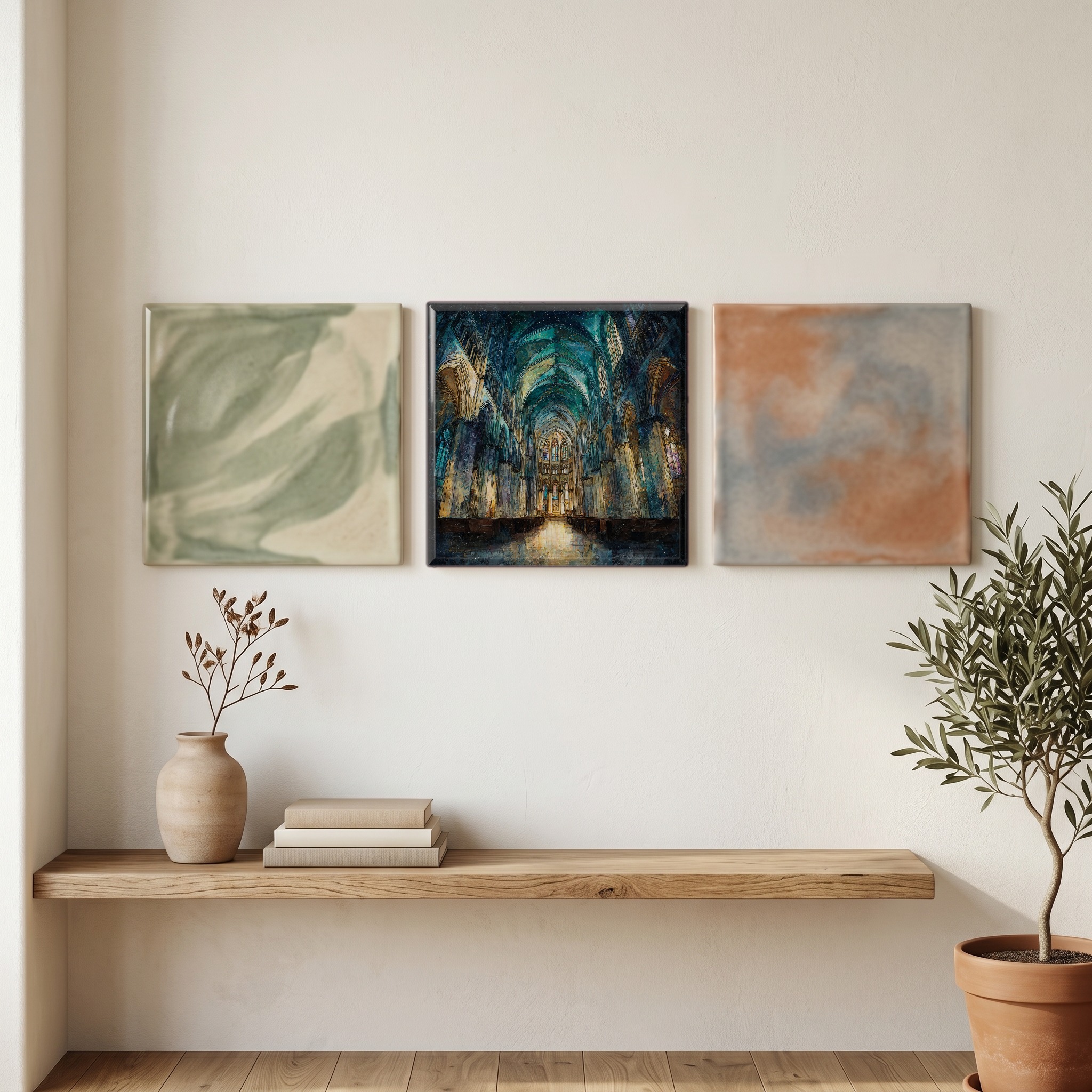
or build a grouping
or build a grouping

Three or five different vistas, hung together — a chapter of places you've been, or want to go.

about Amiens Cathedral Nave

The place, in three passes.

A little of what's known, in case you fall down the rabbit hole — or want to go see it yourself.
the place

Amiens Cathedral sits in the centre of Amiens, the prefecture of the Somme department in the Hauts-de-France region of northern France, about 120 kilometres north of Paris. Construction began in 1220 under Bishop Évrard de Fouilloy, on the foundations of an earlier cathedral that had burned in 1218. The interior runs roughly 145 metres in length, and the vaults of the nave reach 42.3 metres, the tallest of any completed Gothic cathedral in France. UNESCO inscribed the building on the World Heritage list in 1981, calling it one of the most coherent realisations of the High Gothic style. The Somme runs past the city to the north, and the Hortillonnages, a floating market garden first cultivated in the medieval period, lie just east of the cathedral close.

the stone

The cathedral is built almost entirely of limestone, much of it quarried locally in Picardy and brought up the Somme by barge. Robert de Luzarches set the unified plan around 1220; he was followed by Thomas de Cormont and his son Renaud, who carried the work up into the clerestory and the vaults. The nave's piers are unusually slender for their height, which is part of why the interior reads as so weightless; the master masons had pushed the rib-vault and flying-buttress system close to its structural limit. The west front, finished about 1240, carries hundreds of carved figures and was once polychromed. The original pigments have been studied in detail and are projected back onto the stone during the Chroma light show each summer.

the light

The interior is famously bright by Gothic standards. The clerestory windows, the upper tier just below the vault, are tall and slender; the walls of the upper storeys were thinned almost to a screen of glass, supported on the outside by a double row of flying buttresses. That structural choice lets daylight reach the nave floor with surprising directness, sliding slowly across the white limestone as the sun moves. Most of the medieval glass was lost over the centuries, and the windows in place today are predominantly nineteenth- and twentieth-century replacements, with a few medieval fragments preserved in the apse. The building was designed for that downward, travelling light; the architecture only finishes the sentence the sun starts.

where
France · Amiens, Somme, Hauts-de-France
position
49.8946° N · 2.3022° E
the neighborhood

What's nearby.

A handful of named places within an hour's walk or short drive. Some we've already painted; some we will.
2 km E
Hortillonnages d'Amiens
floating market gardens
1 km N
Saint-Leu Quarter
medieval canal quarter
1 km S
Tour Perret
early reinforced-concrete tower
1 km S
Maison de Jules Verne
writer's house museum
1 km SW
Musée de Picardie
regional fine-art museum
N
Amiens Cathedral Nave
Hortillonnages d'Amiens
Saint-Leu Quarter
Tour Perret
Maison de Jules Verne
Musée de Picardie
common questions

What people ask.

A few questions we get about Amiens Cathedral Nave — and about bringing the piece home.
about the place

Amiens Cathedral stands in the centre of Amiens, the prefecture of the Somme department in the Hauts-de-France region of northern France, roughly 120 kilometres north of Paris. The river Somme runs past the city to the north.

The vaults of the nave reach 42.3 metres above the floor, making Amiens the tallest completed Gothic cathedral in France. Beauvais Cathedral was designed to be taller, but its choir vault collapsed in 1284 and its nave was never built.

Construction began in 1220, two years after a fire destroyed the previous cathedral on the same site. The first architect, Robert de Luzarches, set the plan, and the nave was largely complete by about 1236. Most of the building was finished by 1270.

Three things: its height of 42.3 metres of stone vault, its brightness from large clerestory windows and slender upper walls, and the unity of its design. Robert de Luzarches drew the whole interior at once, which gives the nave an unusually coherent rhythm.

Yes. UNESCO inscribed Amiens Cathedral on the World Heritage list in 1981, citing it as one of the most coherent realisations of the High Gothic style. The interior is widely treated as the canonical example of the system's structural and aesthetic ambitions.

Three master masons led the work in succession: Robert de Luzarches, who set the plan around 1220, then Thomas de Cormont, and finally his son Renaud de Cormont, who carried the upper storeys into the 1260s. Their names are recorded at the centre of the floor labyrinth.

An octagonal black-and-white stone labyrinth, set into the nave floor in 1288, traced a winding path that pilgrims once walked on their knees as a substitute pilgrimage. The original was removed in 1825, and the present labyrinth, in the same octagonal pattern, is a careful nineteenth-century reconstruction.

about the piece in your home

It tends to be. Amiens is the touchstone of High Gothic, the building most historians point to when they explain what the style was reaching for. A Medium hung beside a desk, or a Coaster set on a study table, both carry well with a handwritten note from the studio.

The artwork's deep cathedral blues, ember reds, and warm gold sit comfortably in three settings in particular: Library-Traditional with dark wood and leather, Old-World Modern with limewashed walls and stone, and Jewel-tone Maximalist where layered textiles welcome a strong colour anchor on the wall.

European heritage and old-world interiors are sustained categories rather than passing trends, and the major design publications have tracked them steadily through the twenty-twenties. A piece anchored on a specific cathedral reads as collected rather than themed, which is what the look depends on.

Above a sofa, the single Large holds the wall on its own; for a wider statement, a 4-tile Mural or a 9-tile Mural carries through a longer room. On a console table, the Medium leans well against the wall in a light oak stand, with a Keepsake or two nearby.

Yes, with the Dura Satin or Matte finish. Both are scratch-resistant and meant for vertical installation, including backsplashes and shower walls. The Glossy finish is the show-piece option for living and dining rooms where the tile will not take splashes; for wet rooms, choose Dura Satin or Matte.

A soft microfibre cloth with plain water is enough. The colour is slowly infused into the ceramic surface under high heat and pressure and lives beneath a thin protective finish, so abrasive cleaners, scouring pads, and bleach are not needed and should be avoided.

Yes. Every WenderVista tile is original work from a single Tennessee studio, where Reid Wender curates and the team finishes each tile in-house. There is no licensing and no third-party printing. The piece you receive comes from a small run produced in our own atelier.

if this one stayed with you

A few you might also love.

Hand-picked by the eye that found Sorapis. Same air, same kind of quiet.