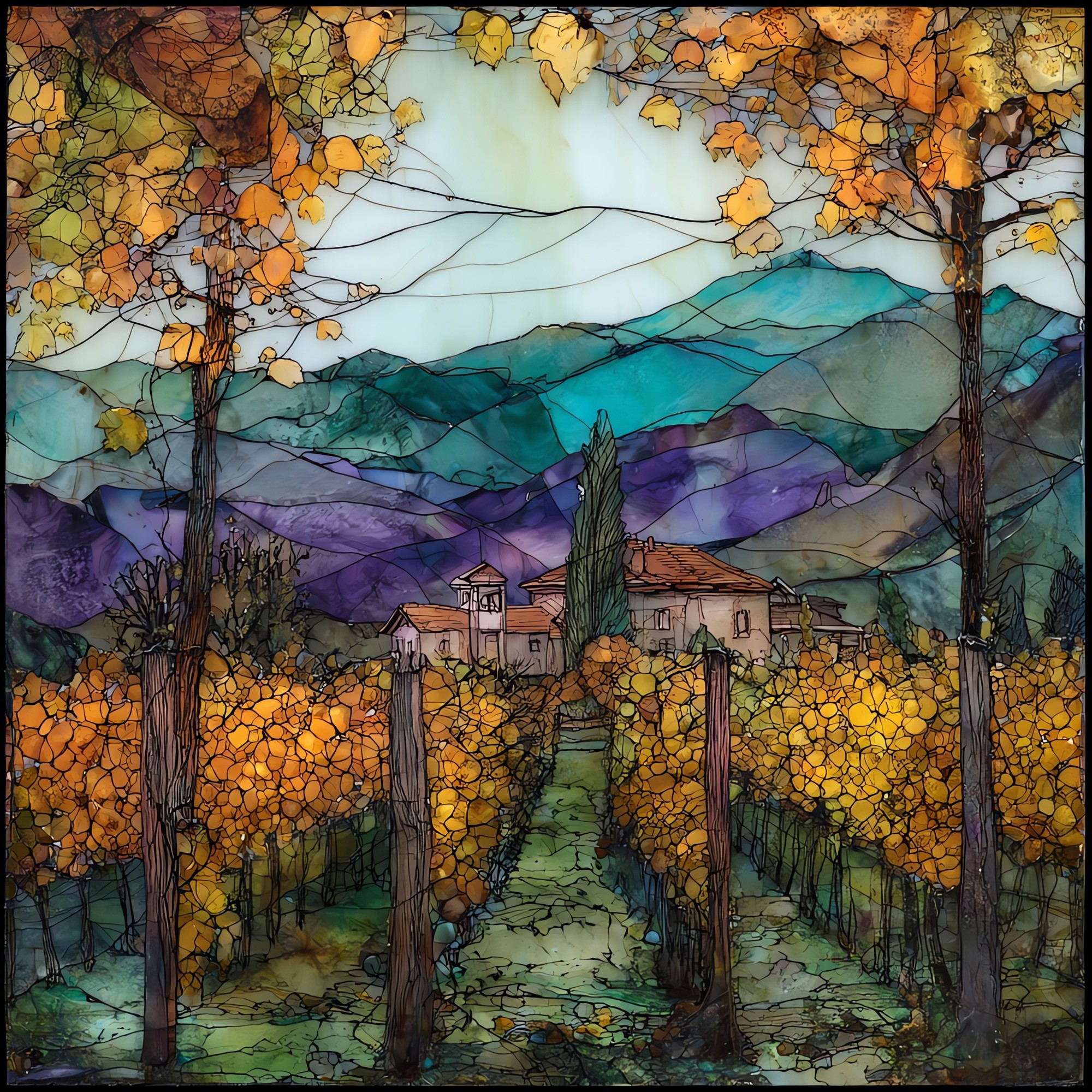
Alsace Vineyard in October
— — rows of gold the rain hasn't reached.
Not only on a wall.
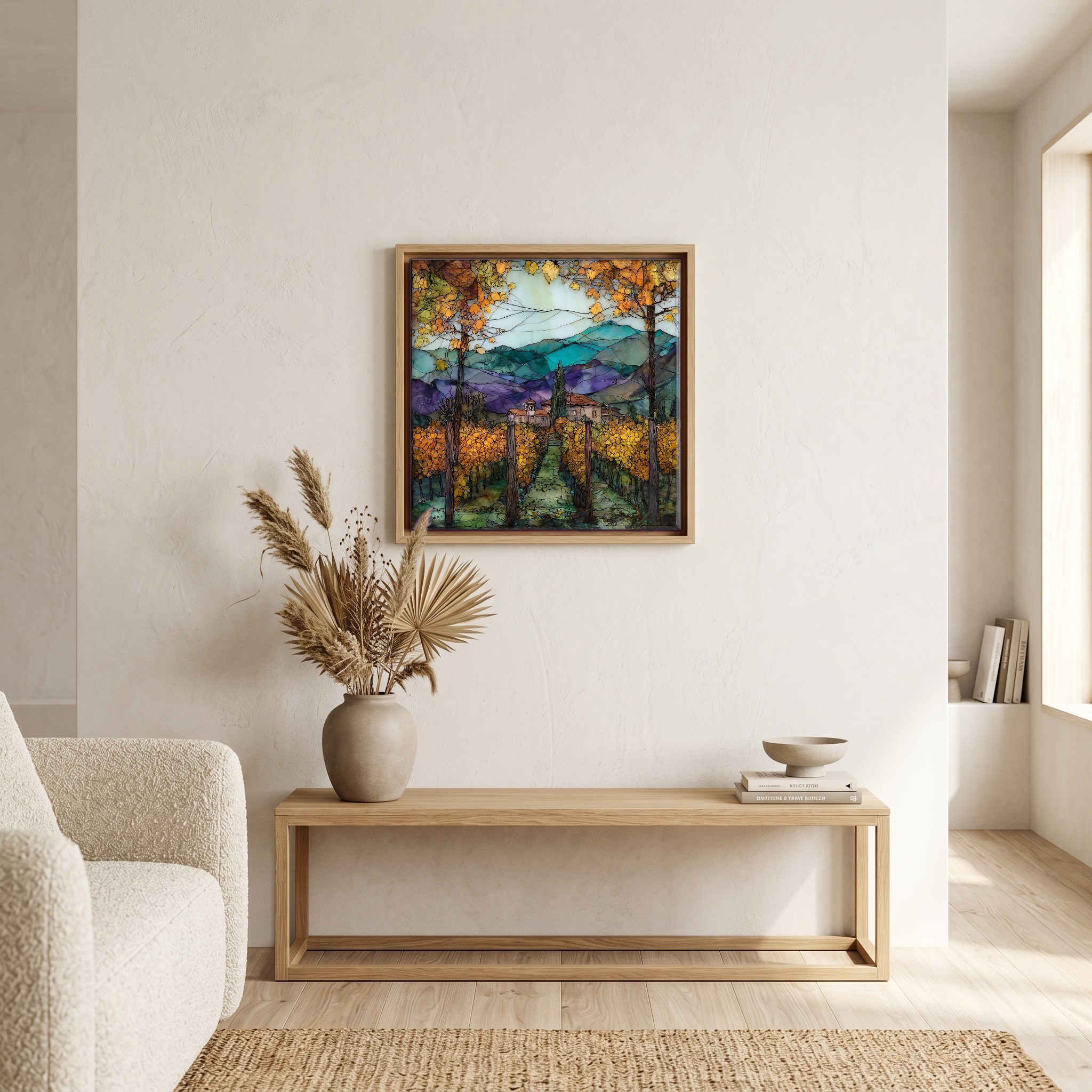
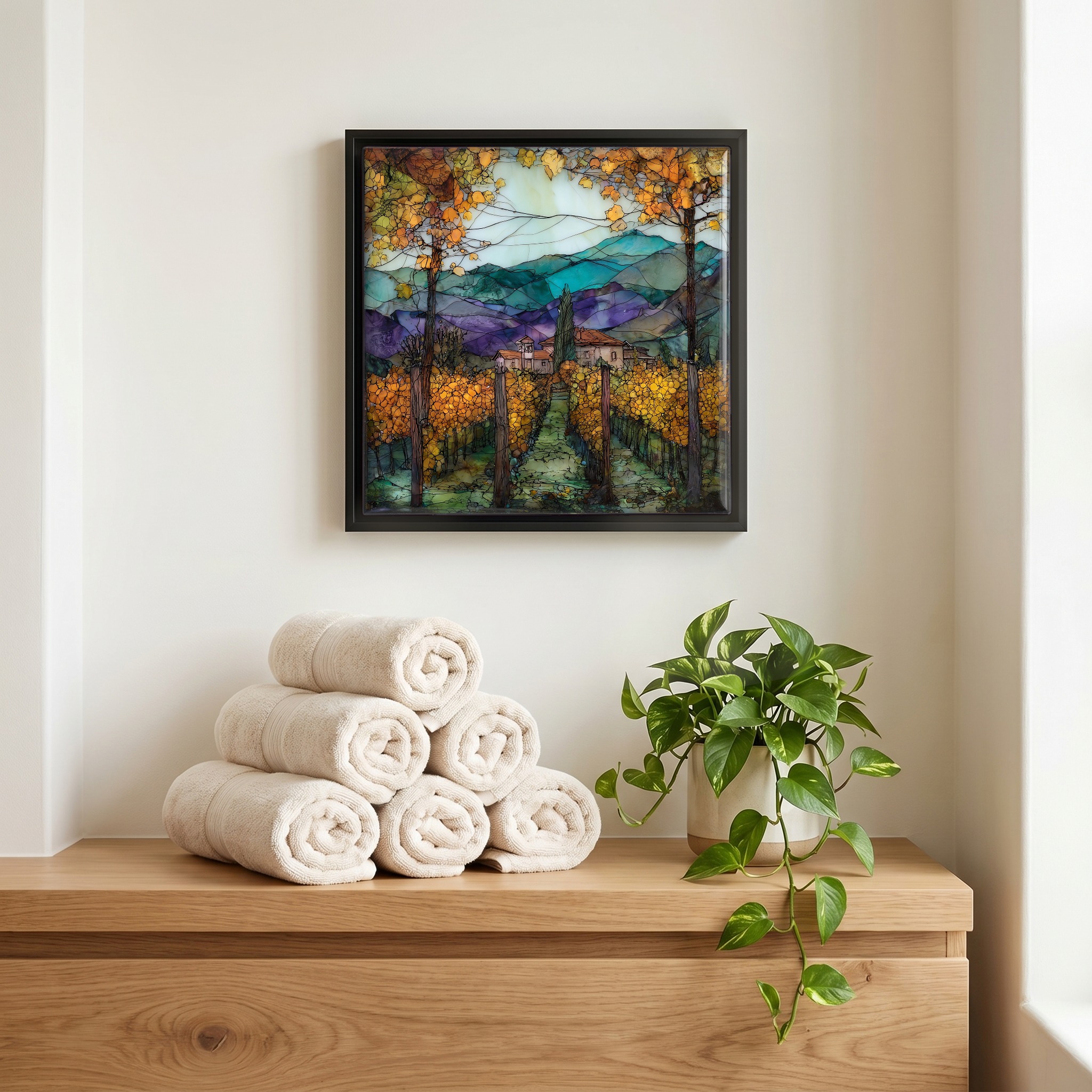
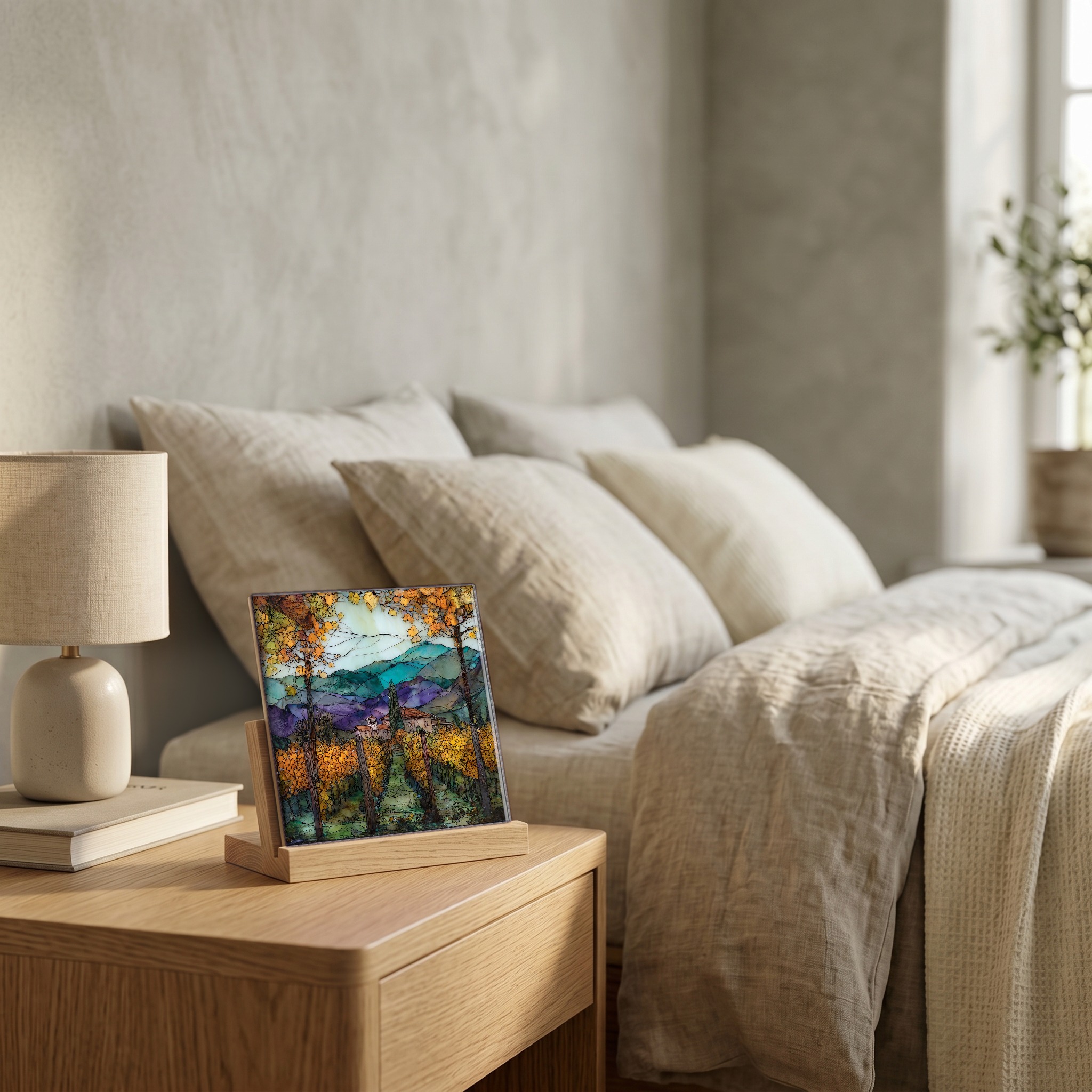
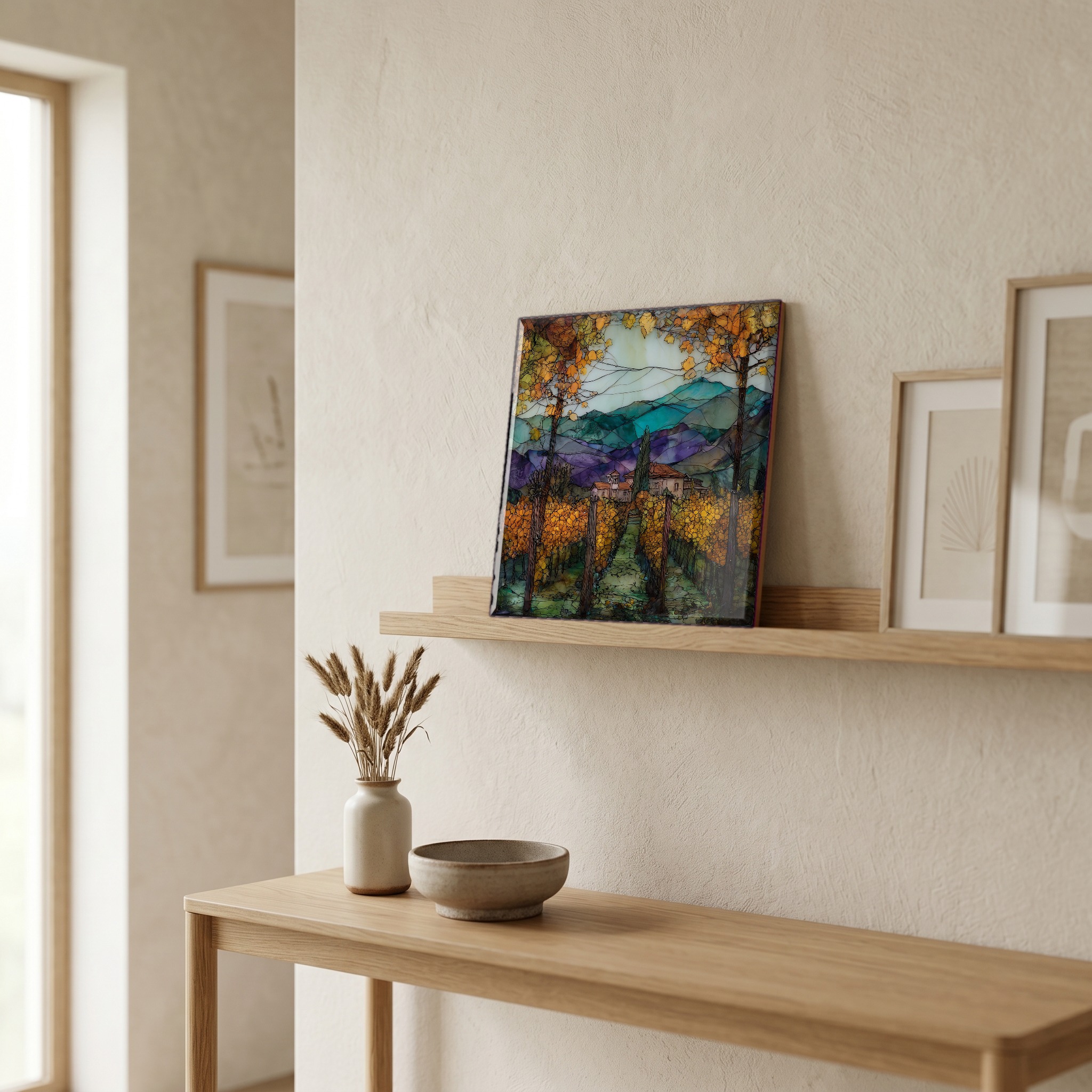
“The slope above Riquewihr, the second week of October. The pickers have moved through and the leaves are starting to go. The Vosges keep the rain west; Colmar, twenty kilometres south, is one of the driest cities in France, and the autumn is long here. The Riesling and Gewürztraminer rows turn first, copper then gold, and stay that way into November. From the upper rows you can see the bell tower of Hunawihr and the Black Forest beyond the Rhine. Nobody is in a hurry.
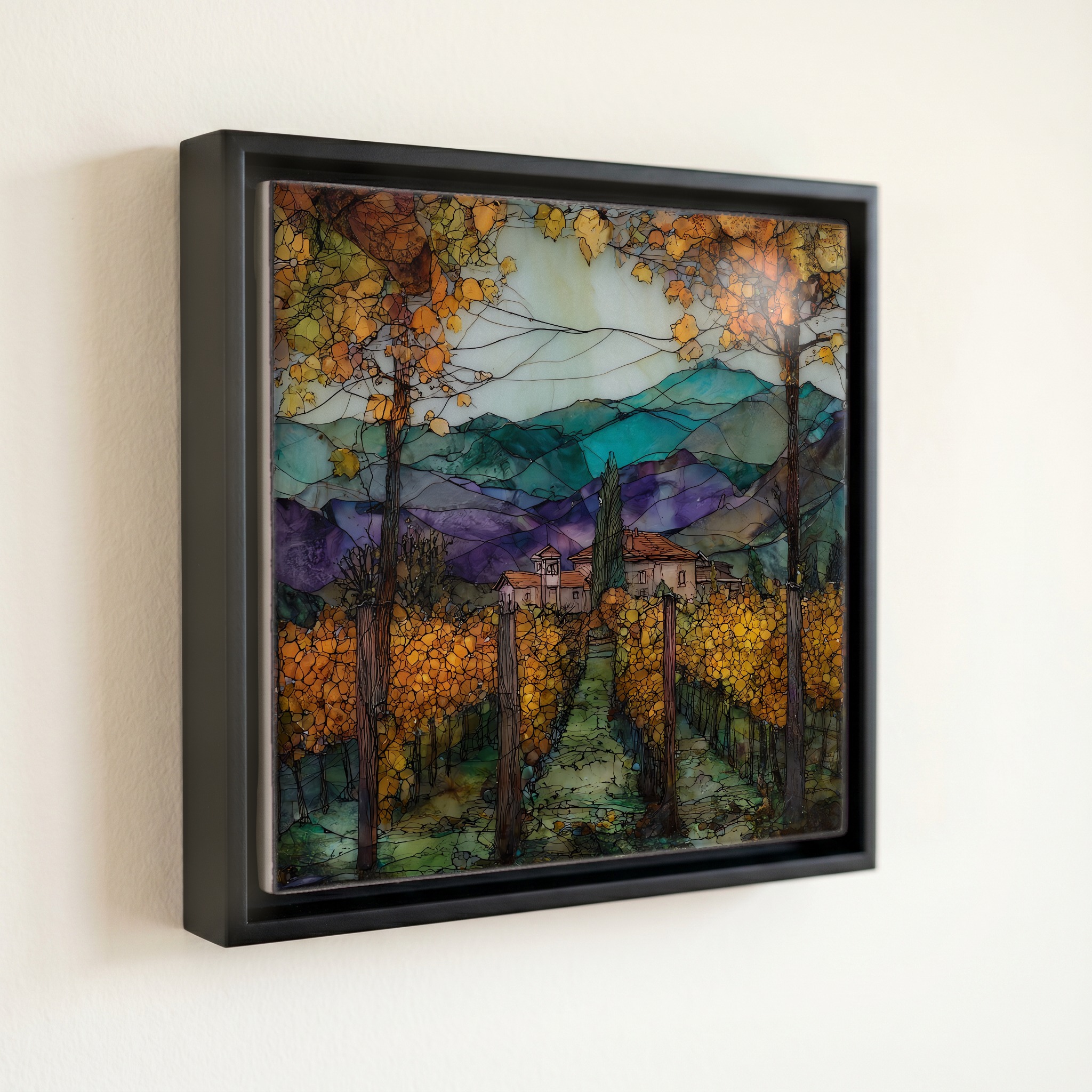
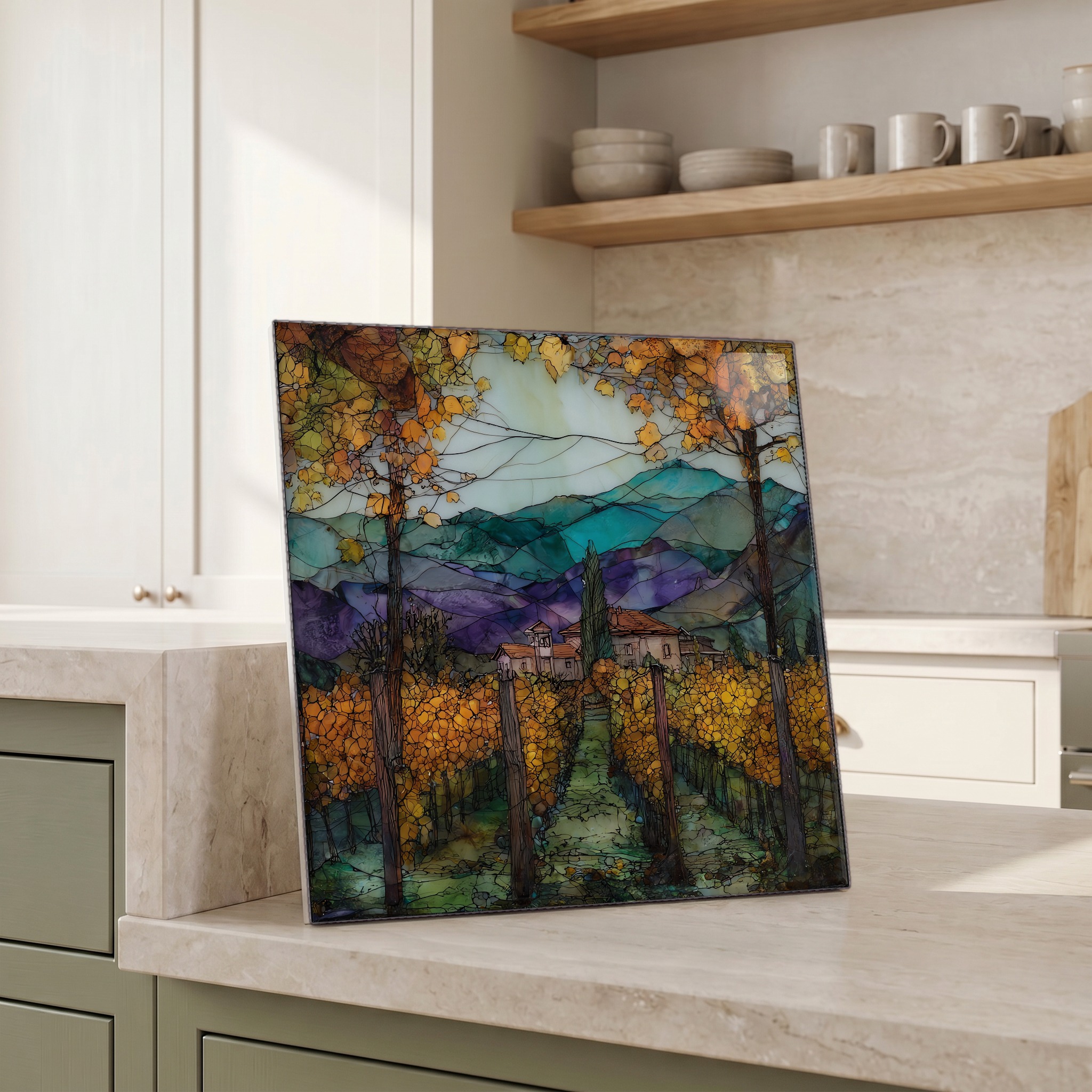
Alsace Vineyard in October, on ceramic.
Each tile is finished by hand in our Knoxville studio. Artwork is slowly infused into the ceramic surface under high heat and pressure, and rests beneath a thin glossy finish. The colour lives in the surface, not on top of it.
Pick any four 4-inch tiles — National Parks you've been to, a Smokies set, the four seasons of one place. $ for a set of , cork-backed, ready to live on the table.
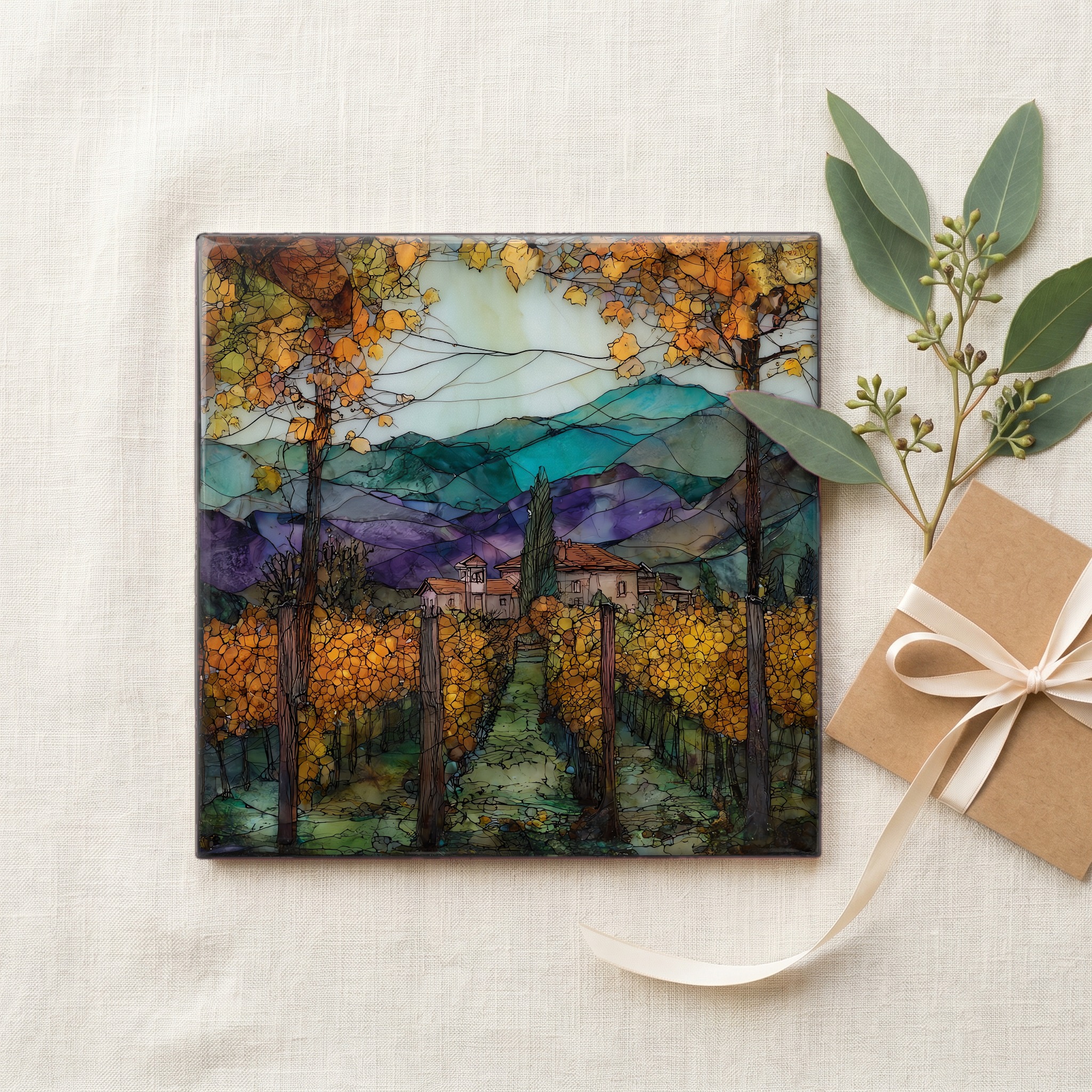
Each tile ships in a kraft box, tied with cream ribbon, with a handwritten note from the studio if you'd like to add one.
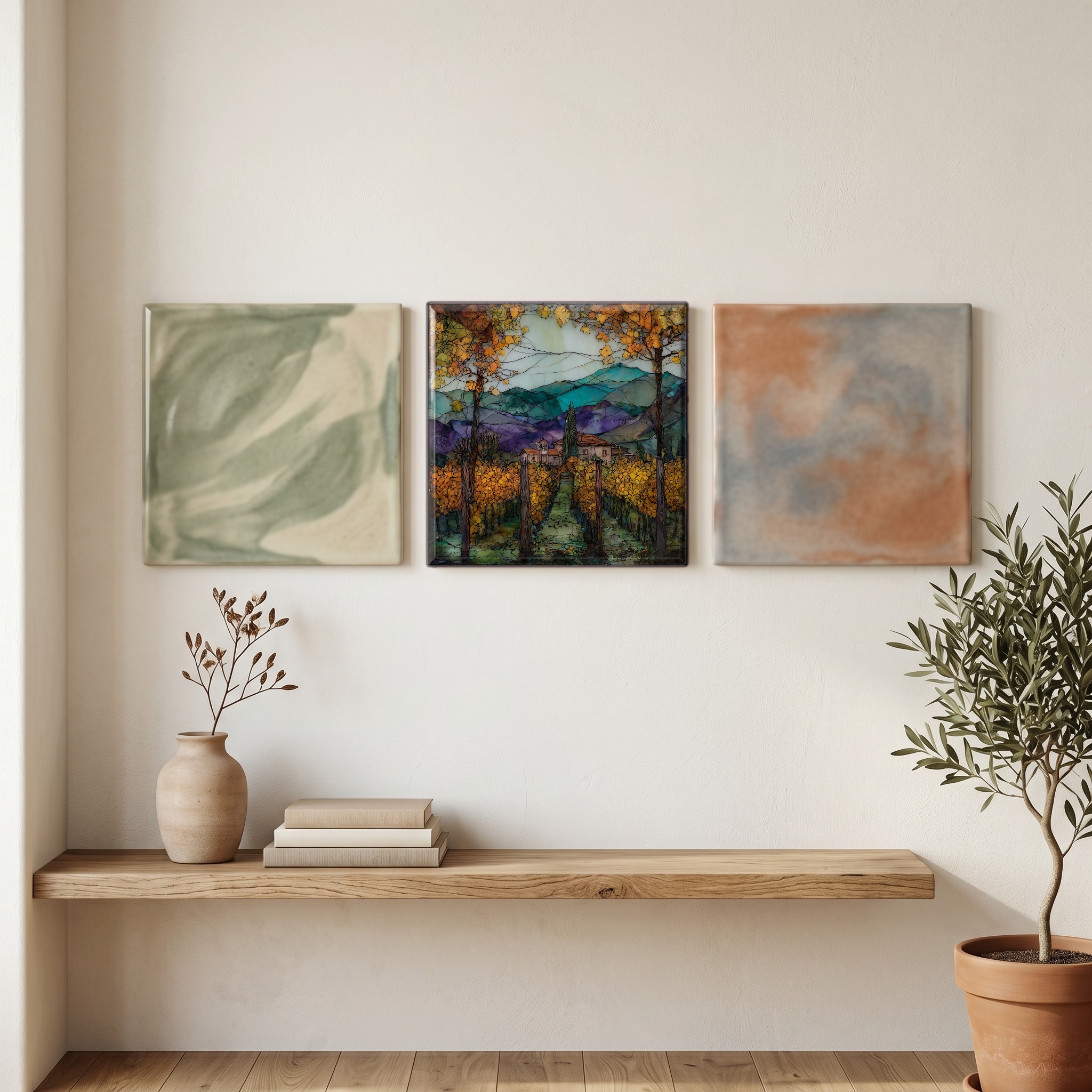
Three or five different vistas, hung together — a chapter of places you've been, or want to go.
The place, in three passes.
Alsace lies in northeastern France, on the eastern slope of the Vosges Mountains and west of the Rhine, which forms the border with Germany. The Route des Vins d'Alsace, established in 1953, runs about 170 kilometres from Marlenheim in the north to Thann in the south and passes through 119 wine communes. Vineyards plant on slopes between roughly 175 and 420 metres above sea level. Fifty-one parcels carry Grand Cru status, the highest of the region's appellations. The most visited villages, Riquewihr, Eguisheim, Kaysersberg, and Ribeauvillé, sit between Colmar and Sélestat in the Haut-Rhin département, half-timbered, walkable, ringed by their own vines.
The grape harvest, called vendanges in French, begins in mid-September and runs through October across the region's main authorised varieties: Riesling, Gewürztraminer, Pinot Gris, Pinot Blanc, Sylvaner, Muscat, and Pinot Noir. The latest pickings, the Vendanges Tardives and Sélection de Grains Nobles categories regulated since 1984, come off the vines in late October and November, after a hard cold concentrates the sugar in fruit left on the stem. The leaves turn through October in waves: Gewürztraminer first to copper, Riesling to lemon-gold, Pinot Noir to deep red. Barr holds its annual Fête des Vendanges in early October, one of the oldest harvest fairs on the route.
Alsace sits in the rain shadow of the Vosges Mountains, which rise to 1,424 metres at the Grand Ballon and shoulder most of the weather coming off the Atlantic. Colmar receives roughly 600 millimetres of rainfall a year, putting it among the driest cities in France. The October light here is long and low and gold for most of the day; cloud cover breaks faster than it does on the western side of the range. Late afternoon, the sun slides along the rows at a shallow angle and the copper leaves catch it directly. The Rhine valley, about twenty kilometres east, fills with mist after sunset while the upper slopes stay clear longer.