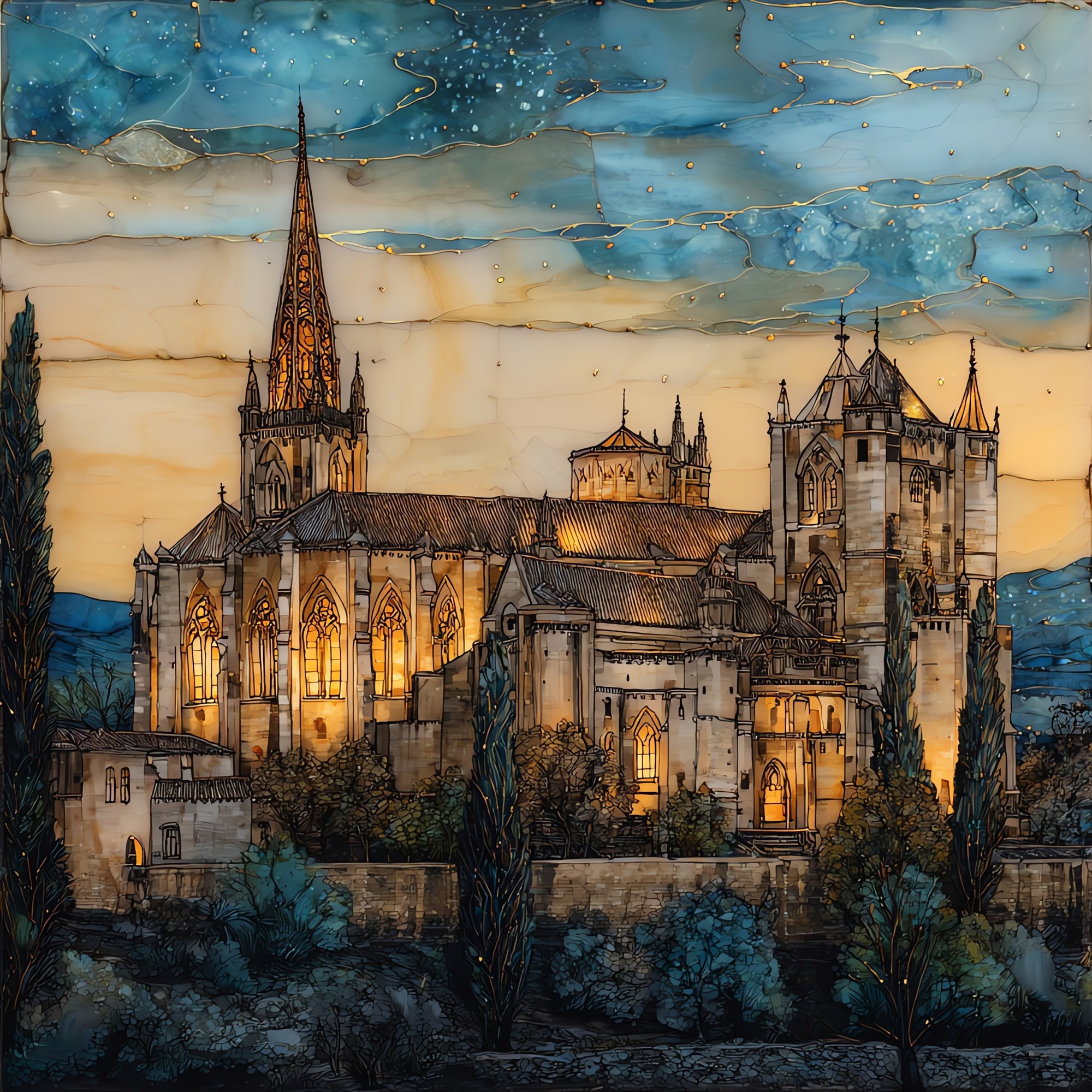
Albi Sainte-Cecile Cathedral
— — a fortress built around a sky.
Not only on a wall.
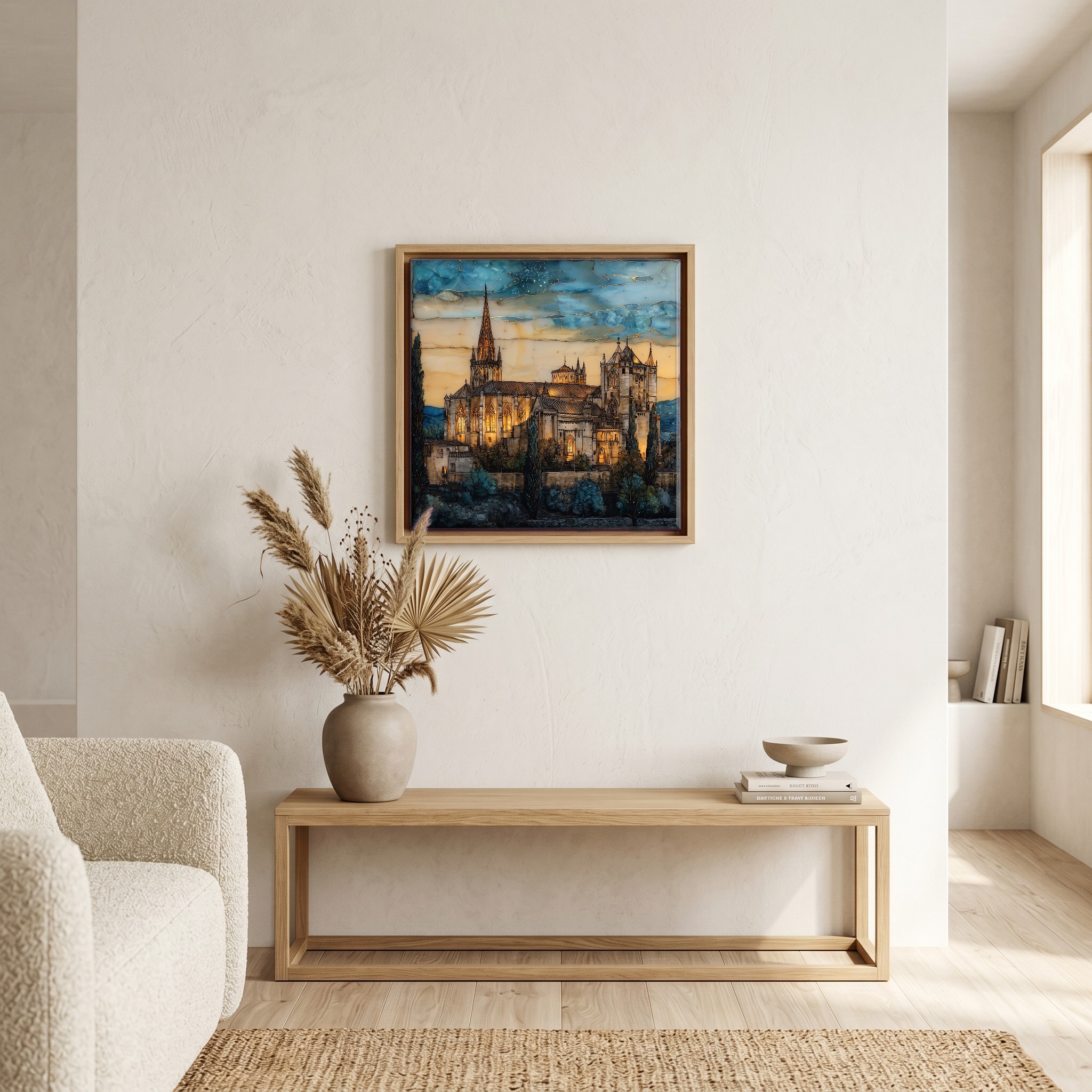
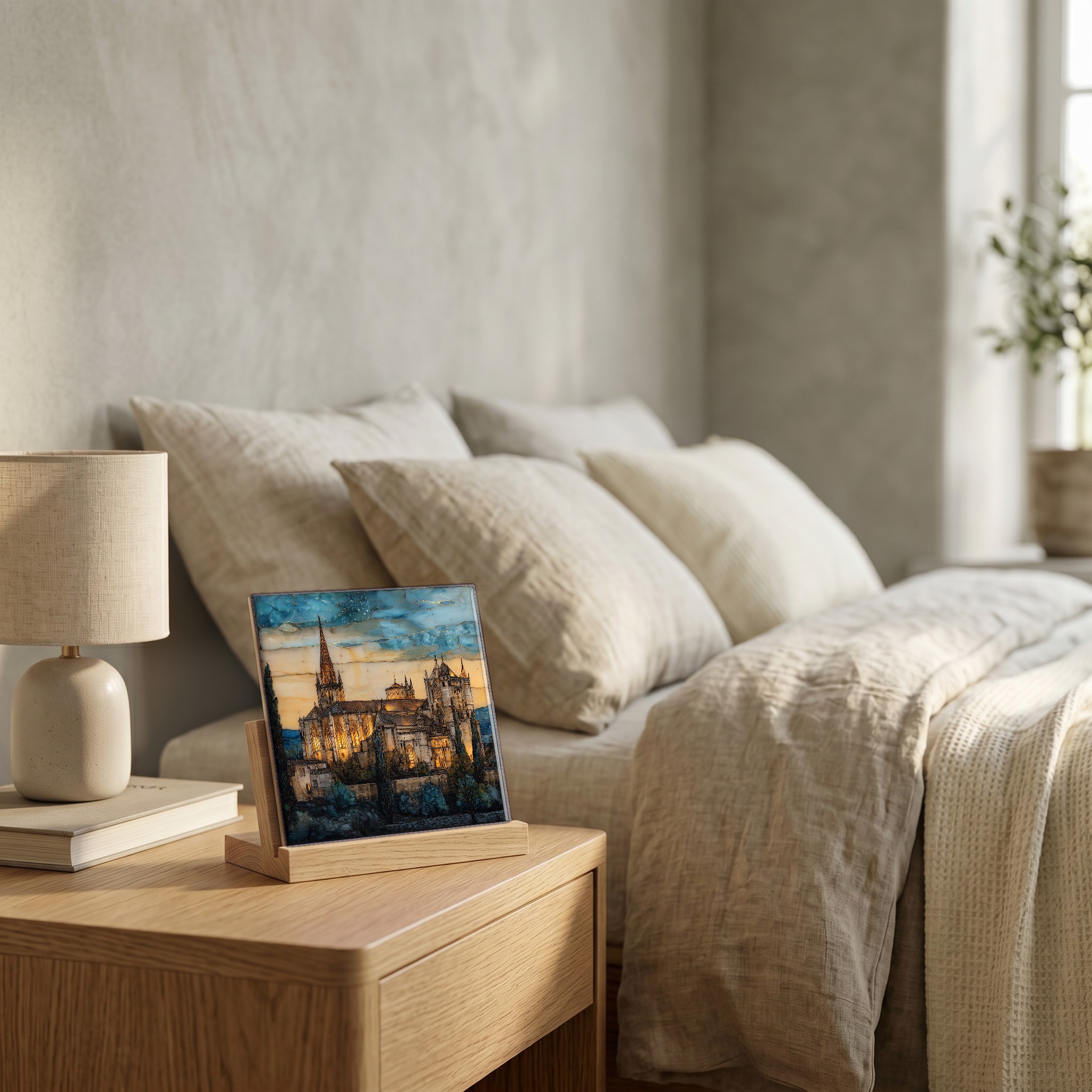
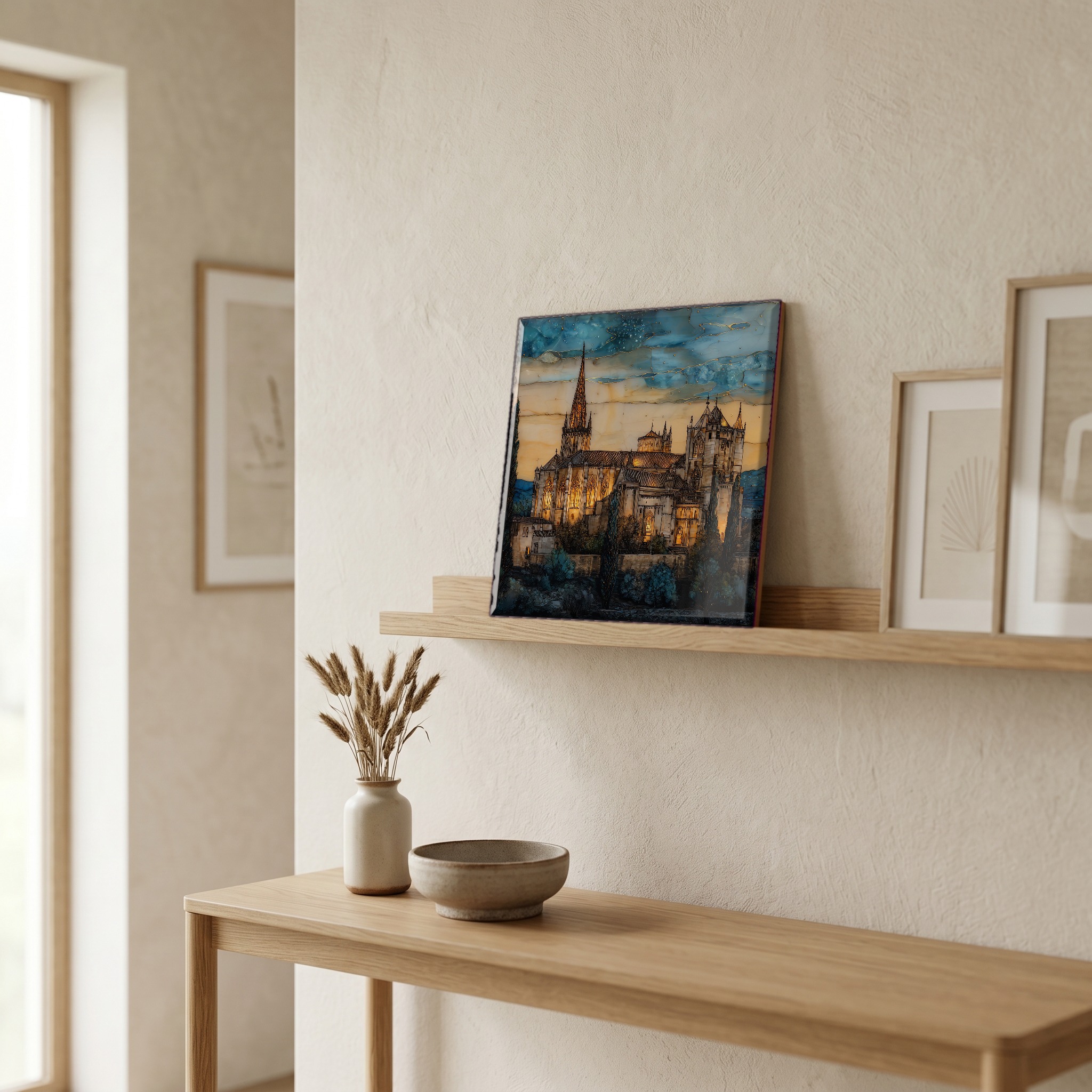
“The largest brick cathedral in the world, on the banks of the Tarn in southern France. The outside reads as a fortress, built in the decades after the Albigensian Crusade, when the Church wanted Catharism's last embers to see something they could not knock down. The inside is the opposite argument. Every surface of the vault is painted: a blue ceiling, gold stars, the largest expanse of Italian Renaissance painting in France running across the floor of heaven. The Last Judgment covers the west wall. The two faces of the building seem to belong to different religions.
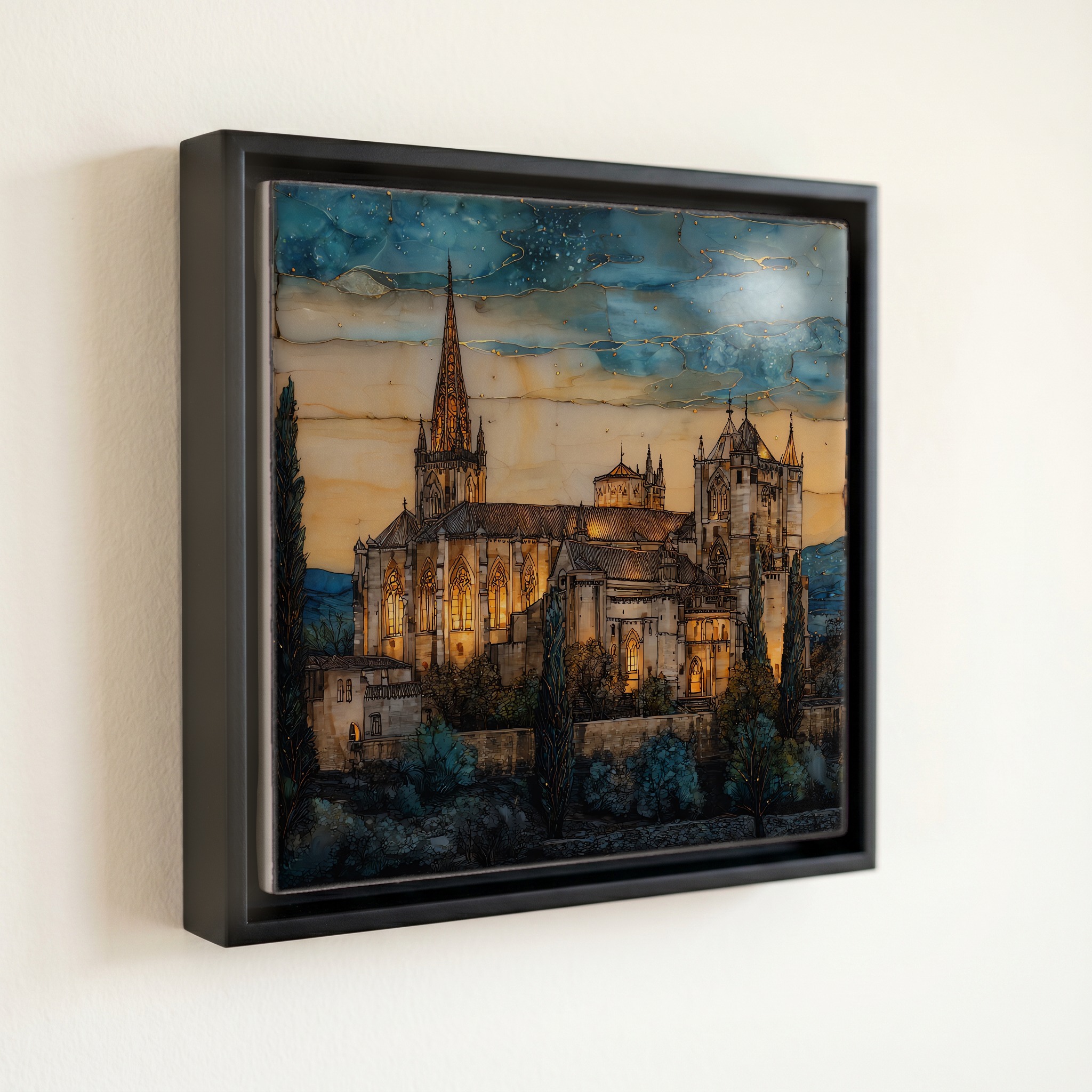
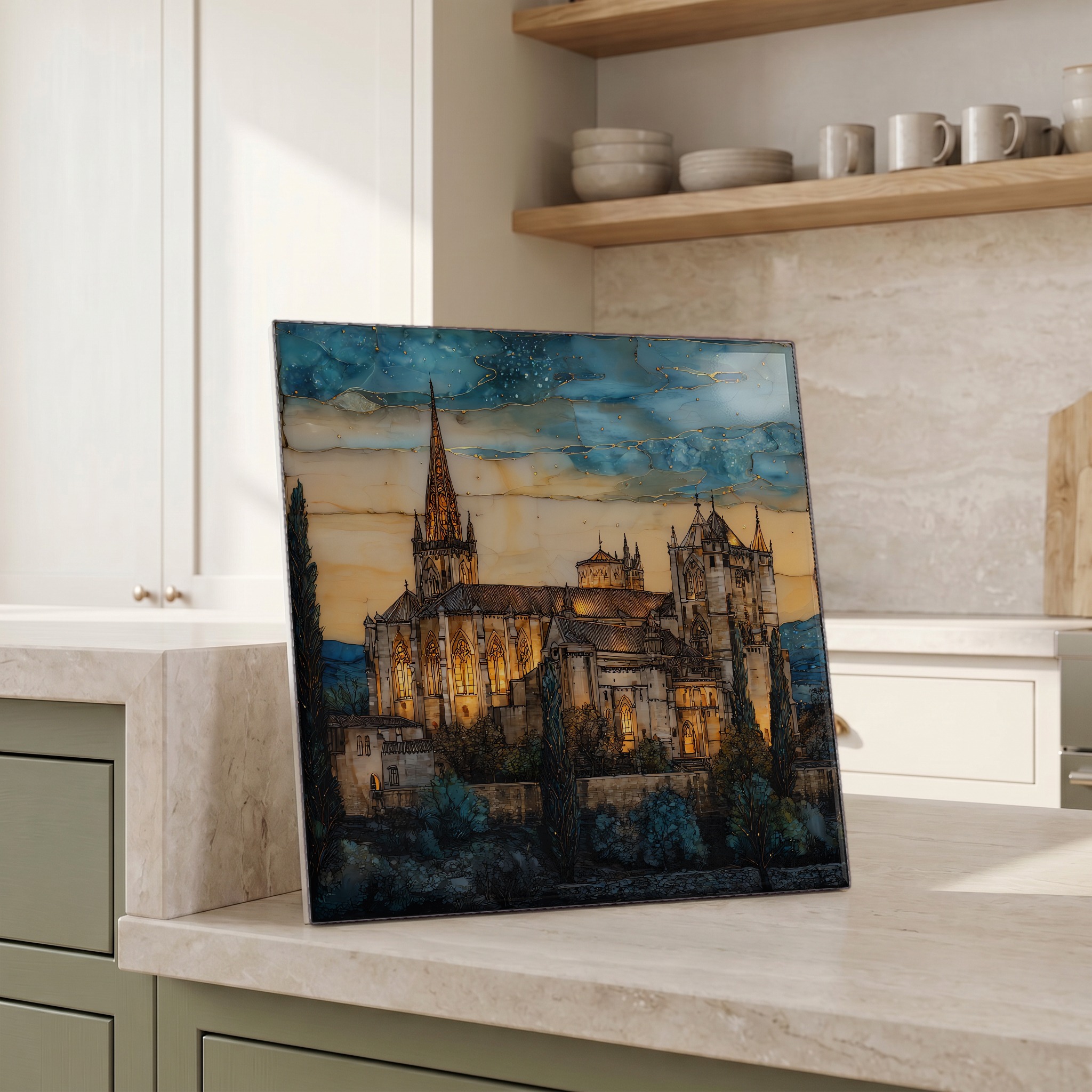
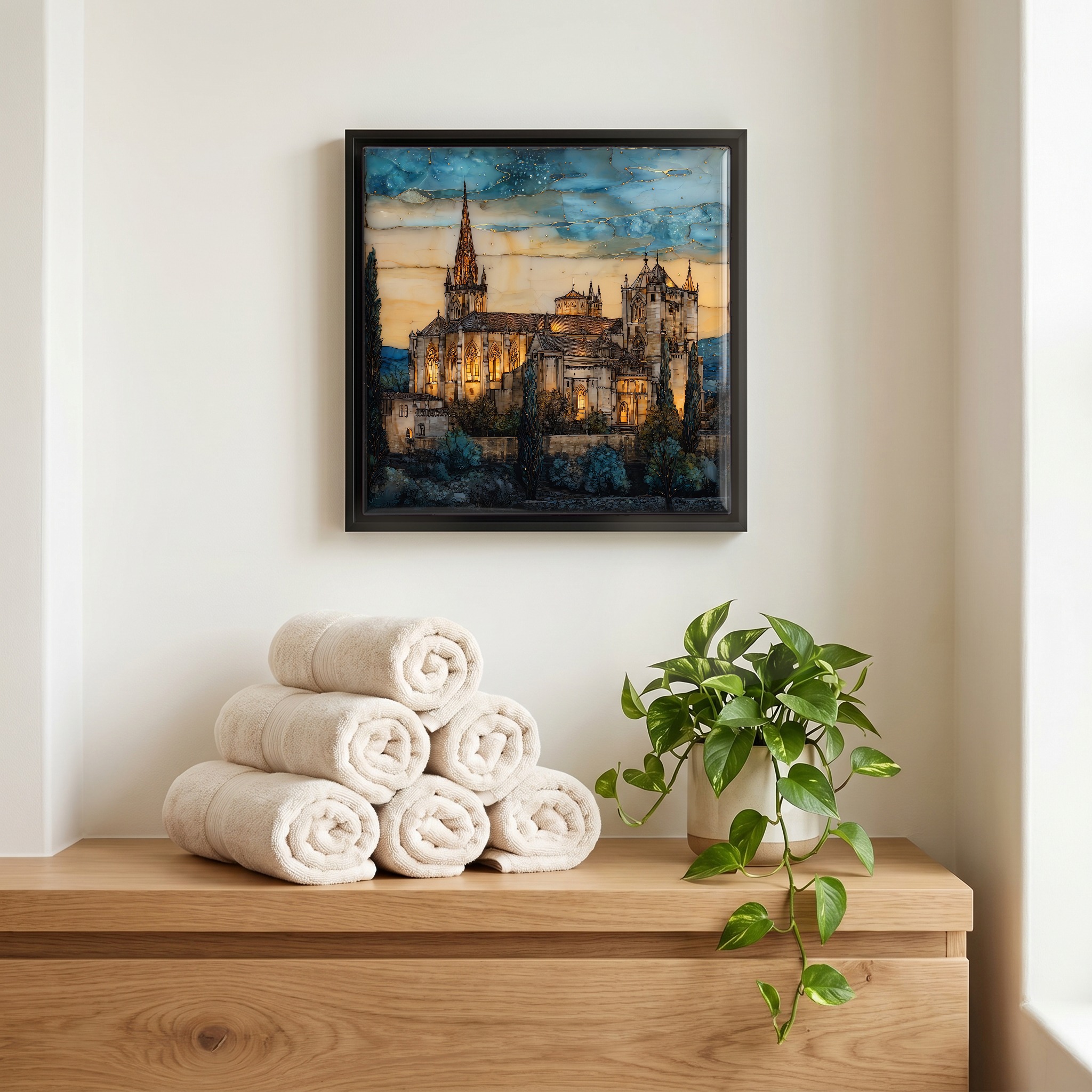
Albi Sainte-Cecile Cathedral, on ceramic.
Each tile is finished by hand in our Knoxville studio. Artwork is slowly infused into the ceramic surface under high heat and pressure, and rests beneath a thin glossy finish. The colour lives in the surface, not on top of it.
Pick any four 4-inch tiles — National Parks you've been to, a Smokies set, the four seasons of one place. $ for a set of , cork-backed, ready to live on the table.
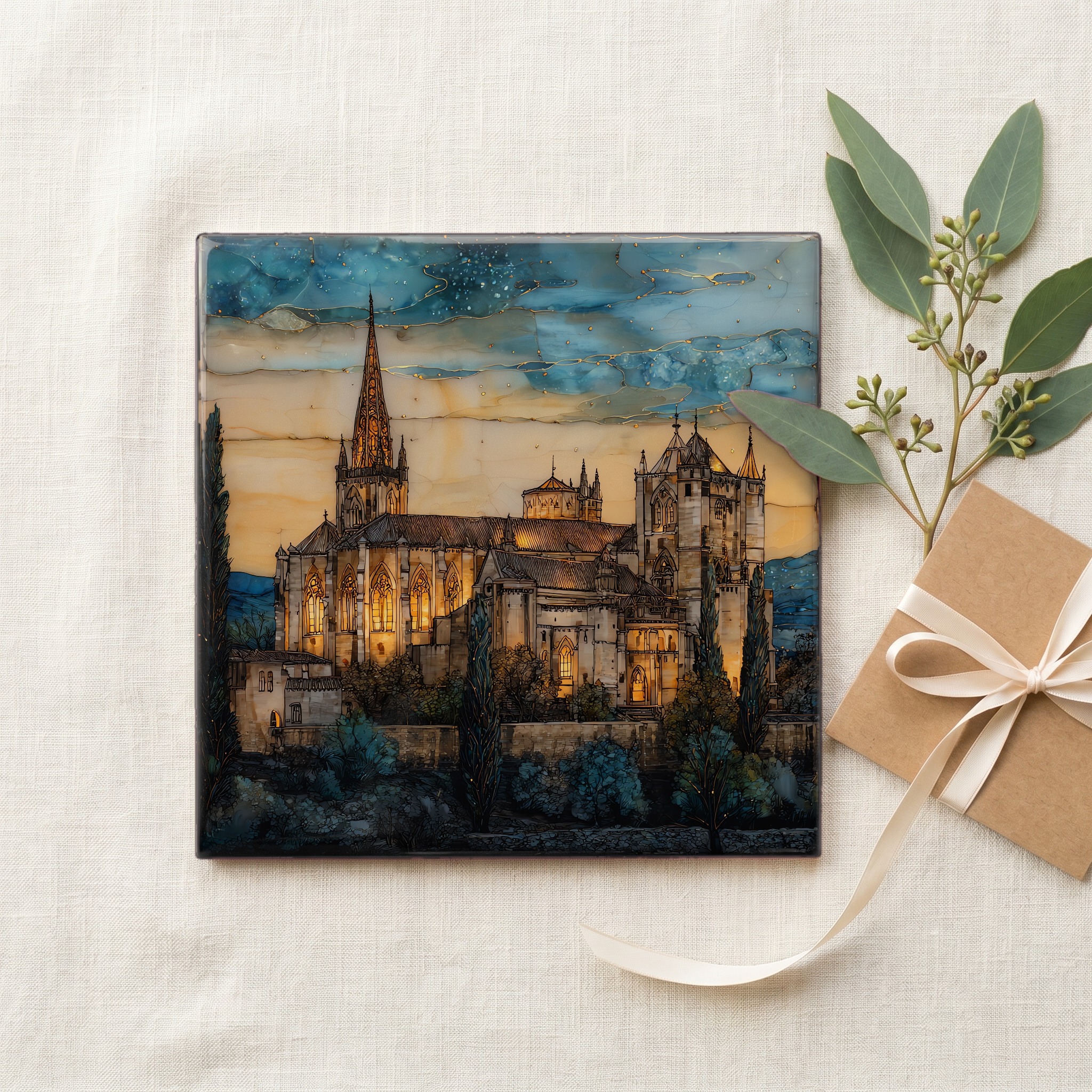
Each tile ships in a kraft box, tied with cream ribbon, with a handwritten note from the studio if you'd like to add one.
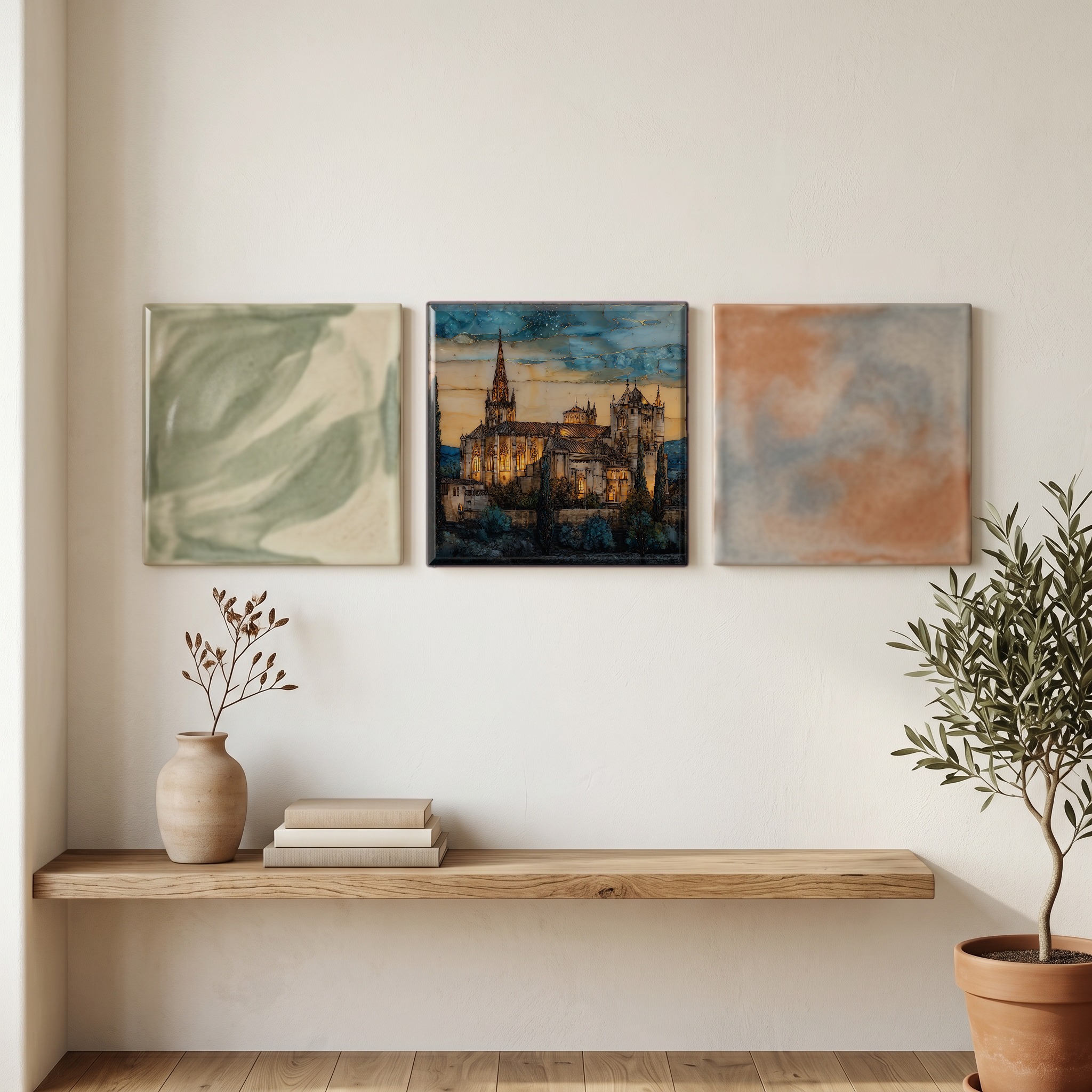
Three or five different vistas, hung together — a chapter of places you've been, or want to go.
The place, in three passes.
Sainte-Cécile Cathedral stands on a low bluff above the Tarn River in Albi, a market town in the Occitanie region of southern France. Construction began in 1282 and continued for nearly two centuries; the building was consecrated in 1480. It is widely cited as the largest brick cathedral in the world, built from the pink-red terracotta the Tarn valley has produced since Roman times. The cathedral is the centerpiece of the Episcopal City of Albi, a quarter inscribed on the UNESCO World Heritage list in 2010 for its medieval Catholic core. The Pont Vieux, a stone bridge dating to 1035, crosses the river just below.
Construction began in 1282, about five decades after the Albigensian Crusade ended and Catharism was suppressed. The builders chose brick, not stone, and an unusual plan: a nave close to 100 meters long, no transept, walls three meters thick, narrow slit windows. The result reads more like a fortress than a church. The bell tower rises roughly 78 meters, square and unornamented in the regional style now called Méridional Gothic. This is the gothic of the south, more massive than the soaring stone gothic of the north. Bishop Bernard de Castanet pushed the project through. The intent was clear: a building the local memory of dissent could not easily pull down.
The interior is the cathedral's surprise. Almost every surface of the vaulting and the choir is painted, the work of a team of Italian artists summoned from Bologna around 1509. The deep blue ceiling is the signature, set with gilded stars and ribbed in gold. The painted surface is the largest expanse of Italian Renaissance painting in France. At the west end, beneath the organ loft, the Last Judgment fills the wall, a fresco from the 1470s and 1480s. The choir screen is carved in flamboyant Gothic limestone, brought down from Quercy in the same period. The fortress outside is a different building from the chapel within.