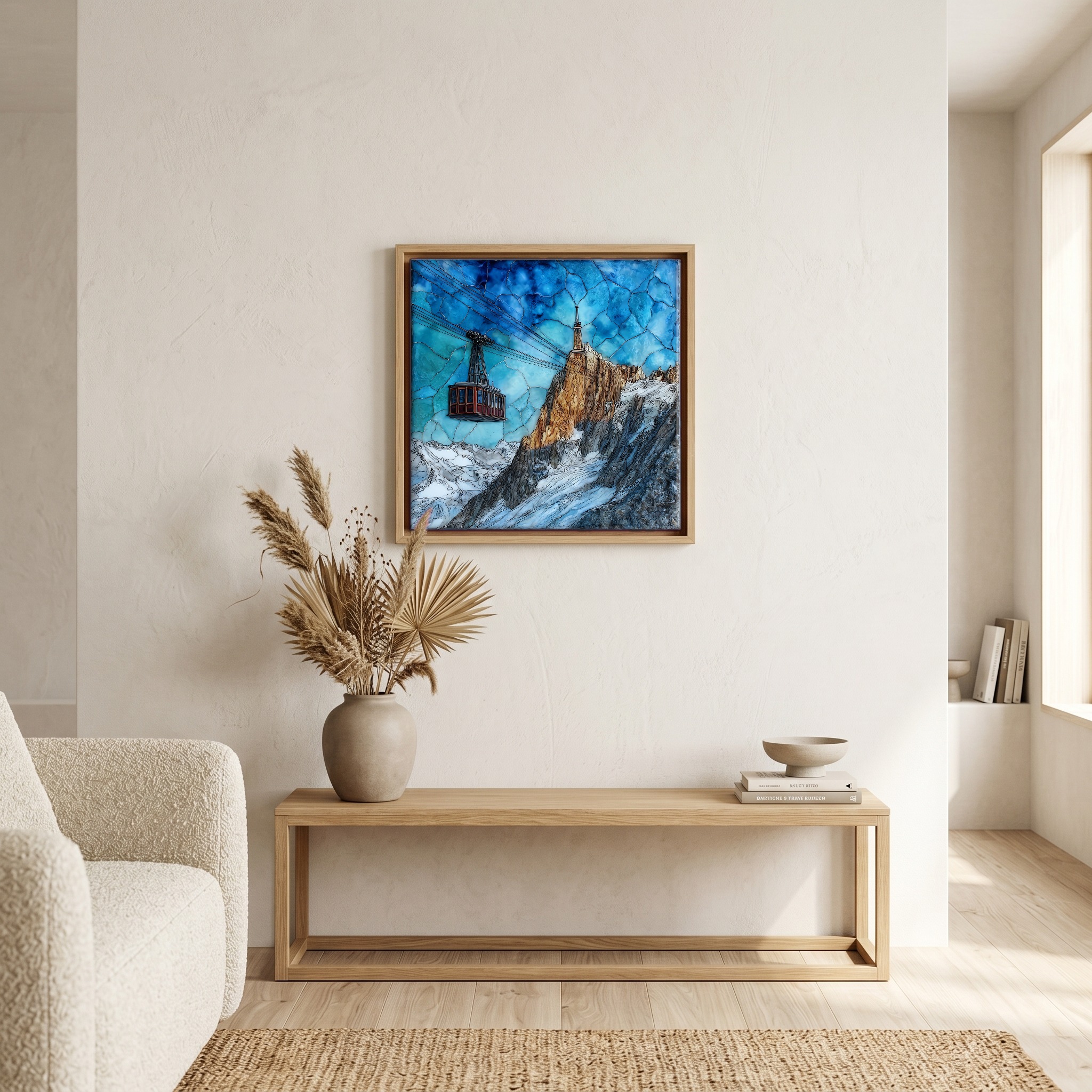
Wender·Vista
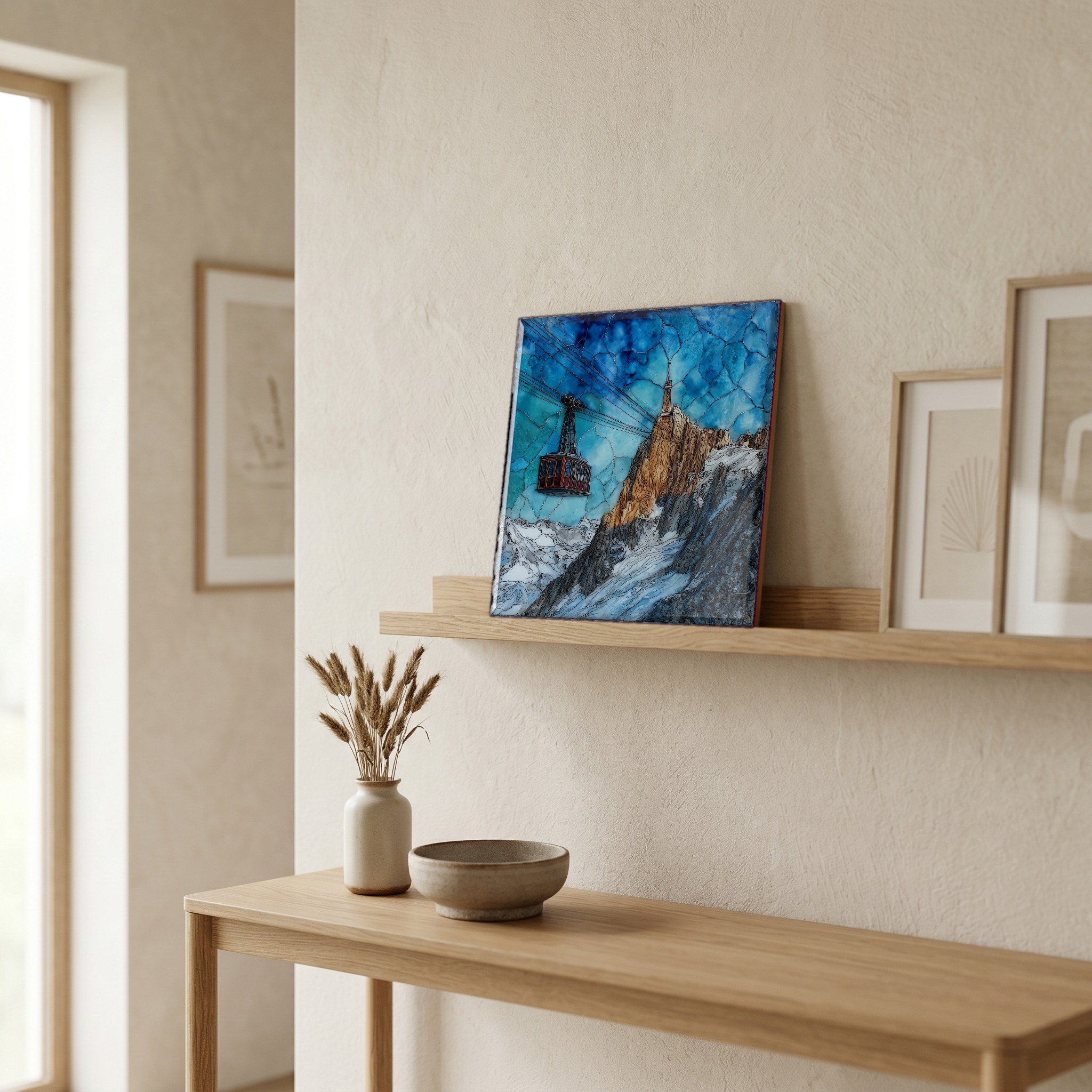
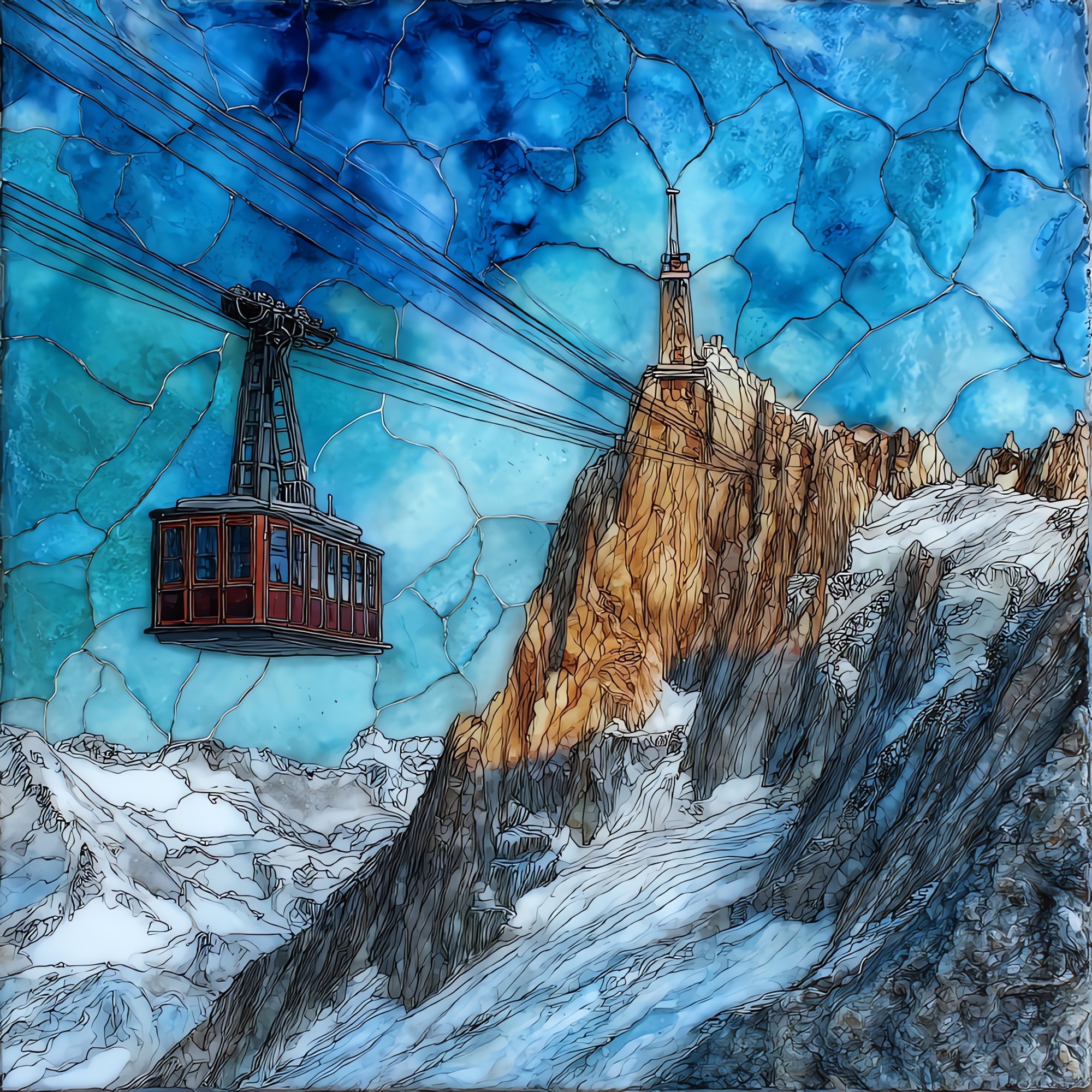
Aiguille du Midi Cable Car
shown on ceramic, 12-inch tileFrance
high above Chamonix, in the Mont Blanc massif

Aiguille du Midi Cable Car

— twenty minutes from the meadow to the snow.

Where it lives

Not only on a wall.

A small tile on the nightstand catching the morning. A larger one above the fire. Yours, wherever you spend the slow hours.
Above the bench, in a warm oak surround.
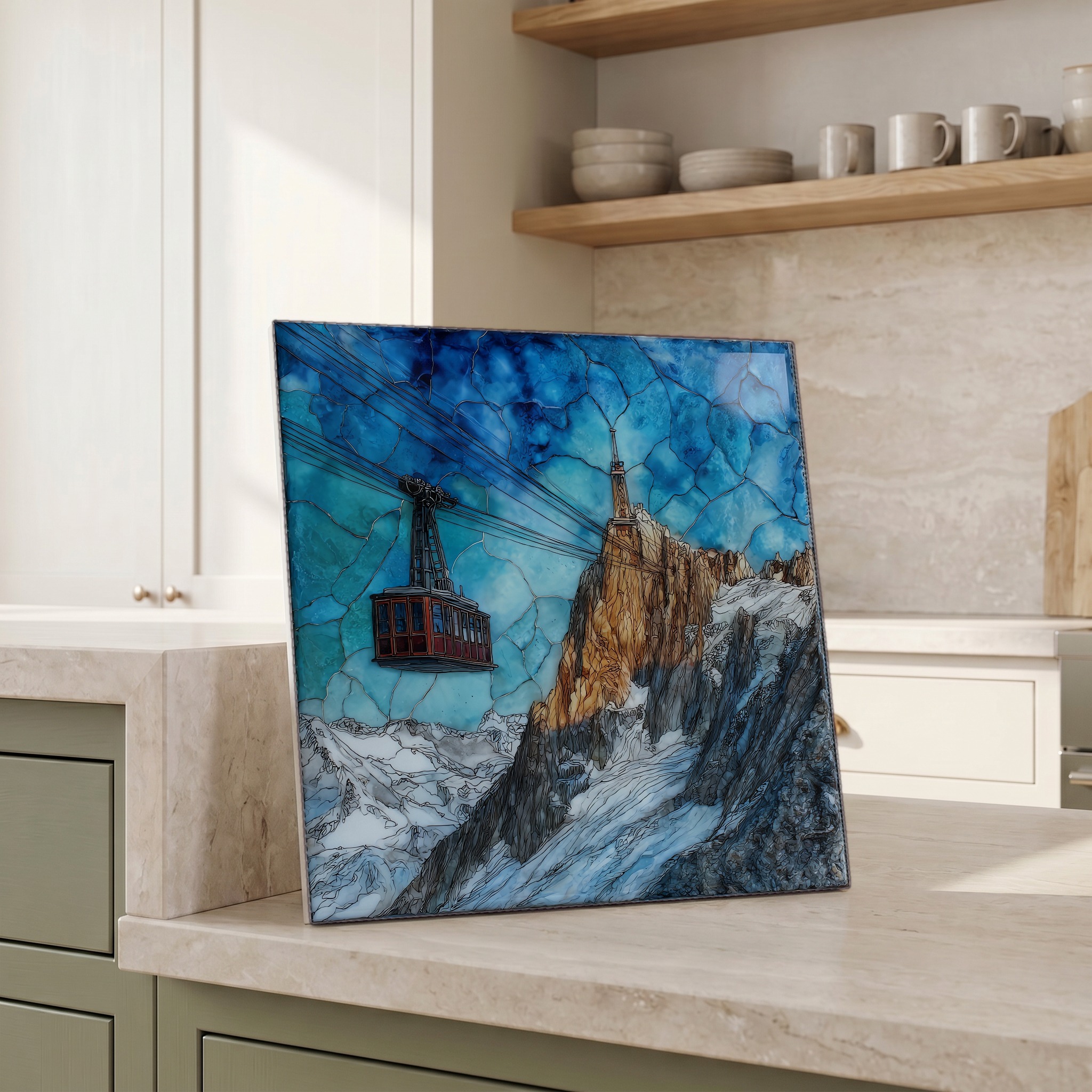
Beside the kettle, propped on the counter.
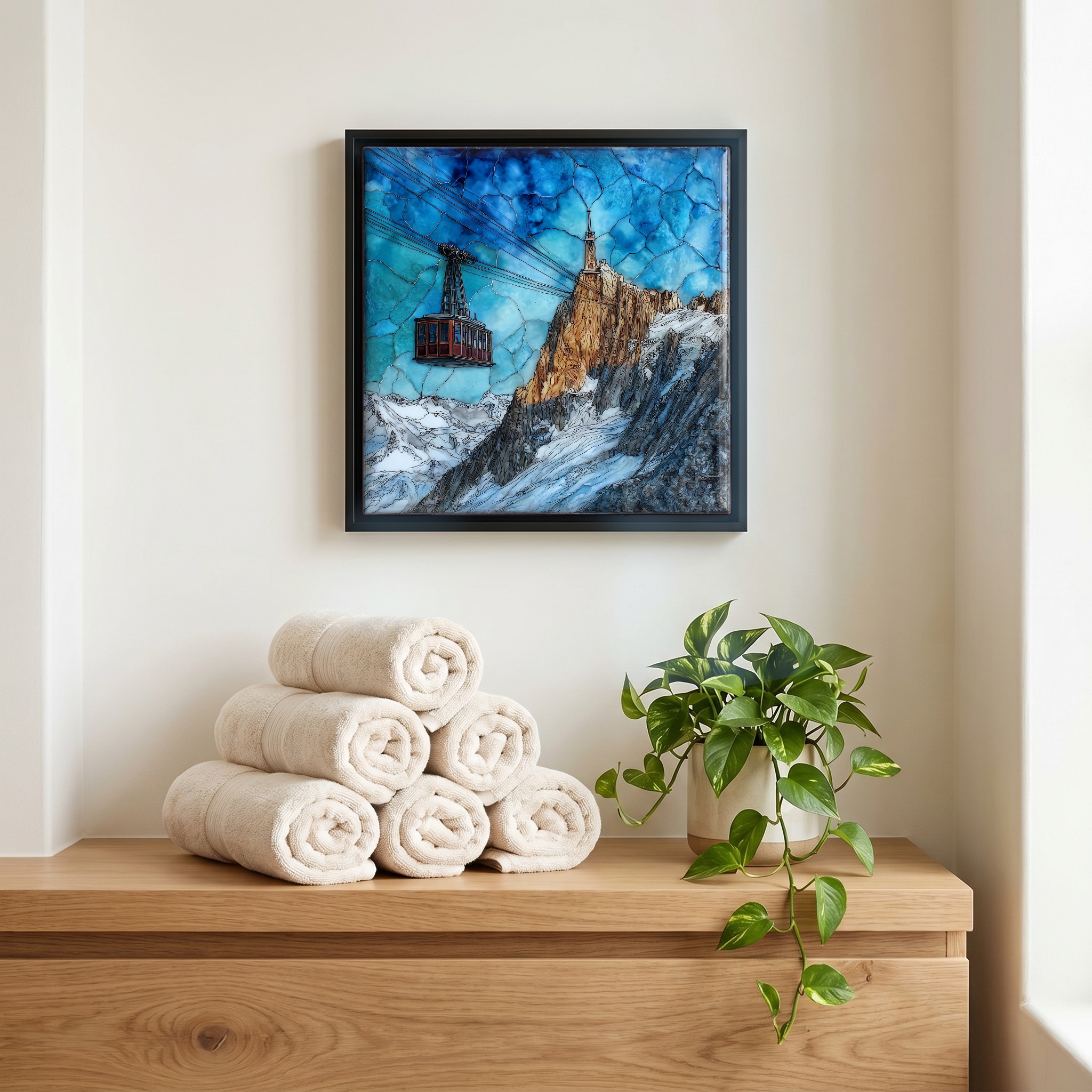
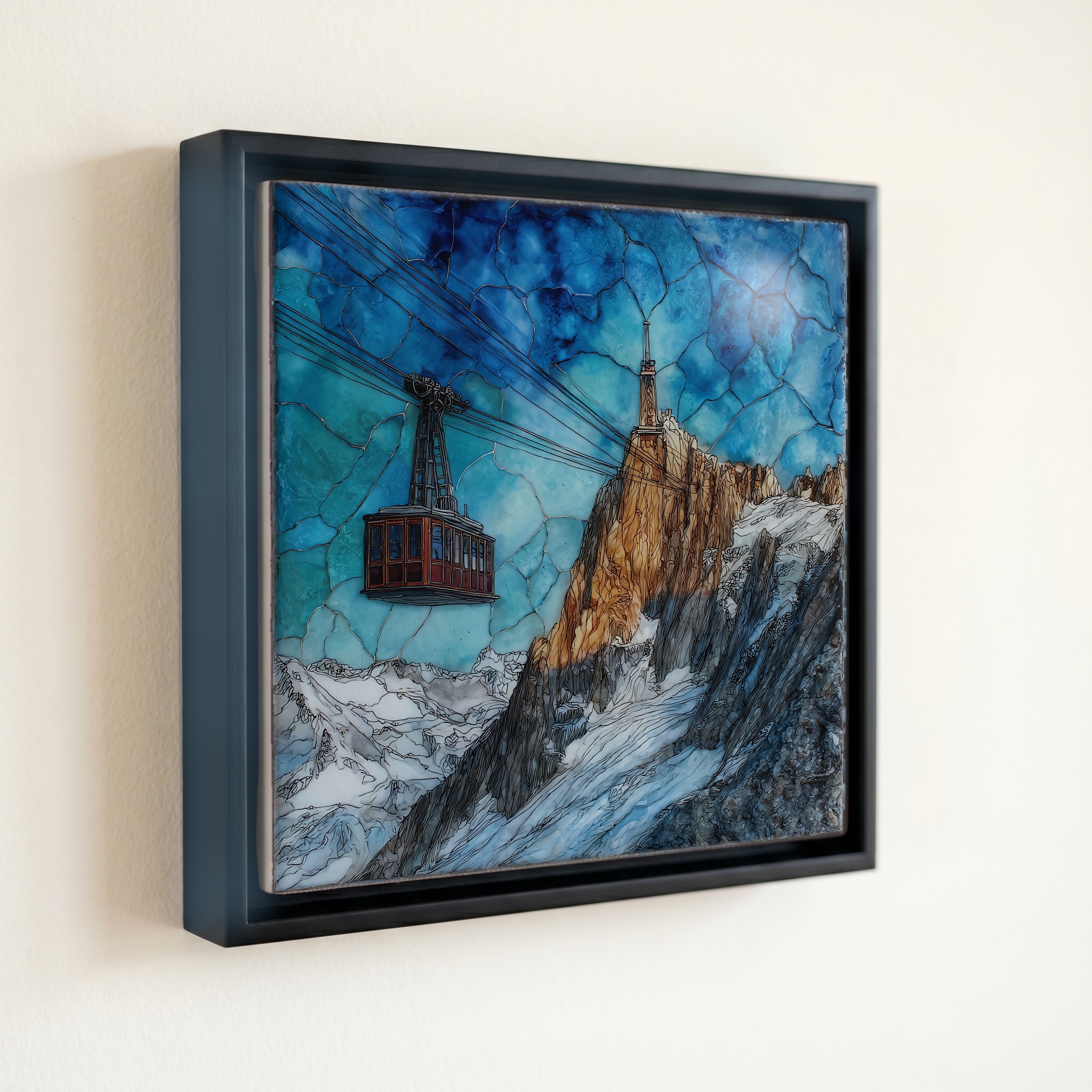
Above the linens, in a slim black surround.
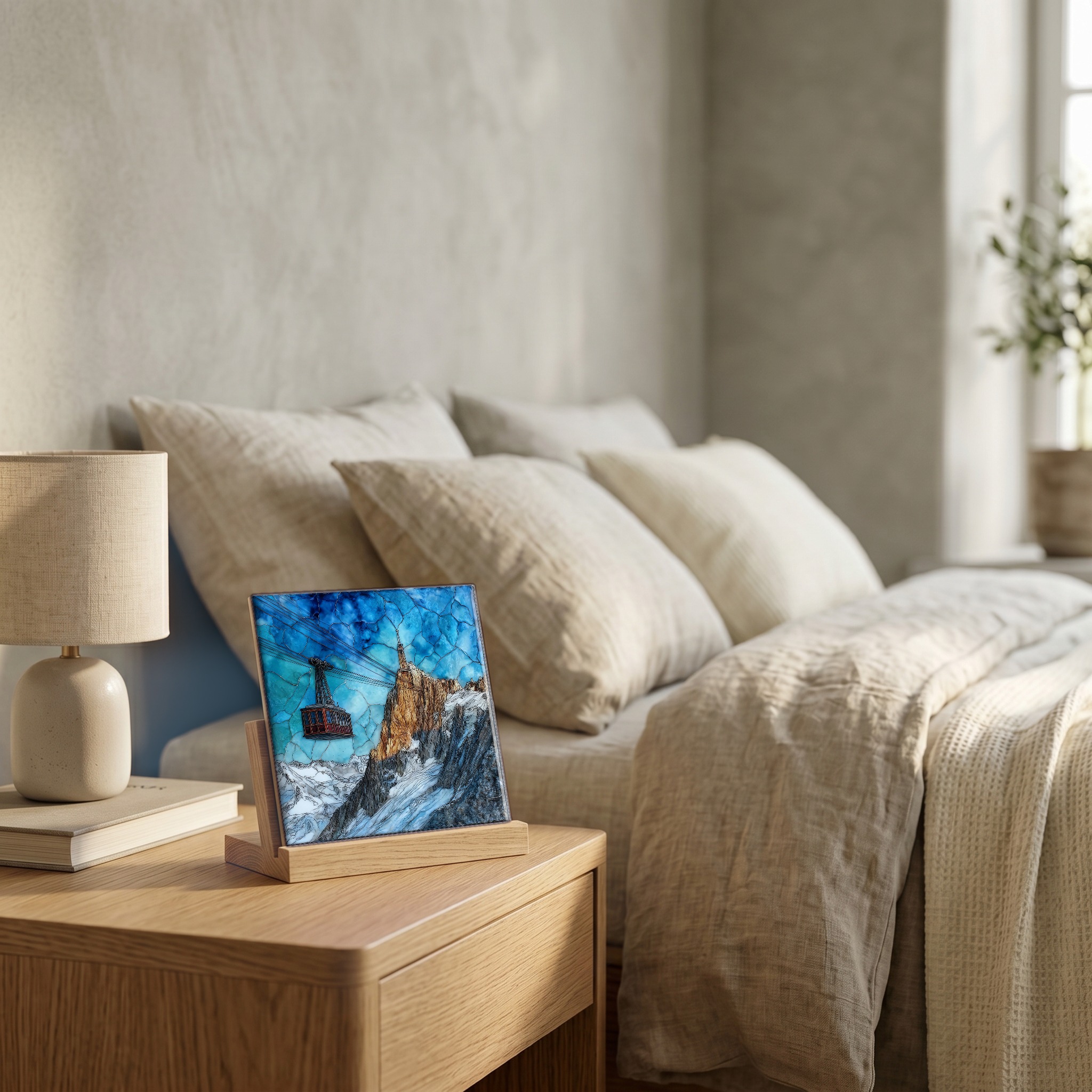
On the nightstand, on a light oak stand.
On a picture ledge, where the light comes in.
a note from the studio

A cable that lifts out of Chamonix straight into the granite. The line opened in 1955 and held the record for the highest aerial tramway in the world for years afterward. The trip takes twenty minutes: green valley, a transfer at Plan de l'Aiguille, then bare rock and snow at the summit terminal. The air thins. The Mont Blanc massif fills the windows. From the top deck a small glass cube projects out over the south face. Visitors stand on a transparent floor with nearly a thousand metres of open air beneath their feet. Most people are quiet on the way down.
from the studio
shown in a slim black floating frame · 6 × 6 in
— bring it home

Aiguille du Midi Cable Car, on ceramic.

Each tile is finished by hand in our Knoxville studio. Artwork is slowly infused into the ceramic surface under high heat and pressure, and rests beneath a thin glossy finish. The colour lives in the surface, not on top of it.

What kind of piece?
One tile — square or rectangle.
How big?
the popular one — counter, shelf, nightstand
6 × 6 in · 15 cm · 1.6 lb
Surface finish
A clear glossy finish — the artwork reads as if under resin. Ideal for show-pieces and framed wall art.
How it sits
A hidden cleat — sits ¼″ proud of the wall.
$58
Hand-finished and shipped from our studio at the foot of the Smokies. On your wall in about ten days.
size
6 × 6 in
15 cm
weighs
1.6 lb
solid in the hand
surface
ceramic, hand-finished
art rests beneath a thin glossy finish
from
Knoxville, TN
our family studio, at the foot of the Smokies
— start a Coaster Set

Pick any four 4-inch tiles — National Parks you've been to, a Smokies set, the four seasons of one place. $ for a set of , cork-backed, ready to live on the table.
comes gift-ready
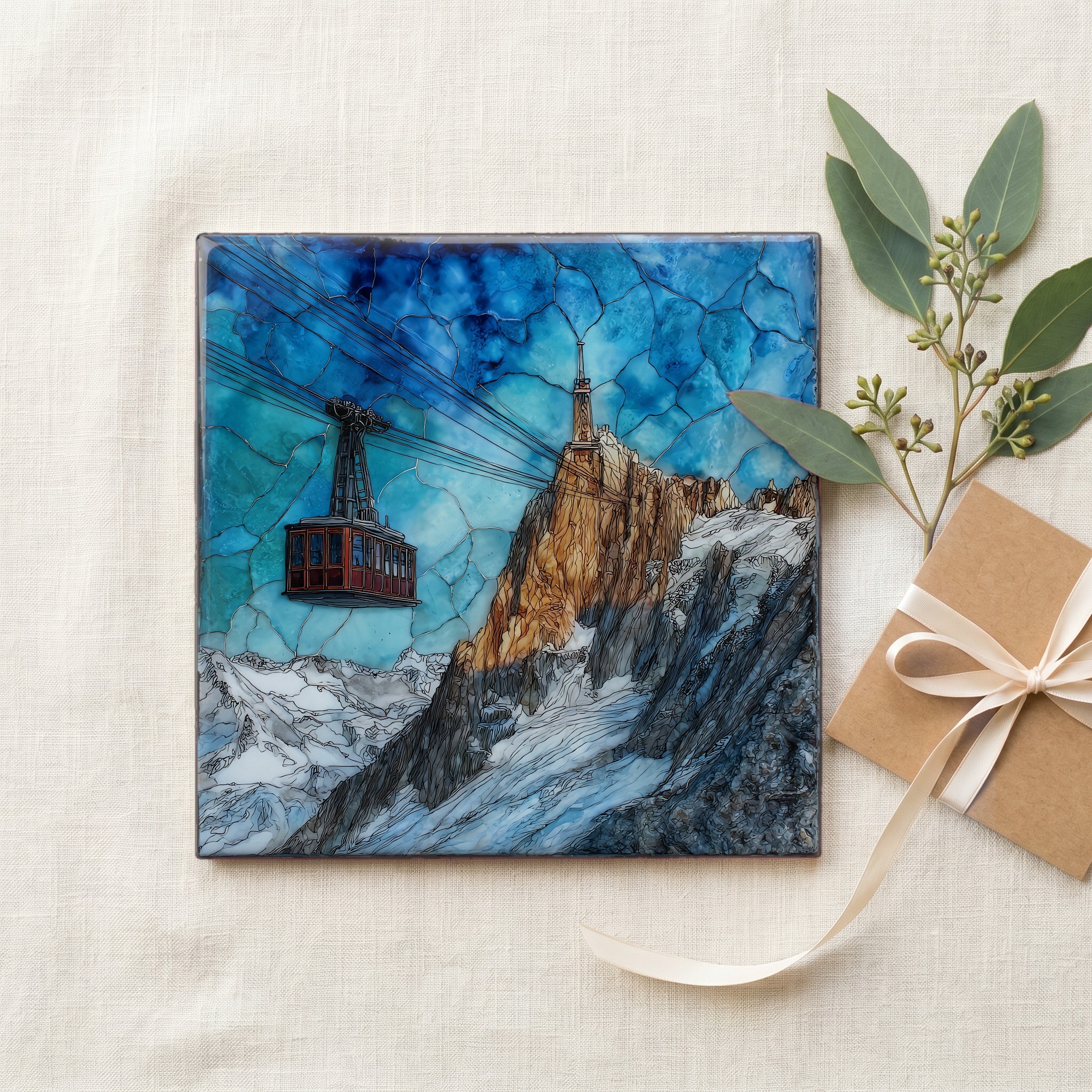
comes gift-ready

Each tile ships in a kraft box, tied with cream ribbon, with a handwritten note from the studio if you'd like to add one.
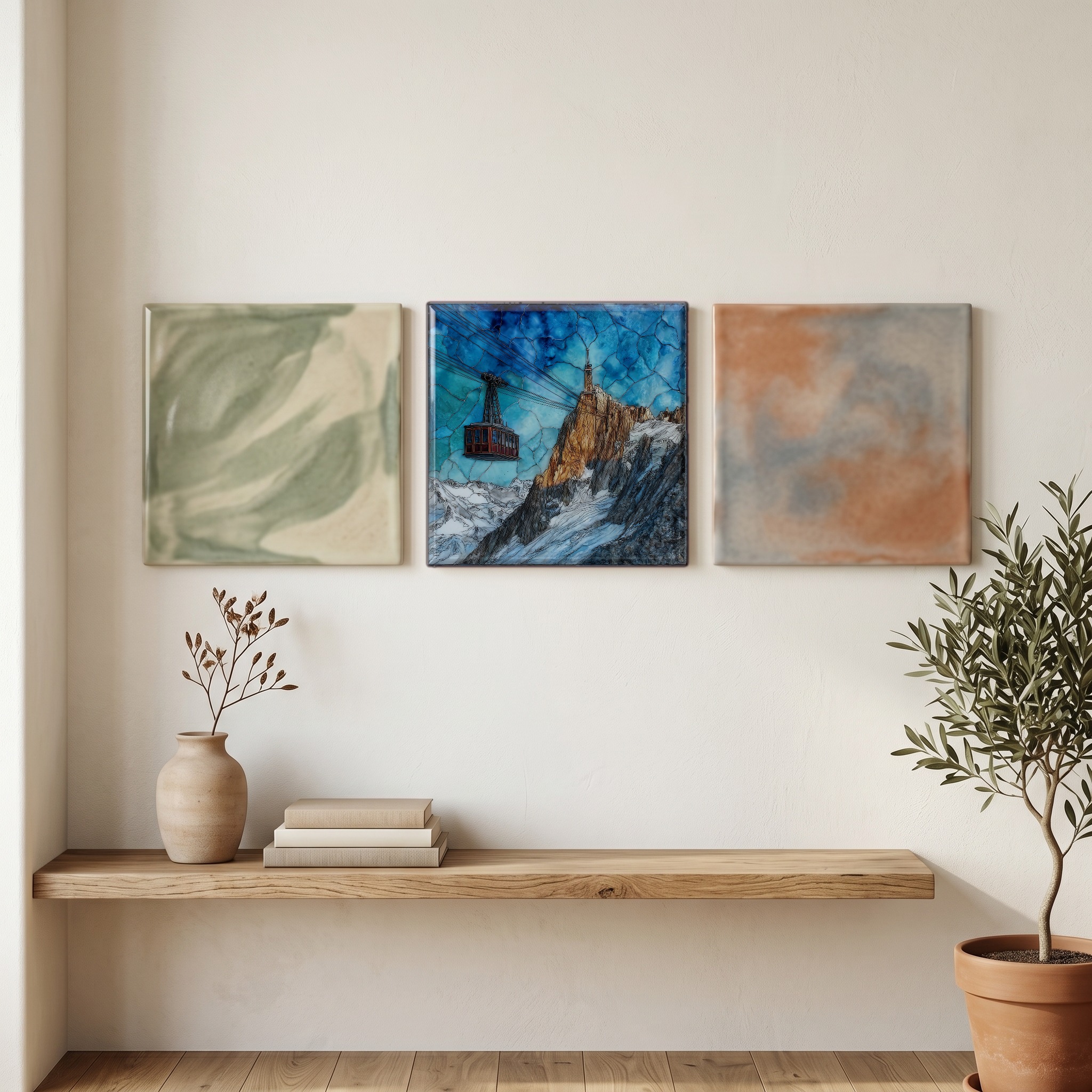
or build a grouping
or build a grouping

Three or five different vistas, hung together — a chapter of places you've been, or want to go.

about Aiguille du Midi Cable Car

The place, in three passes.

A little of what's known, in case you fall down the rabbit hole — or want to go see it yourself.
the place

The Aiguille du Midi is a 3,842-metre granite needle in the Mont Blanc massif of the French Alps, above the town of Chamonix-Mont-Blanc in the Haute-Savoie department. The cable car to its summit was built by the Compagnie du Mont-Blanc and opened on 22 July 1955; on opening it became the highest aerial tramway in the world, a record it held for nearly two decades. The line runs in two stages from a lower terminal in central Chamonix at 1,035 metres, through a mid-station at Plan de l'Aiguille at 2,317 metres, to a summit terminal cut into the rock just below the peak. From there the view opens across the Mont Blanc massif into Italy and Switzerland.

the air

At 3,842 metres the summit terminal sits in air at roughly 60 percent of sea-level pressure, and first-time visitors who climb the small interior elevator to the upper viewing deck often feel light-headed in the first minutes. The Compagnie du Mont-Blanc advises taking the ascent slowly, with a few minutes of acclimatisation at the Plan de l'Aiguille mid-station on the way up. The snowfields of the Vallée Blanche fall away to the south, the dome of Mont Blanc itself rising another 966 metres above the terminal. Wind is constant on the upper platforms. Even in July the summit temperature can sit well below freezing, and the snow underfoot has been there since the last winter.

the visit

The cable car runs from the centre of Chamonix, the lower terminal a short walk from the SNCF train station. Tickets are sold by the Compagnie du Mont-Blanc and are best reserved in advance during peak summer, when wait times at midday can stretch past an hour. The system closes for several weeks each autumn for scheduled maintenance, typically in November, and winter operations depend on weather and wind. A separate smaller gondola called the Panoramic Mont-Blanc connects the summit across the Géant glacier to the Pointe Helbronner on the Italian side, a roughly thirty-minute traverse open in summer only. Warm layers, sturdy shoes, and sunglasses for the snow are the standard kit, even in August.

where
France · Chamonix-Mont-Blanc, Haute-Savoie
elevation
3,842 m · 12,605 ft
position
45.8792° N · 6.8869° E
the neighborhood

What's nearby.

A handful of named places within an hour's walk or short drive. Some we've already painted; some we will.
3 km N
Chamonix-Mont-Blanc
alpine town
2 km N
Plan de l'Aiguille
cable-car mid-station
4 km E
Mer de Glace
glacier
9 km S
Mont Blanc summit
alpine peak
9 km E
Pointe Helbronner
cross-border cable terminal
N
Aiguille du Midi Cable Car
Chamonix-Mont-Blanc
Plan de l'Aiguille
Mer de Glace
Mont Blanc summit
Pointe Helbronner
common questions

What people ask.

A few questions we get about Aiguille du Midi Cable Car — and about bringing the piece home.
about the place

The cable car runs from the centre of Chamonix-Mont-Blanc, in the Haute-Savoie department of southeastern France, up to a summit terminal at 3,842 metres on the Aiguille du Midi itself, in the Mont Blanc massif. The base station is a short walk from the Chamonix train station.

The summit terminal sits at 3,842 metres above sea level, just below the peak of the Aiguille du Midi itself. From the lower terminal in Chamonix at 1,035 metres the total vertical ascent is about 2,807 metres, one of the longest of any cable car in the world.

The cable car was built by the Compagnie du Mont-Blanc and opened on 22 July 1955. For nearly two decades afterward it held the record for the highest aerial tramway in the world. The same company still operates the line today.

The ascent runs in two stages and takes about twenty minutes top to bottom, with a transfer at the Plan de l'Aiguille mid-station at 2,317 metres. The full round trip from Chamonix typically takes ninety minutes when queues are short, longer in midday summer.

It runs most of the year but closes for several weeks each autumn for scheduled maintenance, usually in November. Winter operations depend on weather and wind, and individual days can be cancelled with little notice. The Compagnie du Mont-Blanc publishes daily conditions.

Yes, by a separate gondola. The Panoramic Mont-Blanc crosses the Géant glacier from the Aiguille du Midi summit to the Pointe Helbronner on the Italian side. The traverse takes about thirty minutes and runs in summer only, weather permitting. There is no walking route between the two terminals.

It is a glass cube installed on the upper terrace of the summit terminal, opened in December 2013. Visitors stand on a transparent floor with roughly a thousand metres of open air below their feet. Soft slip-on covers protect the glass; queues are common in summer.

about the piece in your home

It has been a meaningful gift for customers with ties to Chamonix or the wider Mont Blanc region. The cable car is part of the local mythology: opened in 1955, the highest tramway in the world for years, the standard gateway to the high mountain. A Small or Medium with a handwritten studio note travels well.

The cool granites, snow whites, and stained-glass blues settle into alpine modern, Scandinavian-warm, and mountain-lodge rooms. The piece pairs with oiled wood, ivory wool, and matte black metal. It also anchors a Japandi room where one cool-toned image holds a quiet palette.

Alpine modern has stayed steady through the past several seasons, supported by the broader return to natural materials and a renewed interest in mountain travel. A Mont Blanc piece in this language reads as both classical and current, and places well in second-home markets across the Alps and the western United States.

Above a standard sofa the single Large reads well as an anchor. For a longer wall a four-tile Mural or a nine-tile Mural carries the room. Above a console table the Medium is usually the right scale; the Large can overpower if the console is narrow.

Yes. For damp or splash-prone rooms we recommend the Dura Satin or Matte finish, which is scratch-resistant and holds up around steam and water. The glossy finish is reserved for framed living-room and bedroom installations.

A soft microfibre cloth and clean water are all the tile needs. The colour is slowly infused into the ceramic surface under high heat and pressure and lives beneath a thin glossy finish, so it does not lift or fade with cleaning. Avoid abrasive sponges and ammonia-based sprays.

Yes. Reid Wender paints every piece in our atlas; nothing is licensed in or resold. The Aiguille du Midi vista belongs to our Mont Blanc collection and is not sold by any other studio.

if this one stayed with you

A few you might also love.

Hand-picked by the eye that found Sorapis. Same air, same kind of quiet.